
Close Menu
    Facebook X (Twitter) Instagram
    SciTechDaily
    • Biology
    • Chemistry
    • Earth
    • Health
    • Physics
    • Science
    • Space
    • Technology
    Facebook X (Twitter) Pinterest YouTube RSS
    SciTechDaily
    Home»Earth»Exploring Earth From Space: Qeshm Island, Iran [Video]
    Earth

    Exploring Earth From Space: Qeshm Island, Iran [Video]

    By European Space Agency (ESA)May 15, 2021No Comments3 Mins Read
    Facebook Twitter Pinterest Telegram LinkedIn WhatsApp Email Reddit
    Share
    Facebook Twitter LinkedIn Pinterest Telegram Email Reddit
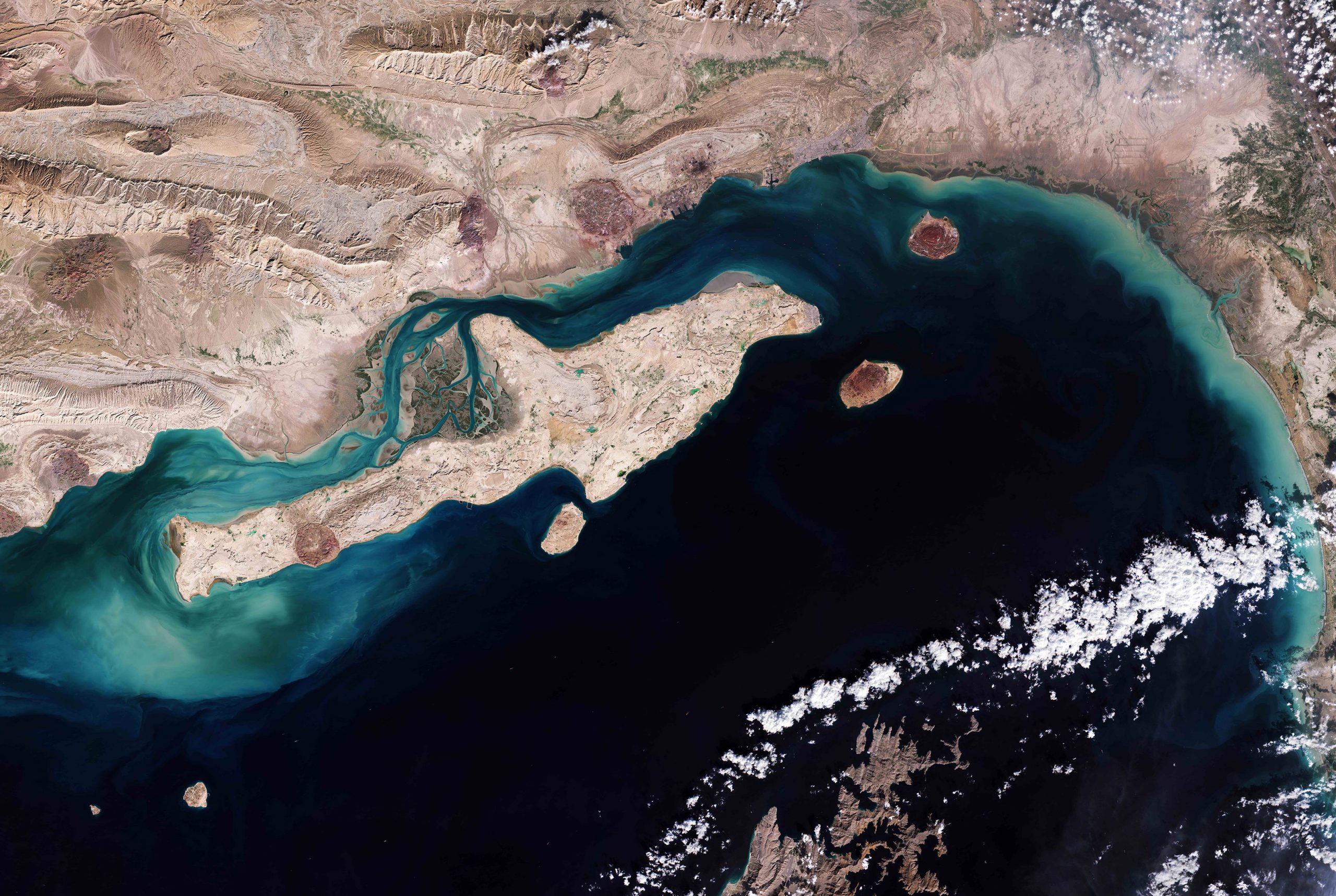
    Qeshm Island, Iran
    Credit: Contains modified Copernicus Sentinel data (2020), processed by ESA, CC BY-SA 3.0 IGO

    The Copernicus Sentinel-2 mission takes us over Qeshm Island – the largest island in Iran.

    Qeshm Island lies in the Strait of Hormuz, parallel to the Iranian coast from which it is separated by the Clarence Strait (Khuran). With an area of around 1200 sq km (460 sq mi), the island has an irregular outline and shape often compared to that of an arrow. The island is approximately 135 km (84 mi) long and spans around 40 km (25 mi) at its widest point.

    The image shows the largely arid land surfaces on both Qeshm Island and mainland Iran. The island generally has a rocky coastline except for the sandy bays and mud flats that fringe the northwest part of the island.

    The Hara Forest Protected Area, a network of shallow waterways and forest, can be seen clearly in the image, between Qeshm Island and the mainland. Hara, which means ‘grey mangrove’ in the local language, is a large mangrove forest and protected area that brings more than 150 species of migrating birds during spring, including the great egret and the western reef heron. The forest also hosts sea turtles and aquatic snakes.

    The dome-shaped Namakdan mountain is visible in the southwest part of the island and features the Namakdan Cave – one of the longest salt caves in the world. With a length of six kilometers (3.7 miles), the cave is filled with salt sculptures, salt rivers, and salt megadomes.

    The water south of Qeshm Island appears particularly dark, while lighter, turquoise colors can be seen in the left of the image most likely due to shallow waters and sediment content. Several islands can be seen in the waters including Hengam Island, visible just south of Qeshm, Larak Island and Hormuz Island which is known for its red, edible soil.

    Several cloud formations can be seen in the bottom-right of the image, as well as a part of the Musandam Peninsula, the northeastern tip of the Arabian Peninsula. The peninsula’s jagged coastline features fjordlike inlets called ‘khors’ and its waters are home to dolphins and other marine life.

    Data from the Copernicus Sentinel-2 mission can help monitor changes in urban expansion, land-cover change and agriculture monitoring. The mission’s frequent revisits over the same area and high spatial resolution also allow changes in inland water bodies to be closely monitored.

    Never miss a breakthrough: Join the SciTechDaily newsletter.
    Follow us on Google and Google News.

    European Space Agency Geography
    Share. Facebook Twitter Pinterest LinkedIn Email Reddit

    Related Articles

    Breathtaking View of Andros, Bahamas From Space [Video]

    Stunning Views of Houston Texas From Copernicus Sentinel-1 Satellite

    Earth From Space: Bolivian Highland Heart [Video]

    Flevoland, Netherlands From Space: One of the Largest Land Reclamation Projects in the World

    Earth From Space: Lake George, Uganda – A Center for Biological Diversity [Video]

    Deforestation in Bolivia Spied From Space Satellite

    Earth From Space: Japanese Archipelago [Video]

    Earth From Space: Faroe Islands [Video]

    Earth From Space: Tromsø, Norway [Video]

    Leave A Reply Cancel Reply

    • Facebook
    • Twitter
    • Pinterest
    • YouTube

    Don't Miss a Discovery

    Subscribe for the Latest in Science & Tech!

    Trending News

    This Copper Drug Clears Alzheimer’s Brain Toxins and Boosts Memory

    Adults Over 65 Lost Massive Amounts of Weight With Ozempic

    How Flocking Birds “Defy” One of Physics’ Most Fundamental Laws

    Physicists Create a New Kind of Schrödinger’s Cat State From Exotic Quantum Building Blocks

    Your Diet Could Be Missing the Key Ingredient for Heart Protection

    Researchers Warn Widely Prescribed Blood Pressure Drugs Could Be Harming Diabetic Kidneys

    James Webb Spots Something Strange Between Day and Night on an Alien Planet

    How Ancient People Moved a 6-Ton Stone 700 Kilometers to Stonehenge

    Follow SciTechDaily
    • Facebook
    • Twitter
    • YouTube
    • Pinterest
    • Newsletter
    • RSS
    SciTech News
    • Biology News
    • Chemistry News
    • Earth News
    • Health News
    • Physics News
    • Science News
    • Space News
    • Technology News
    Recent Posts
    • Scientists Uncover Cause of Inflammatory Bowel Disease Solving Decades-Old Mystery
    • The Surprising Reason Swimming Could Be Better for Your Heart Than Running
    • Could Vitamin C Be the Secret to Keeping Your Brain Younger?
    • The Surprising Fix for Robot Traffic Jams
    • Near Absolute Zero, This Transistor Starts Acting Like a Brain Cell
    Copyright © 1998 - 2026 SciTechDaily. All Rights Reserved.
    • Science News
    • About
    • Contact
    • Editorial Board
    • Privacy Policy
    • Terms of Use

    Type above and press Enter to search. Press Esc to cancel.