
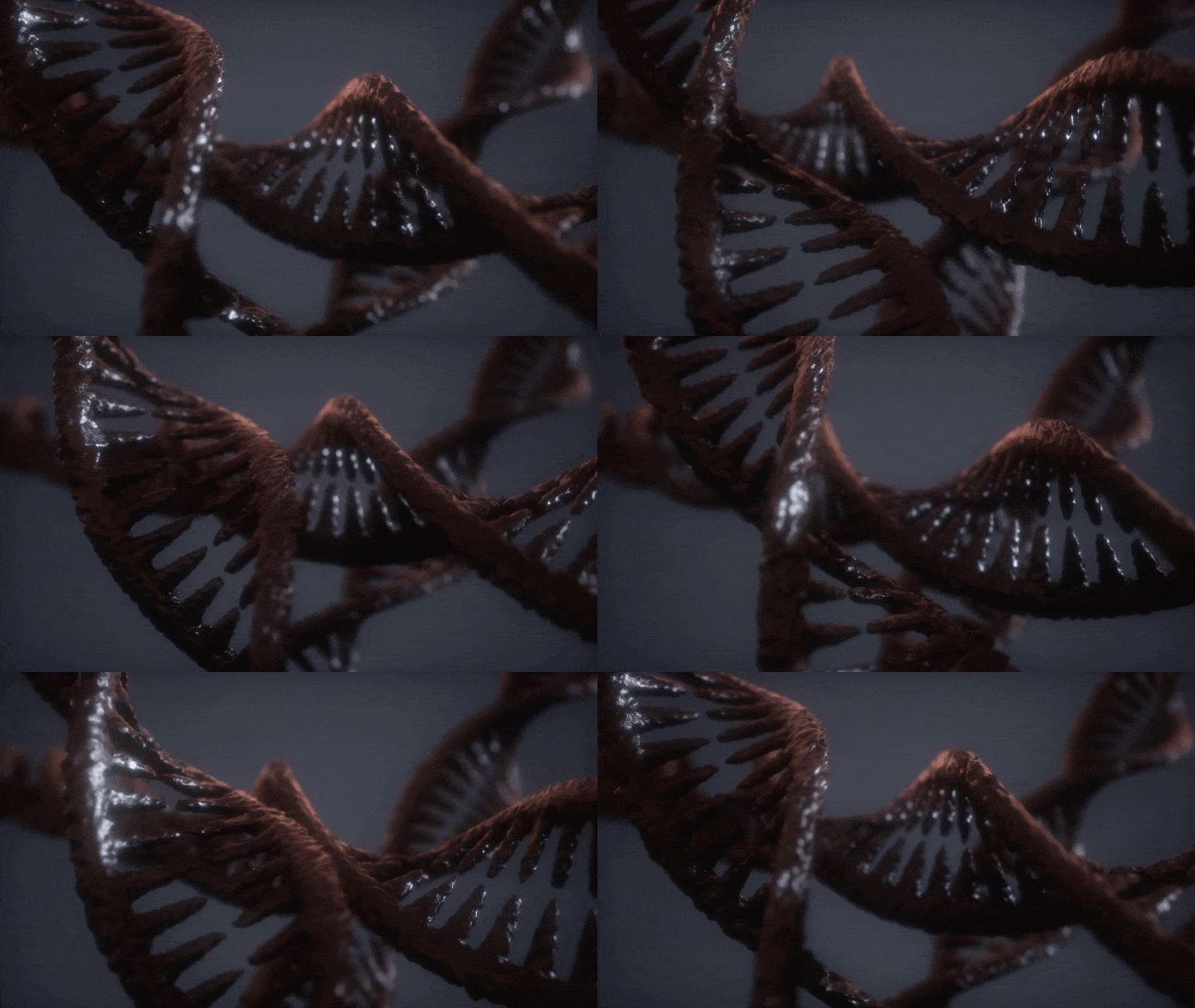
Unexpected Diversity in Virus-Derived Sequences in the Human Genome
Powerful genetic analysis tools reveal that people exhibit a surprising level of variation in virus-derived genetic sequences.
Three RIKEN geneticists have discovered previously undetected snippets of genetic material from viruses lurking in our DNA. The methods they developed for this discovery will be valuable for determining when this viral genetic material entered the human genome and also whether it can give rise to differences between individuals.
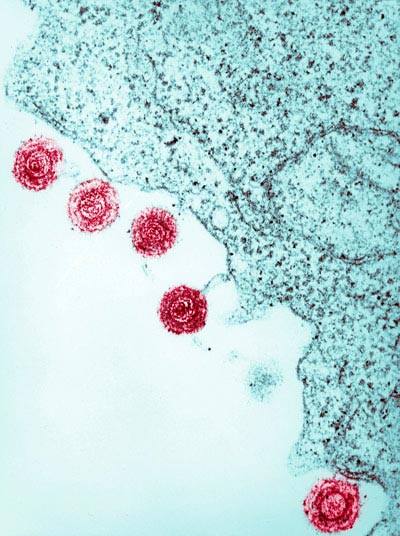
Roughly 8% of the human genome can be traced backed to retroviruses—viruses that reverse the normal order of genetic transcription, having an RNA genome that is reverse-transcribed into DNA and then inserted into the genome of the host cell. The most infamous retrovirus is the human immunodeficiency virus (HIV).
Retroviruses: Ancient Architects of Our DNA
While retroviruses can have devastating effects on human health, the viral genetic material inserted in our genomes can provide useful functions. For example, retroviral proteins expressed in the placenta enable humans and other mammals to give birth to live offspring rather than eggs.
“During the course of human evolution our ancestors acquired many virus-derived sequences, some of which impart useful functions,” says Shohei Kojima of the RIKEN Center for Integrative Medical Sciences (IMS). “I used to think that viruses were menaces, but some of their genetic sequences are essential for human development.”
Over the last two decades, researchers have discovered much about the retroviral genetic sequences in the human genome, as well as viral-origin sequences derived from non-retroviruses. But it is unclear how much these sequences vary between people and whether variants could give rise to different human characteristics.

Now, Kojima, Anselmo Kamada and Nicholas Parrish, all at RIKEN IMS, have investigated virus-derived variations in 3,332 people from diverse populations using bioinformatic tools specially designed for the task.
They discovered that viruses are responsible for unexpected structural variations in the human genome. They also found rare variants in the germline that can be traced back to human herpesvirus 6 (Figure 1).
Surprising Genome Variants Linked to Viruses
Not all the viral genetic material they found had ancient origins, however. The trio discovered that some commonly used cell lines had been infected by viruses. “We think these sequences are likely caused by infection of the subject who donated their blood for human genetics research,” says Parrish. “Strangely, the viruses don’t usually infect B cells, which were used to make the cell lines we used, and so we don’t fully understand how those viruses infected the cells.”
The team intends to explore the possible functions of the sequences they have identified. Some studies have suggested associations between viral genetic sequences and a higher risk of certain diseases, Parrish notes. “If that’s true, how and why are they maintained in the human population?” he asks. “We want to see if they provide some benefit in addition to the cost.”
Reference: “Virus-derived variation in diverse human genomes” by Shohei Kojima, Anselmo Jiro Kamada and Nicholas F. Parrish, 26 April 2021, PLoS Genetics.
DOI: 10.1371/journal.pgen.1009324
Never miss a breakthrough: Join the SciTechDaily newsletter.
Follow us on Google and Google News.
1 Comment
The basis of my research on coronaviruses is that they attempt to enter the cell nucleus and associate with our DNA. MERS, SARS, and Covid-19 have been successful at this, and I suggest their “snippets” are intended to adjust our DNA to improve the virus infection agenda.
My independent research has found multiple one-in-a-million nucleotide sequence matches between all the coronaviruses and the human genome. Those sequences are the same as some of the loops of human tRNA. Using those loops and their amino acid code matches, viruses may be able to fool the nucleus membrane in cells to allow the virus to enter and associate with the human DNA, creating more opportunities for further infection. Our immune system may be compromised and may no longer be able to stop the virus and other diseases from attacking organs throughout the body. Vaccines that attack the virus protein shells while ignoring their contents are doomed to failure from the Darwin effect, but recognizing these loops suggests a possible approach to successful coronavirus vaccines. Only the infection process is considered in my work, not the innate virulence of the virus. For more info, check out this YouTube, Coronavirus – Using Your DNA Against You. https://www.youtube.com/watch?v=8dOIzD6ch8s