
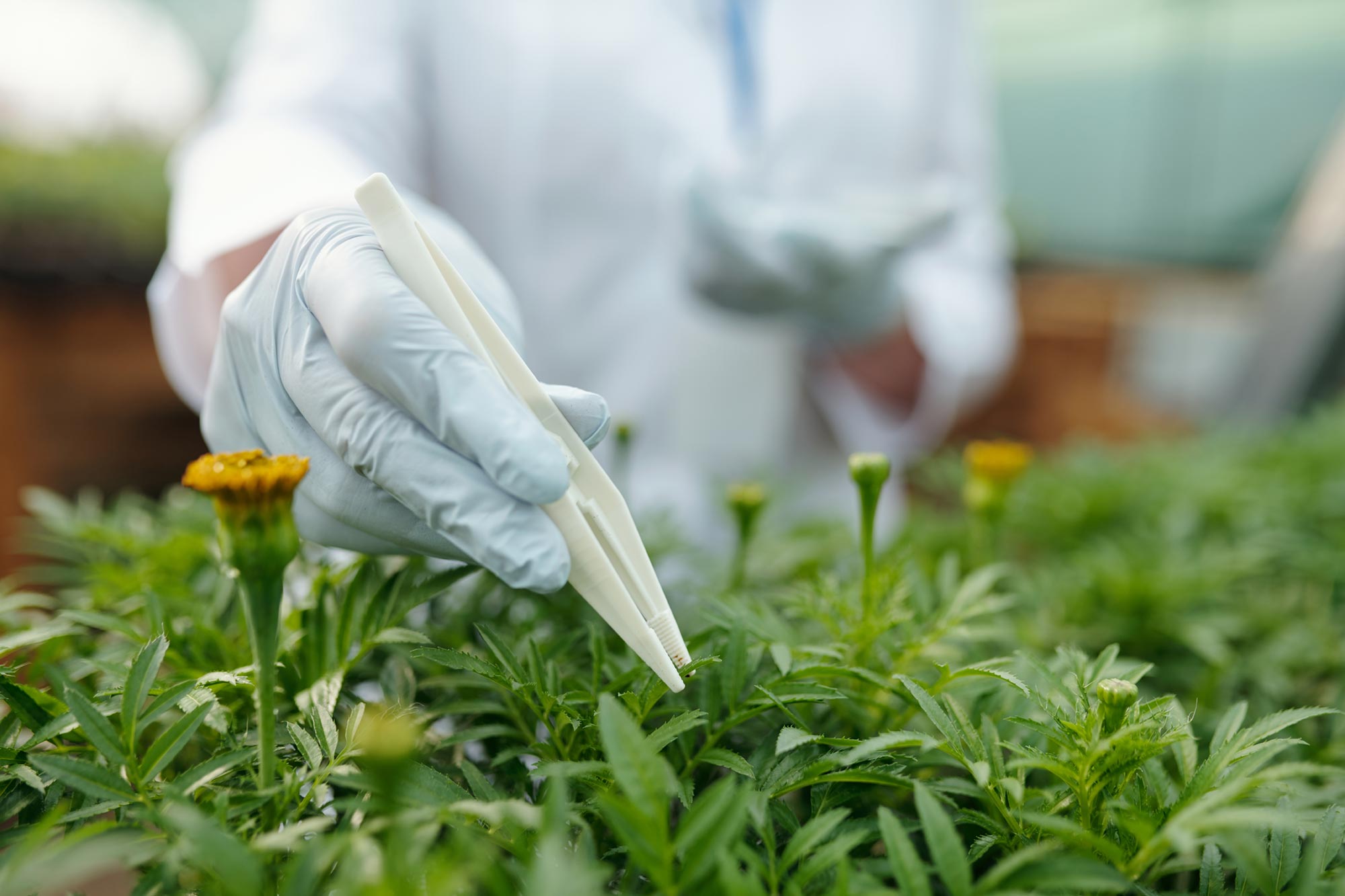
A common ornamental flower may hold untapped potential as a heat-stable, functional protein source.
Rising demand for protein-rich diets has fueled a surge in plant-based ingredients, but most come from crops grown specifically for that purpose. Researchers are now looking at a different opportunity: turning overlooked plant materials into useful nutrients. One candidate is the pot marigold, an edible flower that is widely cultivated yet frequently discarded once its ornamental value fades.
To test its potential, scientists examined dried marigold flowers and evaluated their protein content and behavior, with findings published in ACS Food Science & Technology.
“Marigold flowers are widely cultivated, yet an estimated 40% of production is discarded as waste, especially after ornamental use,” says Anand Mohan, the corresponding author of the study. “We saw an opportunity to valorize this agricultural byproduct by exploring its protein fraction, given the growing demand for plant-based and sustainable food ingredients.”
Extracting and Analyzing Marigold Proteins
The team processed pot marigold flowers (Calendula officinalis) into a fine powder, then used four stepwise liquid extraction stages to separate different protein groups. Each stage produced a distinct mixture for further testing.
Their analysis revealed that some extracts were rich in glutamic acid and aspartic acid, compounds linked to an umami flavor that can enhance taste. The proteins also showed strong heat stability, remaining intact at temperatures up to 221 degrees Fahrenheit (105 degrees Celsius, about 221 degrees Fahrenheit). This exceeds the tolerance of common plant proteins such as pea and chickpea, suggesting marigold proteins may better withstand cooking conditions.
In addition, two of the protein extracts demonstrated strong emulsifying ability, meaning they can keep oil evenly dispersed in water. This property is important for products like salad dressings, mayonnaise, and dairy alternatives.
Functional Benefits for Food Development
The findings suggest marigold flowers could serve as a new plant-based protein source with practical uses in food production. Mohan notes that their emulsifying, hydrating, and antioxidant properties make them well suited for nutrient-enriched formulations. These traits could help improve flavor, texture, and stability in baked goods and other emulsion-based foods.
Next, the researchers plan to examine potential health benefits and incorporate marigold proteins into products such as baked goods and salad dressings, followed by consumer taste testing.
“People are increasingly aware of food waste and are seeking innovative solutions,” concludes Mohan. “Demonstrating that something as common and overlooked as a flower can be transformed into a valuable food ingredient makes science both relatable and impactful.”
Reference: “Assessing Structural, Thermal, and Functional Characteristics of Marigold Flower Protein as a Sustainable Food Ingredient” by Fidele Benimana, Nancy Alila, Kentaro Kawata, Christopher Kucha, Anupam Roy and Anand Mohan, 2 April 2026, ACS Food Science & Technology.
DOI: 10.1021/acsfoodscitech.5c01215
The authors acknowledge funding from the U.S. Department of Energy, Office of Science, Basic Energy Sciences, Chemical Sciences, Geosciences, and Biosciences Division for supporting the protein amino acid identification component of this research.
Never miss a breakthrough: Join the SciTechDaily newsletter.
Follow us on Google and Google News.
5 Comments
thanks for this
Marigolds or ‘pot marigolds’? They are not the same. Calendula are not marigolds (Tagetes). This article confuses the two.
Maybe they thought the tagetes leaves looked more pot like haha. Always amusing when they get mixed up.
Local fine dining has them on the menu. They are quite nice deep fried.
Marigolds (Tagetes spp.) and pot marigolds (Calendula officinalis) are NOT the same plant. The image above is of Tagetes sp., which won’t kill you, but isn’t really edible. It’s also NOT the plant referenced in this study. Ugh, the misinformation is everywhere. Be careful folks! Calendula is called pot marigold because it’s edible, you can throw it into a pot and eat it. However, it’s usually the flower petals that are eaten, as the achene and receptical of the flower are very resinous and may not be palatable as food. Greet medicine, though. Know your plants well before you consume them!