
Close Menu
    Facebook X (Twitter) Instagram
    SciTechDaily
    • Biology
    • Chemistry
    • Earth
    • Health
    • Physics
    • Science
    • Space
    • Technology
    Facebook X (Twitter) Pinterest YouTube RSS
    SciTechDaily
    Home»Science»Out of This World Nutrition: Designing the “Perfect” Meal To Feed Long-Term Space Travelers
    Science

    Out of This World Nutrition: Designing the “Perfect” Meal To Feed Long-Term Space Travelers

    By American Chemical SocietyJanuary 8, 20241 Comment3 Mins Read
    Facebook Twitter Pinterest Telegram LinkedIn WhatsApp Email Reddit
    Share
    Facebook Twitter LinkedIn Pinterest Telegram Email Reddit
    Food Long Distance Space Travel
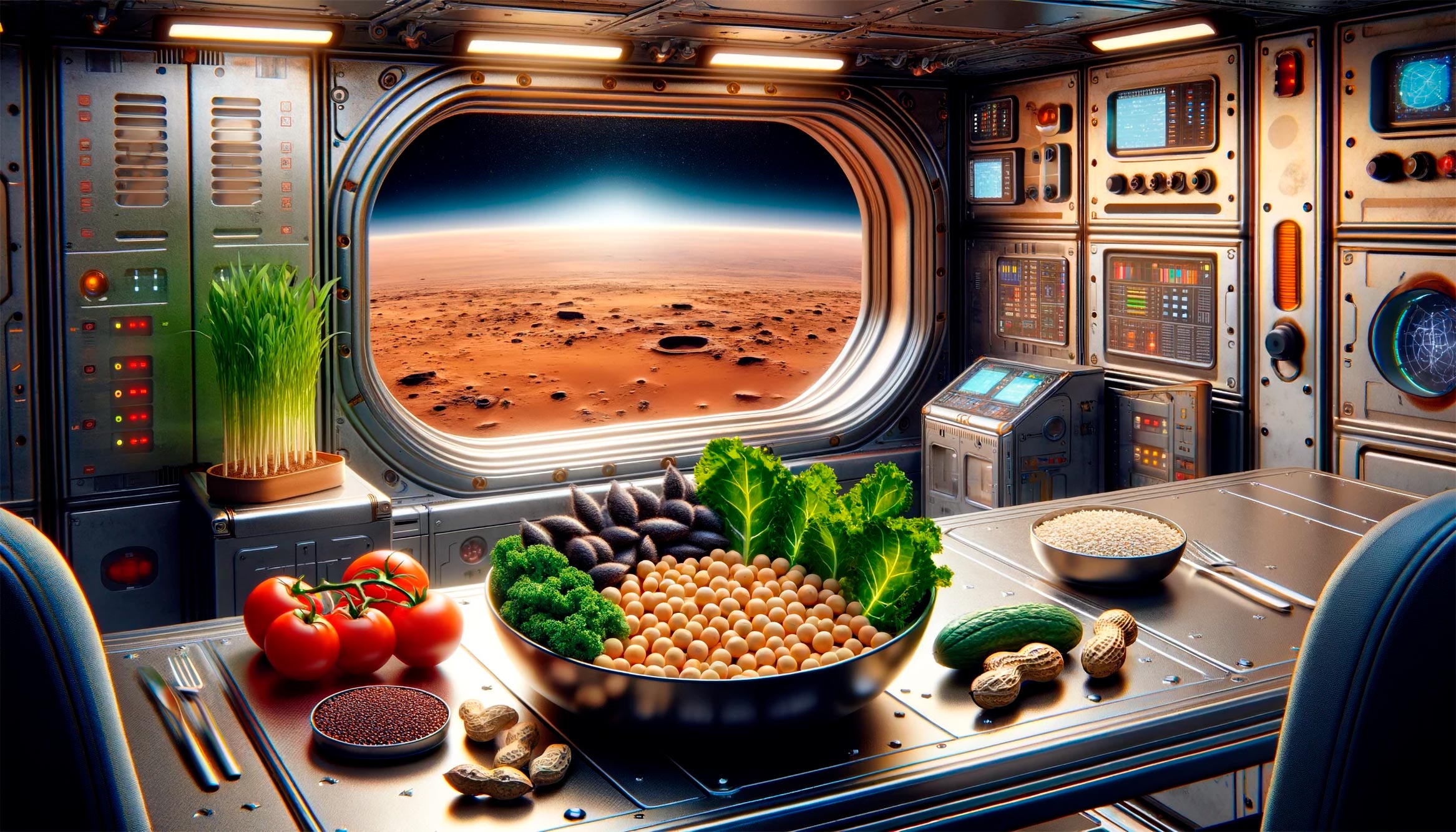
    Researchers have developed an optimal “space meal” for astronauts on extended missions, focusing on a nutrient-rich vegetarian salad. The meal balances astronauts’ increased nutritional needs in space with sustainable growth and minimal resource usage. Credit: SciTechDaily.com

    Researchers have created a vegetarian salad as the ideal space meal for male astronauts, balancing nutrition and sustainability. The meal, tested positively on Earth, could be a key component in long-term space missions.

    Imagine blasting off on a multiyear voyage to Mars, fueled by a diet of bland, prepackaged meals. As space agencies plan for longer missions, they’re grappling with the challenge of how to best feed people. Now, researchers reporting in ACS Food Science & Technology have designed the optimal “space meal”: a tasty vegetarian salad. They chose fresh ingredients that meet male astronauts’ specialized nutritional needs and can be grown in space.

    Balancing Nutrition and Sustainability in Space

    Astronauts in space burn more calories than humans on Earth and require extra micronutrients, such as calcium, to stay healthy during extended exposure to microgravity. Additionally, future long-term missions will require growing food in a sustainable, circular way within the spacecraft or space colonies. While researchers have explored methods of growing food in space and what nutrients astronauts require to stay healthy, specific fresh meals have not been developed. So, Volker Hessel and coworkers wanted to optimize a space meal that meets those unique requirements of spaceflight and tastes good.
    Space Food Salad
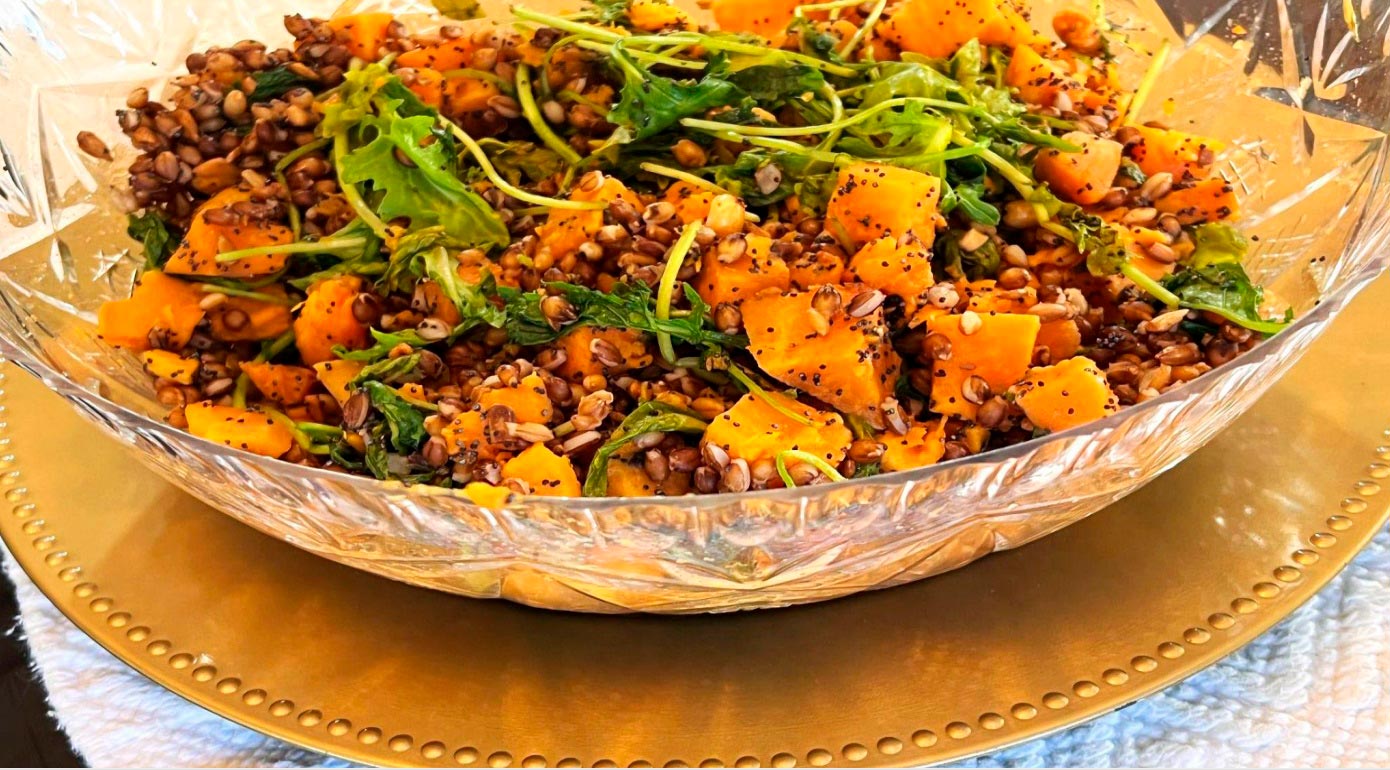
    This salad made up of soybeans, poppy seeds, barley, kale, peanuts, sweet potato, and sunflower seeds could be the optimal meal for men on long-term space missions. Credit: Adapted from ACS Food Science & Technology 2023, DOI: 10.1021/acsfoodscitech.3c00396

    First, the researchers assessed combinations of fresh ingredients, using a method called linear programming, which computationally balances different variables to meet a specific goal. In this case, their model identified how well the combinations of different foods could meet a male astronaut’s daily nutritional needs while minimizing the water required to grow the foods. The team was also concerned about the sustainability of the foods in space, selecting ingredients that needed little fertilizer, time and area to grow, and whether inedible portions could be recycled.

    Of the 10 scenarios the researchers examined, they found that a vegetarian meal made up of soybeans, poppy seeds, barley, kale, peanuts, sweet potato, and/or sunflower seeds provided the most efficient balance of maximal nutrients and minimal farming inputs. While this combination couldn’t quite provide all the micronutrients an astronaut needs, those missing could be added in a supplement, the researchers suggest.

    Taste Testing the Space Salad

    To make sure that the identified combination was tasty, the team whipped up the ideal space meal as a salad for four people to taste test here on Earth. One tester gave rave reviews and “wouldn’t mind eating this all week as an astronaut.” Other people were more muted in their praise, even though they went back for second helpings. In the future, the researchers plan to see what their computer model dishes up as options for female astronauts and expand the variety of crops in their database.

    Reference: “Modeling of Space Crop-Based Dishes for Optimal Nutrient Delivery to Astronauts and Beyond on Earth” by Shu Liang, Karolina Rivera-Osorio, Alexandra J. Burgess, Diriba B. Kumssa, Marc Escribà-Gelonch, Ian Fisk, Matthew Knowling, Dov Stekel and Volker Hessel, 13 December 2023, ACS Food Science & Technology.
    DOI: 10.1021/acsfoodscitech.3c00396

    The authors acknowledge funding from a University of Adelaide scholarship stipend.

    Never miss a breakthrough: Join the SciTechDaily newsletter.
    Follow us on Google and Google News.

    American Chemical Society Astronaut Food Science Nutrition
    Share. Facebook Twitter Pinterest LinkedIn Email Reddit

    Related Articles

    Food Scientists Have Made Chocolate Healthier – Without Sacrificing Taste!

    Superfood in a Glass: The Surprising Health Benefits of Blueberry Wine

    New Research Reveals That Some Plant-Based Steaks and Cold Cuts Are Lacking in Protein

    The Future of Sweet: Scientists Crack the Code for Near-Perfect Sugar Substitutes

    New Plant-Based Gummy Vitamins Can Help Vegans and Vegetarians Get Their Essential Nutrients

    Nutrient Encapsulating Microparticles Could Help Fight Malnutrition

    Healthier Diets and Reducing Food Waste is Vital to Reducing Climate Change

    Consuming Fruits & Vegetables Improves Psychological Well-Being

    Little Significant Difference in Organic Foods vs. Conventional Alternatives

    1 Comment

    1. philip on January 18, 2024 7:59 pm

      Most is fine but rumor has it Bushs Baked Bears are NOT for astronauts.

      Reply
    Leave A Reply Cancel Reply

    • Facebook
    • Twitter
    • Pinterest
    • YouTube

    Don't Miss a Discovery

    Subscribe for the Latest in Science & Tech!

    Trending News

    Millions Take These IBS Drugs, But a New Study Finds Serious Risks

    Scientists Unlock Hidden Secrets of 2,300-Year-Old Mummies Using Cutting-Edge CT Scanner

    Bread Might Be Making You Gain Weight Even Without Eating More Calories

    Scientists Discover Massive Magma Reservoir Beneath Tuscany

    Europe’s Most Active Volcano Just Got Stranger – Here’s Why Scientists Are Rethinking It

    Alzheimer’s Symptoms May Start Outside the Brain, Study Finds

    Millions Take This Popular Supplement – Scientists Discover a Concerning Link to Heart Failure

    The Universe Is Expanding Too Fast and Scientists Can’t Explain Why

    Follow SciTechDaily
    • Facebook
    • Twitter
    • YouTube
    • Pinterest
    • Newsletter
    • RSS
    SciTech News
    • Biology News
    • Chemistry News
    • Earth News
    • Health News
    • Physics News
    • Science News
    • Space News
    • Technology News
    Recent Posts
    • Simple Blood Test May Predict Alzheimer’s Years Before Brain Scans Show Signs
    • Scientists Say Adding This Unusual Seafood to Your Diet Could Reverse Signs of Aging
    • U.S. Waste Holds $5.7 Billion Worth of Crop Nutrients
    • Scientists Say a Hidden Structure May Exist Inside Earth’s Core
    • Doctors Surprised by the Power of a Simple Drug Against Colon Cancer
    Copyright © 1998 - 2026 SciTechDaily. All Rights Reserved.
    • Science News
    • About
    • Contact
    • Editorial Board
    • Privacy Policy
    • Terms of Use

    Type above and press Enter to search. Press Esc to cancel.