
Close Menu
    Facebook X (Twitter) Instagram
    SciTechDaily
    • Biology
    • Chemistry
    • Earth
    • Health
    • Physics
    • Science
    • Space
    • Technology
    Facebook X (Twitter) Pinterest YouTube RSS
    SciTechDaily
    Home»Earth»Scientists: By 2500 Earth Could Be Alien to Humans
    Earth

    Scientists: By 2500 Earth Could Be Alien to Humans

    By McGill UniversityOctober 17, 20213 Comments4 Mins Read
    Facebook Twitter Pinterest Telegram LinkedIn WhatsApp Email Reddit
    Share
    Facebook Twitter LinkedIn Pinterest Telegram Email Reddit
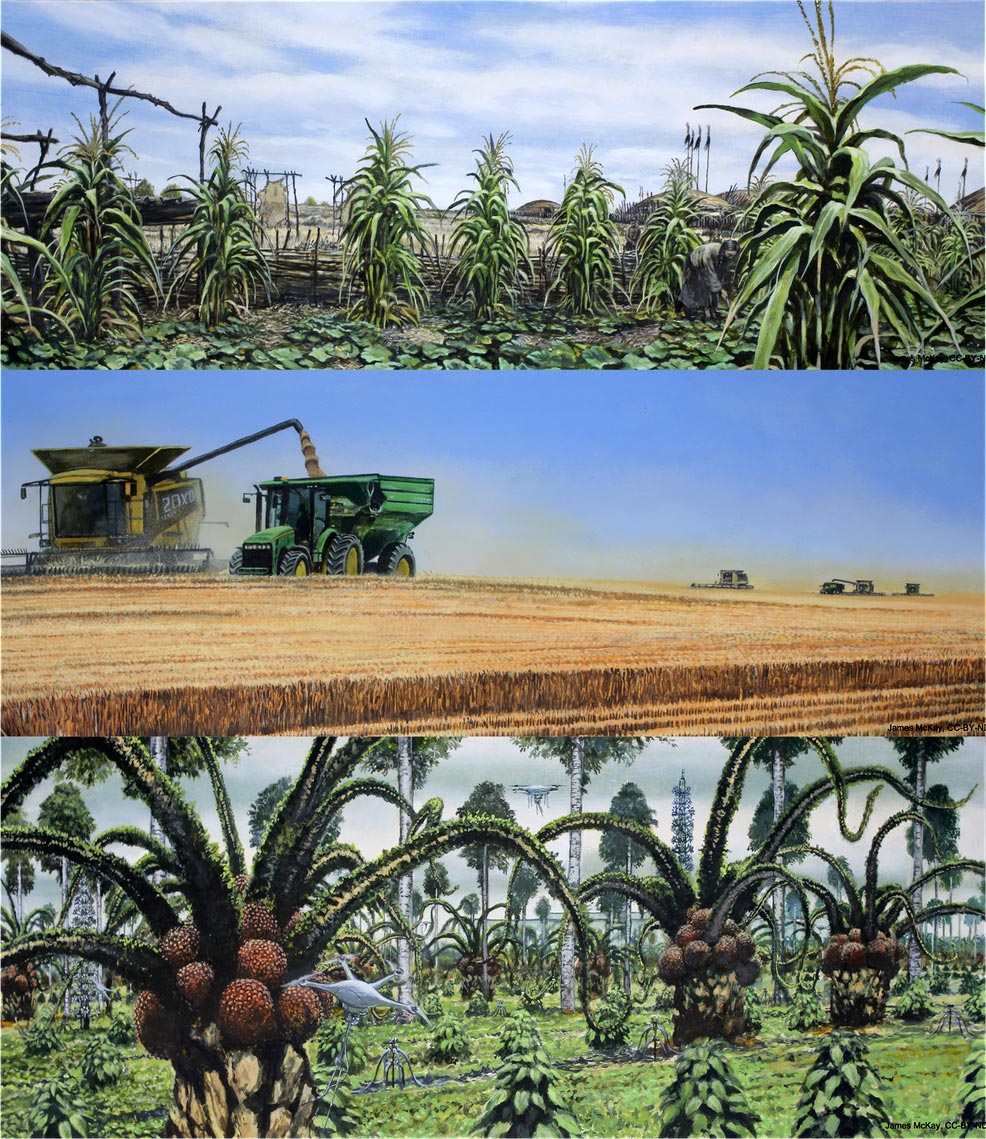
    US Midwest Past Present Future
    The top painting is based on pre-colonization Indigenous cities and communities with buildings and a diverse maize-based agriculture. The second is the same area today, with a grain monoculture and large harvesters. The last image, however, shows agricultural adaptation to a hot and humid subtropical climate, with imagined subtropical agroforestry based on oil palms and arid zone succulents. The crops are tended by AI drones, with a reduced human presence. Credit: James McKay, CC BY-ND, The Conversation

    Climate Projections Should Not Stop at Year 2100

    To fully grasp and plan for climate impacts under any scenario, researchers and policymakers must look well beyond the 2100 benchmark. Unless CO2 emissions drop significantly, global warming by 2500 will make the Amazon barren, the American Midwest tropical, and India too hot to live in, according to a team of international scientists.

    “We need to envision the Earth our children and grandchildren may face, and what we can do now to make it just and liveable for them,” says Christopher Lyon, formerly of University of Leeds and now a Postdoctoral Researcher at McGill University. “If we fail to meet the Paris Agreement goals, and emissions keep rising, many places in the world will dramatically change.”
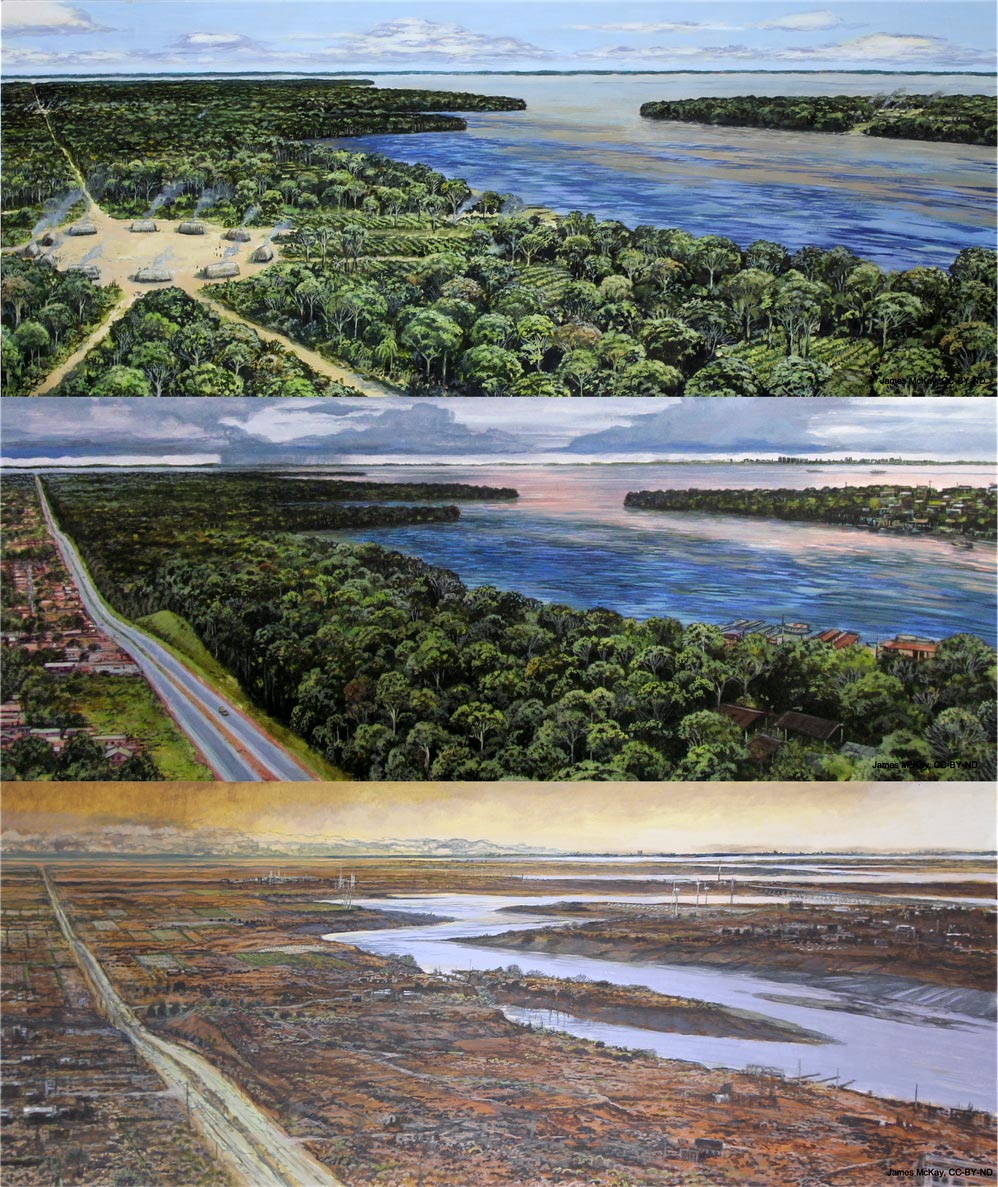
    Amazon Past Present Future
    The top image shows a traditional pre-contact Indigenous village (1500 CE) with access to the river and crops planted in the rainforest. The middle image is a present-day landscape. The bottom image considers the year 2500 and shows a barren landscape and low water level resulting from vegetation decline, with sparse or degraded infrastructure and minimal human activity. Credit: James McKay, CC BY-ND, The Conversation

    The scientists from Montreal and the United Kingdom ran global climate model projections based on time dependent projections of atmospheric greenhouse gas concentrations for low, medium, and high mitigation scenarios up to the year 2500. Their findings, published in Global Change Biology, reveal an Earth that is alien to humans.

    Vegetation Moves to the Poles

    Under low and medium mitigation scenarios – which do not meet the Paris Agreement goal to limit global warming to well below 2 degrees Celsius (3.6 degrees Fahrenheit) – vegetation and the best crop-growing areas may move towards the poles. The area suitable for some crops would also be reduced. Places with long histories of cultural and ecosystem richness, like the Amazon Basin, may become barren.
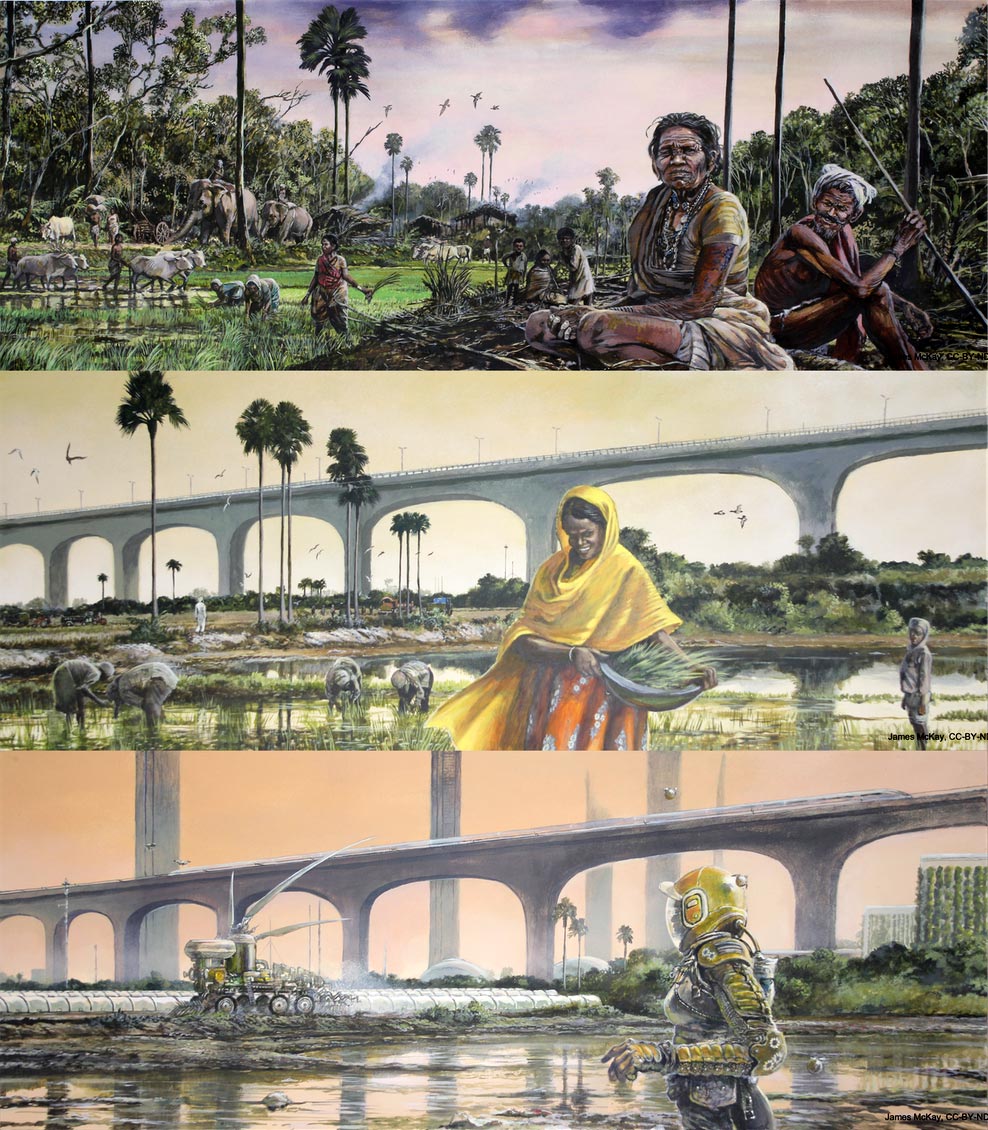
    Indian Subcontinent Past Present Future
    The top image is a busy agrarian village scene of rice planting, livestock use, and social life. The second is a present-day scene showing the mix of traditional rice farming and modern infrastructure present in many areas of the Global South. The bottom image shows a future of heat-adaptive technologies including robotic agriculture and green buildings with minimal human presence due to the need for personal protective equipment. Credit: James McKay, CC BY-ND, The Conversation

    Tropical Regions Uninhabitable

    They also found that heat stress may reach fatal levels for humans in tropical regions that are highly populated. Even under high-mitigation scenarios, the team found that the sea level keeps rising due to expanding and mixing water in warming oceans.

    “These projections point to the potential magnitude of climate upheaval on longer time scales and fall within the range of assessments made by others,” says Lyon.

    Looking Beyond 2100

    Although many reports based on scientific research talk about the long-term impacts of climate change – such as rising levels of greenhouse gases, temperatures, and sea levels – most of them don’t look beyond the 2100 horizon. To fully grasp and plan for climate impacts under any scenario, researchers and policymakers must look well beyond the 2100 benchmark, says the team.

    “The Paris Agreement, the United Nations, and the Intergovernmental Panel on Climate Change’s scientific assessment reports, all show us what we need to do before 2100 to meet our goals, and what could happen if we don’t,” says Lyon. “But this benchmark, which has been used for over 30 years, is short-sighted because people born now will only be in their 70s by 2100.”

    Climate projections and the policies that depend on them, shouldn’t stop at 2100 because they cannot fully grasp the potential long-term scope of climate impacts, the scientists conclude.

    Reference: “Climate change research and action must look beyond 2100” by Christopher Lyon, Erin E. Saupe, Christopher J. Smith, Daniel J. Hill, Andrew P. Beckerman, Lindsay C. Stringer, Robert Marchant, James McKay, Ariane Burke, Paul O’Higgins, Alexander M. Dunhill, Bethany J. Allen, Julien Riel-Salvatore and Tracy Aze, 24 September 2021, Global Change Biology.
    DOI: 10.1111/gcb.15871

    Never miss a breakthrough: Join the SciTechDaily newsletter.
    Follow us on Google and Google News.

    Agriculture Climate Change Greenhouse Gas McGill University Sea Level
    Share. Facebook Twitter Pinterest LinkedIn Email Reddit

    Related Articles

    Antarctic Ice Melt: New Study Highlights Urgency of Emission Reductions

    40% Surge: Growing Nitrous Oxide Emissions Trigger Scientific Alarm

    Good News: Significant Reductions in Global Greenhouse Gas Emissions Still Possible

    Uncovering the Hidden Sources of City Methane Emissions: Researchers Reveal Unrecognized Contributors to Global Warming

    New Link Demonstrated Between Greenhouse Gasses and Sea Level Rise

    As Much as One-Third of Greenhouses Gases Come From Agriculture

    Storing Carbon Emissions in Deep Saline Aquifers

    Past Estimates of Sea-Level Rise Lowered

    Research Shows Roughly 150 Billion Tons of Ice Lost Annually

    3 Comments

    1. Frosted Flake on October 17, 2021 7:12 pm

      So, I should invest in an oxygen delivery business?

      Reply
    2. B on October 18, 2021 9:46 am

      Wow what a headline. People could also live on the moon by 1980. Have we learned nothing about ridiculous predictions?

      Reply
    3. Tom E Coward on October 18, 2021 5:27 pm

      What an ugly future.

      Reply
    Leave A Reply Cancel Reply

    • Facebook
    • Twitter
    • Pinterest
    • YouTube

    Don't Miss a Discovery

    Subscribe for the Latest in Science & Tech!

    Trending News

    Scientists Uncover Potential Brain Risks of Popular Fish Oil Supplements

    Scientists Discover a Surprising Way To Make Bread Healthier and More Nutritious

    After 60 Years, Scientists Uncover Unexpected Brain Effects of Popular Diabetes Drug Metformin

    New Research Uncovers Hidden Side Effects of Popular Weight-Loss Drugs

    Scientists Rethink Extreme Warming After Surprising Ocean Discovery

    Landmark Study Links Never Marrying to Significantly Higher Cancer Risk

    Researchers Discover Unknown Beetle Species Just Steps From Their Lab

    Largest-Ever Study Finds Medicinal Cannabis Ineffective for Anxiety, Depression, PTSD

    Follow SciTechDaily
    • Facebook
    • Twitter
    • YouTube
    • Pinterest
    • Newsletter
    • RSS
    SciTech News
    • Biology News
    • Chemistry News
    • Earth News
    • Health News
    • Physics News
    • Science News
    • Space News
    • Technology News
    Recent Posts
    • Strange 65-Foot Dinosaur Discovered in Argentina
    • Researchers Uncover Source of Strange Deformation in Earth’s Largest Continental Rift
    • Scientists Solve Mystery of Where the Colorado River Vanished Millions of Years Ago
    • Not Just Alzheimer’s: Scientists Uncover Clues to a Second, Overlooked Disorder
    • Scientists Uncover Dangerous Connection Between Serotonin and Heart Valve Disease
    Copyright © 1998 - 2026 SciTechDaily. All Rights Reserved.
    • Science News
    • About
    • Contact
    • Editorial Board
    • Privacy Policy
    • Terms of Use

    Type above and press Enter to search. Press Esc to cancel.