
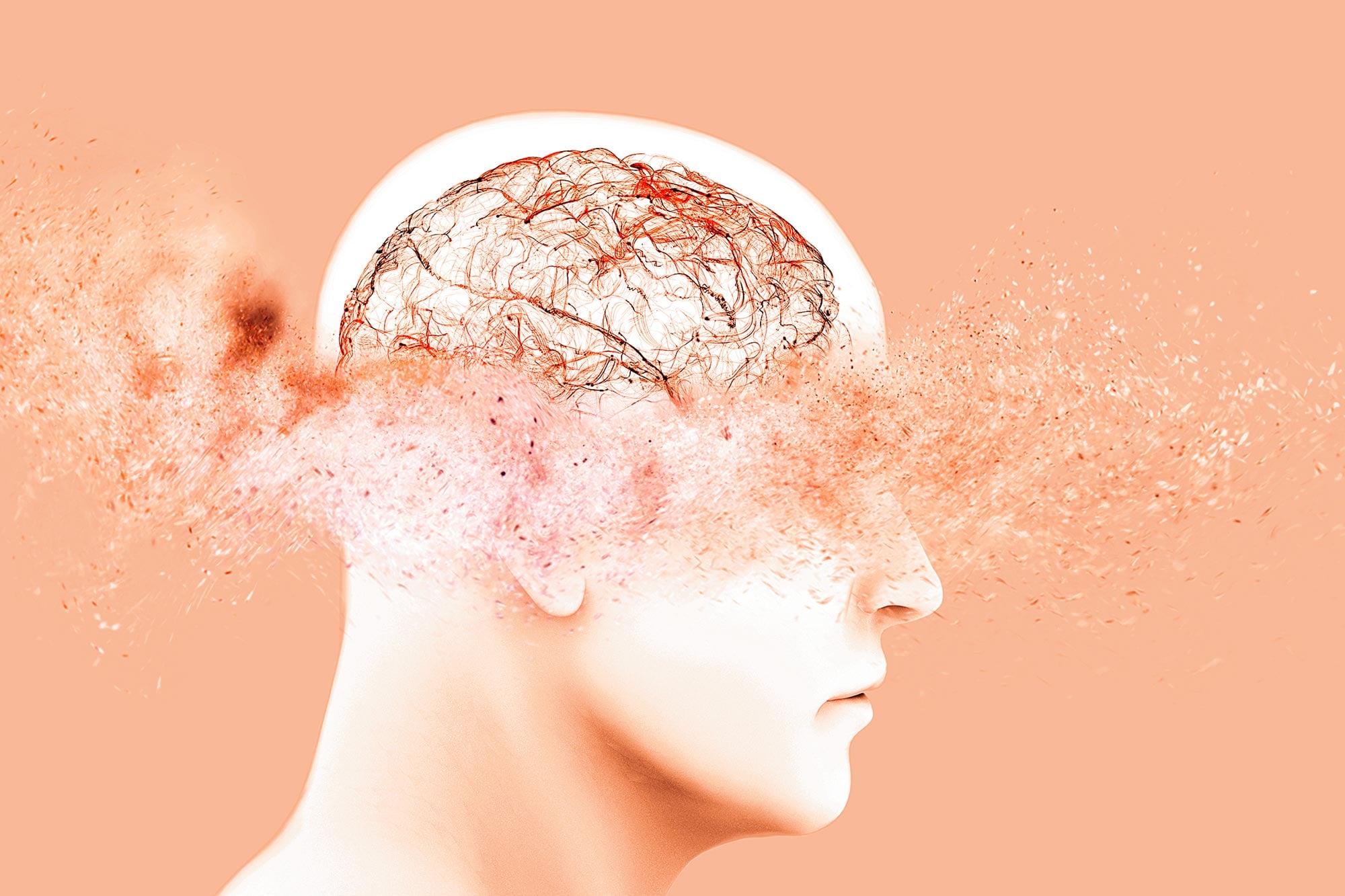
Researchers have identified patterns of neuropsychiatric symptoms that may reveal when Alzheimer’s disease occurs alongside another lesser-understood brain disorder.
Many people diagnosed with Alzheimer’s disease are not dealing with a single condition. A growing body of research shows that multiple brain diseases often develop at the same time, quietly shaping symptoms in ways that are easy to miss. One of these conditions, frontotemporal lobar degeneration (FTLD), is especially difficult to identify during life and has traditionally been confirmed only after death.
Researchers now report that patterns of behavior and mood could help doctors recognize when Alzheimer’s and FTLD are occurring together, offering a potential path toward earlier and more accurate diagnosis.
A study published in Neurology found that patients with both disorders tend to display a broader and more complex range of neuropsychiatric symptoms than those with either condition alone. Rather than fitting neatly into one diagnosis, these individuals often show a blend of features that reflect damage in multiple brain regions.
Overlapping Disorders and Clinical Implications
According to the researchers, these findings could affect how patients and caregivers prepare for the disease. People with both conditions may face a more complicated progression, faster decline, or different responses to treatments designed to slow disease progression.
“We saw that there were different neuropsychiatric symptoms if people had both pathologies, which could inform diagnosis and treatment plans,” said lead study author Daliah Ross, a postdoctoral fellow in the clinical neuropsychology program at Brown University’s Warren Alpert Medical School. “The development of neuropsychiatric symptoms can be really impactful on patients and their families in terms of quality of life and resources needed. It would be helpful for patients and families to have a better sense of what to expect so they can prepare.”
Ross focuses on improving how neurodegenerative diseases are understood and diagnosed. While reviewing research on brain pathology and disease patterns, she observed that most patients do not have Alzheimer’s alone, but rather a combination of conditions.
“We tend to study cognitive disorders in isolation, but people don’t usually have just Alzheimer’s by itself,” Ross said.
The Role of FTLD in Symptom Presentation
FTLD can cause symptoms such as disinhibition and noticeable personality changes, which are not typically associated with Alzheimer’s disease. Despite this, the overlap between Alzheimer’s and FTLD has received limited scientific attention. Ross noted that in many neurodegenerative diseases, having multiple underlying conditions can change how symptoms appear, making diagnosis and treatment more challenging.
To explore this further, the research team analyzed data from 29 Alzheimer’s Disease Research Centers funded by the National Institutes of Health. The study included 919 patients whose diagnoses of moderate to severe Alzheimer’s disease and or FTLD were confirmed through autopsy.
The results showed clear differences. Compared to patients with only FTLD, those with both conditions were more likely to have experienced anxiety, delusions, and irritability before death. Compared to those with only Alzheimer’s, the same group was more likely to show personality changes and disinhibition.
Advancing Diagnosis and Patient Care
These insights may help clinicians better support patients and caregivers by improving recognition of FTLD in people already diagnosed with Alzheimer’s, said study author Dr. Edward Huey, associate director of Brown’s Center for Alzheimer’s Disease Research and director of the Memory and Aging Program at Butler Hospital.
“This study shows a strong association between the amount of FTLD neuropathology and the symptoms of FTLD including personality changes, apathy and inappropriate behaviors, all of which are more common in FTLD than in Alzheimer’s disease,” Huey said. “While there are treatments for Alzheimer’s disease, there aren’t currently any known disease modifying treatments for FTLD, and we desperately need them. In the meantime, this research may inform a diagnosis of FTLD, which can help patients and caregivers know more about what to expect as the disease progresses.”
Ross added that while new Alzheimer’s treatments are generating excitement, more work is needed to understand how they affect people with multiple overlapping conditions such as Alzheimer’s and FTLD.
“The literature on looking at mixed dementia and multiple co-pathologies is really important,” Ross said. “I hope that our team’s work helps move that along, and I’m looking forward to doing more research in that area.”
Reference: “Neuropsychiatric Symptoms in Patients With Pathologically Confirmed Comorbid Alzheimer Disease and Frontotemporal Lobar Degeneration” by Daliah Ross, Molly Split, Zachary Kunicki, Rachel Keszycki, Sarah Prieto, Alyssa N. De Vito, Masood Manoochehri, Edward D. Huey and Megan S. Barker, 5 March 2026, Neurology.
DOI: 10.1212/WNL.0000000000214750
The study was funded in part by the National Institute on Aging (U19 AG024904, U01 AG079850).
Never miss a breakthrough: Join the SciTechDaily newsletter.
Follow us on Google and Google News.