
Close Menu
    Facebook X (Twitter) Instagram
    SciTechDaily
    • Biology
    • Chemistry
    • Earth
    • Health
    • Physics
    • Science
    • Space
    • Technology
    Facebook X (Twitter) Pinterest YouTube RSS
    SciTechDaily
    Home»Space»High Energy Cosmic Rays Could Give Clues to Whether Our Universe Is a Simulation
    Space

    High Energy Cosmic Rays Could Give Clues to Whether Our Universe Is a Simulation

    By SciTechDailyOctober 12, 2012No Comments3 Mins Read
    Facebook Twitter Pinterest Telegram LinkedIn WhatsApp Email Reddit
    Share
    Facebook Twitter LinkedIn Pinterest Telegram Email Reddit
    lattice-simulation
    Lattice simulation

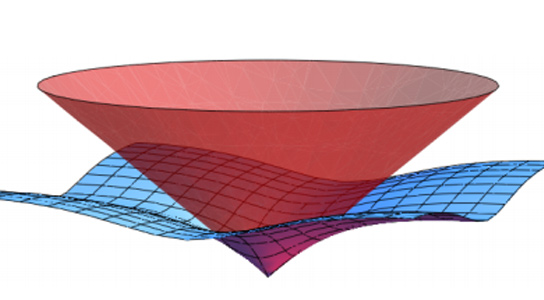
    Quantum chromodynamics is the theory that describes the strong nuclear force, how it binds quarks and gluons into protons and neutrons, and how these form nuclei. Simulating quantum chromodynamics on computers is a way to examine what kind of complexity arises from it. The premise is that simulating physics on such a fundamental level is akin to simulating the Universe itself.

    Physicists from the University of Bonn, Germany, published their findings in a pre-print on arXiv. Even using the world’s most powerful supercomputers, physicists have only managed to simulate tiny corners of the cosmos, only a few femtometers across.
    earth-simulation

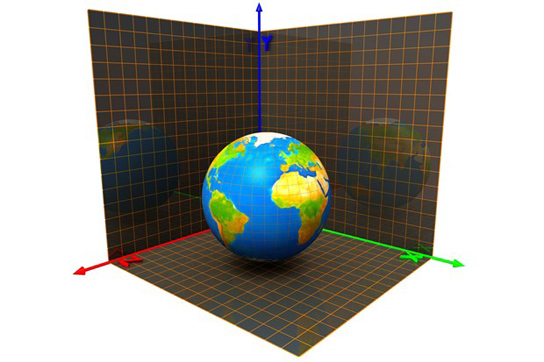
    The significant point is that the simulation is almost indistinguishable from reality, as much as we understand it. This is one of the reasons why some physicists consider the possibility that our entire Universe could be running on a vastly powerful computer network. Silas Beane et al. say that there are ways to see if we are being simulated, in certain scenarios.

    The problem with all simulations is that the laws of physics need to be superimposed onto a discrete three-dimensional lattice that advances through increments of time. Beane pondered whether the lattice spacing imposes any kind of limitation on the physical processes we see in the universe. They focus on high-energy processes, which probe smaller regions of space as they get more energetic.

    They discovered that the lattice spacing imposes a fundamental limit on the energy that particles can have, because nothing can exist that is smaller than the lattice itself. If the cosmos is a simulation, there should be a cut off in the spectrum of high energy particles.

    This cut off in the energy of cosmic ray particles is known as the Greisen-Zatsepin-Kuzmin or the GZK limit, and comes about because high-energy particles interact with the cosmic microwave background and so lose energy as they travel long distances.

    The most striking feature is that the angular distribution of the highest energy components would exhibit cubic symmetry in the rest frame of the lattice, deviating significantly from isotropy, states Beane. This means that cosmic rays would travel preferentially along the axes of the lattice, so they couldn’t be seen equally in all directions.

    Finding the effect would mean that we could see the orientation of the lattice on which our universe is simulated. However, the computer lattice may be constructed in an entirely different way than hypothesized by this study. Another problem is that the effect is only measurable if the lattice cut off is the same as the GZK limit. This occurs when the lattice spacing is about 10-12 femtometers. If the spacing is smaller, researchers will see nothing.

    Reference: “Constraints on the universe as a numerical simulation” by Silas R. Beane, Zohreh Davoudi and Martin J. Savage, 24 September 2014, The European Physical Journal A.
    DOI: 10.1140/epja/i2014-14148-0

    Never miss a breakthrough: Join the SciTechDaily newsletter.
    Follow us on Google and Google News.

    Astrophysics
    Share. Facebook Twitter Pinterest LinkedIn Email Reddit

    Related Articles

    Chemistry Might Influence Habitable Zones Around Extrasolar Systems

    IBEX Measures Particles Outside Our Solar System

    NASA’s Kepler Mission Discovers 11 New Extrasolar Systems with 26 Exoplanets

    Lasers Mimic Supernova to Explain Cosmic Magnetic Fields

    Baryon Oscillation Spectroscopic Survey Measures the Universe’s Expansion and Dark Energy

    SN Primo Is Farthest Type Ia Supernova Discovered

    Scientists Convene to Take a Picture of the Supermassive Black Hole at the Center of the Milky Way

    Black Hole Fires Cosmic Bullets of Ionized Gases

    Hubble Observes Rare Blue Stars in Andromeda’s Core

    Leave A Reply Cancel Reply

    • Facebook
    • Twitter
    • Pinterest
    • YouTube

    Don't Miss a Discovery

    Subscribe for the Latest in Science & Tech!

    Trending News

    Scientists May Have Discovered How To Heal Damaged Kidneys

    Interstellar Visitor 3I/ATLAS Is Bursting With an Unexpected Chemical

    Scientists Just Found All 5 Genetic “Letters” of DNA and RNA on an Asteroid

    The 4,000-Year-Old City That Defied History’s Rules on Wealth and Power

    The World’s Biggest Population Fear Has Flipped – and It Could Change Everything

    This “Fake” Pill Improved Memory and Physical Performance in Just 3 Weeks

    Scientists Say Frequent Ejaculation May Improve Sperm Quality and Fertility

    Scientists Have Found “The Heaven Sword” After Years of Looking

    Follow SciTechDaily
    • Facebook
    • Twitter
    • YouTube
    • Pinterest
    • Newsletter
    • RSS
    SciTech News
    • Biology News
    • Chemistry News
    • Earth News
    • Health News
    • Physics News
    • Science News
    • Space News
    • Technology News
    Recent Posts
    • Scientists Challenge a Fundamental Assumption About Consciousness
    • Scientists Say the “Backrooms” Have Become a New Kind of Tourist Destination
    • A Giant Scorpion the Size of a Coffee Table Is Forcing Scientists To Rethink Evolution
    • Science Debunks a Common Belief About Pets and Stress
    • The Surprising Reason Sugary Gum Helped Lower Blood Pressure
    Copyright © 1998 - 2026 SciTechDaily. All Rights Reserved.
    • Science News
    • About
    • Contact
    • Editorial Board
    • Privacy Policy
    • Terms of Use

    Type above and press Enter to search. Press Esc to cancel.