
Close Menu
    Facebook X (Twitter) Instagram
    SciTechDaily
    • Biology
    • Chemistry
    • Earth
    • Health
    • Physics
    • Science
    • Space
    • Technology
    Facebook X (Twitter) Pinterest YouTube RSS
    SciTechDaily
    Home»Space»Lasers Mimic Supernova to Explain Cosmic Magnetic Fields
    Space

    Lasers Mimic Supernova to Explain Cosmic Magnetic Fields

    By SciTechDailyJanuary 25, 2012No Comments2 Mins Read
    Facebook Twitter Pinterest Telegram LinkedIn WhatsApp Email Reddit
    Share
    Facebook Twitter LinkedIn Pinterest Telegram Email Reddit
    galaxy-magnetic-fields-mimic-laser
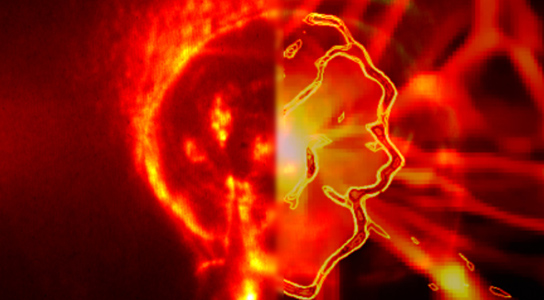
    Scientists use powerful lasers to simulate supernova effects, uncovering insights into the early formation of magnetic fields in galaxies.

    Scientists are using powerful lasers to mimic the effects of supernovae, which are helping to reveal how the magnetic fields of galaxies may have been formed in the early universe. All galaxies have magnetic fields, ones that might affect how fast stars are born, but it hasn’t been discovered where these magnetic fields come from.

    The standard model explains that these fields form from tiny magnetic fields, which existed before galaxies appeared, serving as cosmic seeds that were amplified over billions of years by the turbulence in the intergalactic medium. It’s still unclear how these seeding magnetic fields initially arose.
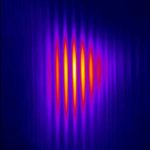
    One explanation is that they were generated by the Biermann battery effect, based on how the hydrogen making up most of the gas in the Universe is made up of negatively charged electrons and positively charged protons. Outside pressures can push electrons easily around, since they are less massive, which could create an electric field. Eddies within the hydrogen can then set the electric charges spinning, thus generating magnetic fields.

    In order to confirm that seed magnetic fields could form this way, scientists experimented with high-power lasers at the Laboratoire pour l’Utilisation des Lasers Intenses (LULI) in Paris to try and recreate the extreme conditions of outer space. Green lasers blasted a carbon rod about 500 microns thick, just about five times thicker than a human hair, delivering more energy onto its surface in an instant that the whole Earth would receive from the sun in that same instant.

    This mimics a blast just like a supernova, states lead author Gianluca Gregori, a physicist at the University of Oxford in England. The flexes of the carbon rod generate a shock wave within the low-pressure helium gas that surrounds it. The shock wave also produces eddies, that could create magnetic fields.

    This scaled experiment reproduces the plasma conditions found in the early universe, but in a laboratory setting. They’ve calculated that it would take about 700 million years to amplify seed fields to galactic proportions, supporting the current theories of how galactic magnetic fields arise.

    Never miss a breakthrough: Join the SciTechDaily newsletter.
    Follow us on Google and Google News.

    Astronomy Astrophysics Galaxy Lasers Magnetic Fields Supernova
    Share. Facebook Twitter Pinterest LinkedIn Email Reddit

    Related Articles

    Astronomers Detect X-rays From the Remains of Supernova SN 1957D

    Emerald-Cut Dwarf Galaxy Located 70 Million Light-Years Away

    Origins of Type Ia Supernovae

    Ancient Galactic Collision Created Stellar Swirls of NGC 5907

    Possible Evidence of Hadron Acceleration in Tycho Supernova Remnant

    Links Between Core Collapse Supernovae and Star Formation Established

    Study of X-Shaped Radio Galaxy NGC 326 Shows Outburst History and Active Galactic Nucleus Feedback

    SN Primo Is Farthest Type Ia Supernova Discovered

    Hubble Observes Rare Blue Stars in Andromeda’s Core

    Leave A Reply Cancel Reply

    • Facebook
    • Twitter
    • Pinterest
    • YouTube

    Don't Miss a Discovery

    Subscribe for the Latest in Science & Tech!

    Trending News

    Mezcal “Worm” in a Bottle Mystery: DNA Testing Reveals a Surprise

    New Research Reveals That Your Morning Coffee Activates an Ancient Longevity Switch

    This Is What Makes You Irresistible to Mosquitoes

    Shockingly Powerful Giant Octopuses Ruled the Seas 100 Million Years Ago

    Scientists Stunned by New Organic Molecules Found on Mars

    Rewriting Dinosaur Evolution: Scientists Unearth Remarkable 150-Million-Year-Old Stegosaur Skull

    Omega-3 Supplements Linked to Cognitive Decline in Surprising New Study

    First-of-Its-Kind Discovery: Homer’s Iliad Found Embedded in a 1,600-Year-Old Egyptian Mummy

    Follow SciTechDaily
    • Facebook
    • Twitter
    • YouTube
    • Pinterest
    • Newsletter
    • RSS
    SciTech News
    • Biology News
    • Chemistry News
    • Earth News
    • Health News
    • Physics News
    • Science News
    • Space News
    • Technology News
    Recent Posts
    • Male Birth Control Breakthrough: Scientists Find Way To Turn Sperm Production Off and Back On
    • A Common Vitamin Could Hold the Key to Treating Fatty Liver Disease
    • New Research Shows Vitamin B12 May Hold the Key to Healthy Aging
    • Scientists Map Thousands of Brain Connections With RNA Barcodes
    • This Gene Tweak Turns Strawberries Into Healthier, Tastier Superfruit
    Copyright © 1998 - 2026 SciTechDaily. All Rights Reserved.
    • Science News
    • About
    • Contact
    • Editorial Board
    • Privacy Policy
    • Terms of Use

    Type above and press Enter to search. Press Esc to cancel.