

The ATLAS Experiment at CERN welcomes a brand-new detector: the Muon New Small Wheel system. Its successful installation follows nearly a decade of design and construction, and marks a major milestone in ATLAS’ high-luminosity era.
The High-Luminosity upgrade of the Large Hadron Collider (HL-LHC) will dramatically increase the rate of collisions in the ATLAS experiment. While an opportunity for physicists to explore some of the rarest processes in the Universe, the large collision rate brings new challenges – in particular, higher radiation levels and significantly more data. The ATLAS Collaboration is adapting its experiment to deal with these challenges, upgrading all parts of its detectors with new, state-of-the-art instruments.
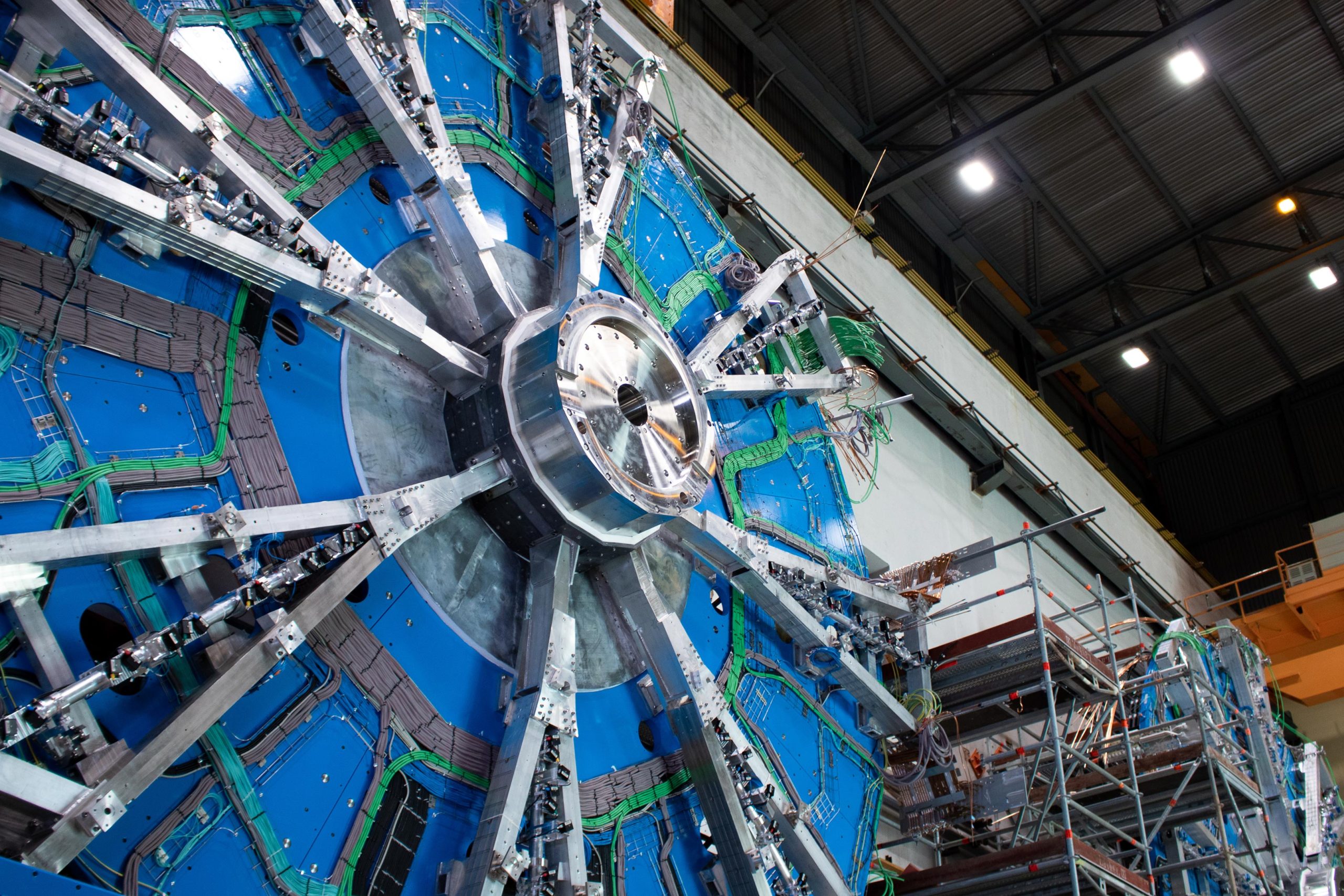
“The Muon New Small Wheels (NSW) are the first new detectors in ATLAS specifically designed to handle high luminosity conditions,” says Andreas Hoecker, ATLAS Spokesperson. “Today’s installation of the second – and final – NSW follows nearly a decade of dedicated efforts from ATLAS members, who designed, constructed and assembled this high-tech muon detector from scratch. These new detectors will significantly expand our experiment’s capabilities, readying us for the exciting high luminosities to come.”
Cutting-Edge Technology
The ATLAS NSW system is made up of two wheel-shaped detectors, sitting on opposite ends of the experimental cavern. Named in comparison to ATLAS’ 25-meter “big wheel” detectors, each NSW weighs more than 100 tonnes and is nearly 10 meters in diameter.
More important than size is function. The New Small Wheel detectors are at the forefront of detector design, using two innovative gaseous detector technologies: micromegas (MM) and small-strip thin-gap chambers (sTGC). These provide both fast and precise muon-tracking capabilities. “This combination of technologies will allow us to study particles at the high rates expected from the HL-LHC, while also improving our spatial resolution,” says Mario Antonelli, NSW Phase-I Upgrade Project Leader. “This will be especially critical for the ATLAS “trigger,” the system that decides which collision events to keep and which to discard. The trigger will rely on the NSW’s excellent resolution to confirm whether a particle originated from the interaction point, thus reducing our chances of saving data from unwanted background events.”
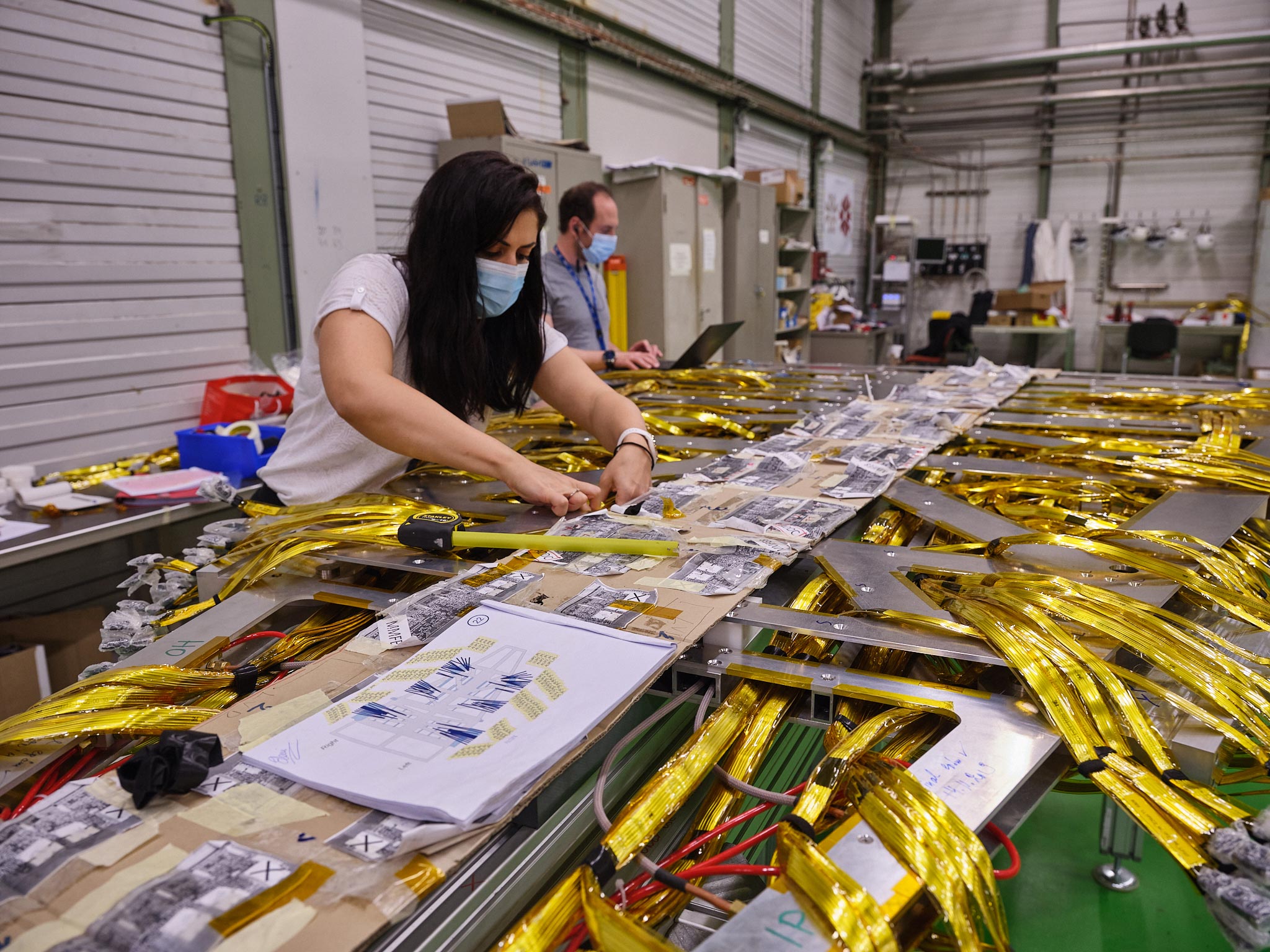
The readout capabilities of the overall system are staggering: two million MM readout channels and 350,000 sTGC electronic readout channels. Each wheel has 16 sectors, each containing two layers of MM and sTGC chambers with four measurement planes apiece, providing physicists with useful redundancy as they trace a muon’s track through the detectors.
The Dance of Detectors
While 2021 has seen the NSW detectors journey underground, this was not their first time on the move! “The NSW effort was multinational, with members from across the global ATLAS Collaboration contributing to design and construction,” says Philipp Fleischmann, ATLAS Muon System Project Leader. “In particular, the chambers were built at institutes in nine countries: Canada, Chile, China, France, Germany, Greece, Israel, Italy and Russia. The chambers were then shipped to CERN, where they underwent careful checks before being assembled into wedges and mounted on the wheels.” In total, the team placed 128 MM and 192 sTGC chambers onto the wheels.
The first fully-assembled wheel was NSW “A”, completed in May 2021. While work on the second wheel continued at pace, teams immediately kicked off plans to take the detector underground. They were operating under a tight schedule, with the ATLAS and LHC timetable dependent on the successful installation of the new wheels.
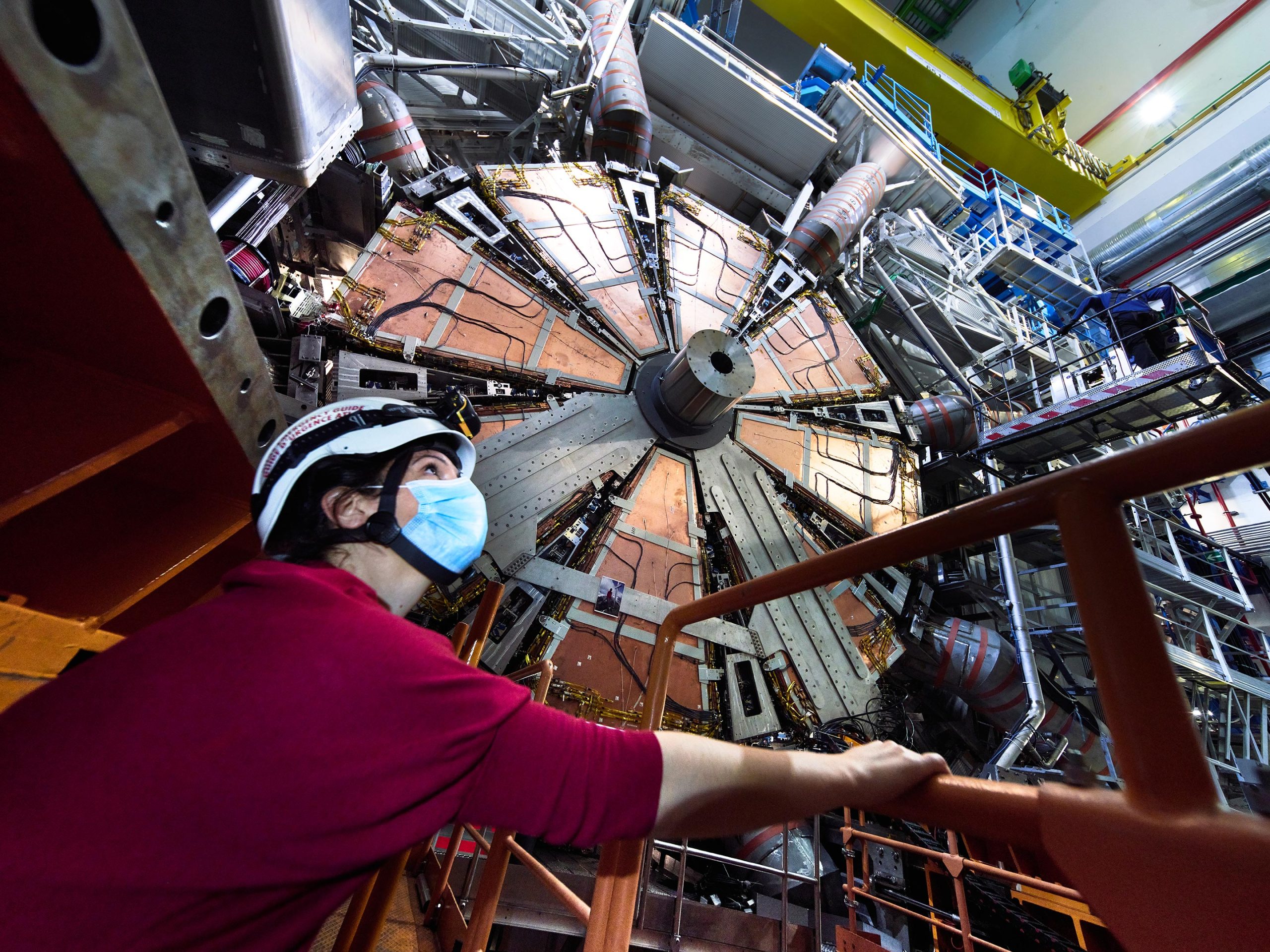
Waiting in the wings were the original Small Wheels, which first had to be removed from the ATLAS site to make way for their replacement. Following a decade of excellent service to the experiment, the original wheels were officially retired on July 2 and October 12, and moved to Building 191 on the CERN site.
On July 6, the NSW “A” was driven from Building 191 to the ATLAS surface hall – a careful journey of 2 kilometers that lasted several hours. On July 12, the wheel was lowered into the ATLAS cavern, and moved into its final position between the calorimeter endcap cryostat and the endcap toroid magnets. A few months later, this momentous occasion was repeated for NSW “C.” With construction finalized in September, the wheel was transported to the ATLAS site on October 14. It sat at the ready on the surface for two weeks, while the LHC carried out a pilot beam run, before being lowered into the cavern today.
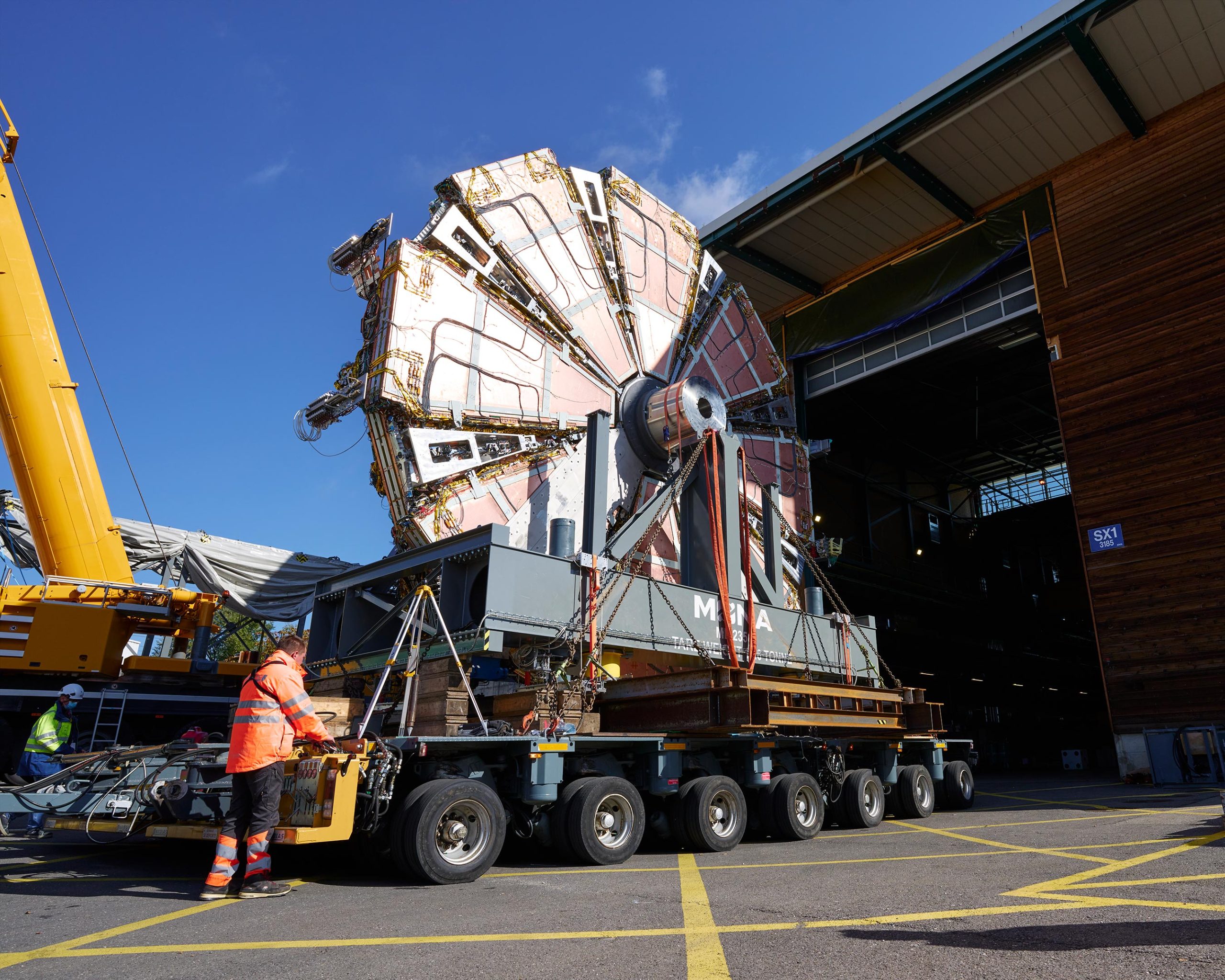
“When we set out to complete the NSW detectors in time for Run 3 of the LHC (starting next year), we knew it would be a tough assignment,” says Ludovico Pontecorvo, ATLAS Technical Coordinator. “That the team managed to keep the project on track – despite a global pandemic and the tragic loss of their project leader, Stephanie Zimmermann – is a testament to their incredible talent and dedication.”
New Wheels In Motion
The NSW detectors will be instrumental in Run 3 data-taking, as a moderate increase in luminosity is already planned for the LHC. While waiting to see the wheels in action, the ATLAS Collaboration turns their focus to the next major upgrades of the experiment. “The next long shutdown of the LHC (LS3, scheduled for 2025) will be the last before the HL-LHC begins operation,” says Francesco Lanni, ATLAS Upgrade Coordinator. “We have a lot to accomplish in the intervening years, including the construction and assembly of an entire new inner tracking system. But with each new upgrade, we get one step closer to the next chapter of LHC physics and the exciting discoveries that may lay within.”
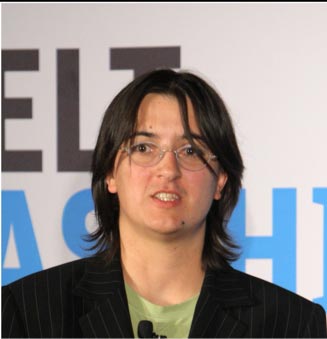
In memory of Stephanie Zimmermann, ATLAS New Small Wheel Project Leader
Key to the success of the New Small Wheel was its former project leader, ATLAS physicist Stephanie Zimmermann. Her sudden death in November 2020 left a hole in the tight-knit NSW family. Her colleagues vowed to carry the flag on her behalf, to complete the project in her memory, dedicating themselves to the project’s success as completely as she had.
Stephanie’s impact on the ATLAS experiment extended far beyond the key NSW project. She joined the ATLAS experiment as a master’s student in 1999, staying with ATLAS throughout her doctoral thesis, her research fellowship at CERN, and the subsequent employment as a researcher at the University of Freiburg. As a research fellow, she coordinated the integration work of the muon spectrometer. It was largely thanks to her that this task was completed on time for the installation into the ATLAS underground hall. She held many important positions in ATLAS, serving as Muon System Run Coordinator, ATLAS Run Coordinator and, since 2013, as NSW Project Leader.
Stephanie was an outstanding scientist and an extraordinary person. She was highly appreciated for her scientific competence, her detailed knowledge of every aspect of her projects, her outstanding commitment and team spirit, as well as her support and care for her collaborators. She led by example and continues to inspire her colleagues. In her honor – and wishing to fulfill her dream of seeing the NSW installed – a photo of Stephanie was attached to NSW “A” as it was lowered into the experiment.
Never miss a breakthrough: Join the SciTechDaily newsletter.
Follow us on Google and Google News.