
Close Menu
    Facebook X (Twitter) Instagram
    SciTechDaily
    • Biology
    • Chemistry
    • Earth
    • Health
    • Physics
    • Science
    • Space
    • Technology
    Facebook X (Twitter) Pinterest YouTube RSS
    SciTechDaily
    Home»Science»Leonardo Da Vinci Fossil Sketch Might Be Depiction of Early Nests
    Science

    Leonardo Da Vinci Fossil Sketch Might Be Depiction of Early Nests

    By SciTechDailyNovember 19, 2012No Comments3 Mins Read
    Facebook Twitter Pinterest Telegram LinkedIn WhatsApp Email Reddit
    Share
    Facebook Twitter LinkedIn Pinterest Telegram Email Reddit
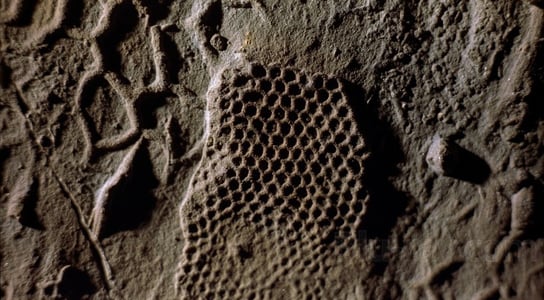
    paleodictyon-fossil
    Fossilized burrows left by Paleodictyon nodosum.

    500 years ago, Leonardo da Vinci briefly worked on fossils, inadvertently triggering a mystery that remains yet unsolved.

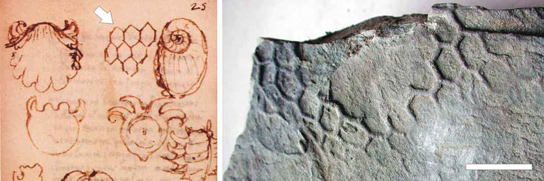
    A page of Leonardo’s Paris Manuscript I is covered in sketches of marine fossils, including a honeycomb-like array of hexagons that paleontologists think might constitute the first recorded observation of Paleodictyon, an enigmatic trace fossil.
    paleodycton-fossil-davinci
    A scrawled hexagonal pattern appears alongside some sketches of body fossils in another of da Vinci’s notebooks, Codex I.

    Many paleontologists think that the imprint shows burrows made by an animal living in loose sediment on the floor. There have been specimens of Paleodictyon discovered dating back to the Cambrian Period, 542 million to 488 million years ago. Similar structures are still being found on the ocean floor today.

    The identity of the animal that generates these hexagons remains a mystery. Similar, but simpler, fossils could explain why and show that organisms started caring for their young millions of years earlier than previously thought.

    Mark McMenamin, a paleontologist at Mount Holyoke College in Massachusetts, found this set of simpler fossils in 540-million-year-old limestone from the early Cambrian in Nevada and Mexico. They seem to be burrows, each a few tens of micrometers in diameter, forming swarms about 2 centimeters across.

    McMenamin noticed that some of the burrow swarms cut through organic pellets, 250 to 500 micrometers in diameter, too large to have been generated by whatever made the burrows originally. He believes an unknown adult animal deposited the pellets to form a nest around a clutch of eggs, which failed to fossilize. “The hatchlings then fed on organic matter in the pellets that had been broken down by bacteria,” states McMenamin. As they ate their way through the nest, the hatchlings left the distinctive burrows that were preserved in the fossil record.

    McMenamin discussed the idea at the Geological Society of America annual meeting last week in Charlotte, North Carolina. If proven correct, this interpretation would add more than 200 million years to the known record of parenting, which is complex behavior for the Cambrian.

    This hypothesis might also explain why Leonardo and modern paleontologists have failed to find the animal responsible for the hexagonal burrows. In order to confirm this theory, Duncan McIlroy, a burrow specialist, believes McMenamin would need to carefully section the rock to build up a 3D picture of the burrows and look for discrete structures as part of a large, semi-permanent burrow system created by an adult organism.

    Never miss a breakthrough: Join the SciTechDaily newsletter.
    Follow us on Google and Google News.

    Cambrian Fossils Paleontology
    Share. Facebook Twitter Pinterest LinkedIn Email Reddit

    Related Articles

    500-Million-Year-Old Mystery Fossil Rewrites Early Animal Evolution

    500-Million-Year-Old “Worm-Like” Fossil Represents Rare Discovery of Ancient Animal in North America

    Mysterious “Godzillus” Fossil Discovered by Amateur Paleontologist

    Cretaceous Period Sankofa Pyrenaica Fossilized Eggs Are Unusually Shaped

    Burtele Foot Points to Other Past Hominins

    Jawless Vertebrate Conodont Had Sharpest Yet Minuscule Teeth

    Microraptor Feathers Were Black With Iridescent Sheen

    Jurassic Period Super-Sized Fleas Had Armored Mouthparts to Attack the Thick Hide of Dinosaurs

    Hundreds of Lost Fossils From the Darwin Collection Rediscovered by the British Geological Survey

    Leave A Reply Cancel Reply

    • Facebook
    • Twitter
    • Pinterest
    • YouTube

    Don't Miss a Discovery

    Subscribe for the Latest in Science & Tech!

    Trending News

    This Experimental Drug Repaired the Gut and Reversed Severe Fatty Liver Disease

    Physicists Just Turned a Black Hole Energy Theory Into Reality

    Stanford Scientists Solve a 252-Million-Year-Old Mass Extinction Mystery

    The Ancient Survival Mechanism Making Weight Loss So Difficult

    Just 3,000 Steps a Day May Help Protect the Brain From Alzheimer’s

    “Weird Clams” Reveal a New Invasion Along the U.S. Northeast Coast

    Archaeologists Decapitated Tutankhamun and Glued His Body Back Together

    New Black Hole Theory Solves a 50-Year-Old Problem

    Follow SciTechDaily
    • Facebook
    • Twitter
    • YouTube
    • Pinterest
    • Newsletter
    • RSS
    SciTech News
    • Biology News
    • Chemistry News
    • Earth News
    • Health News
    • Physics News
    • Science News
    • Space News
    • Technology News
    Recent Posts
    • One Asteroid Collision May Have Rocked Earth, Mars, and the Moon
    • Scientists Restore the Sense of Touch With Electrical Brain Stimulation
    • New Study Reveals Herpesvirus Infection May Accelerate Alzheimer’s Disease
    • Microplastics Found in 84% of Serious Heart Attack Patients
    • The Oldest Known Right-Handed Animal May Have Lived 550 Million Years Ago
    Copyright © 1998 - 2026 SciTechDaily. All Rights Reserved.
    • Science News
    • About
    • Contact
    • Editorial Board
    • Privacy Policy
    • Terms of Use

    Type above and press Enter to search. Press Esc to cancel.