
Close Menu
    Facebook X (Twitter) Instagram
    SciTechDaily
    • Biology
    • Chemistry
    • Earth
    • Health
    • Physics
    • Science
    • Space
    • Technology
    Facebook X (Twitter) Pinterest YouTube RSS
    SciTechDaily
    Home»Space»Don’t Miss: Planets of Dusk and Dawn, a Lunar Eclipse, and the Coma Star Cluster
    Space

    Don’t Miss: Planets of Dusk and Dawn, a Lunar Eclipse, and the Coma Star Cluster

    By Preston Dyches, NASA/JPLMay 2, 2022No Comments4 Mins Read
    Facebook Twitter Pinterest Telegram LinkedIn WhatsApp Email Reddit
    Share
    Facebook Twitter LinkedIn Pinterest Telegram Email Reddit

    What’s Up for May? The planets of dusk and dawn, a lunar eclipse, and the Coma star cluster.
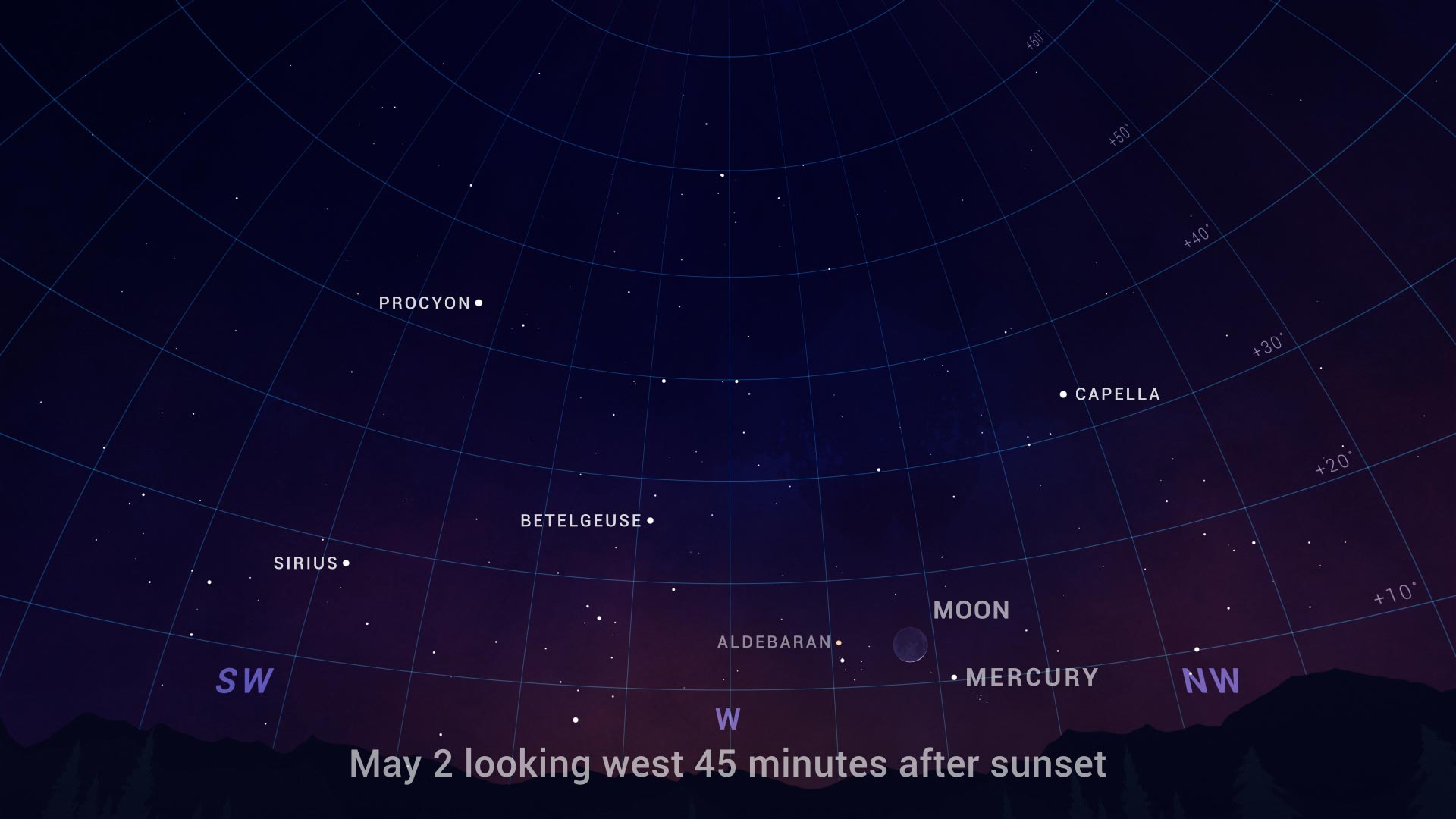
    Mercury Low in the Western Sky
    Sky chart showing Mercury low in the western sky on May 2, accompanied by the crescent moon and bright star Aldebaran. Credit: NASA/JPL-Caltech

    May begins and ends with a couple of great planet-spotting opportunities. On May 2nd, look to the west about 45 minutes after sunset to find Mercury about 10 degrees off the horizon, accompanied by a slim crescent moon. Just to the south of the Moon is brilliant red giant star Aldebaran, which should be roughly the same brightness as Mercury. (And by the way, this is the only chance to spot a naked-eye planet in the early evening until August.)
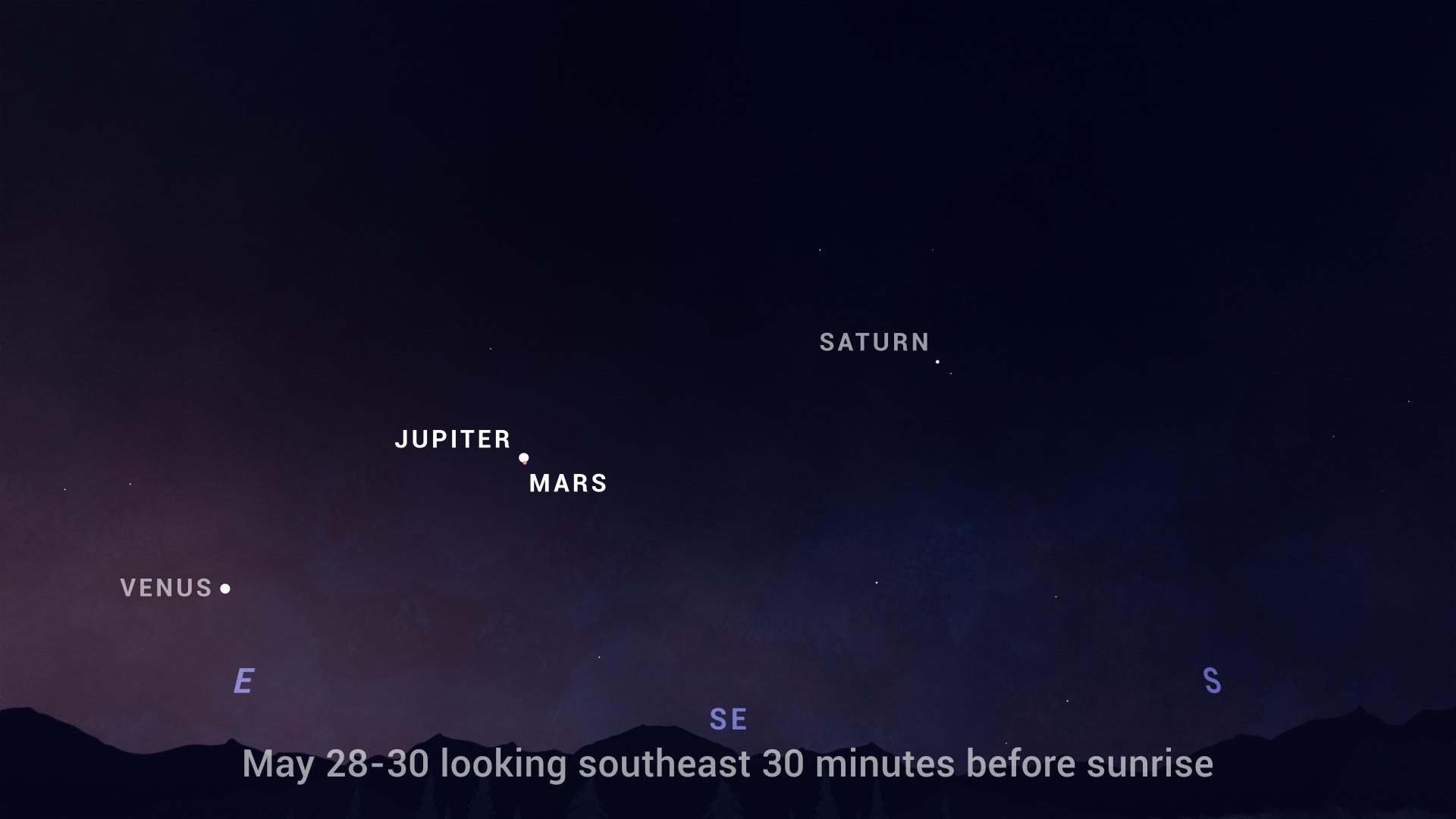
    Jupiter and Mars Will Appear Extremely Close
    Sky chart showing how Jupiter and Mars will appear extremely close in the morning sky on May 28-30. Credit: NASA/JPL-Caltech

    Then in the last week of May, you can watch each morning as Jupiter and Mars get increasingly close in the predawn sky. Their morning meetup culminates in a close conjunction that you can watch on the 28th through the 30th, where they’ll be separated by barely the width of the full moon. Should look incredible with binoculars, where you can also see Jupiter’s largest moons.

    Skywatchers in the Western Hemisphere can look forward to a total lunar eclipse in mid-May. The event will be visible across the Americas, Europe, and Africa – basically anywhere the Moon is above the horizon at the time.
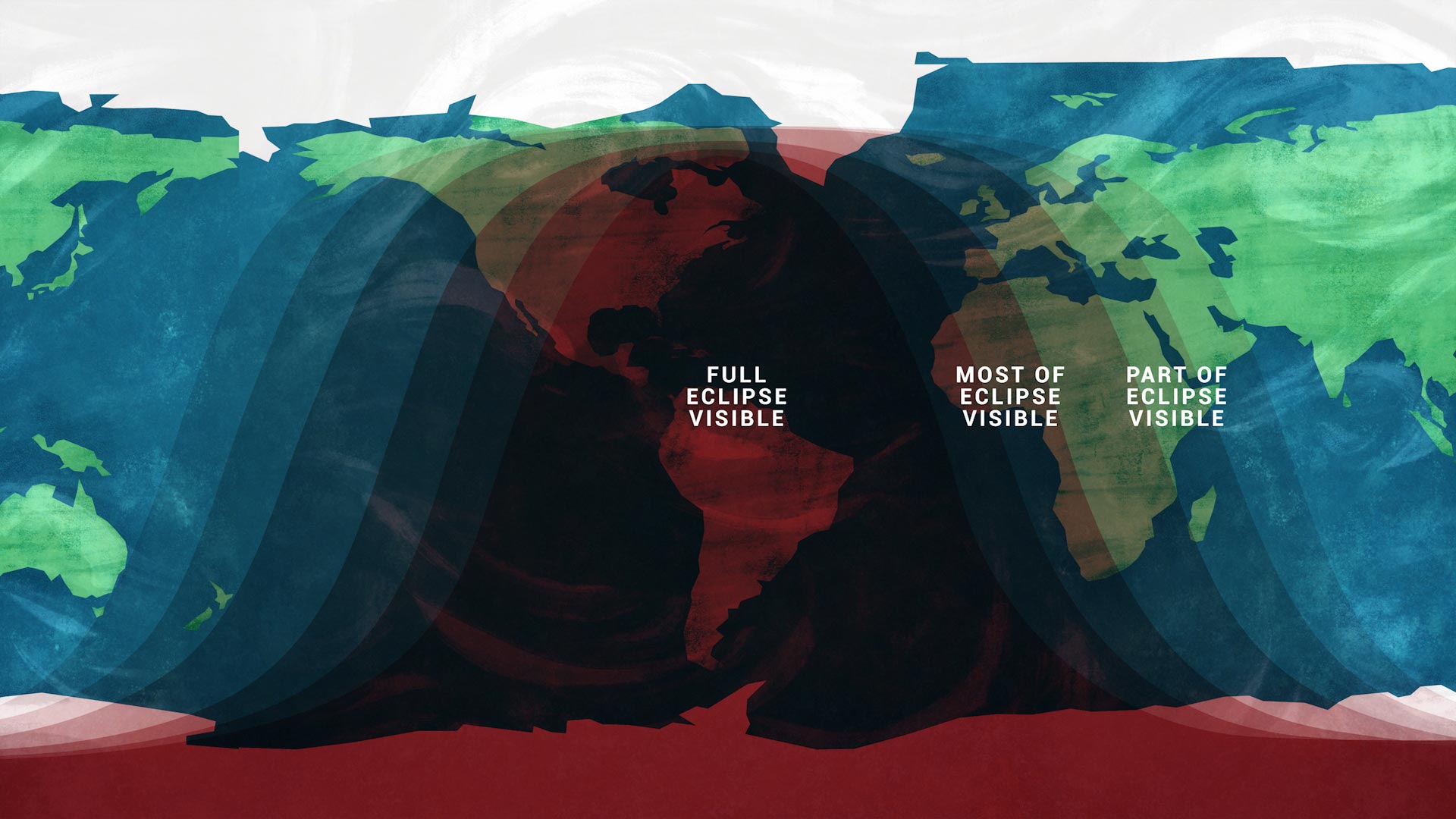
    Eclipse Visibility Map May 2022 Total Lunar Eclipse
    Eclipse visibility map for the May 15-16, 2022 total lunar eclipse. Credit: NASA/JPL-Caltech

    The visible part of the eclipse begins about 10:30 p.m. U.S. Eastern time on May 15th, with totality starting an hour later and lasting for about an hour and a half. Those in the Eastern U.S. will see the eclipse start with the Moon well above the horizon. For the Central U.S., the eclipse starts about an hour and a half after dark, with the Moon relatively low in the sky. On the West coast of the U.S., the Moon rises with totality beginning or already underway, so you’ll want to find a clear view toward the southeast if viewing from there.

    Now, lunar eclipses are the ones that are safe to look at directly with your eyes, binoculars, or a telescope (unlike solar eclipses).

    The Moon takes on a dim, reddish hue during the period of totality. Even though the Moon is fully immersed in Earth’s shadow at that time, red wavelengths of sunlight filter through Earth’s atmosphere and fall onto the Moon’s surface. One way to think of this is that a total lunar eclipse shows us a projection of all the sunrises and sunsets happening on the planet at that moment.

    So check your local details for this eclipse, and find lots more eclipse info from NASA at this link. 

    Finally in May, a really nice target for binoculars: the Coma star cluster. This loose, open star cluster displays 40 or 50 stars spread over a region of sky about three finger-widths wide. The brightest stars in the cluster form a distinctive Y shape, as seen here.
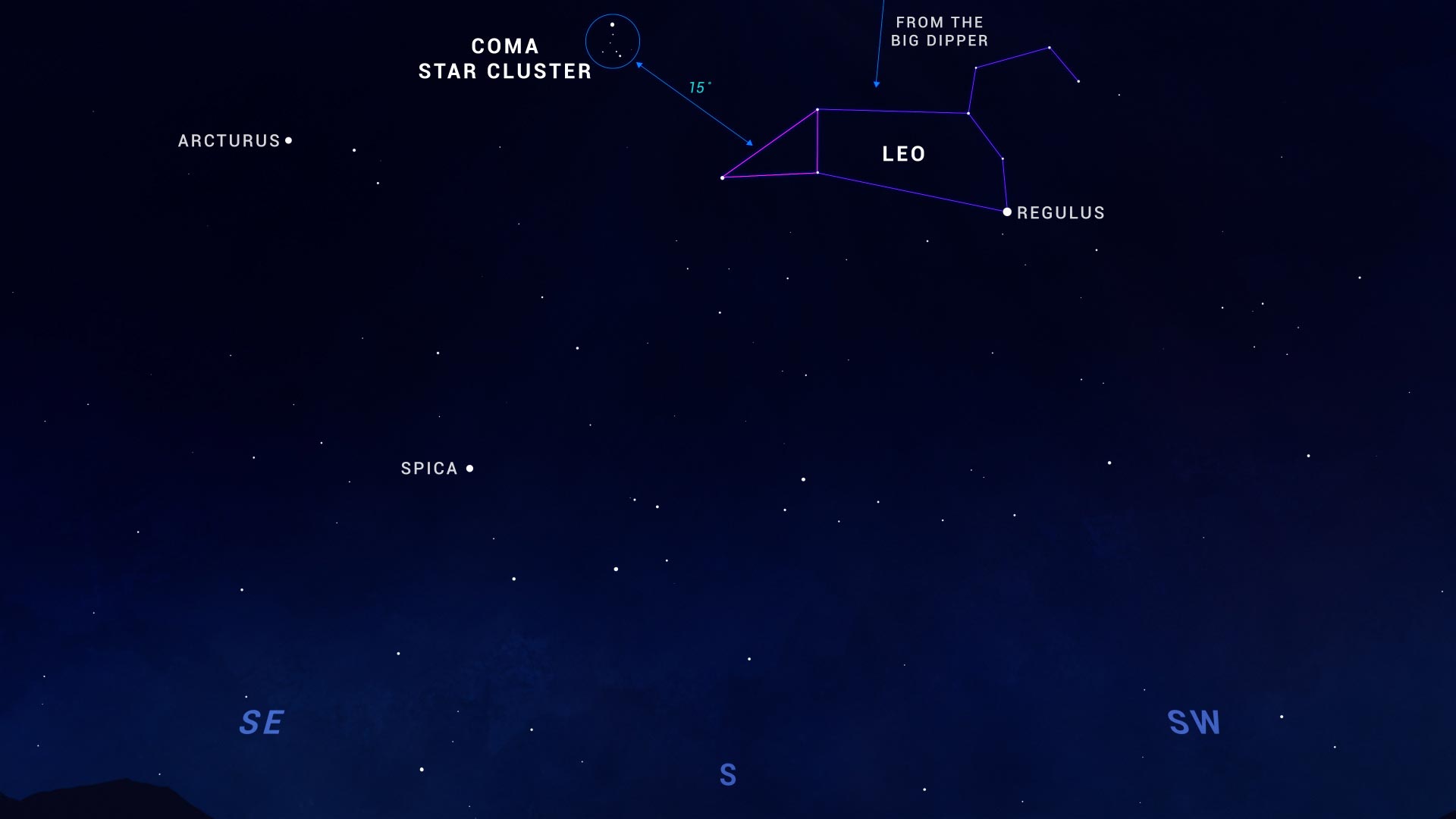
    Coma Star Cluster in May
    Sky chart showing where to find the Coma star cluster in May. The cluster is about 6° wide, and is located about 15° east of the hindquarters of Leo, the lion constellation, which is found high overhead in the south. Credit: NASA/JPL-Caltech

    The Coma star cluster is located about 300 light-years away, making it the second-closest open cluster to Earth after the Hyades cluster in Taurus.

    To find the Coma star cluster, look southward for the constellation Leo. It can be easiest to start from the Big Dipper, toward the north, and use the two “pointer stars” on the end which always point you toward Leo. Once you’ve identified Leo, the Coma star cluster is about 15 degrees to the east of the triangle of stars representing the lion’s hindquarters. It’s relatively easy to find with binoculars, even under light-polluted urban skies – as long as it’s clear out.

    So here’s wishing you clear skies for finding the Coma star cluster and any other wonders you discover in the night sky in May.

    Never miss a breakthrough: Join the SciTechDaily newsletter.
    Follow us on Google and Google News.

    Astronomy JPL NASA Popular
    Share. Facebook Twitter Pinterest LinkedIn Email Reddit

    Related Articles

    Don’t Miss: Total Solar Eclipse, Mars and Saturn Rising, Slim Lunar Crescent, Comet 12P

    Webb’s Ethanol Discovery Fuels Search for Alien Life

    Don’t Miss: Jupiter Plows Through the Pleiades

    NASA’s Next-Gen Exoplanet-Imaging Technology Advances Search for Extraterrestrial Life

    NASA Telescopes Are Unlocking the Secrets Behind Mysterious Deep Space Signals

    Catch the Quadrantid Fireballs: A January Sky Spectacle With Moon and Planet Pairings

    From IRAS to Webb: The Incredible Evolution of NASA’s Infrared Telescopes

    End of an Era: NASA’s NEOWISE 10-Year Mission Ending Due to Solar Activity

    Don’t Miss: Geminid Meteor Shower and Asteroid Vesta

    Leave A Reply Cancel Reply

    • Facebook
    • Twitter
    • Pinterest
    • YouTube

    Don't Miss a Discovery

    Subscribe for the Latest in Science & Tech!

    Trending News

    Why Popular Diabetes Drugs Like Ozempic Don’t Work for Everyone: The “Genetic Glitch”

    Scientists Stunned After Finding Plant Thought Extinct for 60 Years

    Scientists Discover Tiny New Spider That Hunts Prey 6x Its Size

    Natural Component From Licorice Shows Promise for Treating Inflammatory Bowel Disease

    Scientists Warn: Popular Sweetener Linked to Dangerous Metabolic Effects

    Monster Storms on Jupiter Unleash Lightning Beyond Anything on Earth

    Scientists Create “Liquid Gears” That Spin Without Touching

    The Simple Habit That Could Help Prevent Cancer

    Follow SciTechDaily
    • Facebook
    • Twitter
    • YouTube
    • Pinterest
    • Newsletter
    • RSS
    SciTech News
    • Biology News
    • Chemistry News
    • Earth News
    • Health News
    • Physics News
    • Science News
    • Space News
    • Technology News
    Recent Posts
    • Unexpected Hormone Discovery Could Change How We Treat Arthritis
    • Scientists Supercharge “Natural Killer” Cells To Break Through Cancer’s Defenses
    • Simple “Gut Reset” May Prevent Weight Gain After Ozempic or Wegovy
    • 2.8 Days to Disaster: Scientists Warn Low Earth Orbit Could Suddenly Collapse
    • Scientists Uncover How Serotonin May Trigger Tinnitus
    Copyright © 1998 - 2026 SciTechDaily. All Rights Reserved.
    • Science News
    • About
    • Contact
    • Editorial Board
    • Privacy Policy
    • Terms of Use

    Type above and press Enter to search. Press Esc to cancel.