
Close Menu
    Facebook X (Twitter) Instagram
    SciTechDaily
    • Biology
    • Chemistry
    • Earth
    • Health
    • Physics
    • Science
    • Space
    • Technology
    Facebook X (Twitter) Pinterest YouTube RSS
    SciTechDaily
    Home»Science»Laboratory Safety Concerns: Researchers Aren’t As Safe As They Feel
    Science

    Laboratory Safety Concerns: Researchers Aren’t As Safe As They Feel

    By SciTechDailyJanuary 4, 2013No Comments2 Mins Read
    Facebook Twitter Pinterest Telegram LinkedIn WhatsApp Email Reddit
    Share
    Facebook Twitter LinkedIn Pinterest Telegram Email Reddit
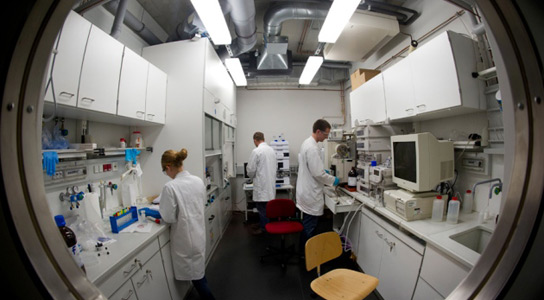
    An international poll provides a lens into lab workers’ attitudes to workplace welfare. Credit: Arno Burgi/DPA/Press Association
    An international poll provides a lens into lab workers’ attitudes to workplace welfare. Credit: Arno Burgi/DPA/Press Association

    According to the results of the first international survey of researchers’ workplace attitudes and practices, scientists may have a false sense of security about the safety of their laboratories.

    86% of the 2,400 scientists who responded to the survey stated that their labs are safe places to work. Yet just under half experienced injuries, ranging from animal bites to chemical inhalation. A large part of the scientists also noted frequently working alone, unreported injuries and insufficient safety training.

    Nature Publishing Group and the firm BioRAFT helped launch the survey. UCLA’s Center for Laboratory Safety plans to analyze the data more closely later this year. Most of the participants were from the USA and the UK, but also came from Europe, China and Japan. They felt that any injuries sustained were part of the job. The most common injuries were minor, but 30% of the respondents said they had witnessed at least one major lab injury, which required the attention of a medical professional. More than one-quarter of junior researchers stated that they had experienced an injury that they didn’t report to their supervisors.

    Only 60% said that they had received safety training. Around half agreed that lab safety could be improved, with chemists (60%) most likely to feel this, and neuroscientists (30%) significantly less so.

    Around 40% of junior scientists said that people worked alone in their lab every day, compounding the risk to health in the case of an accident, compared to only 26% of senior scientists. Junior researchers tend to work longer hours in the lab than their bosses. Half of the juniors worked over 40 hours a week, compared to just one-fifth of seniors.

    UK and US scientists also assess lab risks differently when they start an experiment, due to legal requirement. Two-thirds of Britons said they used their organization’s approved form of risk assessment, which is mandated by the UK Health & Safety Executive. Only one-quarter of Americans did the same.

    Researchers tend to have mixed feelings about safety training, inspections, and safety rules. Two-thirds thought that lab inspections improved safety, with senior scientists more likely to agree than juniors.

    Some health and safety experts think that the survey was too broad and unfocused to draw definite conclusions. The non-randomized sampling technique was also criticized.

    Never miss a breakthrough: Join the SciTechDaily newsletter.
    Follow us on Google and Google News.

    Share. Facebook Twitter Pinterest LinkedIn Email Reddit

    Related Articles

    Forgotten Autobiography Rewrites the Story of a War of 1812 Soldier

    Ancient Egyptian Princesses Were Trained Warriors, Their Bones Reveal

    Long-Lost Megalodon Fossils Found Hiding on a Museum Shelf

    Two-Year Lifestyle Program Boosts Cognition 55% More in Older Adults

    Speaking More Languages May Slow Brain Aging

    Experimental Eye Drops Restore Sight in Blind Mice

    Coffee’s Most Destructive Pest Is Accidentally Helping the Ants That Hunt It

    Cells Join Forces To Survive Prolonged Mechanical Strain

    When Gut Bacteria Run Out of Fiber, They May Start Eating You

    Leave A Reply Cancel Reply

    • Facebook
    • Twitter
    • Pinterest
    • YouTube

    Don't Miss a Discovery

    Subscribe for the Latest in Science & Tech!

    Trending News

    Study Finds a Surprising Link Between Gut Microbes and Aging

    Frequent Cannabis Users Wake Up With More “Stress Hormone”

    Scientists Reveal Hidden DNA Traces in the Shroud of Turin

    Giant Alien World Found Hiding in Plain Sight for 11 Years

    Scientists Link Heavy TV Watching to Brain Changes Decades Later

    Did T. rex Leave These Mysterious Marks on Dinosaur Bones?

    Quantum Computers Could Freeze Like Ordinary PCs

    Scientists Reversed Autism-Like Symptoms in Adult Mice Within Two Hours

    Follow SciTechDaily
    • Facebook
    • Twitter
    • YouTube
    • Pinterest
    • Newsletter
    • RSS
    SciTech News
    • Biology News
    • Chemistry News
    • Earth News
    • Health News
    • Physics News
    • Science News
    • Space News
    • Technology News
    Recent Posts
    • Forgotten Autobiography Rewrites the Story of a War of 1812 Soldier
    • Ancient Egyptian Princesses Were Trained Warriors, Their Bones Reveal
    • Long-Lost Megalodon Fossils Found Hiding on a Museum Shelf
    • Two-Year Lifestyle Program Boosts Cognition 55% More in Older Adults
    • Speaking More Languages May Slow Brain Aging
    Copyright © 1998 - 2026 SciTechDaily. All Rights Reserved.
    • Science News
    • About
    • Contact
    • Editorial Board
    • Privacy Policy
    • Terms of Use

    Type above and press Enter to search. Press Esc to cancel.