
Close Menu
    Facebook X (Twitter) Instagram
    SciTechDaily
    • Biology
    • Chemistry
    • Earth
    • Health
    • Physics
    • Science
    • Space
    • Technology
    Facebook X (Twitter) Pinterest YouTube RSS
    SciTechDaily
    Home»Space»NASA Completes Computer Swap for Curiosity Rover
    Space

    NASA Completes Computer Swap for Curiosity Rover

    By Guy Webster, Jet Propulsion LaboratoryMarch 4, 2013No Comments3 Mins Read
    Facebook Twitter Pinterest Telegram LinkedIn WhatsApp Email Reddit
    Share
    Facebook Twitter LinkedIn Pinterest Telegram Email Reddit
    NASA Mars Rover Curiosity Artist's Concept
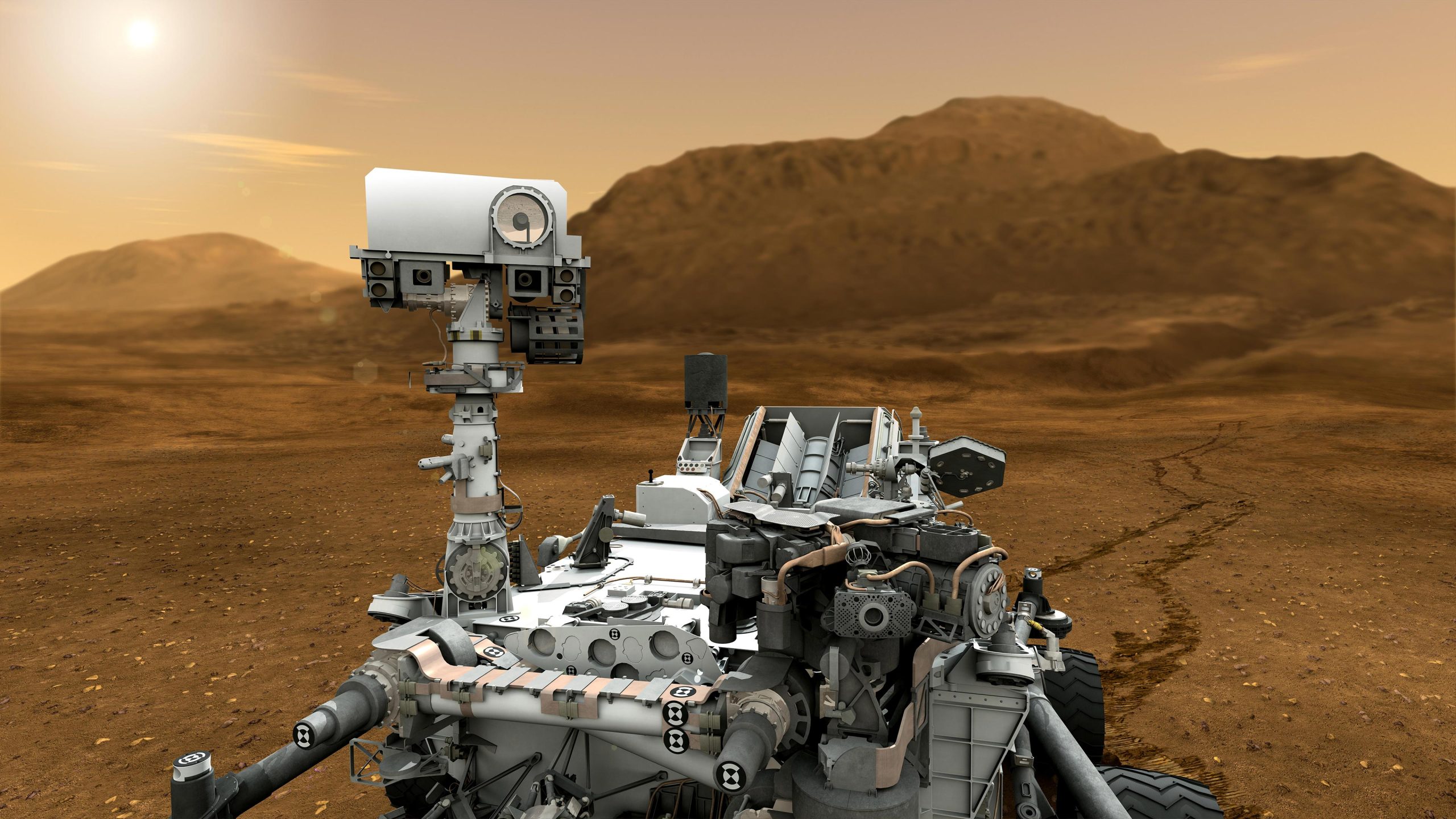
    This artist concept features NASA’s Mars Science Laboratory Curiosity rover, a mobile robot for investigating Mars’ past or present ability to sustain microbial life. In this picture, the mast, or rover’s “head,” rises to about 2.1 meters (6.9 feet) above ground level, about as tall as a basketball player. This mast supports two remote-sensing instruments: the Mast Camera, or “eyes,” for stereo color viewing of surrounding terrain and material collected by the arm; and, the ChemCam instrument, which is a laser that vaporizes material from rocks up to about 7 meters (23 feet) away and determines what elements the rocks are made of. Credit: NASA/JPL-Caltech

    NASA ground engineers have completed a computer swap for the Curiosity rover in response to a memory issue, shifting the rover into a minimal-activity precautionary status called “safe mode.”

    The ground team for NASA’s Mars rover Curiosity has switched the rover to a redundant onboard computer in response to a memory issue on the computer that had been active.

    The intentional swap at about 2:30 a.m. PST today (Thursday, February 28) put the rover, as anticipated, into a minimal-activity precautionary status called “safe mode.” The team is shifting the rover from safe mode to operational status over the next few days and is troubleshooting the condition that affected operations yesterday. The condition is related to a glitch in flash memory linked to the other, now-inactive, computer.

    “We switched computers to get to a standard state from which to begin restoring routine operations,” said Richard Cook of NASA’s Jet Propulsion Laboratory, project manager for the Mars Science Laboratory Project, which built and operates Curiosity.

    Like many spacecraft, Curiosity carries a pair of redundant main computers in order to have a backup available if one fails. Each of the computers, A-side and B-side, also has other redundant subsystems linked to just that computer. Curiosity is now operating on its B-side, as it did during part of the flight from Earth to Mars. It operated on its A-side from before the August 2012 landing through Wednesday.

    “While we are resuming operations on the B-side, we are also working to determine the best way to restore the A-side as a viable backup,” said JPL engineer Magdy Bareh, leader of the mission’s anomaly resolution team.

    The spacecraft remained in communications at all scheduled communication windows on Wednesday, but it did not send recorded data, only current status information. The status information revealed that the computer had not switched to the usual daily “sleep” mode when planned. Diagnostic work in a testing simulation at JPL indicates the situation involved corrupted memory at an A-side memory location used for addressing memory files.

    Scientific investigations by the rover were suspended Wednesday and today. Resumption of science investigations is anticipated within several days. This week, laboratory instruments inside the rover have been analyzing portions of the first sample of rock powder ever collected from the interior of a rock on Mars.

    NASA’s Mars Science Laboratory Project is using Curiosity to assess whether areas inside Gale Crater ever offered a habitable environment for microbes. JPL, a division of the California Institute of Technology in Pasadena, manages the project for NASA’s Science Mission Directorate in Washington.

    Never miss a breakthrough: Join the SciTechDaily newsletter.
    Follow us on Google and Google News.

    Astronomy Curiosity Rover JPL Mars NASA Planetary Science Popular
    Share. Facebook Twitter Pinterest LinkedIn Email Reddit

    Related Articles

    Curiosity Fails to Detect Methane on Mars

    Curiosity Discovers More Hydration of Minerals Near Clay-Bearing Rocks

    NASA’s Curiosity Rover Drills and Collects First Martian Bedrock Sample

    Mineralogy of Martian Soil Is Similar to Soils of Volcanic Origin in Hawaii

    Curiosity Prepares to Take Its First Scoop of Soil for Analysis

    Curiosity Finds Ancient Streambed on Mars

    NASA’s Curiosity Readies for First Drive on Mars

    Color HiRISE Image of Curiosity Rover on Mars

    Mission Engineers Prepare for Curiosity’s Landing on Mars

    Leave A Reply Cancel Reply

    • Facebook
    • Twitter
    • Pinterest
    • YouTube

    Don't Miss a Discovery

    Subscribe for the Latest in Science & Tech!

    Trending News

    Scientists Recreate a Nuclear Fireball and Uncover Fallout’s Hidden Chemistry

    These Tiny Gut Particles Could Be Accelerating Aging Throughout the Body

    Doctors Changed One Thing and Weight Gain Stopped

    Magnetic Fields May Solve a Longstanding Binary Star Mystery

    The Probiotic Breakthrough for Natural Anxiety Relief and Better Mental Health

    Animal vs. Plant Protein: Scientists Found a Surprising Nutritional Difference

    According to Scientists, This Simple Dietary Change Is Linked to Lower Depression Scores

    Researchers Discover a Hidden Vitamin D Problem That Persists Year-Round

    Follow SciTechDaily
    • Facebook
    • Twitter
    • YouTube
    • Pinterest
    • Newsletter
    • RSS
    SciTech News
    • Biology News
    • Chemistry News
    • Earth News
    • Health News
    • Physics News
    • Science News
    • Space News
    • Technology News
    Recent Posts
    • Scientists Uncover Why Walking Gets Slower and More Exhausting As We Age
    • 24 Hours Without Sleep Changes Your Saliva in Measurable Ways
    • A Major Update Just Hit Cholesterol Guidelines – Here’s What Every Adult Needs To Know
    • Scientists Tracked 4,500 Animals During COVID – What They Discovered Was Surprising
    • Hidden Phase of Matter Finally Captured After Decades of Predictions
    Copyright © 1998 - 2026 SciTechDaily. All Rights Reserved.
    • Science News
    • About
    • Contact
    • Editorial Board
    • Privacy Policy
    • Terms of Use

    Type above and press Enter to search. Press Esc to cancel.