
Human Brain Organoids Intergate with Rat Brains and Respond to Visual Stimuli
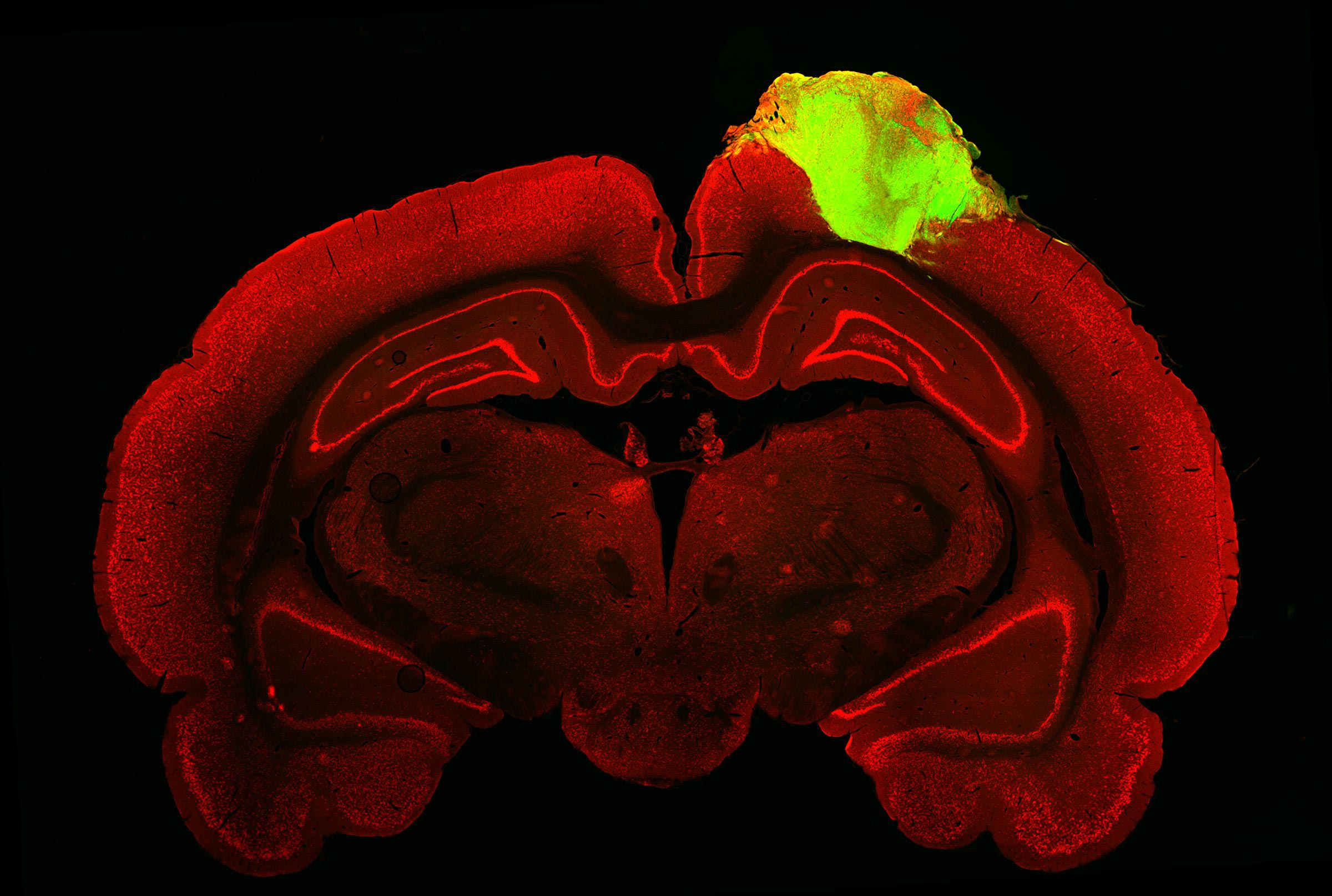
In a study published in the journal Cell Stem Cell on February 2, researchers show that brain organoids—clumps of lab-grown neurons—can integrate with rat brains and respond to visual stimulation like flashing lights.
Decades of research has shown that we can transplant individual human and rodent neurons into rodent brains, and, more recently, it has been demonstrated that human brain organoids can integrate with developing rodent brains. However, whether these organoid grafts can functionally integrate with the visual system of injured adult brains has yet to be explored.
“We focused on not just transplanting individual cells, but actually transplanting tissue,” says senior author H. Isaac Chen, a physician and Assistant Professor of Neurosurgery at the University of Pennsylvania. “Brain organoids have architecture; they have structure that resembles the brain. We were able to look at individual neurons within this structure to gain a deeper understanding of the integration of transplanted organoids.”
Integration of Organoids into Host Brain Networks
The researchers cultivated human stem cell-derived neurons in the lab for around 80 days before grafting them into the brains of adult rats that had sustained injuries to their visual cortex. Within three months, the grafted organoids had integrated with their host’s brain: becoming vascularized, growing in size and number, sending out neuronal projections, and forming synapses with the host’s neurons.
The team made use of fluorescent-tagged viruses that hop along synapses, from neuron to neuron, to detect and trace physical connections between the organoid and brain cells of the host rat. “By injecting one of these viral tracers into the eye of the animal, we were able to trace the neuronal connections downstream from the retina,” says Chen. “The tracer got all the way to the organoid.”
Functional Response to Visual Stimuli
Next, the researchers used electrode probes to measure the activity of individual neurons within the organoid when the animals were exposed to flashing lights and alternating white and black bars. “We saw that a good number of neurons within the organoid responded to specific orientations of light, which gives us evidence that these organoid neurons were able to not just integrate with the visual system, but they were able to adopt very specific functions of the visual cortex.”
The team was surprised by the degree to which the organoids were able to integrate within only three months. “We were not expecting to see this degree of functional integration so early,” says Chen. “There have been other studies looking at transplantation of individual cells that show that even 9 or 10 months after you transplant human neurons into a rodent, they’re still not completely mature.”
“Neural tissues have the potential to rebuild areas of the injured brain,” says Chen. “We haven’t worked everything out, but this is a very solid first step. Now, we want to understand how organoids could be used in other areas of the cortex, not just the visual cortex, and we want to understand the rules that guide how organoid neurons integrate with the brain so that we can better control that process and make it happen faster.”
Reference: “Structural and functional integration of human forebrain organoids with the injured adult rat visual system” by Dennis Jgamadze, James T. Lim, Zhijian Zhang, Paul M. Harary, James Germi, Kobina Mensah-Brown, Christopher D. Adam, Ehsan Mirzakhalili, Shikha Singh, Jiahe Ben Gu, Rachel Blue, Mehek Dedhia, Marissa Fu, Fadi Jacob, Xuyu Qian, Kimberly Gagnon, Matthew Sergison, Oceane Fruchet, Imon Rahaman, Huadong Wang, Fuqiang Xu, Rui Xiao, Diego Contreras, John A. Wolf, Hongjun Song, Guo-li Ming and
Han-Chiao Isaac Chen, 2 February 2023, Cell Stem Cell.
DOI: 10.1016/j.stem.2023.01.004
This research was supported by the Department of Veterans Affairs, National Institutes of Health, and the Dr. Miriam and Sheldon G. Adelson Medical Research Foundation.
Never miss a breakthrough: Join the SciTechDaily newsletter.
Follow us on Google and Google News.
1 Comment
life is life. Why do researchers cross species? If they can operate on a rat’s brain, surely they can do a spinal tap on them too and stop taking human samples.