
Close Menu
    Facebook X (Twitter) Instagram
    SciTechDaily
    • Biology
    • Chemistry
    • Earth
    • Health
    • Physics
    • Science
    • Space
    • Technology
    Facebook X (Twitter) Pinterest YouTube RSS
    SciTechDaily
    Home»Chemistry»Modern Treasure Hunt: Baker’s Yeast Used To Extract Rare Earth Elements From Hot Springs and Seawater
    Chemistry

    Modern Treasure Hunt: Baker’s Yeast Used To Extract Rare Earth Elements From Hot Springs and Seawater

    By Osaka Metropolitan UniversityApril 14, 20232 Comments2 Mins Read
    Facebook Twitter Pinterest Telegram LinkedIn WhatsApp Email Reddit
    Share
    Facebook Twitter LinkedIn Pinterest Telegram Email Reddit
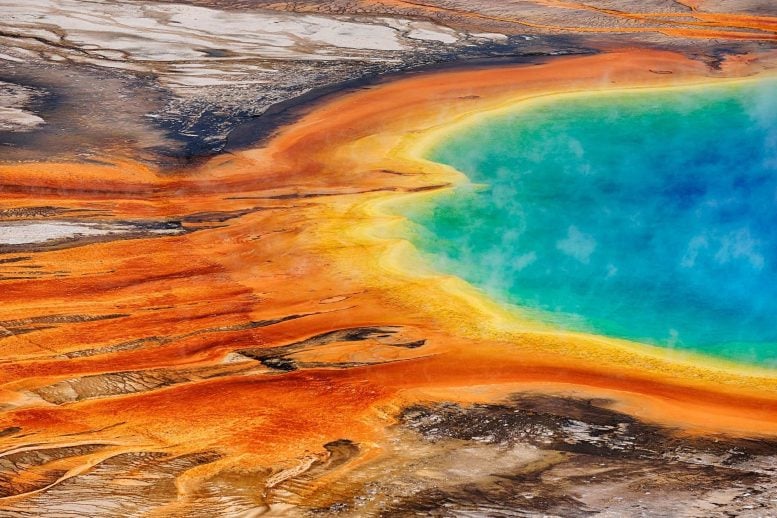
    Geothermal Hot Springs
    A research group from the Osaka Metropolitan University Graduate School of Engineering has created an environmentally friendly and inexpensive adsorbent material using baker’s yeast and trimetaphosphate that selectively recovers rare earth elements (REEs). Experiments with synthetic seawater and hot spring water showed that the material could adsorb REEs even with a high content of other components.

    Success in Recovering Trace Rare Earth Elements in Environmental Water

    An Osaka Metropolitan University research group has created an environmentally friendly and inexpensive adsorbent material using baker’s yeast and trimetaphosphate that selectively recovers rare earth elements from hot springs and seawater.

    The demand for precious metals and rare earth elements is expected to continue increasing in the future. Due to limited production areas, recycling from precision equipment and recovering from seawater and hot spring water are needed to ensure a stable supply.

    A research group led by Professor Masayuki Azuma and Associate Professor Yoshihiro Ojima of the Osaka Metropolitan University Graduate School of Engineering has successfully developed an adsorbent material that can selectively recover rare earth elements (REEs) using environmentally friendly and inexpensive baker’s yeast and trimetaphosphate, which is used as a food additive.

    Rare Earth Recovery Using P-Yeast
    Researchers have succeeded in selectively recovering trace rare earth elements in synthetic seawater and environmental water, such as hot spring water, using baker’s yeast with a phosphate group added. Credit: Masayuki Azuma, Osaka Metropolitan University

    The research group conducted experiments using synthetic seawater and hot spring water to evaluate the performance of this material in a real environment. As a result, it was confirmed that the material can selectively adsorb REEs even when using hot spring water with an REE concentration of several to several tens of ppb (μg/L) and a very high content of other components.

    “This new technology is expected to contribute to the realization of a metal resource-circulating society and a safe society through environmental purification. In the future, we will continue to conduct experiments on a variety of environmental water with the aim of establishing a system capable of treating large quantities of metal resources through continuous operation,” said Professor Azuma.

    The results were published in the journal Environmental Technology & Innovation.

    Reference: “Adsorption of rare earth ions from synthetic seawater and hot spring water using phosphorylated yeast” by Maya Kihara, Yoshihiro Ojima and Masayuki Azuma, 2 March 202, Environmental Technology & Innovation.
    DOI: 10.1016/j.eti.2023.103093

    Never miss a breakthrough: Join the SciTechDaily newsletter.
    Follow us on Google and Google News.

    Biochemistry Biotechnology Microbiology Osaka Metropolitan University Popular Rare Earth Minerals
    Share. Facebook Twitter Pinterest LinkedIn Email Reddit

    Related Articles

    Miracle Molecule Stops Stroke Damage – And Could Tackle Alzheimer’s Next

    Carbon Neutral Biochemicals: Transforming CO2 Into Valuable Materials Using Formic Acid

    MIT’s New Carbon Nanotube-Based Sensor Can Detect COVID-19 or Other Emerging Pathogens

    Virus Variants: A Vital Tool to Study Viral Evolution in the Test Tube

    Scientists Invent New Method for Producing Synthetic DNA

    Researchers Zero In on Natural Products That Disrupt Lethal Viruses, Including the COVID-19 Coronavirus

    New Forensic DNA Technology to Combat Terrorism – Dust on Boots, Baggage Can Track Down Suspects

    Battling COVID-19: Researchers Discover Materials – Activated With UV Light – That Can Kill Coronavirus and Other Viruses

    Sulfur-Scavenging Bacteria Could Be Key to Biomanufacturing Common Component of Plastic

    2 Comments

    1. Clyde Spencer on April 14, 2023 4:41 pm

      Something that these researchers, and others like them, forget is that there is more to extracting a resource from water than demonstrating a technical possibility. It also has to be economically possible. That means, the cost of the process has to be much less than the value of that which is being extracted. That includes disposing of the inevitable waste products arising from the process stream.

      Reply
    2. Eric on April 16, 2023 5:18 am

      Why would anyone assume a cost effective process is a complicated concept that no one takes into account? 😂

      Reply
    Leave A Reply Cancel Reply

    • Facebook
    • Twitter
    • Pinterest
    • YouTube

    Don't Miss a Discovery

    Subscribe for the Latest in Science & Tech!

    Trending News

    “Strangest of Its Kind”: Scientists Uncover a Bizarre Bacterial Self-Destruct Switch

    Scientists Reverse 60 Years of Aging in Human Cells, Turning 80-Year-Old Cells Into 20-Year-Olds

    A Solar Storm Heading Toward Earth Suddenly Changed in Ways Scientists Didn’t Predict

    A Simple Diet Change Could Transform Kidney Disease Treatment, 10-Year Study Finds

    Eating 30% Less Food Has an Unexpected Effect on DNA, Study Finds

    Just Two Days on a Vegan Diet Triggered Unexpected Changes in the Liver

    Antarctica’s “Doomsday Glacier” Could Raise Sea Levels Twice As Much as Scientists Feared

    Snakebites Are Far Deadlier Than We Thought, New Study Reveals

    Follow SciTechDaily
    • Facebook
    • Twitter
    • YouTube
    • Pinterest
    • Newsletter
    • RSS
    SciTech News
    • Biology News
    • Chemistry News
    • Earth News
    • Health News
    • Physics News
    • Science News
    • Space News
    • Technology News
    Recent Posts
    • Scientists Discover a New Dinosaur Species Hiding in Plain Sight for 25 Years
    • Something Strange Is Happening to Barn Owls: They’re Changing Color
    • Why Are Octopuses So Smart? The Answer May Lie in How Their DNA Folds
    • Nearly 20 Years Later, Physicists Finally Detect a Long-Predicted Effect in Graphene
    • No Batteries, No Plugs: Scientists Create a Tiny Sensor That Powers Itself
    Copyright © 1998 - 2026 SciTechDaily. All Rights Reserved.
    • Science News
    • About
    • Contact
    • Editorial Board
    • Privacy Policy
    • Terms of Use

    Type above and press Enter to search. Press Esc to cancel.