
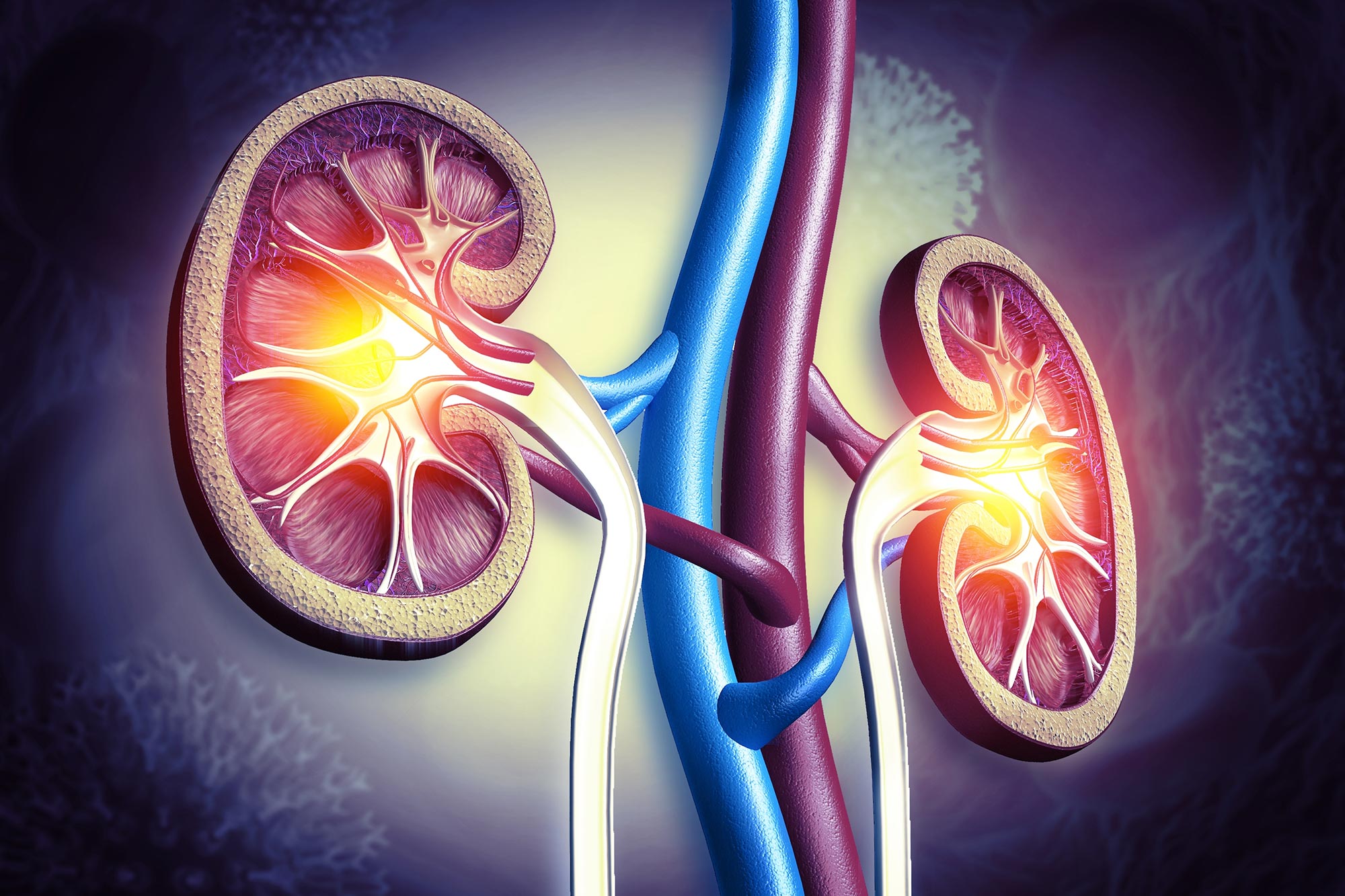
For kidney patients with acid buildup, a decade-long trial suggests fruits and vegetables may offer what a standard treatment did not: fewer hospital visits without higher overall costs.
When kidneys lose their ability to function properly, the consequences can extend far beyond waste buildup. People with chronic kidney disease can also develop excess acid in their blood, a condition known as metabolic acidosis that can contribute to worsening kidney function and other serious complications. Doctors commonly treat this imbalance with sodium bicarbonate, but new research suggests that a surprisingly simple dietary approach could offer greater long-term benefits.
In a decade-long clinical trial, researchers found that patients who received fruits and vegetables to help neutralize excess acid experienced substantially fewer hospitalizations and emergency department visits than those receiving usual care. O
ver 10 years, the 36 patients in the dietary group had just 14 hospitalizations and 20 emergency visits, compared with 64 and 88, respectively, among the 36 patients receiving usual care. Only four patients in the dietary group required dialysis, compared with 16 in the usual-care group, raising intriguing questions about the role of nutrition in protecting kidney health.
Two acid treatments, different long-term results
The trial enrolled 108 adults with stage 3 chronic kidney disease (CKD) and metabolic acidosis, the medical term for excess acid buildup in the body. Researchers randomly assigned participants to three groups of 36, receiving fruits and vegetables, oral sodium bicarbonate, or usual care. The dietary approach used base-producing fruits and vegetables, which help counter acidity. Both the dietary treatment and sodium bicarbonate were intended to reduce dietary acid by half, allowing researchers to compare two approaches with the same acid-reduction goal.
Participants were followed annually for 10 years. Across all three groups, researchers recorded 115 hospitalizations and 166 emergency department visits, and 34 patients needed dialysis. Despite sharing the dietary treatment’s acid-reduction goal, sodium bicarbonate showed no difference from usual care in hospitalizations, emergency department visits, or progression to dialysis.
Kidney benefits without higher overall costs
“Treatment of metabolic acidosis with fruits and vegetables was associated with more favorable long-term clinical outcomes and health care utilization than standard treatment with sodium bicarbonate or usual care, without increasing overall health-system or societal costs,” said corresponding author Nimrit Goraya, MD, of Baylor Scott and White Health.
The findings will be presented at ASN Kidney Week 2026, October 22–25. The trial’s comparison of individual treatments also raises the question of how dietary interventions might affect care and spending across a larger population.
“These findings support evaluating dietary interventions in chronic kidney disease not only at the individual-patient level but also at the population level, where the cumulative clinical and economic benefits may be substantial. They also highlight the potential quality-of-life and health-system value of investing in fruits and vegetables as a treatment strategy, particularly when favorable clinical outcomes can be achieved without increasing overall costs.”
Meeting: ASN Kidney Week
Never miss a breakthrough: Join the SciTechDaily newsletter.
Follow us on Google and Google News.
3 Comments
EVERYONE NEEDS SALVATION HERE ARE THE WORDS OF SALVATION PLEASE FORGIVE ME JESUS IM A SINNER COME INTO MY HEART AND SAVE ME FROM MY SIN I NO THAT YOU ARE THE SAVIOR AND I NO THAT YOU DIED FOR ME ON CALVARY AND I NO THAT GOD RAISE YOU FROM THE DEAD AND YOU ARE ALIVE AND I THANKYOU FOR YOUR SALVATION IN JESUS HOLY NAME AMEN AND ITS IMPORTANT TO ALWAYS ASK FOR FORGIVENESS EVERY NIGHT AND HOPE SOMEONE GETS SAVED ITS IMPORTANT
This is a SCIENCE magazine. Your comment is inappropriate and unwanted and is completely off-topic.
…………….. and it’s KNOW, not NO, Tnx!