
Close Menu
    Facebook X (Twitter) Instagram
    SciTechDaily
    • Biology
    • Chemistry
    • Earth
    • Health
    • Physics
    • Science
    • Space
    • Technology
    Facebook X (Twitter) Pinterest YouTube RSS
    SciTechDaily
    Home»Space»NASA’s Voyager 1 Spacecraft Operating at Coldest Temperature Ever
    Space

    NASA’s Voyager 1 Spacecraft Operating at Coldest Temperature Ever

    By Jia-Rui C. Cook, Jet Propulsion LaboratoryJanuary 17, 2012No Comments2 Mins Read
    Facebook Twitter Pinterest Telegram LinkedIn WhatsApp Email Reddit
    Share
    Facebook Twitter LinkedIn Pinterest Telegram Email Reddit
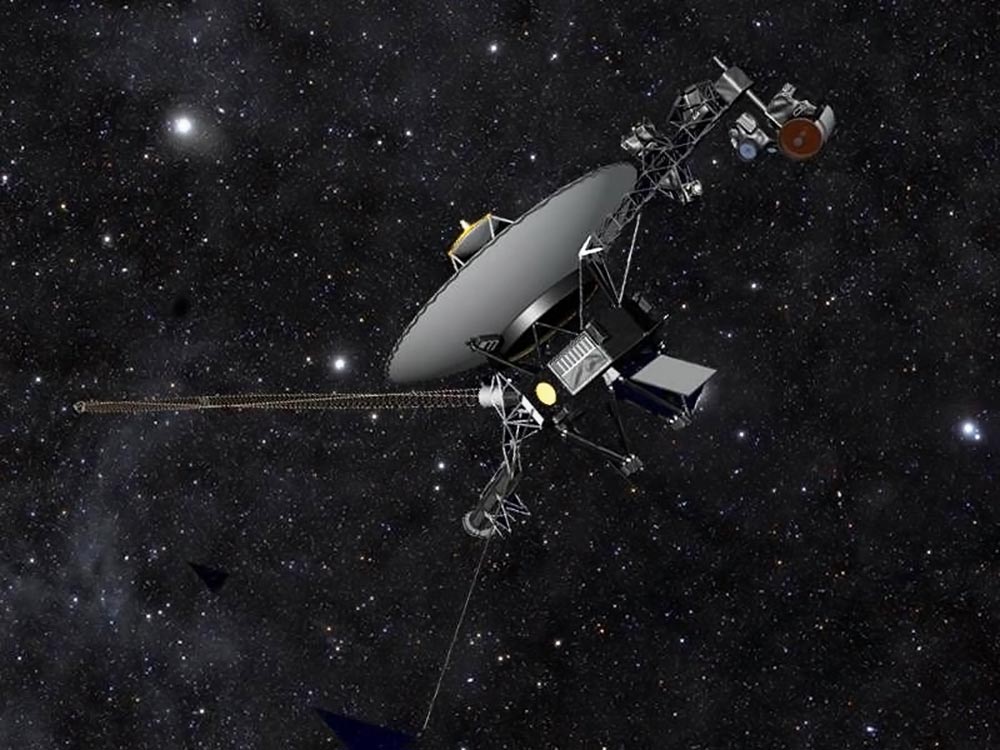
    Voyager Spacecraft Traveling Through Space
    An artist’s concept shows the Voyager spacecraft traveling through space against a field of stars. Credit: NASA/JPL-Caltech

    In hope that NASA’s Voyager 1 spacecraft will be able to transmit data through 2025, NASA has decided they need to further reduce its power consumption. By turning off another heater, they hope to make this possible without jeopardizing the ultraviolet spectrometer. Over the last 17 years, several heaters have been turned off, dropping the temperature below the originally designed minimum operating temperature of minus 35 degrees Celsius (minus 31 degrees Fahrenheit). Currently the operating temperature is slightly below minus 79 degrees Celsius (minus 110 degrees Fahrenheit), the coldest this spectrometer has ever endured, but it continues to collect and return data.

    In order to reduce power consumption, mission managers have turned off a heater on part of NASA’s Voyager 1 spacecraft, dropping the temperature of its ultraviolet spectrometer instrument more than 23 degrees Celsius (41 degrees Fahrenheit). It is now operating at a temperature below minus 79 degrees Celsius, the coldest temperature that the instrument has ever endured. This heater shut-off is a step in the careful management of the diminishing electrical power so that the Voyager spacecraft can continue to collect and transmit data through 2025.

    At the moment, the spectrometer continues to collect and return data. It was originally designed to operate at temperatures as low as minus 35 degrees Celsius, but it has continued to operate in ever chillier temperatures as heaters around it have been turned off over the last 17 years. It was not known if the spectrometer would continue working, but since 2005, it has been operating at minus 56 degrees Celsius (minus 69 degrees Fahrenheit). So engineers are encouraged that the instrument has continued to operate, even after the nearby heater was turned off in December. (The spectrometer is likely operating at a temperature somewhat lower than minus 79 degrees Celsius, but the temperature detector does not go any lower.)

    Scientists and mission managers will continue to monitor the spectrometer’s performance. It was very active during Voyager 1’s encounters with Jupiter and Saturn, and since then an international team led by scientists in France has been analyzing the spectrometer’s data.

    This latest heater shut-off was actually part of the nearby infrared spectrometer, which itself has not been operational on Voyager 1 since 1998.

    Never miss a breakthrough: Join the SciTechDaily newsletter.
    Follow us on Google and Google News.

    NASA Spacecraft Spectrometer Voyager 1
    Share. Facebook Twitter Pinterest LinkedIn Email Reddit

    Related Articles

    MIT’s New Dual-Mode Rocket System Could Send Tiny Satellites to Mars

    Botched Pressure Test of Russian Soyuz Capsule Delays Launch by a Month

    Juno Spacecraft Completes First Trajectory Correction Maneuver

    NASA’s THEMIS Satellite Records Effect of Geomagnetic Storms on Radiation Belts

    NASA’s Cassini Spacecraft Shows Dune Patterns of Titan

    Orion Mockup Takes Final Splash Test

    NASA Plans Trajectory Maneuver for Mars Science Laboratory Spacecraft

    NASA Probe Takes Close-Up Photos of Giant Vesta Asteroid

    NASA’s Voyager 1 in “Cosmic Purgatory”

    Leave A Reply Cancel Reply

    • Facebook
    • Twitter
    • Pinterest
    • YouTube

    Don't Miss a Discovery

    Subscribe for the Latest in Science & Tech!

    Trending News

    This Copper Drug Clears Alzheimer’s Brain Toxins and Boosts Memory

    Adults Over 65 Lost Massive Amounts of Weight With Ozempic

    How Flocking Birds “Defy” One of Physics’ Most Fundamental Laws

    Physicists Create a New Kind of Schrödinger’s Cat State From Exotic Quantum Building Blocks

    Your Diet Could Be Missing the Key Ingredient for Heart Protection

    Researchers Warn Widely Prescribed Blood Pressure Drugs Could Be Harming Diabetic Kidneys

    James Webb Spots Something Strange Between Day and Night on an Alien Planet

    How Ancient People Moved a 6-Ton Stone 700 Kilometers to Stonehenge

    Follow SciTechDaily
    • Facebook
    • Twitter
    • YouTube
    • Pinterest
    • Newsletter
    • RSS
    SciTech News
    • Biology News
    • Chemistry News
    • Earth News
    • Health News
    • Physics News
    • Science News
    • Space News
    • Technology News
    Recent Posts
    • Ancient Black Holes May Have Survived a Cosmic Era Before the Big Bang
    • What if Time Isn’t Fundamental? Physicists Just Tested the Idea in the Lab
    • Scientists Let People Play Video Games Using Only Their Thoughts
    • Women’s Brains May Be More Vulnerable to Dementia Risk Factors Than Scientists Realized
    • Scientists Say We’ve Been Wrong About the Aging Brain
    Copyright © 1998 - 2026 SciTechDaily. All Rights Reserved.
    • Science News
    • About
    • Contact
    • Editorial Board
    • Privacy Policy
    • Terms of Use

    Type above and press Enter to search. Press Esc to cancel.