
Close Menu
    Facebook X (Twitter) Instagram
    SciTechDaily
    • Biology
    • Chemistry
    • Earth
    • Health
    • Physics
    • Science
    • Space
    • Technology
    Facebook X (Twitter) Pinterest YouTube RSS
    SciTechDaily
    Home»Health»Why Are Wait Times in California Emergency Rooms So Long?
    Health

    Why Are Wait Times in California Emergency Rooms So Long?

    By University of California - San FranciscoJuly 26, 20233 Comments3 Mins Read
    Facebook Twitter Pinterest Telegram LinkedIn WhatsApp Email Reddit
    Share
    Facebook Twitter LinkedIn Pinterest Telegram Email Reddit
    Emergency Room Hospital
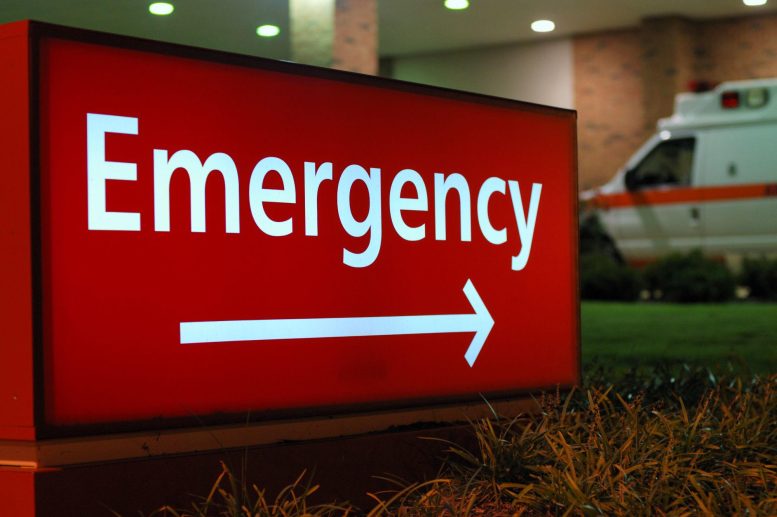
    A recent study from UC San Francisco reveals that the long wait times in California’s emergency departments are due to their capacity failing to keep up with the increased demand over the last decade. The analysis found that while the number of emergency departments decreased, the number of visits and high-severity cases significantly increased.

    Overcrowding in California’s emergency departments is worsening due to increasing patient demand and declining hospital capacity, prompting calls for urgent policy changes.

    A new study conducted by UC San Francisco sheds light on the reasons for extensive waiting periods in emergency rooms, attributing it primarily to a misalignment between the growing patient demand and the emergency department’s (ED’s) capacity in California over the past ten years.

    The researchers found that there was an approximately 4% reduction in the total count of EDs across the state, whereas the frequency of ED visits experienced a 7.4% increase. This comprehensive study marks the first scrutiny of recent trends in emergency medical service utilization in California. Additionally, they disclosed that high-severity visits surged by almost 68%, while the visits for less severe cases dropped by 63%.

    “We know that there is overcrowding in the ED,” said lead author Renee Y. Hsia, MD, a UCSF professor of emergency medicine. “Capacity has largely failed to match the rise in patient demand.”

    The paper was recently published in the journal JAMA Network Open.

    Amid numerous changes in the U.S. healthcare system in recent years, emergency departments (EDs) continue to play a vital role in the system. EDs are required to treat all patients regardless of their ability to pay, and they function as a safety net for uninsured patients, many of whom use the ED for primary care services.

    The new study used data from the California Department of Health Care Access and Information and the U.S. Census Bureau from January 1, 2011, to December 31, 2021.

    A Mismatch in Capacity and Demand

    In that time, California’s population grew by 4.2%, but the number of emergency departments in California fell from 339 to 326, while the number of hospital beds decreased by 2.5% (75,940 to 74,052).

    “Our findings show what many health care workers already know to be true: the burden on emergency departments across the state of California has intensified over the last 10-15 years,” Hsia said.

    “Becoming aware of these trends is the first step to improving emergency department care,” she said. “To efficiently and equitably address ED crowding and improve overall care, policymakers and health care administrators should work to increase ED capacity, while also making thoughtful decisions about where and how to best allocate resources.”

    Reference: “Patterns in Patient Encounters and Emergency Department Capacity in California, 2011-2021” by Renee Y. Hsia, Stefany Zagorov, Nandita Sarkar, Michael T. Savides, Madeline Feldmeier and Newton Addo, 22 June 2023, JAMA Network Open.
    DOI: 10.1001/jamanetworkopen.2023.19438

    Never miss a breakthrough: Join the SciTechDaily newsletter.
    Follow us on Google and Google News.

    California Hospitals Public Health UCSF
    Share. Facebook Twitter Pinterest LinkedIn Email Reddit

    Related Articles

    A “Serious Concern” – Worrying Numbers of Pregnant Women Are Being Exposed to Cancer-Causing Chemicals

    Two Years After Infection, Half of People Hospitalized With COVID-19 Still Have at Least One Symptom

    Waning Immunity: Your Mental Health May Impact Your Chances of Breakthrough COVID

    The Latest Research on Coffee and Your Risk for Heart Rhythm Problems – Good News

    No Sign of Pfizer or Moderna COVID-19 Vaccines in Breast Milk

    Common Antibiotic – Azithromycin – No More Effective Than Placebo for COVID-19

    Scientists Detect 55 Chemicals Never Before Reported in People – 42 “Mystery Chemicals” Whose Sources Are Unknown

    Growing List of Risk Factors for Alzheimer’s Disease: Forest Fires, Cars, and Power Plants

    “Awe Walks” – For Just 15 Minutes Once a Week – Boost Emotional Well-Being

    3 Comments

    1. Jojo on July 26, 2023 2:21 pm

      The real reason is that ER’s have become regular MD offices for the uninsured. ER’s should be be able to deny care to anyone who is not having a valid emergency.

      Reply
    2. Jim Stevens on July 27, 2023 5:13 pm

      If a restaurant was obligated to provide free meals to anyone that showed up, whether the person could pay or not, then there would be long waits at that restaurant–even for those that can and do pay. In fact, that restaurant, and any others like it, would likely go out of business.

      Reply
    3. John Fembup on July 27, 2023 5:44 pm

      Obvious question: why did the number of EDs decrease?

      Did the actual study determine the reason? If so why does the report not mention it?

      Or if not, I wonder why not?

      Reply
    Leave A Reply Cancel Reply

    • Facebook
    • Twitter
    • Pinterest
    • YouTube

    Don't Miss a Discovery

    Subscribe for the Latest in Science & Tech!

    Trending News

    Quantum Gravity May Be Far Less Quantum Than Physicists Expected

    New Tool Supercharges Immunotherapy Against Prostate Cancer

    The Hidden Cancer Risk of Ketogenic Diets

    One Asteroid Collision May Have Rocked Earth, Mars, and the Moon

    New Study Reveals Herpesvirus Infection May Accelerate Alzheimer’s Disease

    Microplastics Found in 84% of Serious Heart Attack Patients

    Why Are Bees Struggling To Survive This Summer?

    New Metal Alloy Is up to 10 Times Stronger Than Structural Steel

    Follow SciTechDaily
    • Facebook
    • Twitter
    • YouTube
    • Pinterest
    • Newsletter
    • RSS
    SciTech News
    • Biology News
    • Chemistry News
    • Earth News
    • Health News
    • Physics News
    • Science News
    • Space News
    • Technology News
    Recent Posts
    • Scientists Are Turning Empty Roadsides Into Butterfly Habitats
    • The Hotspot Beneath Hawaii Is Getting Hotter, Defying a Long-Held Geological Theory
    • Scientists Warn a Silent Oxygen Crisis Is Spreading Through Earth’s Waters
    • Rare “Super-Jupiter” Discovered on an Extraordinary 180-Day Orbit
    • First Sugar Ever Found in Interstellar Space Could Help Explain Life’s Origins
    Copyright © 1998 - 2026 SciTechDaily. All Rights Reserved.
    • Science News
    • About
    • Contact
    • Editorial Board
    • Privacy Policy
    • Terms of Use

    Type above and press Enter to search. Press Esc to cancel.