
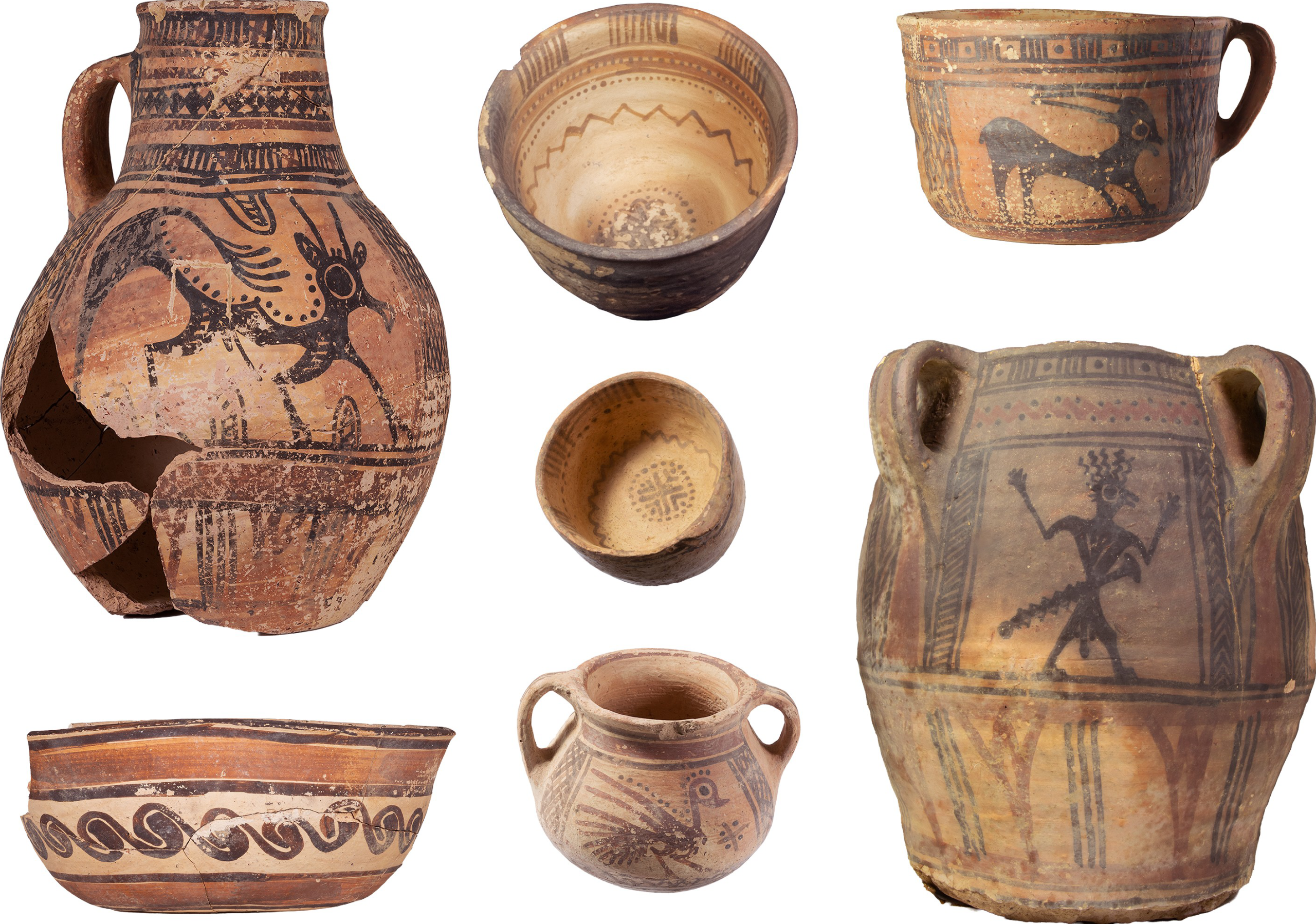
Researchers found that brands existed long before modern capitalism.
Long before modern corporations and capitalism, craftspeople may already have been producing goods with a recognizable identity that traveled far beyond their place of origin. An international team led by Marta Luciani of the University of Vienna has found evidence that distinctive painted pottery made in Northwestern Arabia about 3,200 years ago functioned in many ways like a modern brand.
The findings come from the oasis of Qurayyah, where researchers investigated the production of a distinctive two-color painted pottery. Their analysis suggests the vessels were visually recognizable, desirable, and traded widely enough to meet criteria the researchers associate with branding. The results were published in PLOS One. The research included scientists from M.I.T., the Harvard Museum of the Ancient Near East, OeAI/OeAW, TU Wien, and the University of Sydney, with support from the Heritage Commission of the Saudi Ministry of Culture.
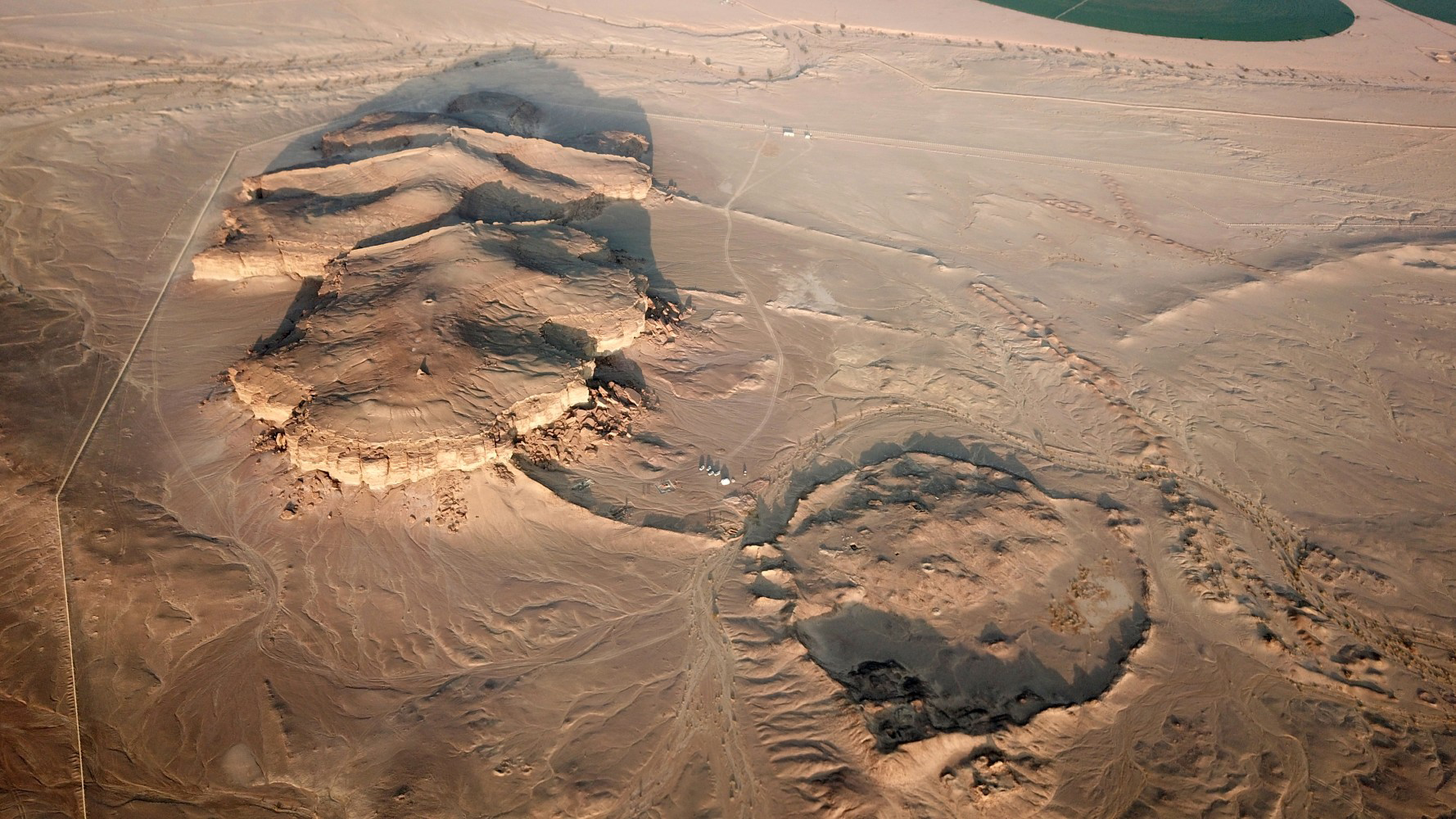
Qurayyah was the production center
Luciani worked with Pamela Fragnoli (OeAI/OeAW) and Johannes H. Sterba (TU Wien) to analyze several dozen Bronze Age ceramic vessels from Qurayyah. Their results challenge earlier ideas about the famous ‘Midianite Pottery’ and provide evidence that the ceramics were actually produced in the Qurayyah oasis.
“Our discovery sheds light on how even in the arid environment of desert oases, where essential resources such as clay, water and fuel were scarce, local communities already in the Bronze Age were far from marginal but participated in wider networks of technological know-how shared with neighboring regions, such as the Southern Levant and Syria. Oasis-dwellers were resourceful and inventive enough to create their own ceramic repertoire: to cherish at home and eventually export abroad,” says study lead Marta Luciani from the Department of Prehistoric and Historical Archaeology of the University of Vienna.
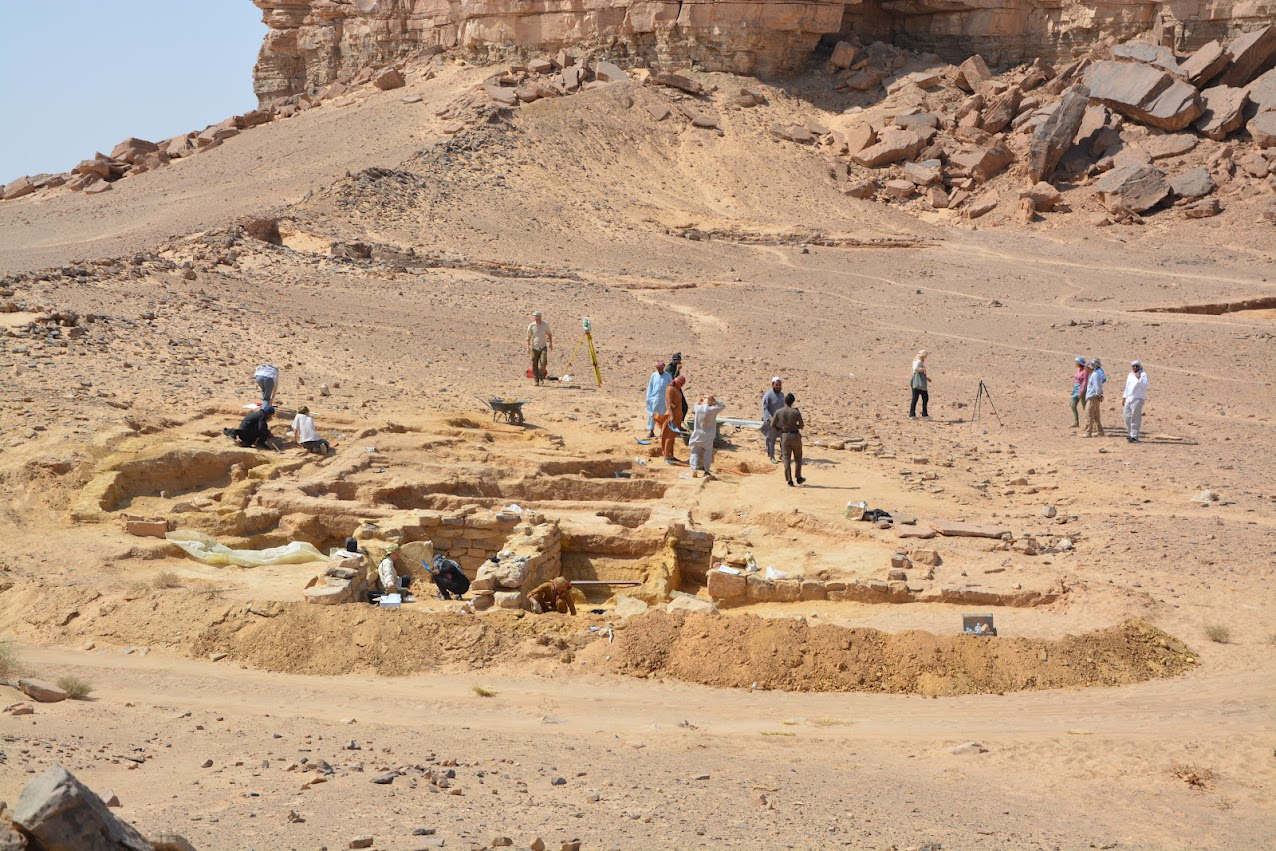
The pottery functioned like a brand
To determine whether the pottery could reasonably be described as a brand, the researchers established a set of criteria that included visual identity, material consistency, technological continuity, centralized production, export circulation, local imitation, intentional commercial scope, and cultural reputation.
“Thus our study’s implications stretch beyond archaeology and the long-term relationship between humans and natural resources in climatically extreme regions into fields such as the economic mechanisms mediating producer-consumer relationships across time and space”, adds Luciani, archaeologist and team leader at the Human Evolution and Archaeological Science (HEAS) network at the University of Vienna.
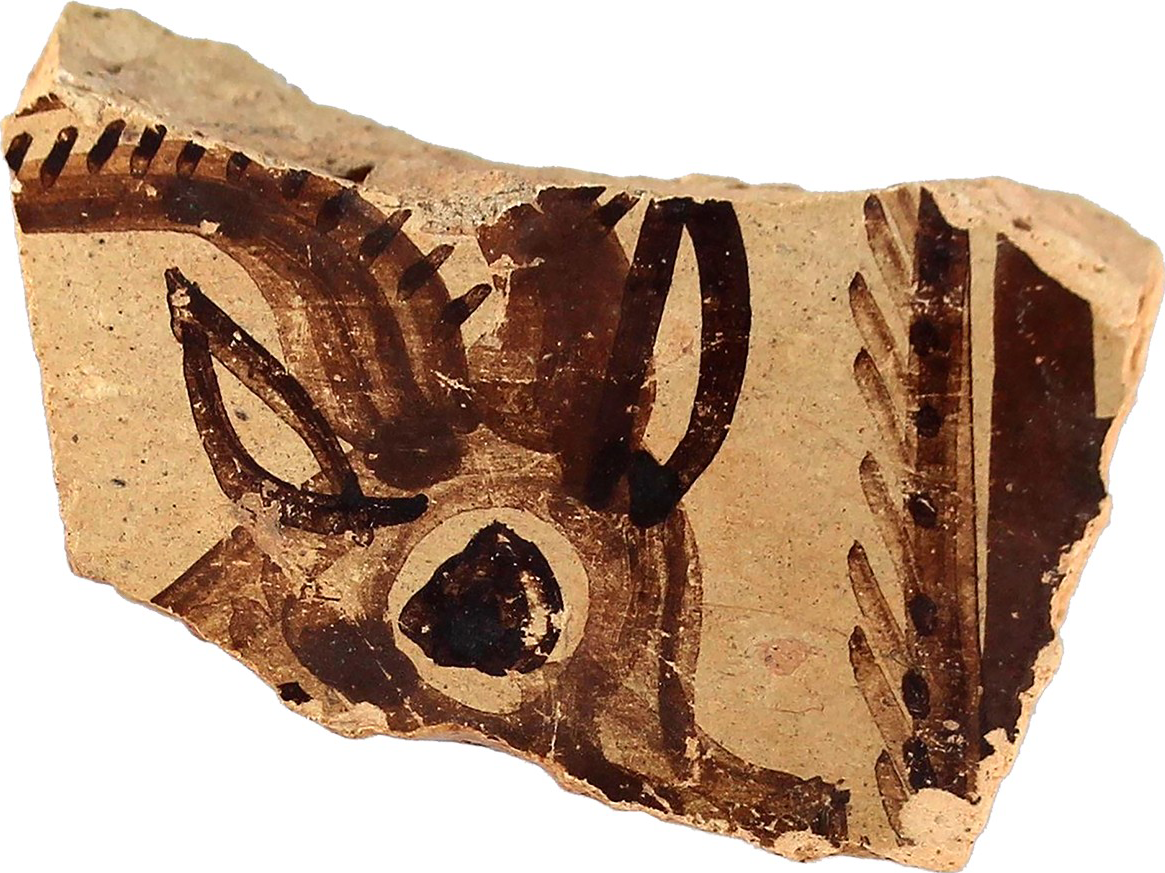
The team relied on several complementary methods to establish where and how the ceramics were made.
“Decisive for this first-time discovery was our interdisciplinary and multi-scalar approach, combining examination of stratified material, vessel-shaping technology, and petrographic analysis of ceramic thin sections under the polarizing microscope,” explains Pamela Fragnoli, Head of the Ceramic Lab of the Austrian Archaeological Institute at the Austrian Academy of Science (OeAI/OeAW),
“We cross-checked with chemical fingerprinting of the vessels’ composition, down to their trace elements obtained via Neutron Activation Analysis,” adds Johannes H. Sterba, Head of the Center for Labeling and Isotope Production at the TU Wien.
The pottery tradition itself stretched across a remarkably long period. Doralice Klainscek, PhD candidate at the University of Vienna and study co-author, specifies: “The first set of Qurayyah Painted Ware was produced 3,600 years ago. Our most striking discovery was ascertaining that painted pottery production continued, by constantly evolving (Fig. 2). Four centuries on, ca. 3,200 years ago they manufactured a flourishing repertoire of painted animals and human rituals (Fig. 3): this became the brand that was exported over hundreds of kilometers north to the Southern Levant, to sites like Tell el-Kheleifeh and even the Timna sanctuary of the Egyptian goddess Hathor, and south to North Arabia. But Qurayyah’s potting tradition did not stop and continued to be based in the oasis for another thousand years, well into the final Iron Age.”
Reference: “Creating a brand. Genesis, transformation and diffusion of Qurayyah Painted Ware” by Marta Luciani, Pamela Fragnoli, William D. Gilstrap, Johannes H. Sterba, Doralice Klainscek, Joseph A. Greene, Stephen Bourke and Paul Donnelly, 19 August 2026, PLOS ONE.
DOI: 10.1371/journal.pone.0351296
Never miss a breakthrough: Join the SciTechDaily newsletter.
Follow us on Google and Google News.
1 Comment
A 3,200-year-old brand? Or perhaps an
CIGI story?
From today’s IP perspective, it also sounds remarkably familiar to a Geographical Indication for Craft and Industrial Products (CIGI).
The lesson hasn’t changed much in 3,200 years: when craftsmanship and place create reputation, that reputation is worth protecting.
And there is a good moment to do it: the EUIPO SME Fund 2026 now offers a dedicated CIGI voucher, covering 50% of eligible costs, up to EUR 2,000.
Ancient problem. Modern protection.