
Close Menu
    Facebook X (Twitter) Instagram
    SciTechDaily
    • Biology
    • Chemistry
    • Earth
    • Health
    • Physics
    • Science
    • Space
    • Technology
    Facebook X (Twitter) Pinterest YouTube RSS
    SciTechDaily
    Home»Science»Mural Painted More Than 2,500 Years Ago Depicts Salt as an Ancient Maya Commodity at a Marketplace
    Science

    Mural Painted More Than 2,500 Years Ago Depicts Salt as an Ancient Maya Commodity at a Marketplace

    By Louisiana State UniversityMarch 23, 20211 Comment4 Mins Read
    Facebook Twitter Pinterest Telegram LinkedIn WhatsApp Email Reddit
    Share
    Facebook Twitter LinkedIn Pinterest Telegram Email Reddit
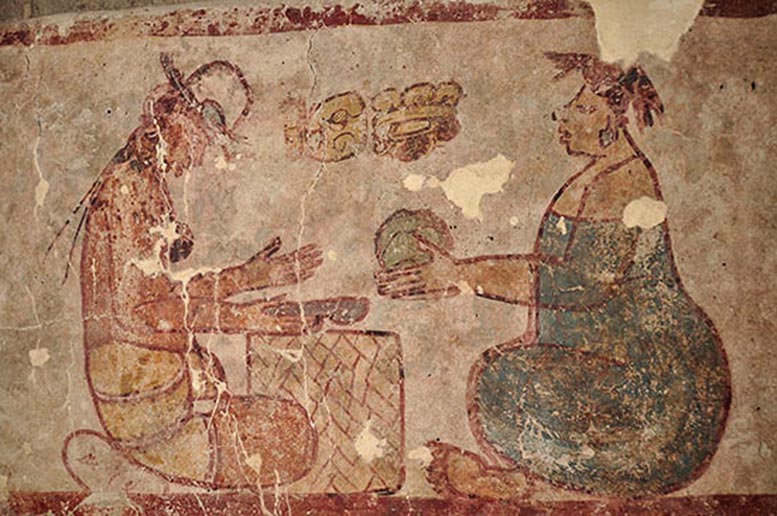
    Salt Depicted in Calakmul Mural
    The first documented record of salt as an ancient Maya commodity at a marketplace is depicted in a mural painted more than 2,500 years ago at Calakmul, a UNESCO World Heritage site in the Yucatan Peninsula in Mexico. Credit: Rogelio Valencia, Proyecto Arqueológico Calakmul

    Maya salt production was sophisticated, widespread, and possibly formed an early system of currency.

    The first documented record of salt as an ancient Maya commodity at a marketplace is depicted in a mural painted more than 2,500 years ago at Calakmul, a UNESCO World Heritage site in the Yucatan Peninsula in Mexico. In the mural that portrays daily life, a salt vendor shows what appears to be a salt cake wrapped in leaves to another person, who holds a large spoon over a basket, presumably of loose, granular salt. This is the earliest known record of salt being sold at a marketplace in the Maya region. Salt is a basic biological necessity and is also useful for preserving food. Salt also was valued in the Maya area because of its restricted distribution.
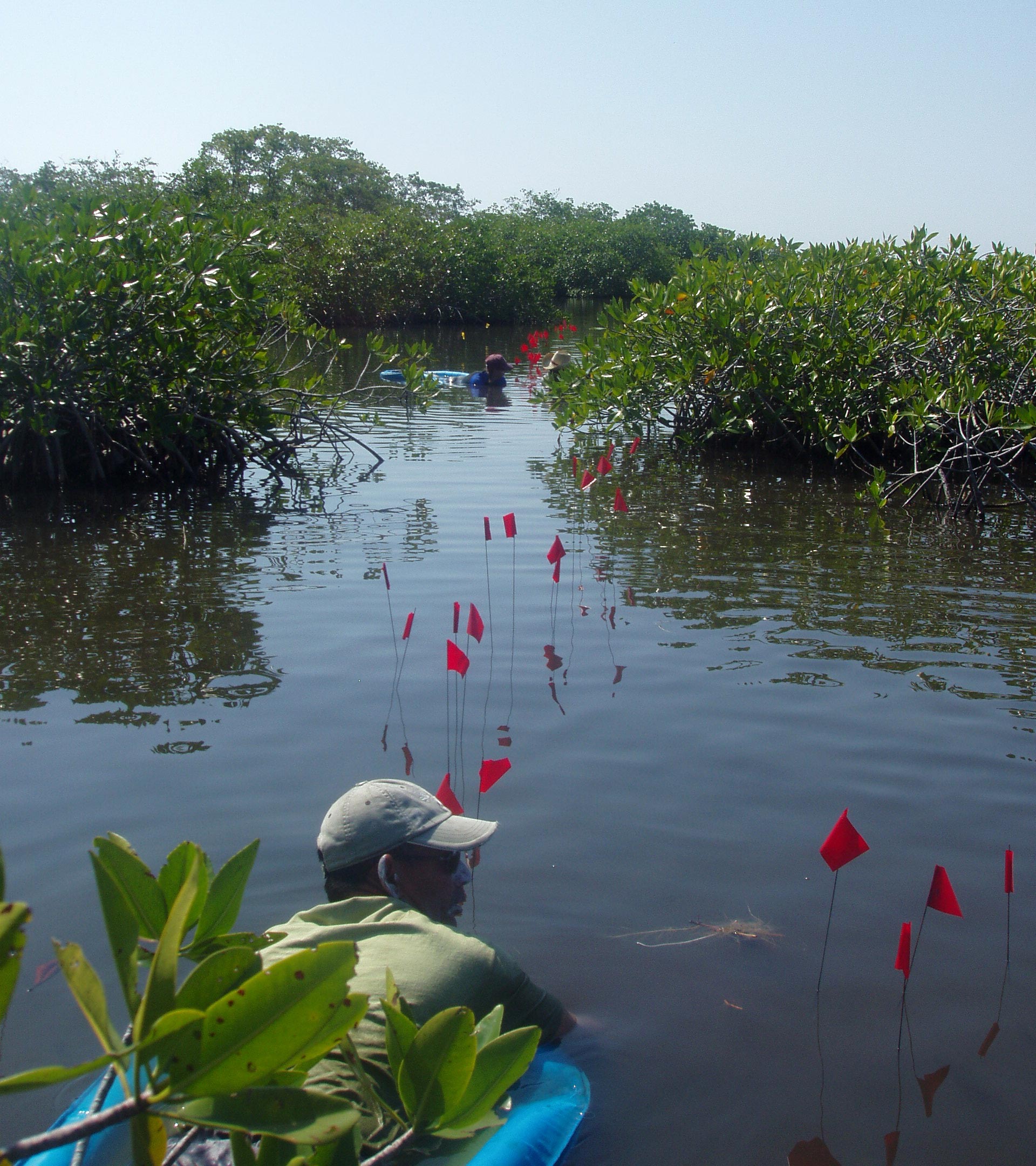
    Archeologists Excavate the Ancient Maya Paynes Creek Saltworks
    LSU archaeologists discovered in 2004 the first remnants of ancient Maya salt kitchen buildings made of pole and thatch that had been submerged and preserved in a saltwater lagoon in a mangrove forest in Belize. Credit: Heather McKillop, LSU

    Salt cakes could have been easily transported in canoes along the coast and up rivers in southern Belize, writes LSU archaeologist Heather McKillop in a new paper published in the Journal of Anthropological Archaeology. She discovered in 2004 the first remnants of ancient Maya salt kitchen buildings made of pole and thatch that had been submerged and preserved in a saltwater lagoon in a mangrove forest in Belize. Since then, she and her team of LSU graduate and undergraduate students and colleagues have mapped 70 sites that comprise an extensive network of rooms and buildings of the Paynes Creek Salt Works.

    “It’s like a blueprint for what happened in the past,” McKillop said. “They were boiling brine in pots over fires to make salt.”

    Her research team has discovered at the Paynes Creek Salt Works, 4,042 submerged architectural wooden posts, a canoe, an oar, a high-quality jadeite tool, stone tools used to salt fish and meat and hundreds of pieces of pottery.

    “I think the ancient Maya who worked here were producer-vendors and they would take the salt by canoe up the river. They were making large quantities of salt, much more than they needed for their immediate families. This was their living,” said McKillop, who is the Thomas & Lillian Landrum Alumni Professor in the LSU Department of Geography & Anthropology.
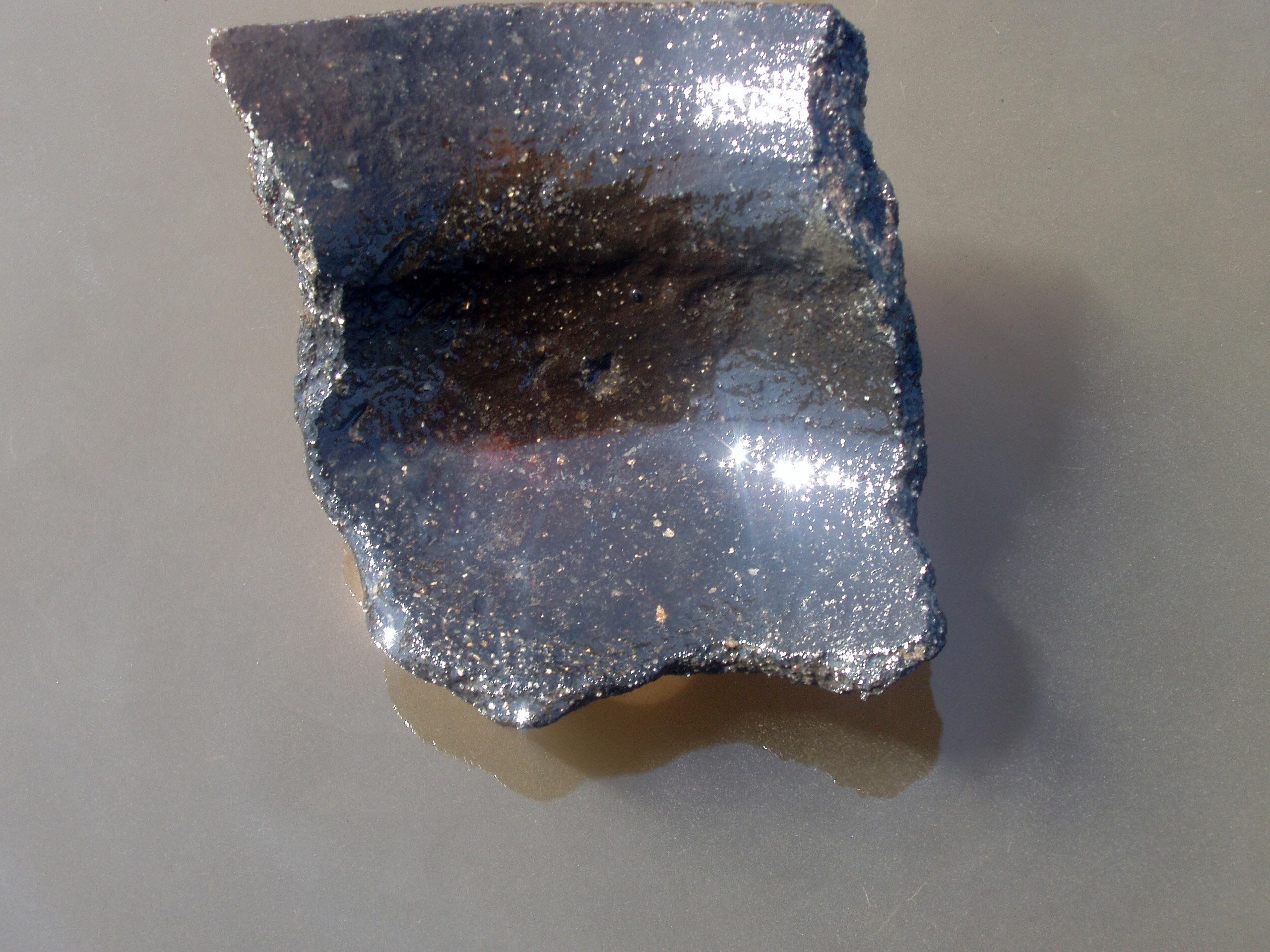
    Excavated Potsherd
    LSU archeologist Heather McKillop’s research team has discovered at the Paynes Creek Salt Works, 4,042 submerged architectural wooden posts, a canoe, an oar, a high-quality jadeite tool, stone tools used to salt fish and meat and hundreds of pieces of pottery. Credit: Heather McKillop, LSU

    Salt as Currency and Economic Driver

    She investigated hundreds of pieces of pottery, including 449 rims of ceramic vessels used to make salt. Two of her graduate students were able to replicate the pottery on a 3D printer in McKillop’s Digital Imaging Visualization in Archaeology lab at LSU based on scans taken in Belize at the study site. She discovered that the ceramic jars used to boil the brine were standardized in volume; thus, the salt producers were making standardized units of salt.

    “Produced as homogeneous units, salt may have been used as money in exchanges,” McKillop said.

    An ethnographic interview with a modern day salt producer in Sacapulas, Guatemala collected in 1981 supports the idea that the ancient Maya also may have viewed salt as a valuable commodity: 

    “The kitchen is a bank with money for us…So when we need money at any time during the year we come to the kitchen and make money, salt.”

    Reference: “Salt as a commodity or money in the Classic Maya economy” by Heather McKillop, 26 February 2021, Journal of Anthropological Archaeology.
    DOI: 10.1016/j.jaa.2021.101277

    Never miss a breakthrough: Join the SciTechDaily newsletter.
    Follow us on Google and Google News.

    Anthropology Archaeology History Louisiana State University Popular
    Share. Facebook Twitter Pinterest LinkedIn Email Reddit

    Related Articles

    Archaeologists Discover That Ancient Islamic Tombs Cluster Like Galaxies

    The City of David and the 80 Million-Year-Old Sharks’ Teeth Mystery

    Archaeologists Make Dramatic Discovery: A Prehistoric Human Type Previously Unknown to Science

    Underwater Archaeology Team Finds 9,000-Year-Old Stone Tool Artifacts

    Neanderthal and Early Modern Human Culture Co-existed Alongside Older Traditions for Over 100,000 Years

    When Good Governments Go Bad: History Shows That Societies Collapse When Leaders Undermine Social Contracts

    Defining Moment in Human Evolution: Turbulent Era Sparked Leap in Human Behavior, Technology 320,000 Years Ago

    Vast Stone Monuments Discovered in Saudi Arabia Were Constructed in 7,000 Years Ago

    How Ancient Poop Debunked Myth of Native American Lost Civilization

    1 Comment

    1. jdfd on March 25, 2021 10:08 pm

      Not sure where you got the date of 2500, LSU press release doest even give that date. The Chiik Nahb murals at Calakmul date to approximately 620-700 AD (Carrasco Vargas and Cordeiro Baqueiro 2012:14)(Maya Archaeology 2 2012).

      Reply
    Leave A Reply Cancel Reply

    • Facebook
    • Twitter
    • Pinterest
    • YouTube

    Don't Miss a Discovery

    Subscribe for the Latest in Science & Tech!

    Trending News

    Largest-Ever Study Finds Medicinal Cannabis Ineffective for Anxiety, Depression, PTSD

    250-Million-Year-Old Egg Solves One of Evolution’s Biggest Mysteries

    Living With Roommates Might Be Changing Your Gut Microbiome Without You Knowing

    Century-Old Cleaning Chemical Linked to 500% Increased Risk of Parkinson’s Disease

    What if Your Memories Never Happened? Physicists Take a New Look at the Boltzmann Brain Paradox

    One of the Universe’s Largest Stars May Be Getting Ready To Explode

    Scientists Discover Enzyme That Could Supercharge Ozempic-Like Weight Loss Drugs

    Popular Sweetener Linked to DNA Damage – “It’s Something You Should Not Be Eating”

    Follow SciTechDaily
    • Facebook
    • Twitter
    • YouTube
    • Pinterest
    • Newsletter
    • RSS
    SciTech News
    • Biology News
    • Chemistry News
    • Earth News
    • Health News
    • Physics News
    • Science News
    • Space News
    • Technology News
    Recent Posts
    • Black Hole Jets Pack Power of 10,000 Suns, Stunning New Study Reveals
    • A Cosmic Crash Turned This Nearby Galaxy Into Chaos
    • This Alien Solar System Doesn’t Follow the Rules – and Scientists Are Intrigued
    • What Did Prehistoric Europeans Eat? Scientists Uncover Surprising Answers
    • Scientists Say This Overlooked Organ Could Hold the Key to Longer Life
    Copyright © 1998 - 2026 SciTechDaily. All Rights Reserved.
    • Science News
    • About
    • Contact
    • Editorial Board
    • Privacy Policy
    • Terms of Use

    Type above and press Enter to search. Press Esc to cancel.