
Magnesium salt is extracted from Sequim seawater using a novel flow-based technique.
People have been using salts from the ocean, like table salt, since prehistoric times. While table salt is the most easily obtained, seawater is a rich supply of other minerals, and researchers are investigating which ones may be extracted from the sea. Magnesium is one of these minerals that is abundant in the sea and is becoming more and more useful on land.
Magnesium has increasing uses in sustainability, such as carbon capture, low-carbon cement, and potential next-generation batteries. These uses are reviving interest in domestic magnesium production. Currently, salt lake brines, some of which are threatened by droughts, are used in an energy-intensive process in the United States to produce magnesium. The Department of Energy included magnesium on its recently released list of critical materials for domestic production.
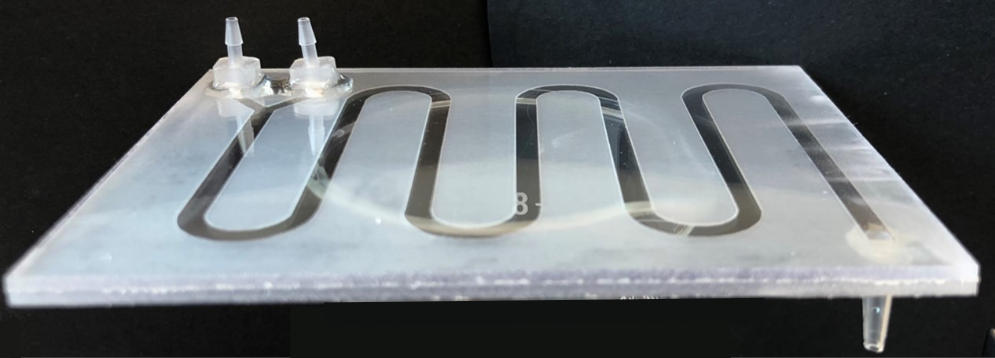
Researchers at Pacific Northwest National Laboratory (PNNL) and the University of Washington (UW) have discovered a simple method to separate a pure magnesium salt, a feedstock for magnesium metal, from seawater. Their findings are detailed in an paper that was recently published in the journal Environmental Science & Technology Letters. Their innovative approach flows two solutions side-by-side in a long stream. The technique, known as the laminar coflow approach, makes use of the boundary that is continuously reacting as a result of the flowing solutions. The system never achieves equilibrium since new solutions are always being introduced.
This method plays a new trick with an old process. In the mid-20th century, chemical companies successfully created magnesium feedstock from seawater by mixing it with sodium hydroxide, commonly known as lye. The resulting magnesium hydroxide salt, which gives the antacid milk of magnesia its name, was then processed to make magnesium metal. However, the process results in a complex mixture of magnesium and calcium salts, which are hard and costly to separate. This recent work produces pure magnesium salt, enabling more efficient processing.
“Normally, people move separations research forward by developing more complicated materials,” said PNNL chemist and UW Affiliate Professor of Materials Science and Engineering Chinmayee Subban. “This work is so exciting because we’re taking a completely different approach. We found a simple process that works. When scaled, this process could help drive the renaissance of U.S. magnesium production by generating primary feedstock. We’re surrounded by a huge, blue, untapped resource.”
From Sequim Water to Solid Salt
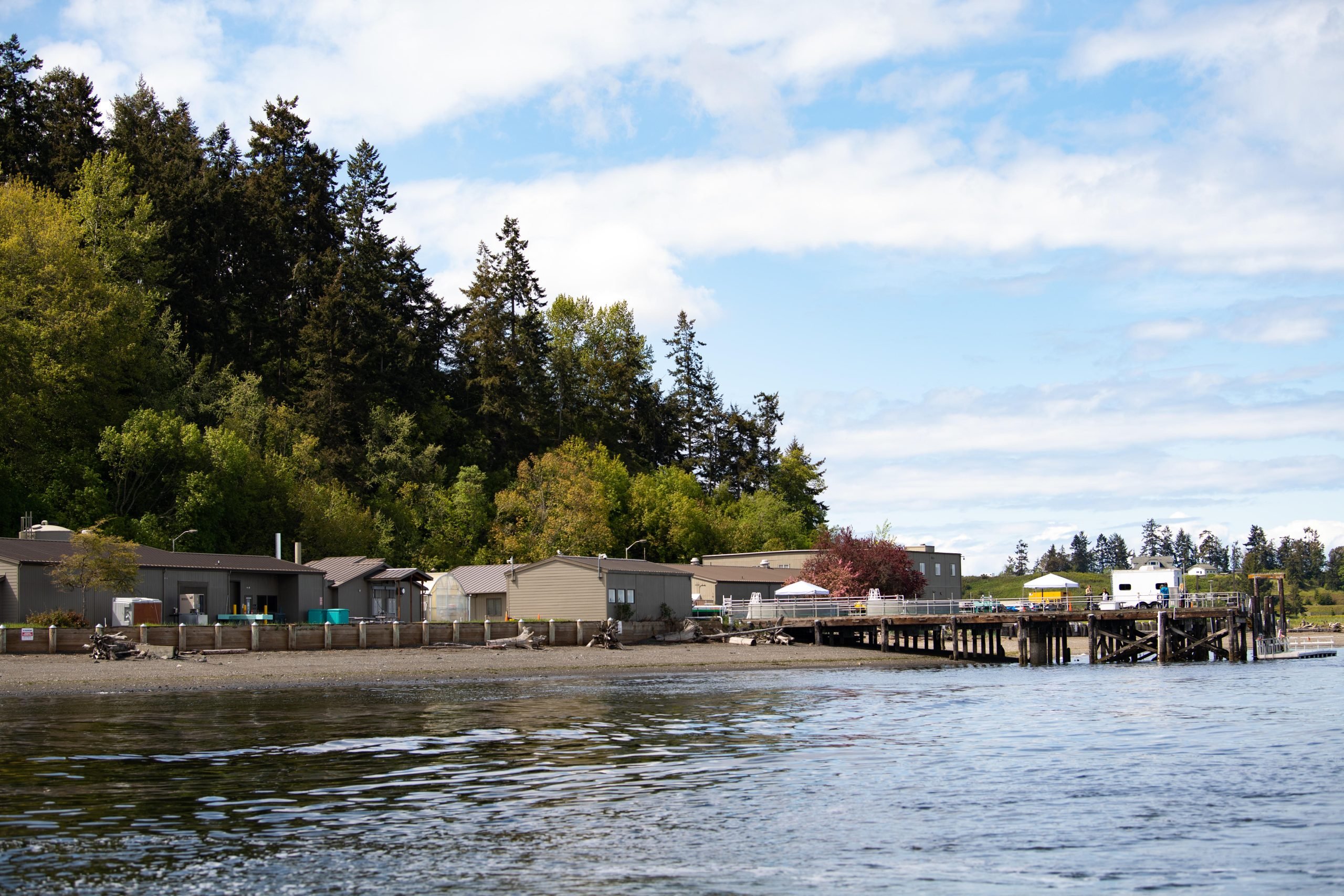
Subban and the team tested their new method using seawater from the PNNL-Sequim campus, allowing the researchers to take advantage of PNNL facilities across Washington State.
“As a Coastal Sciences staff member, I just called a member of our Sequim chemistry team and requested a seawater sample,” said Subban. “The next day, we had a cooler delivered to our lab in Seattle. Inside, we found cold packs and a bottle of chilled Sequim seawater.” This work represents the collaboration that can happen across PNNL’s Richland, Seattle, and Sequim campuses.
In the laminar coflow method, the researchers flow seawater alongside a solution with hydroxide. The magnesium-containing seawater quickly reacts to form a layer of solid magnesium hydroxide. This thin layer acts as a barrier to solution mixing.
“The flow process produces dramatically different results than simple solution mixing,” said PNNL postdoctoral researcher Qingpu Wang. “The initial solid magnesium hydroxide barrier prevents calcium from interacting with the hydroxide. We can selectively produce pure solid magnesium hydroxide without needing additional purification steps.”
The selectivity of this process makes it particularly powerful. Generating pure magnesium hydroxide, without any calcium contamination, allows researchers to skip energy-intensive and expensive purification steps.
Sustainability for the Future
The new and gentle process has the potential to be highly sustainable. For example, the sodium hydroxide used to extract the magnesium salt can be generated on-site using seawater and marine renewable energy. Removing magnesium is a necessary pre-treatment for seawater desalination. Coupling the new process with existing technologies could make it easier and cheaper to turn seawater into freshwater.
The team is particularly excited about the future of the process. Their work is the first demonstration of the laminar coflow method for selective separations. This new approach has many additional potential applications, but more work needs to be done to understand the underlying chemistry of the process. The knowledge gap offers new possibilities and research directions for powering the blue economy.
“We want to take this work from the empirical to the predictive,” said PNNL materials scientist Elias Nakouzi. “There is an exciting opportunity to develop a fundamental understanding of how this process operates while applying it to important problems like creating new energy materials and achieving selective separation of hard-to-separate ions for water treatment and resource recovery.”
Reference: “Flow-Assisted Selective Mineral Extraction from Seawater” by Qingpu Wang, Elias Nakouzi, Elisabeth A. Ryan and Chinmayee V. Subban, 31 May 2022, Environmental Science & Technology Letters.
DOI: 10.1021/acs.estlett.2c00229
The published study was supported by the PNNL Laboratory Directed Research and Development program. Elisabeth Ryan of UW was also a co-author of the study. The current development of this technology is supported by the Department of Energy, Office of Energy Efficiency and Renewable Energy, Water Power Technologies Office under the Marine Energy Seedlings Program.
Never miss a breakthrough: Join the SciTechDaily newsletter.
Follow us on Google and Google News.
3 Comments
Because after all, aquatic life has no use for magnesium….
I’m flowing a laminar base right now! Seriously I hope once I can get that ACS article (why not open source?) I can suss out what molality brine they’re running and what very fine collander they catch MgCO2 flecks by.
“Currently, salt lake brines, some of which are threatened by droughts, …”
That may be a disadvantage to this particular method; however, exposing the salt pans at the surface will allow mining it and shipping to energy-rich areas, which will be cheaper than transporting the brine.
Again, people only see the negative side. Remember, when life gives you lemons …