
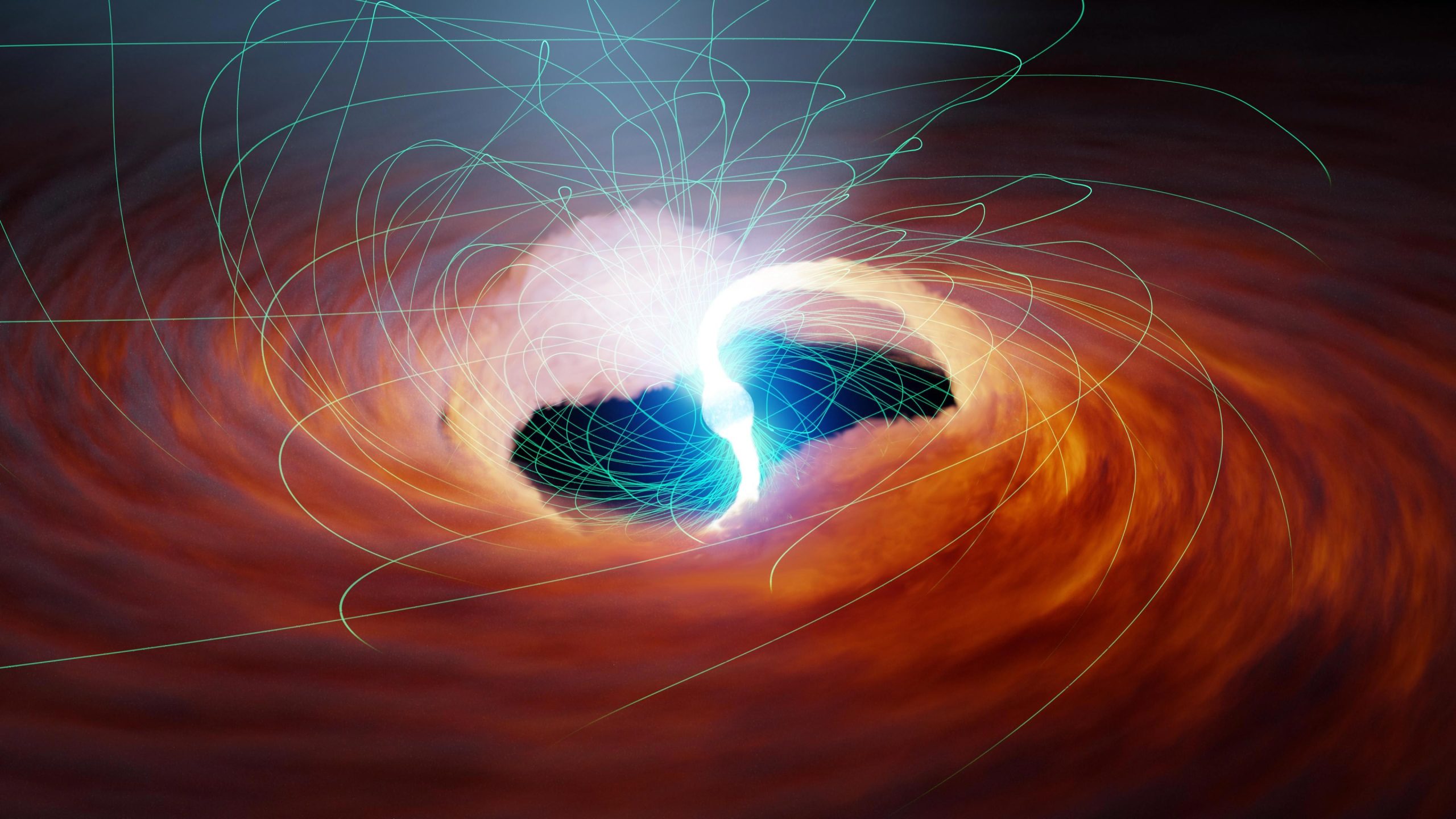
These objects are more than 100 times brighter than they should be. Observations by NASA’s NuSTAR X-ray telescope support a possible solution to this puzzle.
Ultra-luminous X-ray sources (ULXs) produce about 10 million times more energy than the Sun, regularly exceeding the Eddington limit by 100 to 500 times. This has left scientists puzzled as to how these cosmic objects can be so bright. A recent study published in The Astrophysical Journal utilized NASA’s Nuclear Spectroscopic Telescope Array (NuSTAR) to measure a ULX for the first time. Findings confirm that ULXs do indeed break the Eddington limit, potentially due to their strong magnetic fields. An alternative hypothesis suggests that the strong magnetic fields of ULXs distort atoms into elongated shapes, reducing the ability of photons to push atoms away and ultimately increasing an object’s maximum possible brightness.
Exotic cosmic objects known as ultra-luminous X-ray sources produce about 10 million times more energy than the Sun. They’re so radiant, in fact, that they appear to surpass a physical boundary called the Eddington limit, which puts a cap on how bright an object can be based on its mass. Ultra-luminous X-ray sources (ULXs, for short) regularly exceed this limit by 100 to 500 times, leaving scientists puzzled.
In a recent study published in The Astrophysical Journal, researchers report a first-of-its-kind measurement of a ULX taken with NASA’s Nuclear Spectroscopic Telescope Array (NuSTAR). The finding confirms that these light emitters are indeed as bright as they seem and that they break the Eddington limit. A hypothesis suggests this limit-breaking brightness is due to the ULX’s strong magnetic fields. But scientists can test this idea only through observations: Up to billions of times more powerful than the strongest magnets ever made on Earth, ULX magnetic fields can’t be reproduced in a lab.
Breaking the Limit
Particles of light, called photons, exert a small push on objects they encounter. If a cosmic object like a ULX emits enough light per square foot, the outward push of photons can overwhelm the inward pull of the object’s gravity. When this happens, an object has reached the Eddington limit, and the light from the object will theoretically push away any gas or other material falling toward it.
That switch – when light overwhelms gravity – is significant, because material falling onto a ULX is the source of its brightness. This is something scientists frequently observe in black holes: When their strong gravity pulls in stray gas and dust, those materials can heat up and radiate light. Scientists used to think ULXs must be black holes surrounded by bright coffers of gas. But in 2014, NuSTAR data revealed that a ULX by the name of M82 X-2 is actually a less-massive object called a neutron star. Like black holes, neutron stars form when a star dies and collapses, packing more than the mass of our Sun into an area not much bigger than a mid-size city.
This incredible density also creates a gravitational pull at the neutron star’s surface about 100 trillion times stronger than the gravitational pull on Earth’s surface. Gas and other material dragged in by that gravity accelerate to millions of miles per hour, releasing tremendous energy when they hit the neutron star’s surface. (A marshmallow dropped on the surface of a neutron star would hit it with the energy of a thousand hydrogen bombs.) This produces the high-energy X-ray light NuSTAR detects.
The recent study targeted the same ULX at the heart of the 2014 discovery and found that, like a cosmic parasite, M82 X-2 is stealing about 9 billion trillion tons of material per year from a neighboring star, or about 1 1/2 times the mass of Earth. Knowing the amount of material hitting the neutron star’s surface, scientists can estimate how bright the ULX should be, and their calculations match independent measurements of its brightness. The work confirmed M82 X-2 exceeds the Eddington limit.
No Illusions
If scientists can confirm of the brightness of more ULXs, they may put to bed a lingering hypothesis that would explain the apparent brightness of these objects without ULXs having to exceed the Eddington limit. That hypothesis, based on observations of other cosmic objects, posits that strong winds form a hollow cone around the light source, concentrating most of the emission in one direction. If pointed directly at Earth, the cone could create a sort of optical illusion, making it falsely appear as though the ULX were exceeding the brightness limit.
Even if that’s the case for some ULXs, an alternative hypothesis supported by the new study suggests that strong magnetic fields distort the roughly spherical atoms into elongated, stringy shapes. This would reduce the photons’ ability to push atoms away, ultimately increasing an object’s maximum possible brightness.
“These observations let us see the effects of these incredibly strong magnetic fields that we could never reproduce on Earth with current technology,” said Matteo Bachetti, an astrophysicist with the National Institute of Astrophysics’ Cagliari Observatory in Italy and lead author on the recent study. “This is the beauty of astronomy. Observing the sky, we expand our ability to investigate how the universe works. On the other hand, we cannot really set up experiments to get quick answers; we have to wait for the universe to show us its secrets.”
More About the Mission
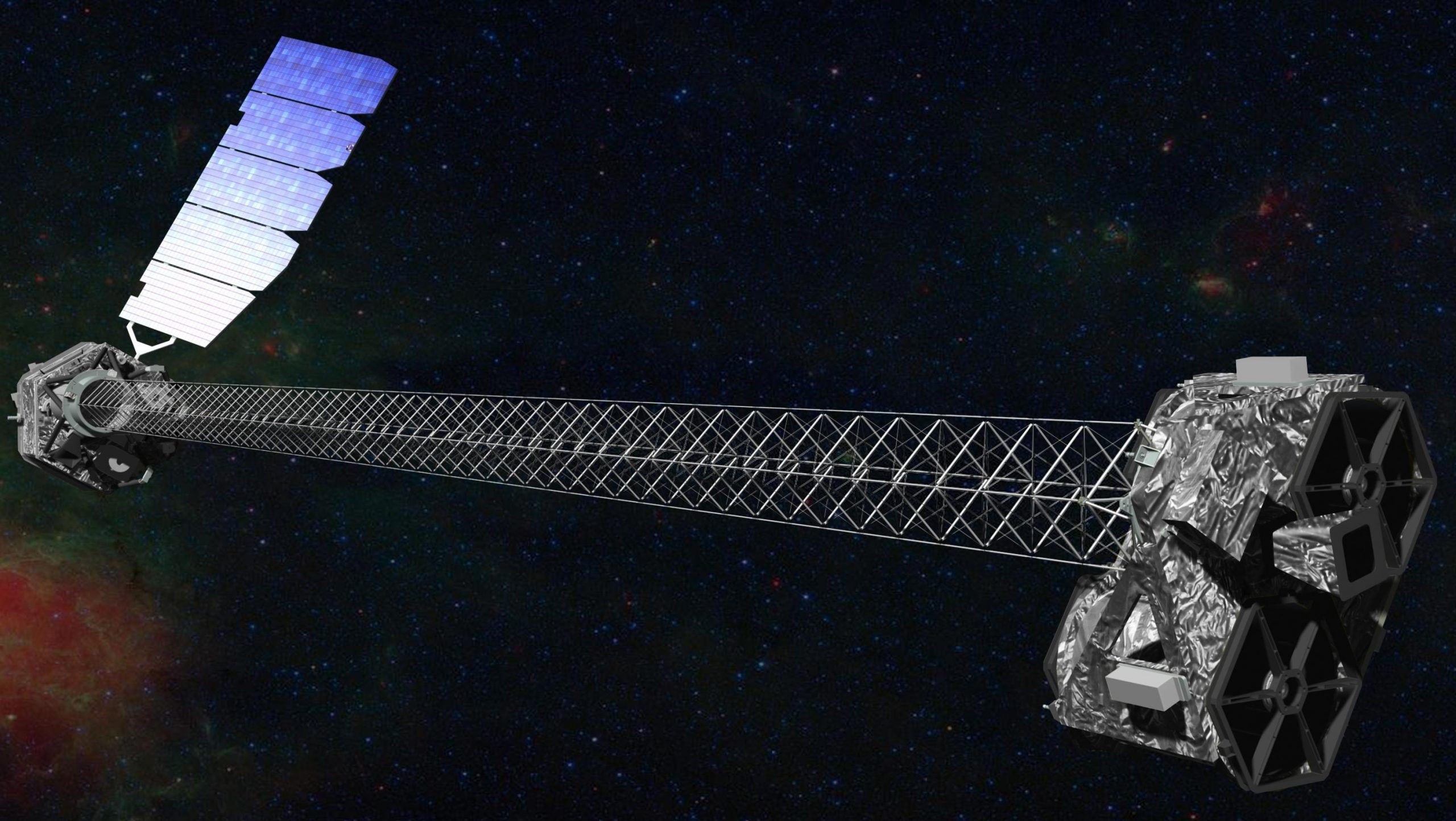
A Small Explorer mission led by the California Instituted of Technology (Caltech) and managed by NASA’s Jet Propulsion Laboratory (JPL) in Southern California for the agency’s Science Mission Directorate in Washington, NuSTAR was developed in partnership with the Danish Technical University and the Italian Space Agency (ASI). The spacecraft was built by Orbital Sciences Corp. in Dulles, Virginia. NuSTAR’s mission operations center is at the University of California, Berkeley, and the official data archive is at NASA’s High Energy Astrophysics Science Archive Research Center at NASA’s Goddard Space Flight Center. ASI provides the mission’s ground station and a mirror data archive. Caltech manages JPL for NASA.
Never miss a breakthrough: Join the SciTechDaily newsletter.
Follow us on Google and Google News.