
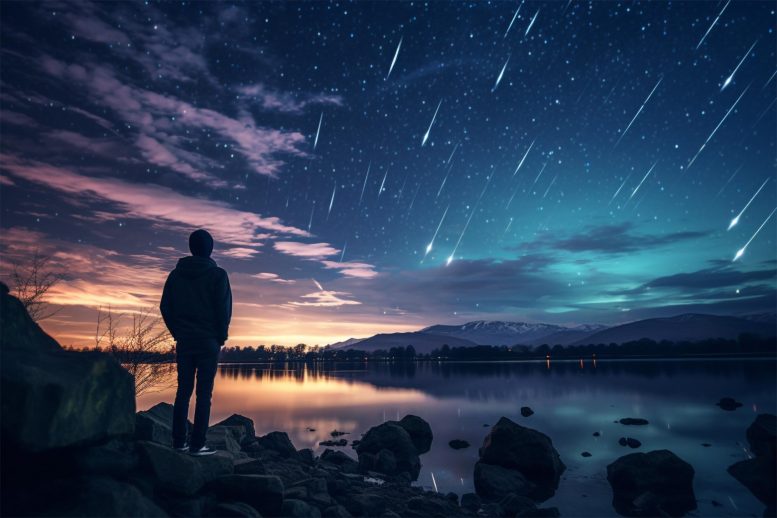
It’s August, and that heralds one of the year’s most beloved celestial events. The Perseid meteor shower will grace the skies, peaking this weekend on Saturday night to Sunday morning, August 12-13.
The Perseid meteor shower, a celestial event eagerly awaited by millions of skywatchers around the world, is about to make its annual return to the night sky. The shower is predicted to reach its peak before dawn on Sunday, August 13th, but viewers should plan to start looking for meteors already at nightfall on Saturday, August 12th. In a dark site away from light pollution, at the peak of the shower, observers might see one meteor per minute!
Viewing Conditions
“Conditions this year couldn’t be more perfect,” says Diana Hannikainen, Sky & Telescope’s Observing Editor. “The waning crescent Moon, which is only 8% illuminated, rises in the wee hours of the morning on August 13th and won’t interfere with viewing.” In addition, the fact that the peak coincides with a weekend night means people can stay up late — or even all night! — without worrying about being late for school or work. “The main thing that could hamper enjoyment of the spectacle would be clouds or light pollution,” Hannikainen cautions.
The Show Begins
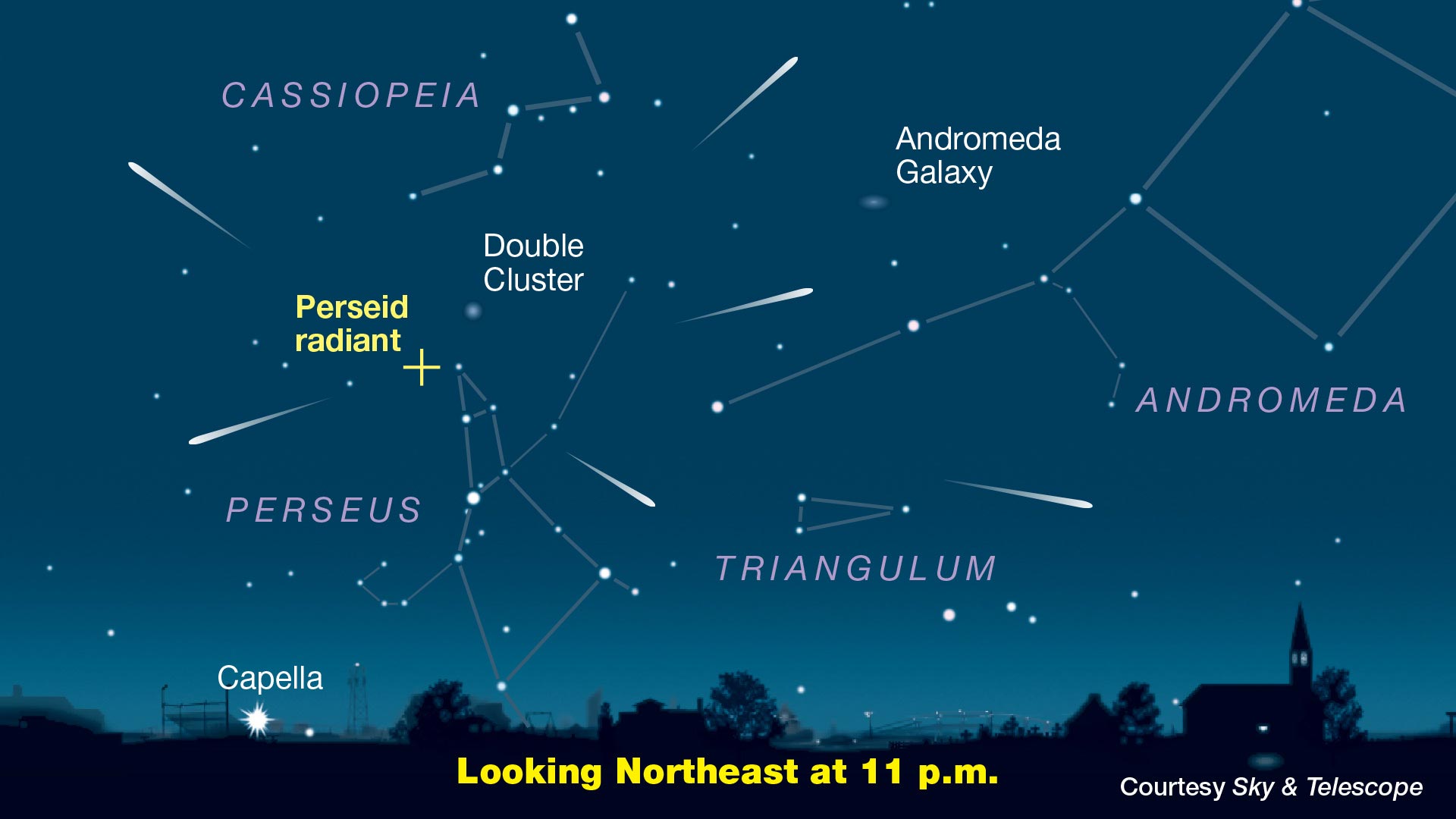
Begin watching for meteors soon after evening twilight ends on the evening of August 12th. By then the shower’s radiant — its perspective point of origin in the constellation Perseus — has risen above the northeastern horizon. The few Perseids that appear this early will be spectacularly long “earthgrazers” that skim along the top of the atmosphere. The higher the radiant, the more meteors you’ll see — so when Perseus climbs higher in the northeast, especially after midnight, more meteors will appear all over the sky. The Perseids are a long-lived event, and you should see meteors — though fewer in number — for several nights before and after the night of the peak.
Animation of simulated meteors, showing how to locate the radiant of the Perseid meteor shower, and how those “shooting stars” will appear in the sky. Credit: Sky & Telescope Illustration
Tips for Enjoying the Perseids
To enjoy the Perseids, you need no equipment but your eyes; binoculars and telescopes show too small an area of sky to be useful for meteor-watching. Find a dark spot away from bright lights with a wide-open view all around if possible. You’ll want to make yourself comfortable to fully enjoy the show — craning your neck for many hours can ruin your experience. Bring a reclining lawn chair or picnic blanket so you can lie back. Bundle up in blankets or a sleeping bag, both for mosquito shielding and for warmth; clear nights can grow surprisingly chilly, even in August. Next, relax, be patient, and let your eyes adapt to the darkness.
Sky & Telescope
Meteors in the Sky
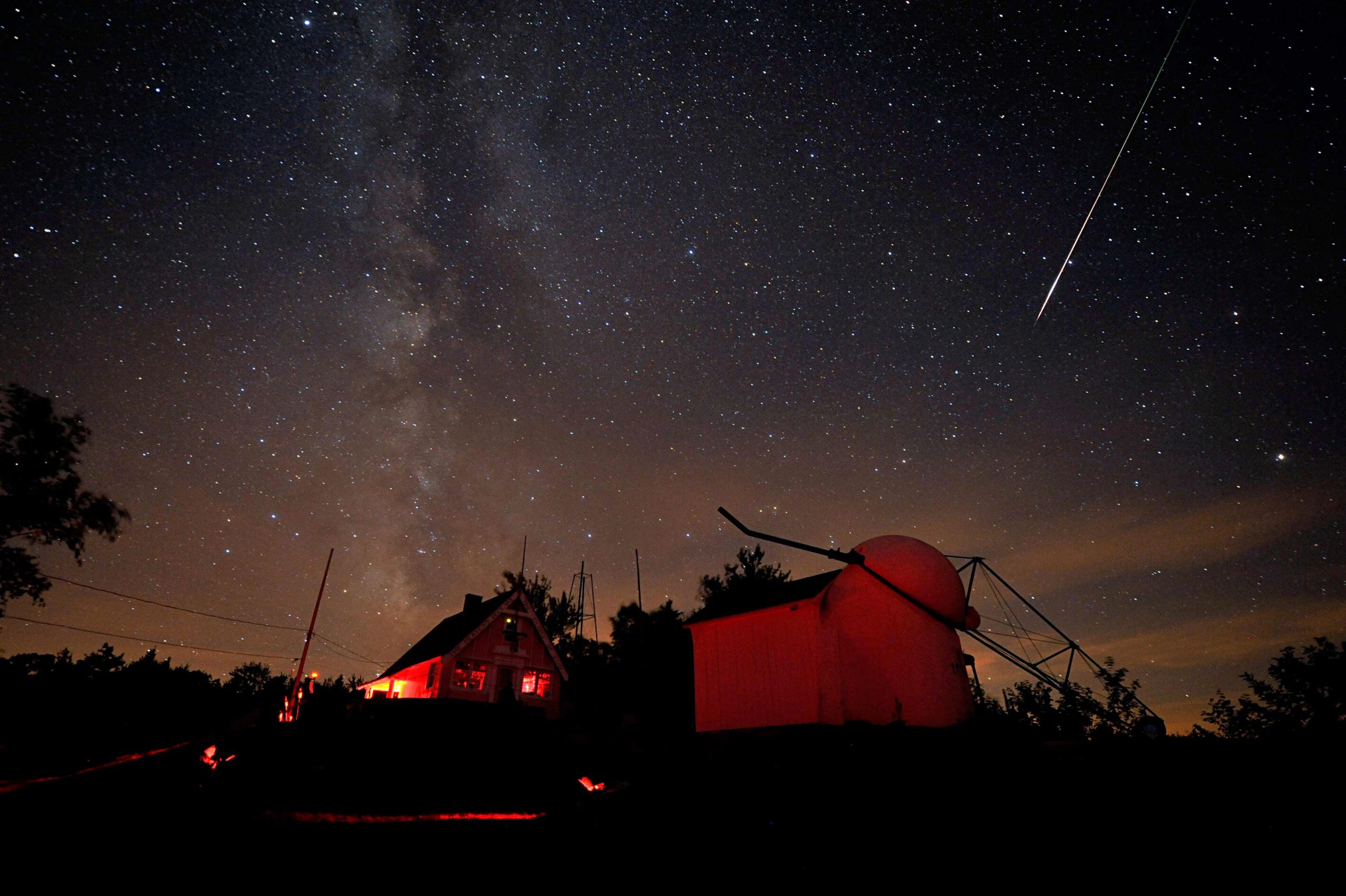
These “shooting stars” can appear anywhere and everywhere in the sky — you don’t have to look toward the radiant to see them. The best direction to watch is wherever your sky is darkest, usually straight up. Faint Perseids appear as tiny, quick streaks. Occasional brighter ones might sail across the sky for several seconds and leave a brief train of glowing smoke.
When you see a meteor, trace its path back to its origin. If you eventually come to the constellation Perseus (see the accompanying sky chart), you’ve just witnessed a Perseid. Occasionally you might spot an interloper. The weaker Delta Aquariid and Kappa Cygnid showers are also active during Perseid season, and there are always a few random, “sporadic” meteors too. All of these come from other parts of the sky. It’s a fun exercise to trace meteors back to their radiants: If the tracks don’t lead you to Perseus, they aren’t Perseids!
Effect of Light Pollution and Clouds
Any light pollution or cloudiness will cut down the number of meteors visible. But the brightest ones shine right through light pollution (though usually not through clouds). In fact, a NASA analysis of all-sky images taken from 2008 to 2013 shows that the Perseids deliver more bright meteors (those that outshine any star) than any other annual meteor shower.
How and Why
Meteors are caused by tiny, sandgrain- to pea-size bits of dusty debris striking the top of Earth’s atmosphere approximately 80 miles (130 km) up. Each Perseid zips in at 37 miles per second (133,000 miles per hour), glowing as it burns to soot and creating a quick, white-hot streak of superheated air. The nuggets in Grape Nuts cereal are a close match to the estimated size, color, and texture of typical meteor-shower particles.
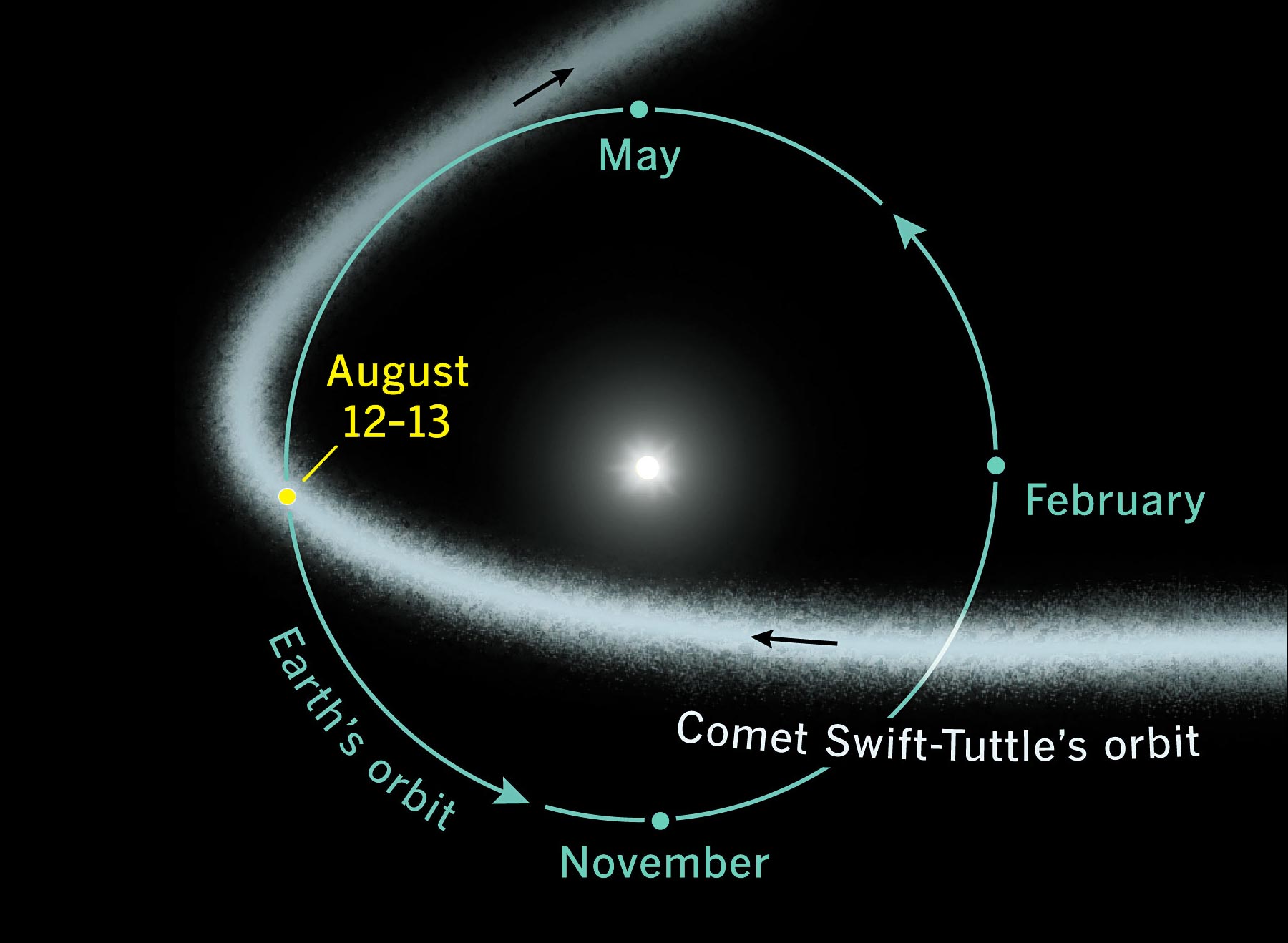
The Perseid bits were shed long ago by Comet Swift-Tuttle and are distributed all along the comet’s orbital path around the Sun. Earth passes through this tenuous “river of rubble” every year in mid-August. The comet is so named because it was independently discovered by Lewis Swift and Horace Parnell Tuttle in July 1862.
Never miss a breakthrough: Join the SciTechDaily newsletter.
Follow us on Google and Google News.