
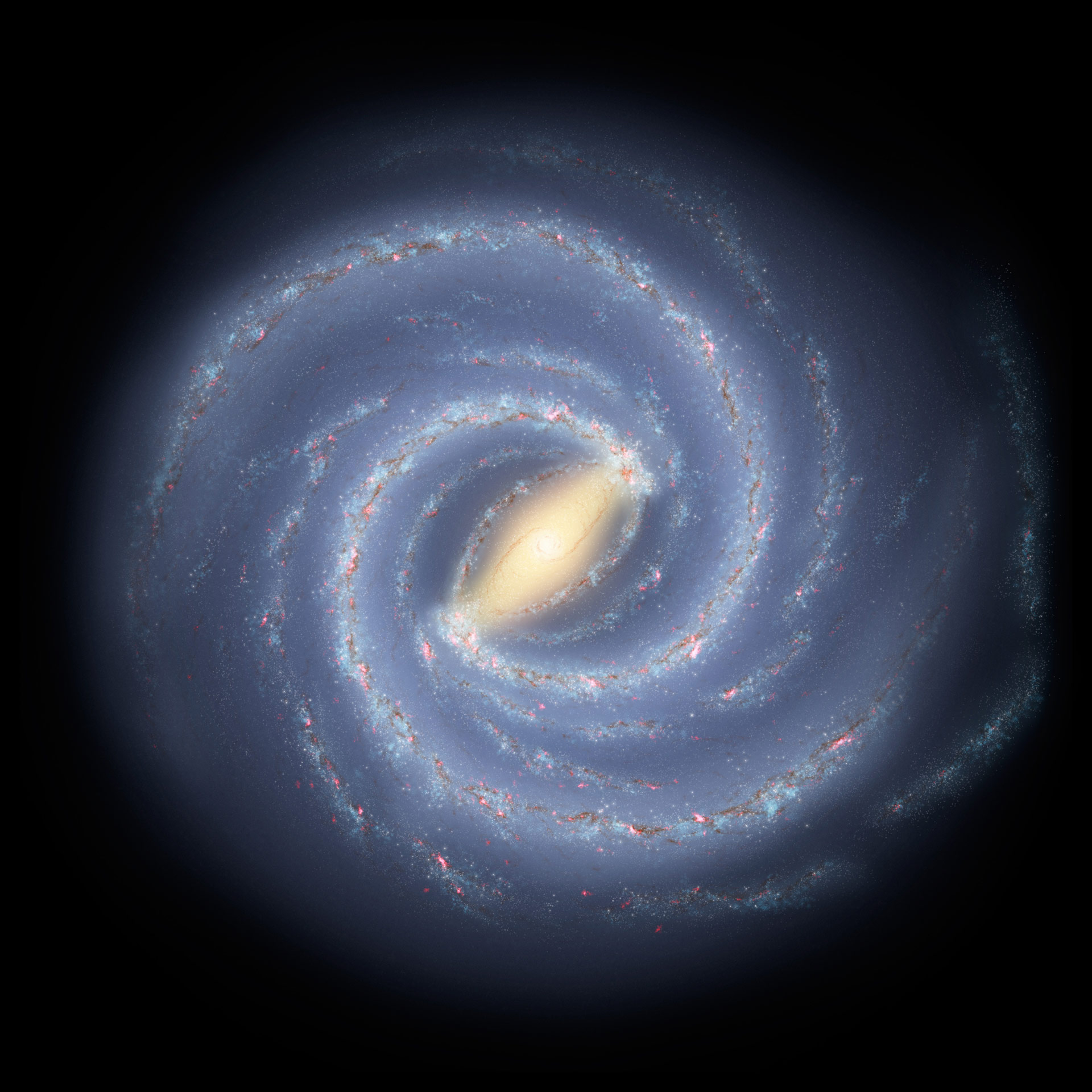
An international group of researchers has demonstrated a more accurate method for measuring the mass of galaxies, revealing that the Milky Way has only about half the mass of the Andromeda Galaxy.
Pittsburgh — Does the Milky Way look fat in this picture? Has Andromeda been taking skinny selfies? It turns out the way some astrophysicists have been studying our galaxy made it appear that the Milky Way might be more massive than it’s neighbor down the street, Andromeda.
Not true, says a study published in the journal Monthly Notices of the Royal Astronomical Society by an international group of researchers, including Matthew Walker of Carnegie Mellon University’s McWilliams Center for Cosmology. In the paper, they demonstrate a new, more accurate method for measuring the mass of galaxies. Using this method, the researchers have shown that the Milky Way has only about half the mass of its neighbor, the Andromeda Galaxy.
In previous studies, researchers were only able to estimate the mass of the Milky Way and Andromeda based on observations made using their smaller satellite dwarf galaxies. In the new study, researchers culled previously published data that contained information about the distances between the Milky Way, Andromeda, and other close-by galaxies — including those that weren’t satellites — that reside in and right outside an area referred to as the Local Group.
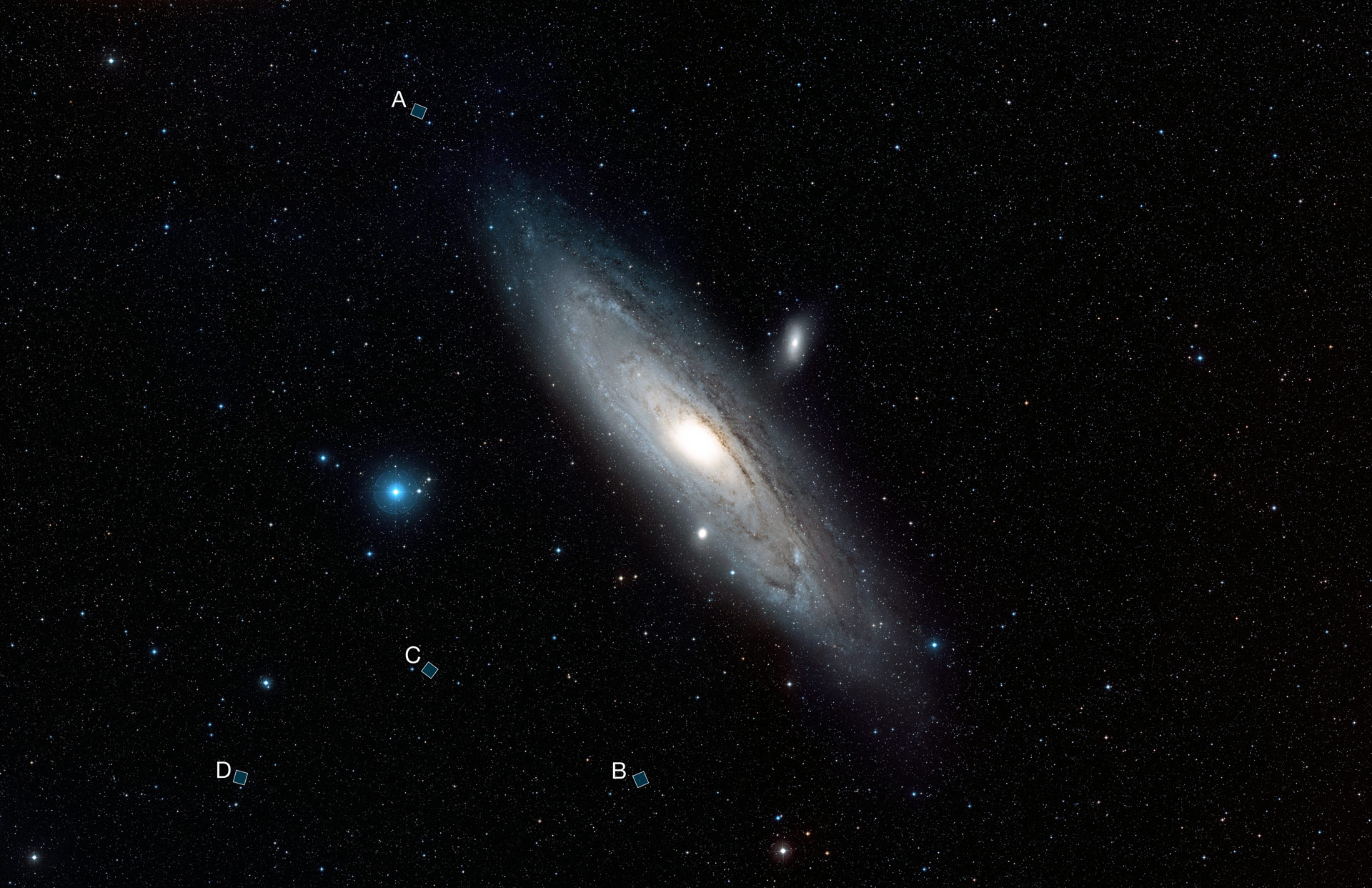
Galaxies in the Local Group are bound together by their collective gravity. As a result, while most galaxies, including those on the outskirts of the Local Group, are moving farther apart due to expansion, the galaxies in the Local Group are moving closer together because of gravity. For the first time, researchers were able to combine the available information about gravity and expansion to complete precise calculations of the masses of both the Milky Way and Andromeda.
“Historically, estimations of the Milky Way’s mass have been all over the map,” said Walker, an assistant professor of physics at Carnegie Mellon. “By studying two massive galaxies that are close to each other and the galaxies that surround them, we can take what we know about gravity and pair that with what we know about expansion to get an accurate account of the mass contained in each galaxy. This is the first time we’ve been able to measure these two things simultaneously.”
By studying both the galaxies in and immediately outside the Local Group, Walker was able to pinpoint the group’s center. The researchers then calculated the mass of both the ordinary, visible matter and the invisible dark matter throughout both galaxies based on each galaxy’s present location within the Local Group. Andromeda had twice as much mass as the Milky Way, and in both galaxies 90 percent of the mass was made up of dark matter.
The study was supported by the UK’s Science and Technology Facilities Council and led by Jorge Peñarrubia of the University of Edinburgh’s School of Physics and Astronomy. Co-authors include Yin-Zhe Ma of the University of British Columbia and Alan McConnachie of the NRC Herzberg Institute of Astrophysics.
Reference: “A dynamical model of the local cosmic expansion” by Jorge Peñarrubia, Yin-Zhe Ma, Matthew G. Walker and Alan McConnachie, 29 July 2014, MNRAS.
DOI: 10.1093/mnras/stu879
arXiv: 1405.0306
Never miss a breakthrough: Join the SciTechDaily newsletter.
Follow us on Google and Google News.
1 Comment
We know that Andromoda Galaxy is undergoing Galactic Cannibalism, since it is so massive that it devours the neighboring galaxies. Even, so will be the Milky Way Galaxy, which will devour the Small and Large Magellanic clouds nearby. The Galactic cannibalism occurs when only the galaxies are nearby and not too far, since far off galaxies only fly away without bothering about the combined gravity under expansion of Universe, which is triggered by nothing other than the Universally predominant Dark Matter and Dark Energy. Lumps of Dark Matter are found, inter-spread even among the galaxies and even inside the galaxies. The anti-gravitational effect of the Dark Matter inside the Galaxies are responsible for spiral, oval and spherical galaxies and their shapes which would otherwise crumble. There is a see saw effect between the gravity and Dark Matter indeed throughout. We know that our Universe is having 96% of Dark Matter and Dark Energy leaving just 4% for the the other visible Universe. The composition seems to be rather same even individually to the galaxies it contains as found in the article where Dark Mater constitutes 70% of each galaxy. Thank You.