
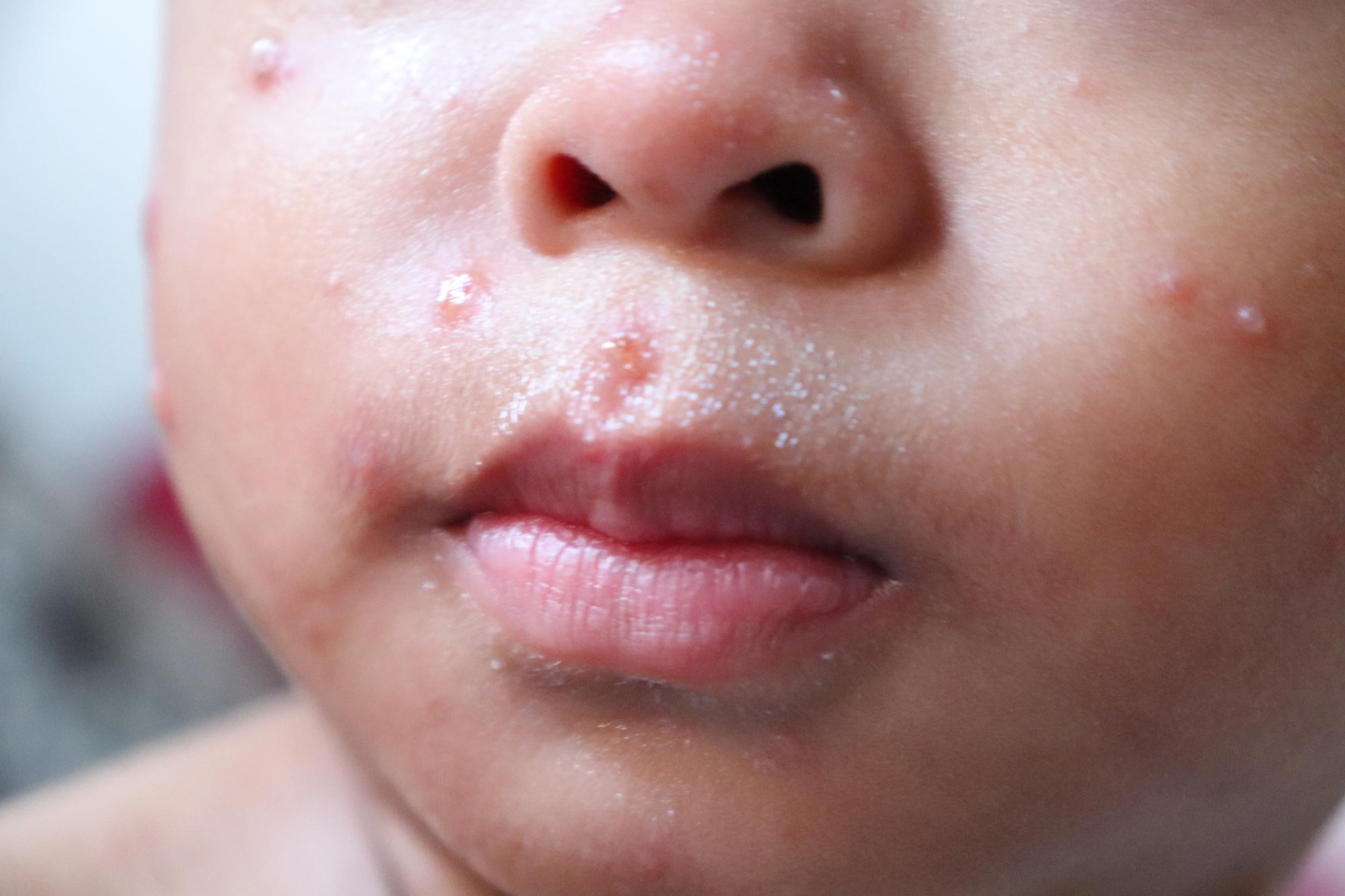
Measles vaccine-induced T cells were able to recognize the deadly Nipah virus, raising the possibility of broader vaccines that could help defend against multiple emerging viruses at once.
T cells are among the immune system’s most powerful defenders. They can help slow tumor growth and fight serious infections. Researchers at La Jolla Institute for Immunology (LJI) have now uncovered how T cells recognize paramyxoviruses, a virus family that includes measles virus and Nipah virus.
Paramyxoviruses are considered possible pandemic threats. Measles spreads very easily, while Nipah virus can be highly deadly. The findings point to a possible way to use T cells to protect people from these dangerous viruses.
Rather than developing protection against one virus at a time, the researchers found that stimulating “cross-reactive” T cells could help defend against the broader paramyxovirus family. That kind of wide protection could be critical when the next outbreak threat is unknown.
Why Broad T Cell Protection Matters Against Emerging Viral Threats
“No one knows which particular viral species or strain of a virus might be responsible for an outbreak, as we’ve seen in the recent cases of Andes hantavirus,” says study leader LJI Professor Alessandro Sette, Dr.Biol.Sci.

“Activating T cells can be your first line of defense when you don’t know what’s going to be thrown at you,” adds study co-leader LJI Research Assistant Professor Alba Grifoni, Ph.D.
The new Cell Reports Medicine study was supported by the National Institutes of Health’s National Institute of Allergy and Infectious Diseases (NIAID) and the Coalition for Epidemic Preparedness Innovations (CEPI).
How Conserved Viral Epitopes Enable Broad Immunity
T cells belong to the adaptive immune system. This means they learn to recognize specific threats. For example, one T cell may respond to an influenza virus infection but not to a malaria parasite infection. T cells are highly specialized.
How do they know what to attack? Each T cell searches for a tiny molecular marker that helps distinguish the body’s own cells from a threat. These markers are known as “epitopes.” Usually, T cell epitopes from one pathogen look very different from those found on another.
Still, viruses cannot hide everything. As they evolve, some features stay the same within related virus families.
That is where immunologists can find an opening. LJI researchers have shown that some T cells can “cross-react” with different viruses when those viruses share similar epitopes.
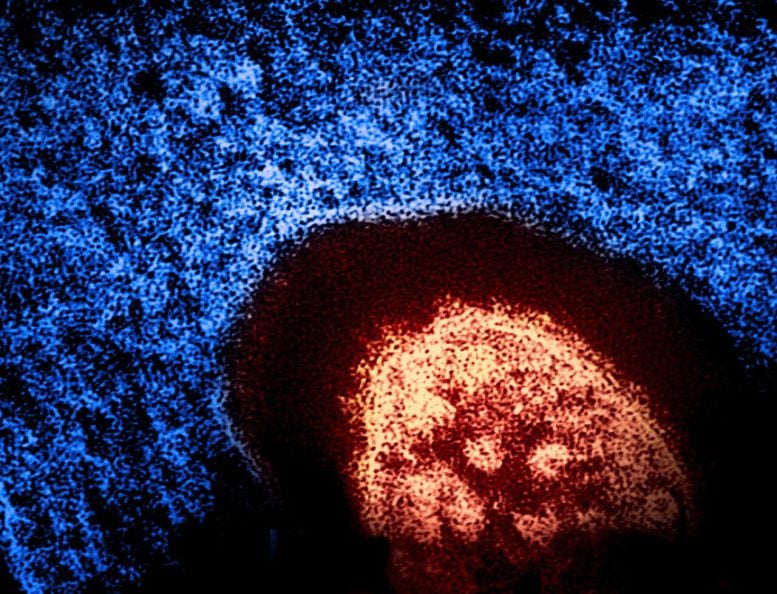
Cross-Reactive T Cells Can Recognize Entire Viral Families
During the COVID-19 pandemic, Sette, Grifoni, LJI Assistant Professor Daniela Weiskopf, Ph.D., and Professor and Chief Scientific Officer Shane Crotty, Ph.D., led a series of landmark studies showing that cross-reactive T cells can detect similarities among different coronaviruses. Someone who previously had a common cold coronavirus may already carry T cells that are prepared to recognize SARS-CoV-2, the coronavirus responsible for COVID-19.
Sette and Grifoni later showed that cross-reactive T cells may also provide broad protection against the deadly Lassa virus and the larger arenavirus family. Their results suggest that future vaccines and treatments might activate these T cells to guard against several dangerous viruses at once.
Together, these studies show why cross-reactive T cells could be vital for stopping emerging viruses.
Measles Vaccine T Cells Show Promise Against Nipah Virus
In the United States, doctors and scientists are especially concerned about measles virus. As vaccination rates have declined, measles cases have risen in recent years. In 2026 alone, the United States has reported 2,033 confirmed measles cases. The country is already on pace to exceed the total number of U.S. measles cases recorded in 2025.

Measles remains a global threat. In Southeast Asia, another related danger is Nipah virus. Spread by bats, Nipah virus is rare but can become deadly very quickly. Its fatality rate ranges from 40 percent to 75 percent, far higher than that of measles. “Outbreaks are becoming more and more frequent, especially in the Malaysian region,” says Grifoni.
The new LJI findings suggest that cross-reactive T cells could be an important tool against the dangerous paramyxovirus family.
Decoding the Measles Vaccine’s T Cell Response
The research team worked with LJI’s John and Susan Major Center for Clinical Investigation to collect and study T cells from blood samples provided by 31 participants. All participants had received the MMR vaccine, which protects against severe illness from measles and mumps viruses (both are paramyxoviruses) as well as rubella virus. Because of this, their blood samples contained T cells prepared to respond to measles infection.
The researchers first examined how those T cells identified measles virus. In other words, what were the T cells recognizing when they encountered measles?
LJI Postdoctoral Fellow Alison Tarke, Ph.D., and LJI Senior Staff Scientist Ricardo Da Silva Antunes, Ph.D., led experiments to map the T cell epitopes found on measles virus.
Those results were valuable on their own. “Even though measles has been studied for quite some time, and there is a vaccine for measles, there was not a lot known about the specific T-cell response elicited by the measles vaccine,” says Sette.
Shared Measles–Nipah Targets Could Guide Future Pandemic Vaccines
Alison Tarke and the LJI team next tested whether the same T cells responded to Nipah virus. Blood tests showed that none of the participants had ever been infected with Nipah virus. Their T cells had not previously had an opportunity to “adapt” or learn to recognize Nipah virus epitopes.
Even so, the researchers found that some T cells trained to fight measles could also detect Nipah virus. These T cells were able to cross-react between the two related viruses because both paramyxoviruses shared “conserved” epitopes.
“Focusing immune responses on these conserved regions could have a broad, protective capacity for the whole viral family,” says Sette.
This study is the first to map T cell epitopes on Nipah virus. The researchers also identified a specific epitope shared by measles and Nipah viruses: a region of the viral fusion or “F” protein. Many cross-reactive T cells recognized this small, conserved viral structure.
“It appears that if someone is vaccinated against measles, their T cells will have some degree of cross-reactivity to Nipah,” says Sette. “That raises the possibility that during a Nipah outbreak, one could perhaps vaccinate people with a measles vaccine, and this cross-reactivity could potentially offer some benefit.”
Reference: “Comprehensive mapping of human CD4+ T cell epitopes for Nipah and measles as prototype Paramyxoviruses” by Alison Tarke, Mariah Macias, Claudia Francisco Morales, Tanner Michaelis, Leila Siddiqui, Esther Dawen Yu, Raphael Trevizani, Abril Zuniga, Christian Zmasek, Elizabeth Phillips, Simon Mallal, Brandon Lin, Jesus O. Estevez, Jonathan R. Erlich, Nicole V. Johnson, Jason S. McLellan, April Frazier, Ricardo da Silva Antunes, Gene S. Tan, Alba Grifoni and Alessandro Sette, 2 June 2026, Cell Reports Medicine.
DOI: 10.1016/j.xcrm.2026.102838
Never miss a breakthrough: Join the SciTechDaily newsletter.
Follow us on Google and Google News.