

LJI researchers develop innovative technique to assess immune memory and SARS-CoV-2 reactions in the upper respiratory tract
Researchers at the La Jolla Institute for Immunology (LJI) have conducted the first comprehensive study of immune cell memory in the upper airways of adult volunteers. In their analysis, they identified “tissue resident” memory cells, which are prepared to protect the airways against SARS-CoV-2 and other respiratory infections.
“We were finally able to take a closer look at the anatomy of infection—what happens when a virus infects tissues of the upper airway,” says LJI Instructor Sydney Ramirez, M.D., Ph.D., who served as first author of the new Nature study.
The researchers also captured a first look at how immune cells that reside in the nasal passages work alongside immune cells that circulate in the bloodstream. Both kinds of immune cells appear essential for fighting upper airway infections and building long-term immunity against specific pathogens.
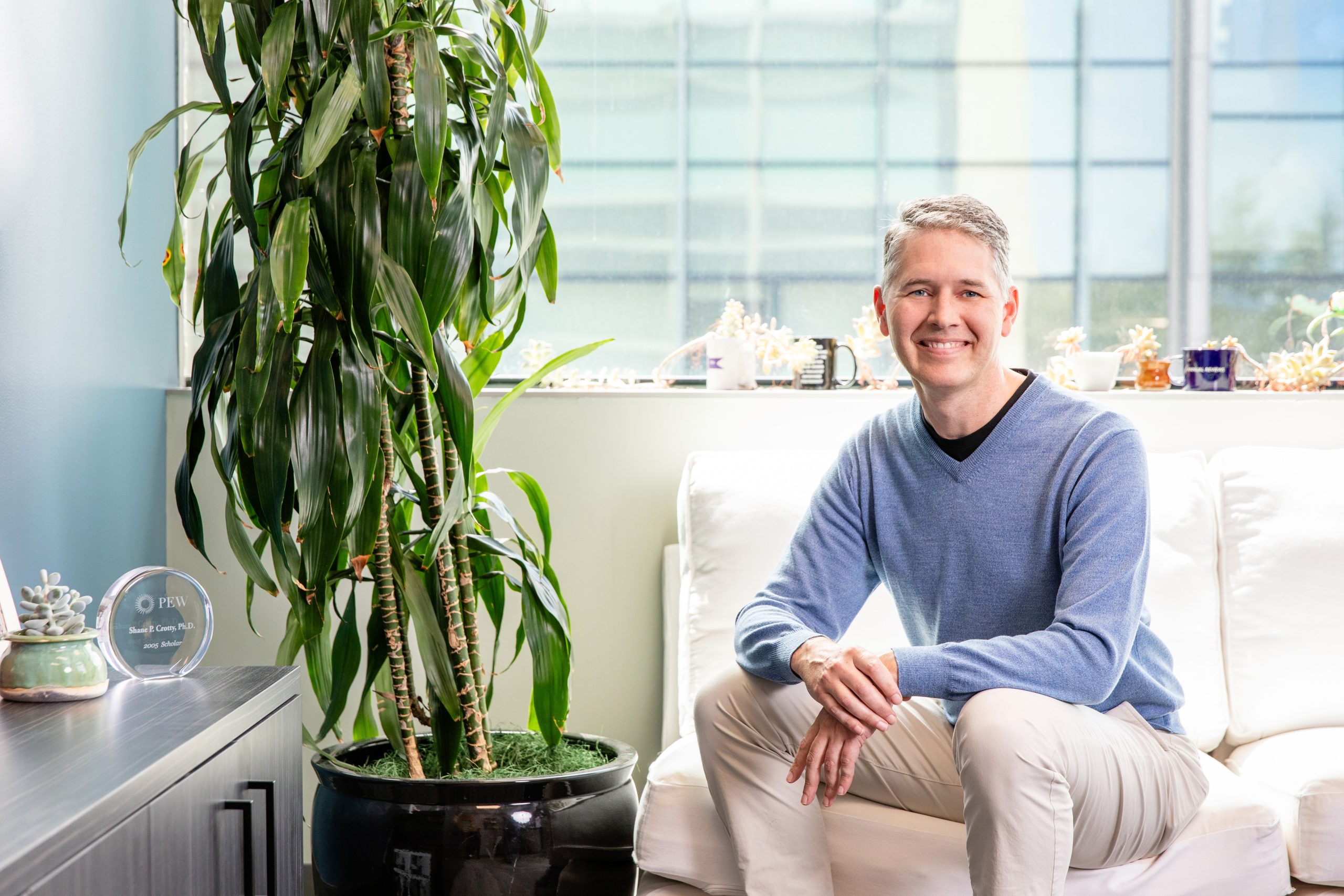
“We have discovered that there is actually a lot of immune memory physically present in your upper airway. That means you do not necessarily have to wait for immune cells elsewhere in the body to find their way into your upper airway to fight an infection,” says LJI Professor and Chief Scientific Officer Shane Crotty, Ph.D., senior author of the new study.
The scientists say these findings may lead to better vaccines to boost immune protection. “This discovery helps us understand immunity to pathogens and will hopefully help us develop new vaccines against viruses that infect the airway,” Crotty says.
Hidden in the airway
The researchers found that immune cells such as T cells and B cells leap into action in response to SARS-CoV-2 vaccination or infection. They measured a large variety of T cells and B cells, which have diverse functions in immunity and inflammation.
The researchers also discovered that the airway is home to virus-specific memory immune cell populations including tissue-resident memory T cells, memory B cells, and antibody-producing cells. Memory B cells can activate to make potent antiviral and antibacterial antibodies to protect the nose and throat from infections.
Ramirez calls the discovery of these long-lived immune cells “really striking.” These specialized “tissue resident” immune cells were adapted to surviving in the upper airway, and they stayed in the airway for at least six months.
Adenoids in action
The scientists also found that the adenoids became more active in response to infection. Adenoids are unique sentinel immune system tissue that sit at the back of the nasal passages, just above the top of the throat. They sample the air we breathe and are home to germinal centers, which produce disease-fighting B cells that make antibodies.
Adenoids are known to shrink in adulthood. “Many medical researchers assumed that you hit a certain age and your tonsils disappear and your adenoids disappear,” says Ramirez.
But the new study shows even older study participants had pathogen-fighting cells in their adenoid tissue. These “germinal center” B cells were specially trained to fight specific viruses, such as SARS-CoV-2. The researchers also found immune cells called T follicular helper cells, which send important signals to B cells in the germinal centers.
“These cells are very important, and they have not been easy to sample in the past,” says study co-author Paul Lopez, Ph.D., a Research Technician in the Crotty Lab who worked closely with Farhoud Faraji, M.D., Ph.D., of the Crotty Lab and L. Benjamin Hills, M.D., Ph.D., at UC San Diego.
A promising new technique
Many diseases get a foothold in the body by first infecting the upper airway. Until now, however, it has been surprisingly tough to collect these cells, and researchers who do sample these cells often find the cells too degraded for analysis.
For the new study, the researchers worked closely with LJI Clinical Director Gina Levi, R.N., and clinical coordinators in LJI’s John and Susan Major Center for Clinical Investigation to develop a new swabbing technique to sample these elusive immune cells.
Levi’s team met monthly with study participants and used swabs to collect immune cells from their nasal passages. To make sure the swabs were reaching the correct tissues and properly sampling the adenoids, the LJI team worked with UC San Diego surgical experts Carol H. Yan, MD, and Adam S. DeConde, MD, whose endoscopy skills allowed swabs to be collected while using a camera (endoscope) to document the sample collection site within the nasal cavity.
Speed was also key to success. The researchers found that they could avoid cell loss and degradation if they processed the samples the same day and didn’t freeze the cells.
“My coordinators and I were able to get study participants swabbed before 1 p.m. each day,” says Levi, who co-authored the new study. “We’d have things ready to process the cells right away, and then Sydney would stay late to analyze the samples.”
Next steps for measuring immunity
Going forward, the LJI researchers are interested in studying how immune cell populations in the airway shift in response to intranasal vaccines, such as the influenza vaccine FluMist, which is sprayed into the nose. They are also continuing to sample some study volunteers to track how long their immune cell populations, including those helpful memory B and T cells, remain stable.
Lopez says the swabbing technique and analysis method may also prove important for immunologists investigating other aspects of the immune system, such as immune cells involved in chronic rhinosinusitis from allergies.
“It would be very interesting to measure immune cells during different disease states and maybe use this information as a possible diagnostic tool in the future,” Lopez says.
Reference: “Immunological memory diversity in the human upper airway” by Sydney I. Ramirez, Farhoud Faraji, L. Benjamin Hills, Paul G. Lopez, Benjamin Goodwin, Hannah D. Stacey, Henry J. Sutton, Kathryn M. Hastie, Erica Ollmann Saphire, Hyun Jik Kim, Sara Mashoof, Carol H. Yan, Adam S. DeConde, Gina Levi and Shane Crotty, 31 July 2024, Nature.
DOI: 10.1038/s41586-024-07748-8
This study was supported by National Institutes of Health (NIH, T32 AI007036), the NIH National Institute of Allergy and Infectious Diseases (NIAID, AI142742), and an A.P. Giannini Foundation fellowship award.
Never miss a breakthrough: Join the SciTechDaily newsletter.
Follow us on Google and Google News.