
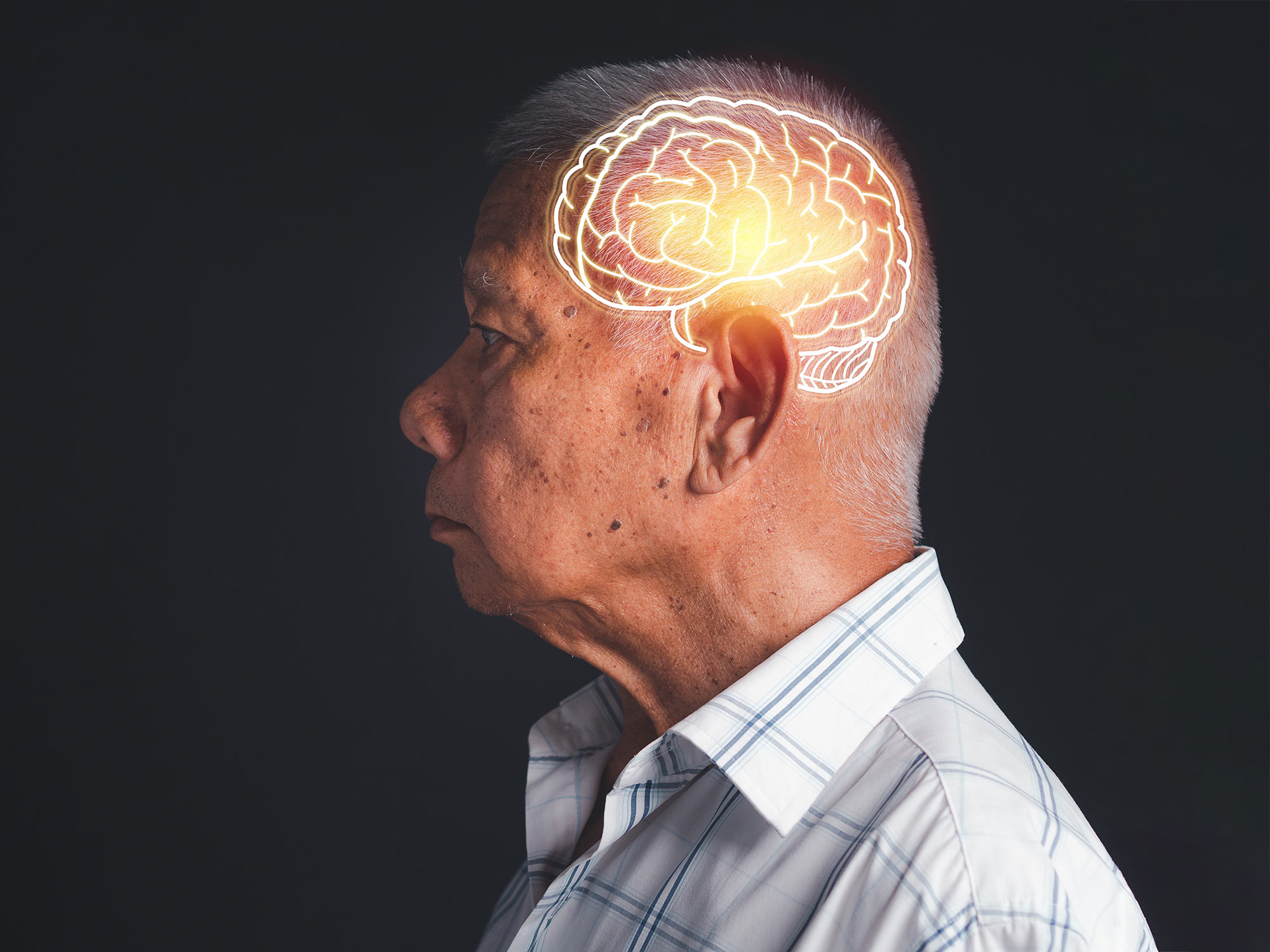
LJI scientists have discovered that T cells may help detect Parkinson’s disease years before motor symptoms appear.
Your T cells play a crucial role in defending the body against disease. However, sometimes they misfire, attacking healthy tissues in a phenomenon known as “friendly fire.”
This misdirected activity becomes a major concern in autoimmune diseases, where abnormal T cell responses lead to conditions like type 1 diabetes, rheumatoid arthritis, and inflammatory bowel disease.
In recent years, researchers at La Jolla Institute for Immunology (LJI) have found evidence that T cells may also be involved in the development of Parkinson’s disease. In the lab of LJI Professor Alessandro Sette, Dr. Biol. Sci., scientists discovered that many people with Parkinson’s have T cells that react to specific brain cell proteins, including alpha-synuclein and PINK1.
Earlier this year, Sette’s team published a study in npj Parkinson’s Disease identifying which subtypes of T cells respond to alpha-synuclein. The results provided more support for the idea that T cell activity may contribute to Parkinson’s. However, it remained unclear when in the course of disease this T cell involvement begins.
“We can see these reactive T cells in people after they develop Parkinson’s, but what happens before that?” says LJI Visiting Scientist Emil Johansson, Ph.D., a researcher in the Sette Lab and co-author of the study.

Now there are answers. In a new npj Parkinson’s Disease paper, Sette and his colleagues report that potentially harmful T cell activity is at its highest during the “prodromal” phase of Parkinson’s—the period that occurs years before a formal diagnosis is made.
“This T cell immunity could be a marker for early Parkinson’s treatment, even before people show symptoms,” says Sette, who was senior author on the new paper. “And there’s reason to think that treating Parkinson’s in the very early stages can lead to a better outcome.”
How the study worked
The prodromal period in Parkinson’s disease can last for decades before a person develops noticeable symptoms such as tremors and cognitive impairments.
Because prodromal Parkinson’s disease is very difficult to detect, the LJI team studied T cell reactivity in research volunteers at high risk of developing Parkinson’s disease. These volunteers had genetic risk factors for Parkinson’s and some had symptoms such as disrupted REM sleep cycles and loss of sense of smell, which can be early signs of Parkinson’s disease development.
The researchers used a technique called Fluorospot to learn more about T cells found in blood samples from these study volunteers. This technique revealed which volunteers had high levels of T cells that reacted to alpha-synuclein or PINK1—and when those T cell numbers were highest.
Sette and his colleagues found that potentially harmful T cells show up early on, well before the onset of noticeable motor symptoms, such as tremors. “You can see that T cell reactivity before diagnosis,” says Sette.
In fact, T cell reactivity to PINK1 was at an all-time high before diagnosis.
Sette warns against jumping to conclusions. Parkinson’s is a complex disease, and the new research doesn’t prove that T cells are actually driving the inflammation associated with Parkinson’s disease.

“Parkinson’s disease is associated with the destruction of nervous system cells. Does that destruction cause autoimmunity—or is the autoimmunity the cause of the disease? That’s the chicken-and-the-egg of inflammation in Parkinson’s disease,” says Sette.
“Certainly, the fact that this T cell reactivity is highest when patients are closest to a diagnosis is intriguing,” Sette adds. “The finding suggests T cells could have something to do with it.”
Next steps for helping patients
The new research may guide the development of early diagnostic tools. In the meantime, LJI scientists are looking for ways to block inflammation and protect brain cells.
As Johansson explains, some T cells actually help dial back inflammation to protect our tissues. “We want to see if there are specific T cells that are protective,” says Johansson. “Could they interfere in inflammation and maybe reduce the number of autoimmune T cells?”
Sette and his colleagues are also working to understand the role of T cells in other neurodegenerative diseases.
“We are very interested in diseases such as Alzheimer’s, for example, where a lot of progress has been made toward identifying people in very early stages of the disease progression,” says Sette.
Reference: “T cell responses towards PINK1 and α-synuclein are elevated in prodromal Parkinson’s disease” by Emil Johansson, Antoine Freuchet, Gregory P. Williams, Tanner Michealis, April Frazier, Irene Litvan, Jennifer G. Goldman, Roy N. Alcalay, David G. Standaert, Amy W. Amara, Natividad Stover, Edward A. Fon, Ronald B. Postuma, John Sidney, David Sulzer, Cecilia S. Lindestam Arlehamn and Alessandro Sette, 26 May 2025, npj Parkinson’s Disease.
DOI: 10.1038/s41531-025-01001-3
This study was supported by LJI & Kyowa Kirin, Inc. (KKNA- Kyowa Kirin North America), the Swedish Research Council (grant references 2024-00175), Aligning Science Across Parkinson’s (ASAP-000375), and the Michael J. Fox Foundation.
Never miss a breakthrough: Join the SciTechDaily newsletter.
Follow us on Google and Google News.