
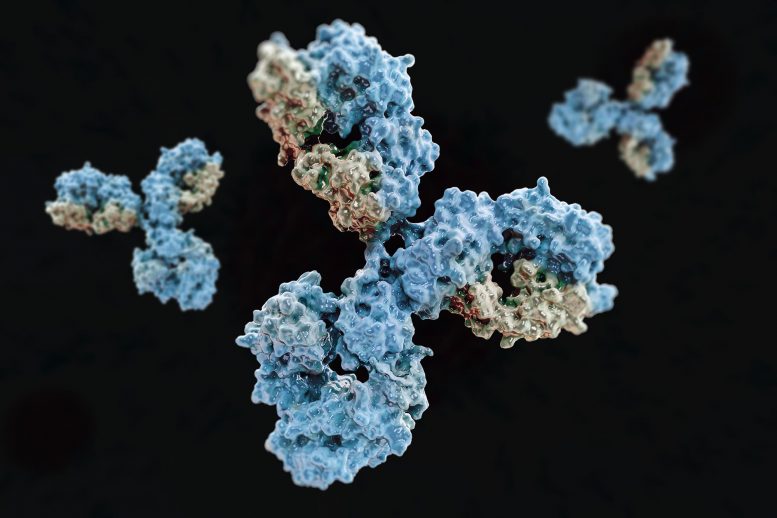
Initial step towards developing fully human antibody therapeutics and diagnostics for COVID-19.
Researchers at Utrecht University, Erasmus Medical Center, and Harbour BioMed (HBM) today reported that they have identified a fully human monoclonal antibody that prevents the SARS-CoV-2 (COVID-19) virus from infecting cultured cells. The discovery, published online today in Nature Communications, is an initial step towards developing a fully human antibody to treat or prevent the respiratory disease COVID-19 caused by the novel coronavirus SARS-CoV-2.
The COVID-19 pandemic has spread rapidly across the globe infecting more than 3.3M people worldwide and killing more than 235,000 people so far.
“This research builds on the work our groups have done in the past on antibodies targeting the SARS-CoV that emerged in 2002/2003,” said Berend-Jan Bosch, Associate Professor, Research leader at Utrecht University, and co-lead author of the Nature Communications study. “Using this collection of SARS-CoV antibodies, we identified an antibody that also neutralizes infection of SARS-CoV-2 in cultured cells. Such a neutralizing antibody has the potential to alter the course of infection in the infected host, support virus clearance or protect an uninfected individual that is exposed to the virus.”
Dr. Bosch noted that the antibody binds to a domain that is conserved in both SARS-CoV and SARS-CoV-2, explaining its ability to neutralize both viruses. “This cross-neutralizing feature of the antibody is very interesting and suggests it may have potential in mitigation of diseases caused by future-emerging related coronaviruses.”
“This discovery provides a strong foundation for additional research to characterize this antibody and begin development as a potential COVID-19 treatment,” said Frank Grosveld, Ph.D. co-lead author on the study, Academy Professor of Cell Biology, Erasmus Medical Center, Rotterdam and Founding Chief Scientific Officer at Harbour BioMed. “The antibody used in this work is ‘fully human,’ allowing development to proceed more rapidly and reducing the potential for immune-related side effects.” Conventional therapeutic antibodies are first developed in other species and then must undergo additional work to ‘humanize’ them. The antibody was generated using Harbour BioMed’s H2L2 transgenic mouse technology.
“This is groundbreaking research,” said Dr. Jingsong Wang, Founder, Chairman & Chief Executive Officer of HBM. “Much more work is needed to assess whether this antibody can protect or reduce the severity of disease in humans. We expect to advance the development of the antibody with partners. We believe our technology can contribute to addressing this most urgent public health need and we are pursuing several other research avenues.”
The paper is titled, “A human monoclonal antibody blocking SARS-VoV-2 Infection. In addition to Drs. Bosch and Grosveld, authors on the paper included: Chunyan Wang, Wentao Li, and Frank van Kuppeveld of Utrecht University; Nisreen Okba and Bart Haagmans of Erasmus Medical Center (Rotterdam); Dubravka Drabek and Rien van Haperen of Erasmus Medical Center and Harbour Antibodies; and Albert Osterhaus of the University of Veterinary Medicine (Hannover, Germany).
Reference: “A human monoclonal antibody blocking SARS-CoV-2 infection” by Chunyan Wang, Wentao Li, Dubravka Drabek, Nisreen M. A. Okba, Rien van Haperen, Albert D. M. E. Osterhaus, Frank J. M. van Kuppeveld, Bart L. Haagmans, Frank Grosveld and Berend-Jan Bosch, 4 May 2020, Nature Communications.
DOI: 10.1038/s41467-020-16256-y
Never miss a breakthrough: Join the SciTechDaily newsletter.
Follow us on Google and Google News.
3 Comments
Another approach involves recognizing and eliminating the deadly features of the coronavirus and letting the milder version infect you, allowing your body to develop a self-vaccine against the deadly version.
My investigations found three one-in-a-million nucleotide matches between the coronavirus and the human genome as a loop in tRNA, a major component in producing proteins within the cell. I speculate that at least one of those sequences is making the coronavirus more deadly. Perhaps eliminating them in the virus may allow our immune system to produce a self-immunity. Testing this speculation must be done and is described in a YouTube https://www.youtube.com/watch?v=1iZ1ohdpxbI
Isn’t Harbour Biomed a 2016 Chinese startup company? Is this coincidental that they would come up with this ‘recent discovery’?
For Chrissake….