
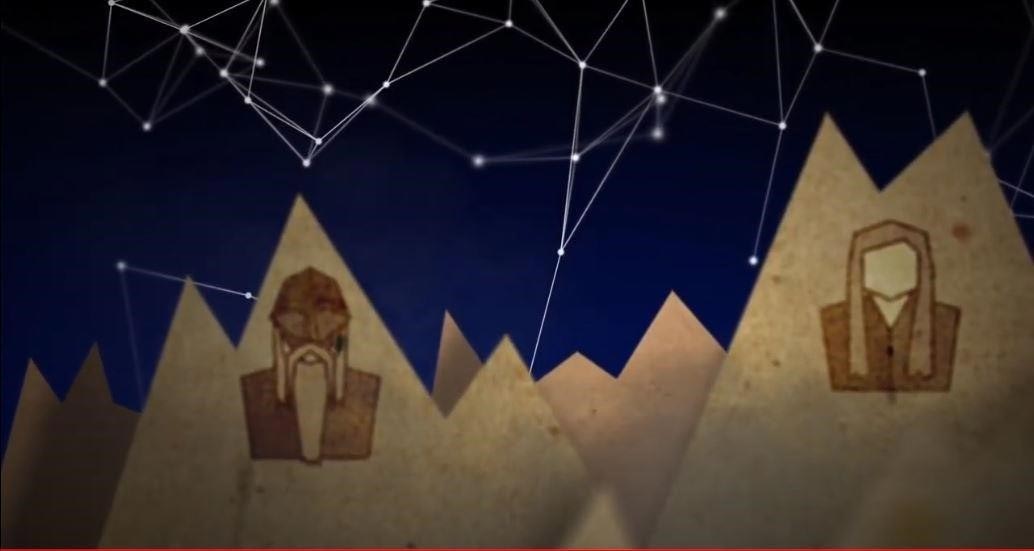
What are the secrets behind one of the most successful fantasy series of all time? How has a story as complex as “Game of Thrones” enthralled the world and how does it compare to other narratives?
Researchers from five universities across the UK and Ireland came together to unravel “A Song of Ice and Fire”, the books on which the TV series is based.
In a paper that has just been published by the Proceedings of the National Academy of Sciences of the USA, a team of physicists, mathematicians, and psychologists from Coventry, Warwick, Limerick, Cambridge, and Oxford universities have used data science and network theory to analyze the acclaimed book series by George R.R. Martin.
The study shows the way the interactions between the characters are arranged is similar to how humans maintain relationships and interact in the real world. Moreover, although important characters are famously killed off at random as the story is told, the underlying chronology is not at all so unpredictable.
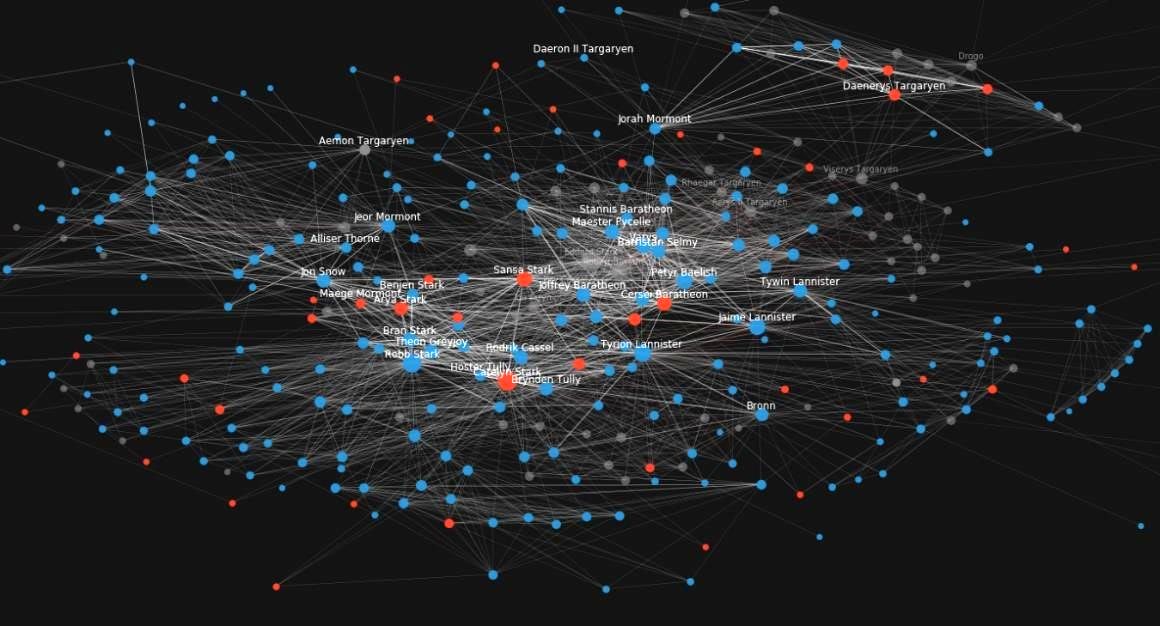
The team found that, despite over 2,000 named characters in “A Song of Ice and Fire” and over 41,000 interactions between them, at chapter-by-chapter level these numbers average out to match what we can handle in real life. Even the most predominant characters — those who tell the story — average out to have only 150 others to keep track of. This is the same number that the average human brain has evolved to deal with.
While matching mathematical motifs might have been expected to lead to a rather narrow script, the author, George R. R. Martin, keeps the tale bubbling by making deaths appear random as the story unfolds. But, as the team show, when the chronological sequence is reconstructed the deaths are not random at all: rather, they reflect how common events are spread out for non-violent human activities in the real world.
‘Game of Thrones’ has invited all sorts of comparisons to history and myth and the marriage of science and humanities in this paper opens new avenues to comparative literary studies. It shows, for example, that it is more akin to the Icelandic sagas than to mythological stories such as England’s Beowulf or Ireland’s Táin Bó Cúailnge. The trick in Game of Thrones, it seems, is to mix realism and unpredictability in a cognitively engaging manner.
Thomas Gessey-Jones, from the University of Cambridge, commented: “The methods developed in the paper excitingly allow us to test in a quantitative manner many of the observations made by readers of the series, such as the books famous habit of seemingly killing off characters at random.”
Professor Colm Connaughton, from the University of Warwick, observed: “People largely make sense of the world through narratives, but we have no scientific understanding of what makes complex narratives relatable and comprehensible. The ideas underpinning this paper are steps towards answering this question.”
Professor Ralph Kenna, from Coventry University, said: “This kind of study opens up exciting new possibilities for examining the structure and design of epics in all sorts of contexts; impact of related work includes outcry over misappropriation of mythology in Ireland and flaws in the processes that led to it.”
Professor Robin Dunbar, from the University of Oxford, observed: “This study offers convincing evidence that good writers work very carefully within the psychological limits of the reader.”
Dr. Pádraig MacCarron, from University of Limerick commented: “These books are known for unexpected twists, often in terms of the death of a major character, it is interesting to see how the author arranges the chapters in an order that makes this appear even more random than it would be if told chronologically.”
Dr. Joseph Yose, from Coventry University said: “I am excited to see the use of network analysis grow in the future, and hopefully, combined with machine learning, we will be able to predict what an upcoming series may look like.”
Reference: “Narrative structure of A Song of Ice and Fire creates a fictional world with realistic measures of social complexity” by Thomas Gessey-Jones, Colm Connaughton, Robin Dunbar, Ralph Kenna, Pádraig MacCarron, Cathal O’Conchobhair and Joseph Yose, 2 November 2020, Proceedings of the National Academy of Sciences.
DOI: 10.1073/pnas.2006465117
Never miss a breakthrough: Join the SciTechDaily newsletter.
Follow us on Google and Google News.
1 Comment
… and Winter is coming. 🙂