
Close Menu
    Facebook X (Twitter) Instagram
    SciTechDaily
    • Biology
    • Chemistry
    • Earth
    • Health
    • Physics
    • Science
    • Space
    • Technology
    Facebook X (Twitter) Pinterest YouTube RSS
    SciTechDaily
    Home»Technology»Innovative Saliva-Based Glucose Sensor to Revolutionize Diabetes Monitoring
    Technology

    Innovative Saliva-Based Glucose Sensor to Revolutionize Diabetes Monitoring

    By King Abdullah University of Science & Technology (KAUST)September 1, 2023No Comments3 Mins Read
    Facebook Twitter Pinterest Telegram LinkedIn WhatsApp Email Reddit
    Share
    Facebook Twitter LinkedIn Pinterest Telegram Email Reddit
    Transistor Measures Glucose in Saliva
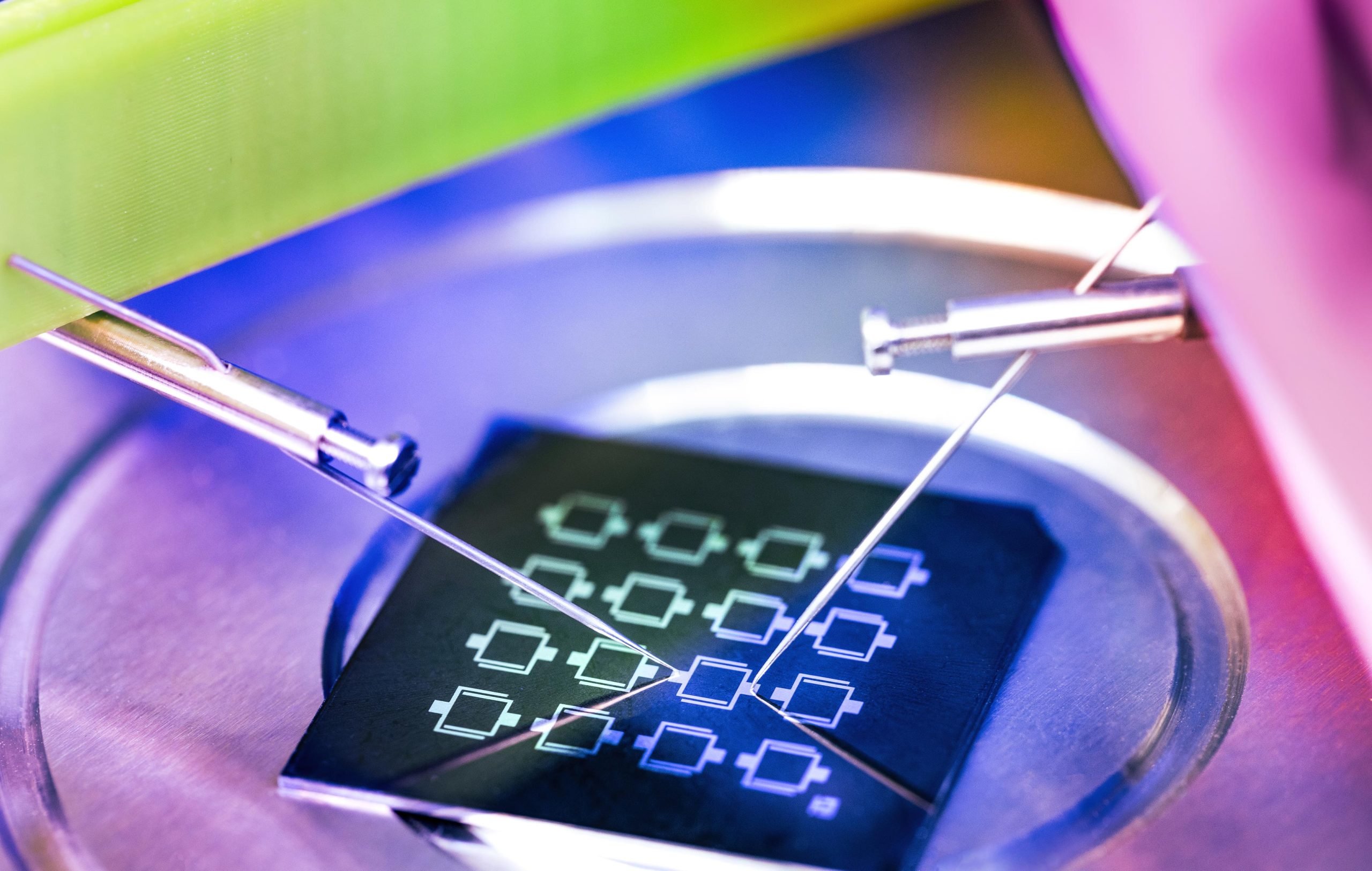
    KAUST researchers have developed a sensor that can measure glucose levels in saliva, offering diabetics an alternative means to monitor glucose levels in their blood. Credit: © 2023 KAUST; Anastasia Serin

    An innovative device could pave the way for more convenient diabetes monitoring.

    A prototype sensor that measures glucose levels in saliva could eventually offer a simple, rapid, and painless way for people to monitor their diabetes, according to the King Abdullah University of Science & Technology (KAUST) researchers behind the technology.

    Diabetes is a disease that occurs when the body cannot regulate its blood glucose levels. Raised glucose levels can lead to cardiovascular disease and other conditions, so it is vital that people with diabetes maintain their blood glucose at moderate levels.

    People with diabetes have traditionally monitored their blood glucose using devices that analyze a drop of blood by pricking a finger several times a day. More recently, implanted sensors can provide continuous glucose monitoring without unpleasant pinpricks, but these devices can be less accurate for lower glucose levels and are not approved for children.
    Abhinav Sharma
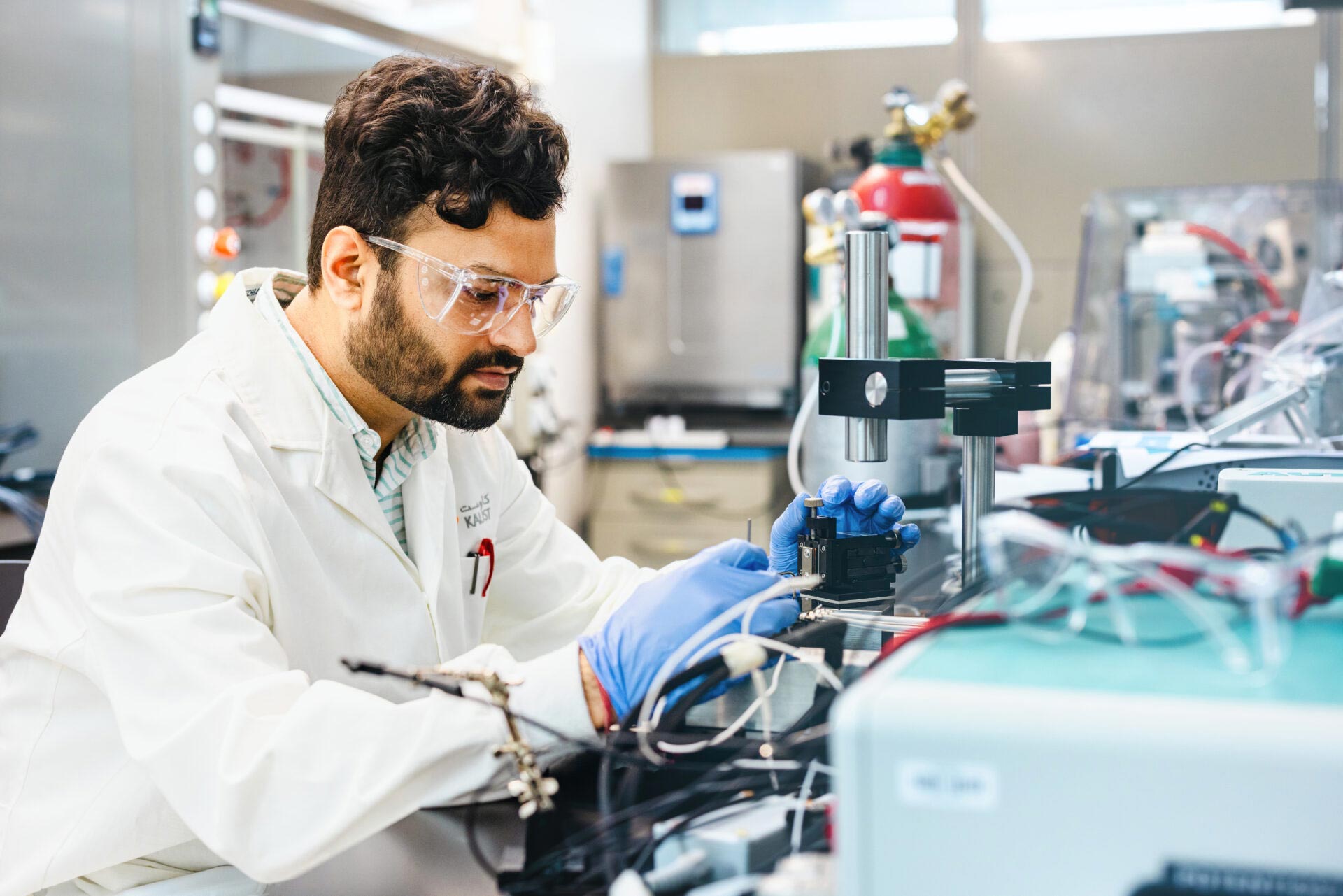
    Professor Thomas Anthopoulos and Abhinav Sharma (pictured above) are now developing an array of transistor sensors that could simultaneously detect multiple metabolites in saliva. Credit: © 2023 KAUST; Anastasia Serin

    Saliva as an Alternative to Blood Testing

    A more convenient way to monitor glucose could be through testing saliva, which is correlated to blood glucose levels. However, glucose concentrations are much lower in saliva than in blood, which has made it difficult to measure accurately without sophisticated laboratory equipment.

    The KAUST team has now created a highly sensitive glucose detector based on a thin-film transistor. These small, lightweight, and low-power devices could be suitable for mass production as inexpensive disposable sensors, says team member Abhinav Sharma. “An easy-to-use noninvasive glucose-measuring device using saliva as a medium could be life-changing for millions of patients worldwide,” he says.

    How the Device Works

    The transistor contains thin layers of the semiconductors indium oxide and zinc oxide, topped with the enzyme glucose oxidase. When a sample of saliva is placed on the sensor, the specific enzyme oxidizes any glucose present to produce D-gluconolactone and hydrogen peroxide. Electrical oxidation of the hydrogen peroxide then produces electrons that enter the semiconductor layers. That changes the current flowing through the semiconductors, and the size of this effect indicates the glucose concentration within the sample.

    The researchers tested their device using human saliva samples that had different amounts of glucose added to them and also analyzed saliva from volunteers who had fasted before taking the tests (glucose levels in saliva may not correlate with blood glucose immediately after a meal).

    They found that the device correctly measured a wide range of glucose concentrations in less than one minute. Crucially, the sensor was not foiled by other molecules in saliva, including sugar derivatives such as fructose and sucrose. Although the sensitivity of the device declined over time, it still offered good performance after being stored for two weeks at room temperature.

    Future Prospects

    The team is now developing an array of transistor sensors that could simultaneously detect multiple metabolites in saliva. “The development of portable sensor arrays that can be integrated with a smartphone is a potential future direction for research,” says Thomas Anthopoulos, who led the team.

    Reference: “Non-invasive, ultrasensitive detection of glucose in saliva using metal oxide transistors” by Abhinav Sharma, Wejdan S. AlGhamdi, Hendrik Faber, Yen-Hung Lin, Chien-Hao Liu, En-Kai Hsu, Wei-Zhi Lin, Dipti Naphade, Suman Mandal, Martin Heeney and Thomas D. Anthopoulos, 15 June 2023, Biosensors and Bioelectronics.
    DOI: 10.1016/j.bios.2023.115448

    Never miss a breakthrough: Join the SciTechDaily newsletter.
    Follow us on Google and Google News.

    Biosensor Biotechnology KAUST Sensor
    Share. Facebook Twitter Pinterest LinkedIn Email Reddit

    Related Articles

    Soft, Stretchy and Strong Electronic Skin Mimics Natural Functions of Human Skin

    Microscope Lens Inspired by Lighthouses Makes It Easier to Observe Molecular-Level Details of Biological Processes

    Iron Nanorobots Go Undercover to Track Living Cells Inside the Body

    Stretchable High Efficiency Solar Cells for Wearable Electronics or Flexible Robot Skin

    Artificial Magnetic Skin Ensures the Force Is With You [Video]

    New Biosensor Can Monitor Glucose Levels From Contact Lenses

    New Biosensors Turn Bacteria Into a Source of Natural Energy

    MIT Engineers Develop Basic Computing Elements for Bacteria

    New Biotech Innovation Reduces Unpredictability in Biological Circuits

    Leave A Reply Cancel Reply

    • Facebook
    • Twitter
    • Pinterest
    • YouTube

    Don't Miss a Discovery

    Subscribe for the Latest in Science & Tech!

    Trending News

    A Billion Years Before the Grand Canyon, a Giant Cliff May Have Stretched Across America

    The Immune Systems of 110-Year-Olds Are Hiding a Remarkable Secret

    Common Osteoarthritis Treatment Fails a Major Test

    Dark Stars May Have Left a Gravitational-Wave Signal We Can Detect Today

    Blackbirds Somehow Know When a Snake Is Too Dangerous To Attack

    A Hidden Gut Reaction May Explain Why Vegetables Are So Good for You

    New “Invisible” Cell Therapy Could Provide Side-Effect-Free Diabetes Treatment

    Nanoscale “Defects” Unlock a Major Heat Transfer Breakthrough

    Follow SciTechDaily
    • Facebook
    • Twitter
    • YouTube
    • Pinterest
    • Newsletter
    • RSS
    SciTech News
    • Biology News
    • Chemistry News
    • Earth News
    • Health News
    • Physics News
    • Science News
    • Space News
    • Technology News
    Recent Posts
    • “Zombie” Cells Reveal a Surprising New Driver of Chronic Inflammation
    • The Rare Vision Side Effect of Ozempic and Wegovy You Should Know About
    • NASA’s New Space Telescope Could Map the Entire Sky With Hubble-Like Detail
    • Hidden Deep Beneath Mars, Scientists Find Evidence of a Vast Magmatic System
    • One Tiny Chemical Difference in RNA Could Help Explain the Origins of Life
    Copyright © 1998 - 2026 SciTechDaily. All Rights Reserved.
    • Science News
    • About
    • Contact
    • Editorial Board
    • Privacy Policy
    • Terms of Use

    Type above and press Enter to search. Press Esc to cancel.