
Close Menu
    Facebook X (Twitter) Instagram
    SciTechDaily
    • Biology
    • Chemistry
    • Earth
    • Health
    • Physics
    • Science
    • Space
    • Technology
    Facebook X (Twitter) Pinterest YouTube RSS
    SciTechDaily
    Home»Earth»Emerald Whirlpools: Satellite Captures Spectacular Algal Blooms in Gulf of Finland
    Earth

    Emerald Whirlpools: Satellite Captures Spectacular Algal Blooms in Gulf of Finland

    By European Space Agency (ESA)September 21, 2023No Comments3 Mins Read
    Facebook Twitter Pinterest Telegram LinkedIn WhatsApp Email Reddit
    Share
    Facebook Twitter LinkedIn Pinterest Telegram Email Reddit
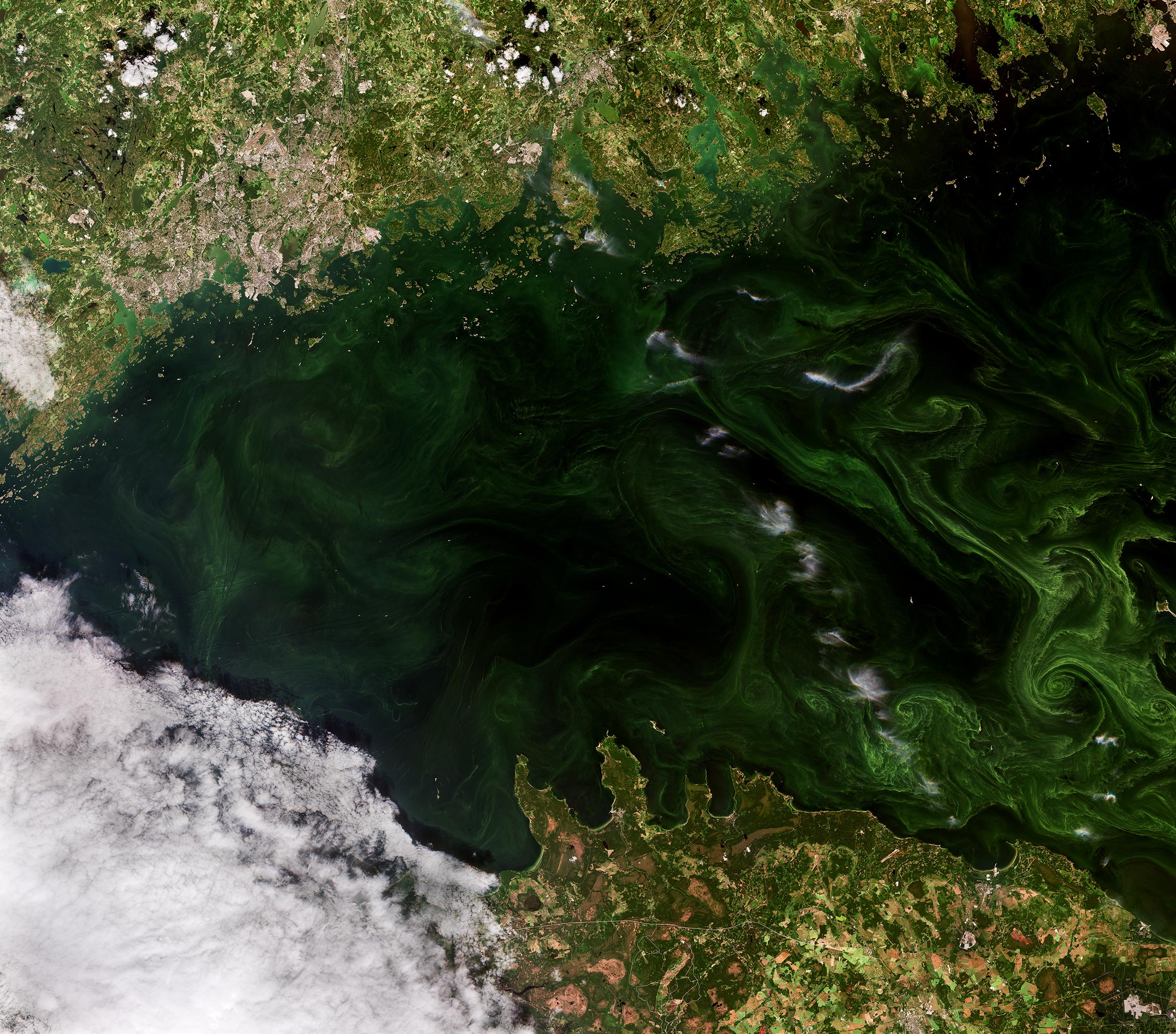
    Emerald Green Algal Blooms in the Gulf of Finland
    This Copernicus Sentinel-2 image reveals extensive algal blooms in the Gulf of Finland. While essential for marine life, some blooms can be harmful. Sentinel-2 aids in monitoring and managing their impact on ecosystems and industries. Credit: Contains modified Copernicus Sentinel data (2023), processed by ESA, CC BY-SA 3.0 IGO

    This satellite image from the European Space Agency’s Copernicus Sentinel-2 features swirls of vivid, emerald-green algal blooms in the Gulf of Finland.

    The Gulf of Finland is the easternmost arm of the Baltic Sea. The area pictured shows the western part of the Gulf. Helsinki, Finland’s capital and most populous city, is visible in light brown on the coast in the top left corner of the image. The image also captures the Estonian coast at the bottom, with Tallin covered by clouds.

    Annual Blooms and Their Appearance

    Each summer, swathes of algae bloom in the Baltic Sea. The blooms usually appear as green threads, as shown in this image, which was captured on July 13, 2023. Streaks, eddies, and swirls, mixed by winds and currents, are clearly visible.

    Understanding Algal Blooms

    An algal bloom describes the rapid growth of phytoplankton – microscopic marine plants that drift on or near the sea surface. While individually microscopic, the chlorophyll they use for photosynthesis collectively tints the ocean waters, which allows them to be measured by satellites orbiting Earth.

    These organisms are essential to life in the sea – they form the base of the marine food chain. Importantly, they also play a huge role in the removal of carbon dioxide from the atmosphere and the production of oxygen.

    However, some phytoplankton and marine algae can be harmful to marine life and to humans. They can produce toxic substances, blooms can occur too often or last too long, depleting the concentration of oxygen in the water.

    Impacts and Monitoring

    High water temperatures, slow circulation, and excessive nutrients released into the ocean often lead to a rapid increase in the number of algae, and consequently large blooms, which can pose a threat to the natural ecosystem and also aquaculture and tourism.

    With its 13 spectral channels, Copernicus Sentinel-2’s imager can be used to detect algal blooms and measure aspects that define water quality, such as surface concentration of chlorophyll. Satellite data can be used to track the growth and spread of blooms and can help develop early warning systems to mitigate the impact on tourism and fishing industries.

    Never miss a breakthrough: Join the SciTechDaily newsletter.
    Follow us on Google and Google News.

    Algae European Space Agency Geography
    Share. Facebook Twitter Pinterest LinkedIn Email Reddit

    Related Articles

    Exploring Earth From Space: Japan in Bloom [Video]

    Earth From Space: Bolivian Highland Heart [Video]

    Flevoland, Netherlands From Space: One of the Largest Land Reclamation Projects in the World

    Earth From Space: Lake George, Uganda – A Center for Biological Diversity [Video]

    Deforestation in Bolivia Spied From Space Satellite

    Earth From Space: Japanese Archipelago [Video]

    Earth From Space: Faroe Islands [Video]

    Earth From Space: Tromsø, Norway [Video]

    Swirling Green Algae Blooms in Baltic Sea Viewed From Space [Video]

    Leave A Reply Cancel Reply

    • Facebook
    • Twitter
    • Pinterest
    • YouTube

    Don't Miss a Discovery

    Subscribe for the Latest in Science & Tech!

    Trending News

    This Copper Drug Clears Alzheimer’s Brain Toxins and Boosts Memory

    Adults Over 65 Lost Massive Amounts of Weight With Ozempic

    How Flocking Birds “Defy” One of Physics’ Most Fundamental Laws

    Physicists Create a New Kind of Schrödinger’s Cat State From Exotic Quantum Building Blocks

    Your Diet Could Be Missing the Key Ingredient for Heart Protection

    Researchers Warn Widely Prescribed Blood Pressure Drugs Could Be Harming Diabetic Kidneys

    James Webb Spots Something Strange Between Day and Night on an Alien Planet

    How Ancient People Moved a 6-Ton Stone 700 Kilometers to Stonehenge

    Follow SciTechDaily
    • Facebook
    • Twitter
    • YouTube
    • Pinterest
    • Newsletter
    • RSS
    SciTech News
    • Biology News
    • Chemistry News
    • Earth News
    • Health News
    • Physics News
    • Science News
    • Space News
    • Technology News
    Recent Posts
    • Scientists Uncover Cause of Inflammatory Bowel Disease Solving Decades-Old Mystery
    • The Surprising Reason Swimming Could Be Better for Your Heart Than Running
    • Could Vitamin C Be the Secret to Keeping Your Brain Younger?
    • The Surprising Fix for Robot Traffic Jams
    • Near Absolute Zero, This Transistor Starts Acting Like a Brain Cell
    Copyright © 1998 - 2026 SciTechDaily. All Rights Reserved.
    • Science News
    • About
    • Contact
    • Editorial Board
    • Privacy Policy
    • Terms of Use

    Type above and press Enter to search. Press Esc to cancel.