
Close Menu
    Facebook X (Twitter) Instagram
    SciTechDaily
    • Biology
    • Chemistry
    • Earth
    • Health
    • Physics
    • Science
    • Space
    • Technology
    Facebook X (Twitter) Pinterest YouTube RSS
    SciTechDaily
    Home»Biology»Revolutionizing Oncology: A Non-Invasive Cancer GPS for Tumor Malignancy Assessment
    Biology

    Revolutionizing Oncology: A Non-Invasive Cancer GPS for Tumor Malignancy Assessment

    By Hokkaido UniversityJanuary 22, 2024No Comments3 Mins Read
    Facebook Twitter Pinterest Telegram LinkedIn WhatsApp Email Reddit
    Share
    Facebook Twitter LinkedIn Pinterest Telegram Email Reddit
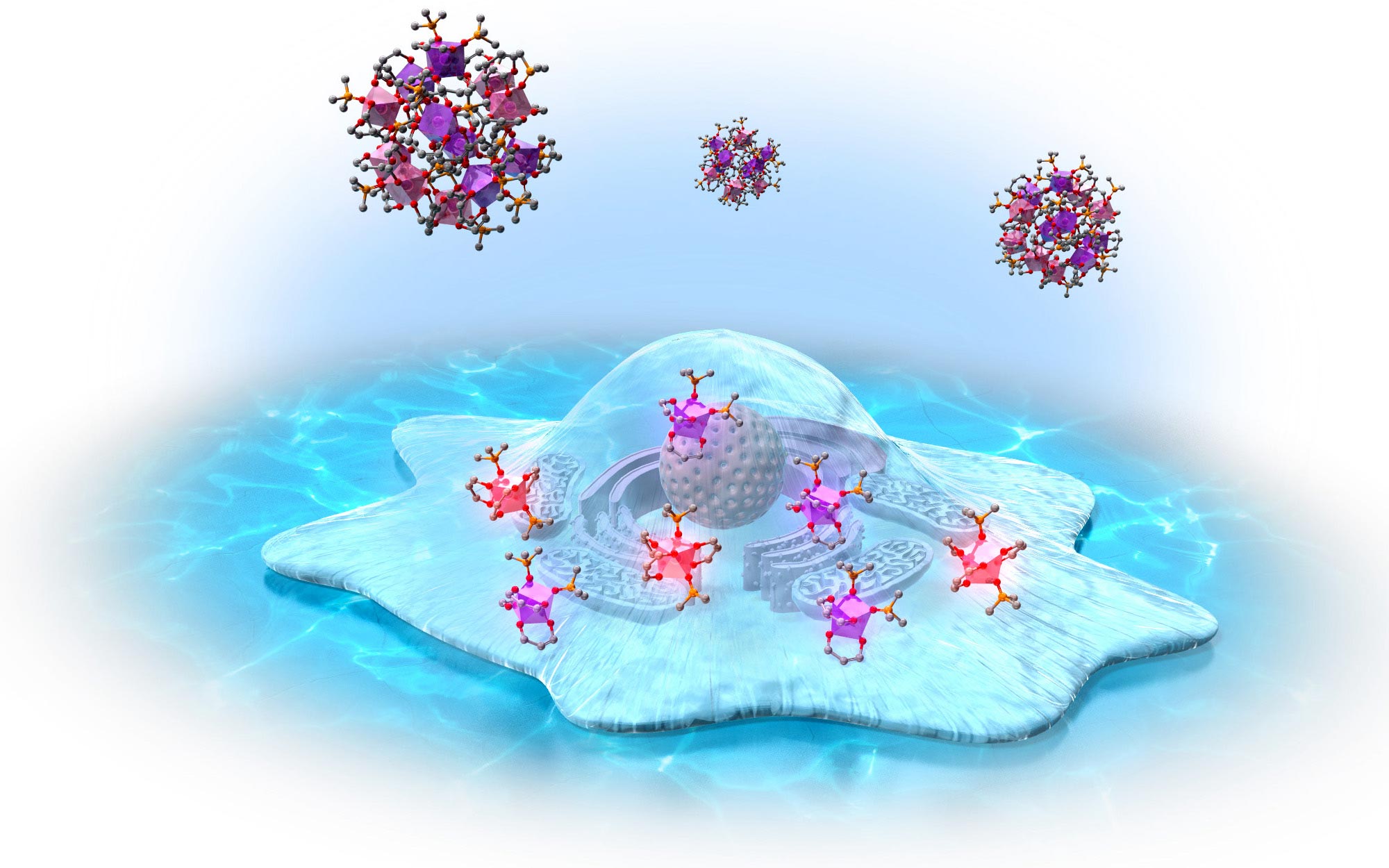
    Europium Complexes Changing Structure
    Depiction of europium complexes changing structure upon interacting with a tumor cell. Credit: Mengfei Wang, et al. Scientific Reports. January 22, 2024

    A water-soluble, luminescent europium complex enables evaluation of malignancy grade in model glioma tumor cells.

    An important part of choosing the most suitable cancer therapy is understanding the malignancy of the tumor; however, current methods for evaluating brain tumor malignancy are invasive and have a high risk of complications.

    Collaborative research led by Professor Yasuchika Hasegawa and Professor Shinya Tanaka of the Institute for Chemical Reaction Design and Discovery (WPI-ICReDD) at Hokkaido University has developed a non-destructive cancer grade probing system (GPS) for evaluating the malignancy grade of model glioma tumor cells using a water-soluble, luminescent europium complex. This method could lead to non-invasive tests for the determination of tumor malignancy in patients.
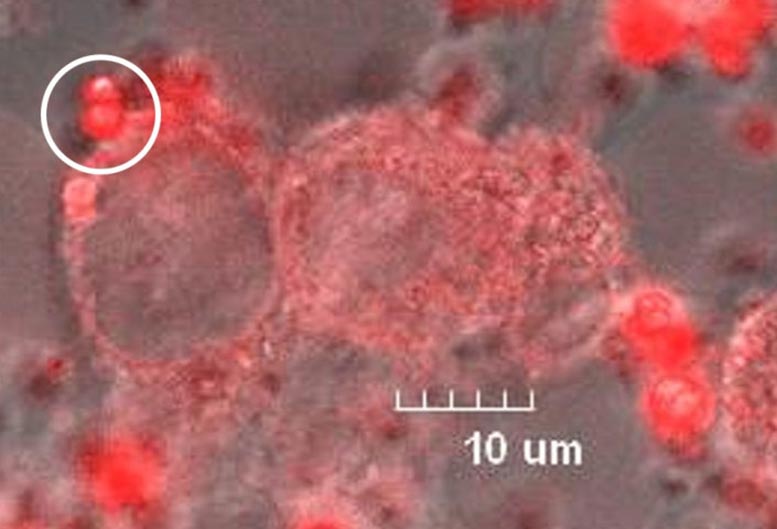
    Red Light Emission From Europium Complexes Inside Model Glioma Cells
    Confocal microscope image showing red light emission from europium complexes inside model glioma cells. The white circle denotes an aggregation of the europium complex. Credit: Mengfei Wang, et al. Scientific Reports. January 22, 2024

    Non-Invasive Malignancy Testing

    The team evaluated tumor malignancy by introducing the europium complex to model cells that mimic glioma, a common type of tumor that accounts for 26.3% of brain cancers (Source: CBTRUS). Three different model cells that mimic different grades of malignancy were tested, and researchers measured changes in the lifetime of the europium complex’s characteristic red-light emission. Researchers found that during the first three hours after adding the europium complex, larger changes in the lifetime of the light emission occurred in the more malignant cells.

    “Visualization of cancer cells using luminescent complexes has previously been reported, but our hypothesis was that the photophysical signals sent by such complexes in cancer cells might reflect internal information from the cancer cells,” said Hasegawa.

    Mengfei Wang, Masumi Tsuda, Shinya Tanaka, Yasuchika Hasegawa
    Members of the research team at the Institute for Chemical Reaction Design and Discovery (WPI-ICReDD), Hokkaido University. Left to Right: Mengfei Wang, Masumi Tsuda, Shinya Tanaka, Yasuchika Hasegawa. Credit: WPI-ICReDD

    Breakthrough in Tumor Analysis

    To achieve this result, researchers first modified the europium complex so that it would be water-soluble and stable among the amino acids in the cell culture medium. Upon addition to the cell culture medium, the europium complex initially forms an aggregate with itself. Interaction with model tumor cells results in the aggregates breaking into single molecules, which are then rapidly taken up by the cells. This process promotes structural changes in the europium complex, which cause changes in the lifetime of the complex’s red-light emission.

    These differences in emission lifetimes were attributed to the varying tumor activity and growth processes of the different malignancy grades, which could cause different structural changes at different time scales in the europium complex. The team anticipates that using this method could enable continuous detection of tumor activity and provide doctors with key information when deciding appropriate treatment.

    “Brain tumors occur in 4.6 out of every 100,000 people in Japan, and the 5-year survival rate is 16% for the most malignant grade 4 type of glioblastoma, which is an aggressive type of glioma brain tumor,” explained Tanaka. “The malignancy evaluation method we developed may be able to benefit these patients in the future.”

    Reference: “Structure-changeable luminescent Eu(III) complex as a human cancer grade probing system for brain tumor diagnosis” by Mengfei Wang, Masaya Kono, Yusaku Yamaguchi, Jahidul Islam, Sunao Shoji, Yuichi Kitagawa, Koji Fushimi, Sora Watanabe, Go Matsuba, Akihisa Yamamoto, Motomu Tanaka, Masumi Tsuda, Shinya Tanaka and Yasuchika Hasegawa, 22 January 2024, Scientific Reports.
    DOI: 10.1038/s41598-023-50138-9

    Never miss a breakthrough: Join the SciTechDaily newsletter.
    Follow us on Google and Google News.

    Brain Tumor Cancer Hokkaido University
    Share. Facebook Twitter Pinterest LinkedIn Email Reddit

    Related Articles

    Shocking Breakthrough: Newly Discovered Hybrid Brain Cells Fire Electrical Impulses

    Hundreds of In Vitro Brains Were Grown in a Lab in Italy – Here’s Why

    3D Tissue Models of Brain Tumors Grown in Brain-Mimicking Microenvironment

    New Molecular Details of Cancer Cells Could Lead to Improved Treatment

    Cancer-Causing Mutations Disrupt Cells’ Ability to Differentiate

    Researchers Use Body’s Immune System to Fight Cancer

    Researchers Use Grape Seed Extract to Kill Cancer Cells

    MR Spectroscopy Helps Measure Brain Tumor Mutation

    New Research Targets Myc-Driven Cancers

    Leave A Reply Cancel Reply

    • Facebook
    • Twitter
    • Pinterest
    • YouTube

    Don't Miss a Discovery

    Subscribe for the Latest in Science & Tech!

    Trending News

    Bone-Strengthening Discovery Could Reverse Osteoporosis

    Scientists Uncover Hidden Trigger Behind Stem Cell Aging

    Scientists Find Way to Reverse Fatty Liver Disease Without Changing Diet

    Could Humans Regrow Limbs? New Study Reveals Promising Genetic Pathway

    Scientists Reveal Eating Fruits and Vegetables May Increase Your Risk of Lung Cancer

    Scientists Reverse Brain Aging With Simple Nasal Spray

    Scientists Uncover Potential Brain Risks of Popular Fish Oil Supplements

    Scientists Discover a Surprising Way To Make Bread Healthier and More Nutritious

    Follow SciTechDaily
    • Facebook
    • Twitter
    • YouTube
    • Pinterest
    • Newsletter
    • RSS
    SciTech News
    • Biology News
    • Chemistry News
    • Earth News
    • Health News
    • Physics News
    • Science News
    • Space News
    • Technology News
    Recent Posts
    • This Student Recreated the Universe in a Bottle. What She Discovered Could Help Reveal How Life Started on Earth
    • Alzheimer’s Symptoms May Start Outside the Brain, Study Finds
    • Cancer’s Secret Weapon? Scientists Reveal How Tumors “Learn” To Survive Treatment
    • Millions Take This Popular Supplement – Scientists Discover a Concerning Link to Heart Failure
    • What Makes Rubber So Strong? Scientists Finally Solve 100-Year-Old Mystery
    Copyright © 1998 - 2026 SciTechDaily. All Rights Reserved.
    • Science News
    • About
    • Contact
    • Editorial Board
    • Privacy Policy
    • Terms of Use

    Type above and press Enter to search. Press Esc to cancel.