
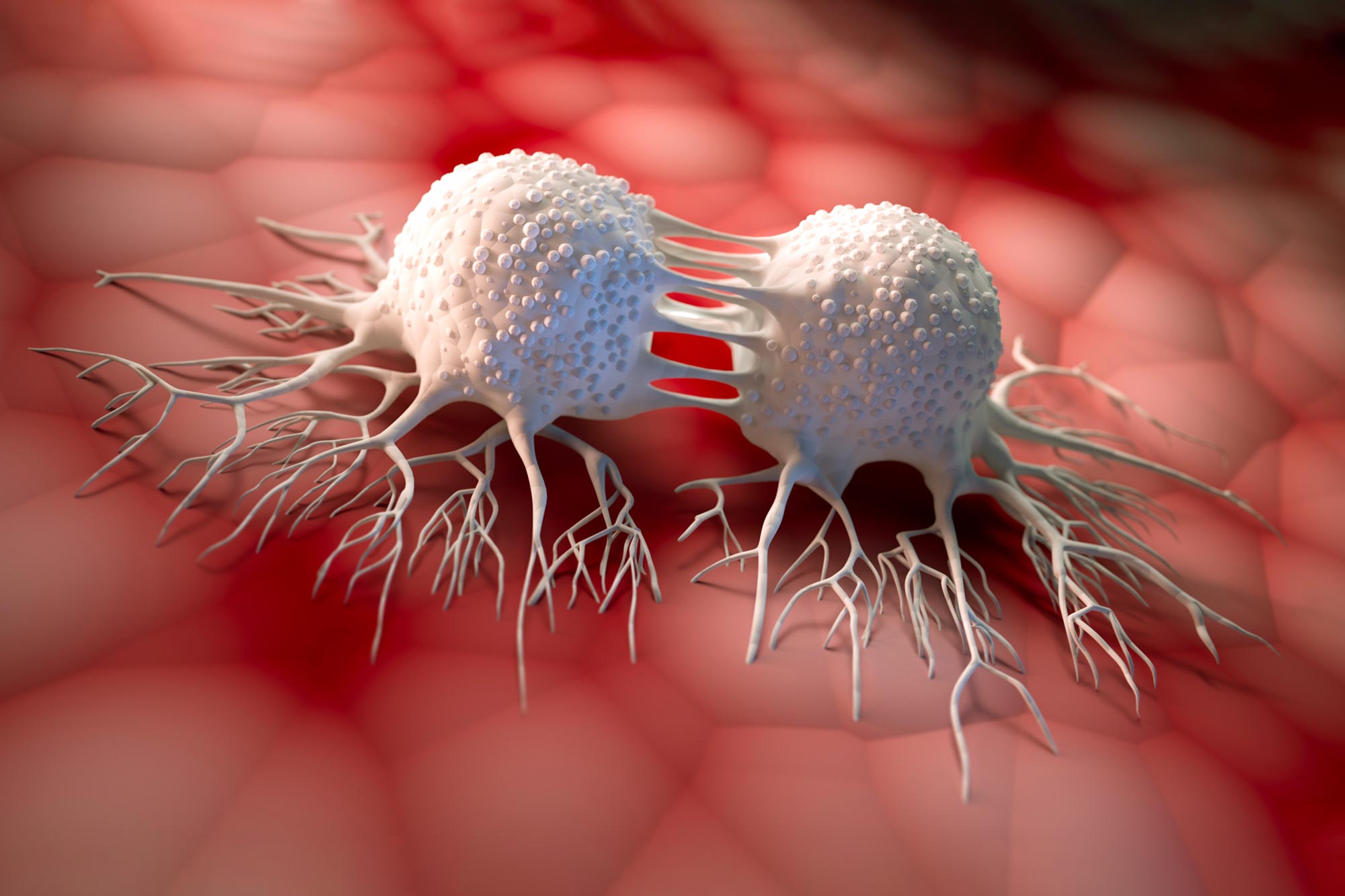
Cancer cells may “learn” to survive therapy by rewiring gene activity using AP-1 proteins.
Researchers at NYU Langone Health say cancer cells may have a far more flexible survival system than scientists once thought. In a new model, the team argues that some tumors may not need to wait for rare DNA mutations to escape treatment. Instead, cancer cells may rapidly adjust how their genes are used, test different survival states, and hold on to the ones that work.
Published in Nature, the perspective article focuses on a group of proteins known as AP-1. These proteins are rapidly activated when cells encounter stress, including exposure to chemotherapy.
Although AP-1 proteins have been studied for decades, the researchers suggest they play a role in a largely overlooked process. In this model, cells survive by reworking how their internal systems operate. This adaptation does not rely on permanent DNA changes. Instead, cells switch genes on or off and retain patterns that improve their chances of survival.
A New View of Drug Resistance
The study proposes that cancer cells take advantage of this flexibility to test different gene activity patterns until they find one that helps them endure treatment. Once a successful state is established, it can be stabilized and passed on as cells divide, contributing to drug-resistant tumors.
“For decades, our understanding of drug resistance was that it was primarily caused by the selection of rarely occurring genetic mutations—or changes in the DNA code—that happen to be effective against a specific drug,” said study author Itai Yanai, PhD, a professor in the Department of Biochemistry and Molecular Pharmacology at NYU Langone.
“More recently, we’ve learned that cells can change cellular states to adapt to treatments, but the mechanism has not been clear,” added Dr. Yanai, faculty in the Institute for Systems Genetics. “We propose the existence of a surprising mechanism whereby cells adapt on the fly, and which may explain why advanced cancers become virtually untreatable.”
“Our AP-1 model works like an evolutionary algorithm inside each cancer cell,” said first author Gustavo S. França, PhD, a postdoctoral fellow in Dr. Yanai’s lab. “By deploying AP-1, the cell is able to generate different ways to regulate its genes and then select the one that is most adaptive to its environment.”
Mix and Match Mechanism
The proposed model centers on transcription factors, proteins that attach to DNA and control the activity of many genes. The AP-1 family stands out because its proteins can combine in numerous ways, forming pairs known as “dimers.” Each pairing influences a different set of genes depending on the cellular context.
This flexibility allows cancer cells to experiment with gene expression patterns and identify which ones best help them survive the stress caused by treatment. The researchers suggest a feedback process is involved. AP-1 dimers that reduce stress are reinforced, while those that do not are eliminated.
Over time, cells settle on an effective AP-1 combination that reshapes how their genes are regulated, enabling survival. These changes are epigenetic, meaning they do not alter DNA itself but still act as a form of memory. This memory allows resistant traits to be passed on to future cell generations.
Implications for Treatment and Beyond
“Our new model could have profound implications for how we think about treating cancer,” said Dr. Yanai. “Instead of targeting its particular state, as most current therapies do, we may also need to target its ability to adapt. If we can block this AP-1 learning mechanism, we may be able to prevent cancer cells from ever becoming treatment resistant in the first place.”
The researchers note that this adaptive process may not be limited to cancer. Similar AP-1 driven mechanisms appear to play roles in normal biological functions, including how the brain forms memories and how skin heals after injury.
The team plans to use tools such as CRISPR gene editing and single-cell analysis to map the full range of AP-1 combinations and understand how each contributes to resistance.
“Our next step is to dissect the AP-1 phosphorylation code,” said Dr. França. “By understanding precisely which AP-1 pairs drive resistance to specific therapies, we can begin to combine conventional cancer therapies with anti-adaptation agents to create treatments that are effective for longer.”
Reference: “A mechanism for adaptive genome regulation in cancer” by Gustavo S. França, and Itai Yanai, 15 April 2026, Nature.
DOI: 10.1038/s41586-026-10269-1
This work was supported by National Institutes of Health grants R01CA296978, U01CA260432, R01LM013522, U54CA263001, and R21CA264361.
Never miss a breakthrough: Join the SciTechDaily newsletter.
Follow us on Google and Google News.
1 Comment
Absolutely love the updated look of this research