
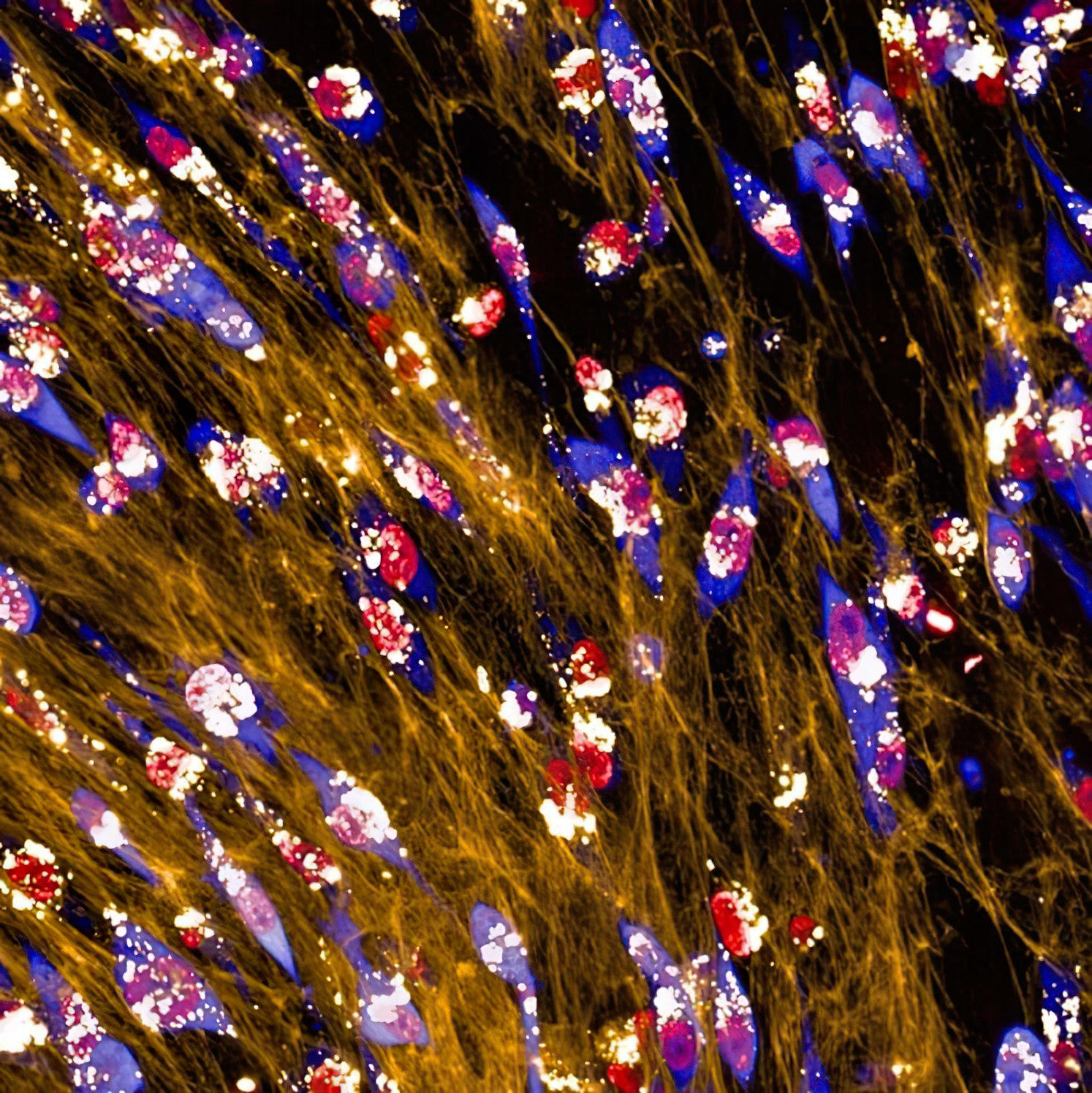
A recent study has discovered that breast cancer cells facing a lack of energy resort to ingesting and consuming their surroundings to overcome starvation.
The research, conducted by scientists at the University of Sheffield and published in the journal PLOS Biology, provides a new insight into a previously unknown mechanism of cancer cell survival and may offer a new target for therapy development.
Cells in the breast, including tumor cells, are embedded in a meshwork called the extracellular matrix (ECM). Nutrients are scarce in the ECM, due to the limited blood flow, and become even scarcer as tumor cells grow.
Lead researcher Dr. Elena Rainero, from the University of Sheffield’s School of Biosciences, and her team investigated how tumors continue to grow – despite the lack of nutrients – and how the tumor cells supply themselves with the raw materials to support their growth.
Novel Survival Mechanisms
“This study identified a novel mechanism employed by breast cancer cells to survive in the challenging environment they are in within tumors,” said Dr. Elena Rainero, from the University of Sheffield.
“As sources of food are scarce, cancer cells gain the ability to eat and digest components of the matrix around them. We have identified a key metabolic process that the cells need to be able to take advantage of the matrix, which could represent a novel therapeutic target.”
During the study, which was funded by Cancer Research UK, Dr Rainero and her team seeded breast adenocarcinoma cells into either collagen (a major component of the ECM) or a commercial matrix preparation, or onto plastic, with or without certain critical amino acids.
Without those amino acids, cells on plastic fared poorly compared to those in one or the other matrix. Similar results were seen with other matrix models – the tumor cells were able to overcome the reduction of amino acids when surrounded by matrix.
Next, by fluorescently labeling the collagen and watching its journey through the cell, the authors showed that the cells took up ECM and broke it down in digestive compartments called lysosomes; when the ECM was chemically treated to cross-link its components, the cells were unable to ingest it.
Metabolic Insights and Therapeutic Implications
Further investigation indicated that uptake was through an ingestion process called macropinocytosis, in which the cell engulfs large quantities of extracellular material.
Analysis of their metabolome indicated that procurement and breakdown of two amino acids, tyrosine, and phenylalanine, dominated the metabolic changes in response to starvation. The Sheffield scientists noted that these two can serve as the raw material for energy production through the mitochondrial tricarboxylic acid (Krebs) cycle.
When they knocked down High Pressure Decorative Laminate (HPDL), a central enzyme in the pathway from phenylalanine to the TCA, cell growth was significantly impaired.
Blocking or reducing expression of HPDL, or the macropinocytosis promoter PAK1, reduced the ability of tumor cells to migrate and to invade surrounding tissue.
Dr Rainero added: “Our results indicate that breast cancer cells take advantage of nutrients in the extracellular matrix in times of nutrient starvation, and that this process depends on both macropinocytosis and metabolic conversion of key amino acids to energy-releasing substrates.
“HPDL-mediated metabolism of tyrosine and phenylalanine could represent a metabolic vulnerability of cancer cells thriving in a nutrient-deprived microenvironment.”
Reference: “The extracellular matrix supports breast cancer cell growth under amino acid starvation by promoting tyrosine catabolism” by Mona Nazemi, Bian Yanes, Montserrat Llanses Martinez, Heather J. Walker, Khoa Pham, Mark O. Collins, Frederic Bard and Elena Rainero, 16 January 2024, PLOS Biology.
DOI: 10.1371/journal.pbio.3002406
M.N., B.Y. and E.R. are funded by Cancer Research UK (C52879/A29144). M.L.M. is funded by Sheffield/ARAP PhD program. F.B. is funded by ‘ARC pour la recherche sur le cancer’ Foundation and AMIDEX AMX-2-CE-03 Chaire d’Excellence. The funders had no role in study design, data collection and analysis, decision to publish, or preparation of the manuscript.
Never miss a breakthrough: Join the SciTechDaily newsletter.
Follow us on Google and Google News.