
Close Menu
    Facebook X (Twitter) Instagram
    SciTechDaily
    • Biology
    • Chemistry
    • Earth
    • Health
    • Physics
    • Science
    • Space
    • Technology
    Facebook X (Twitter) Pinterest YouTube RSS
    SciTechDaily
    Home»Space»NASA’s MESSENGER Spacecraft Seeks to Unmask the Secrets of Mercury
    Space

    NASA’s MESSENGER Spacecraft Seeks to Unmask the Secrets of Mercury

    By NASAApril 28, 2015No Comments2 Mins Read
    Facebook Twitter Pinterest Telegram LinkedIn WhatsApp Email Reddit
    Share
    Facebook Twitter LinkedIn Pinterest Telegram Email Reddit
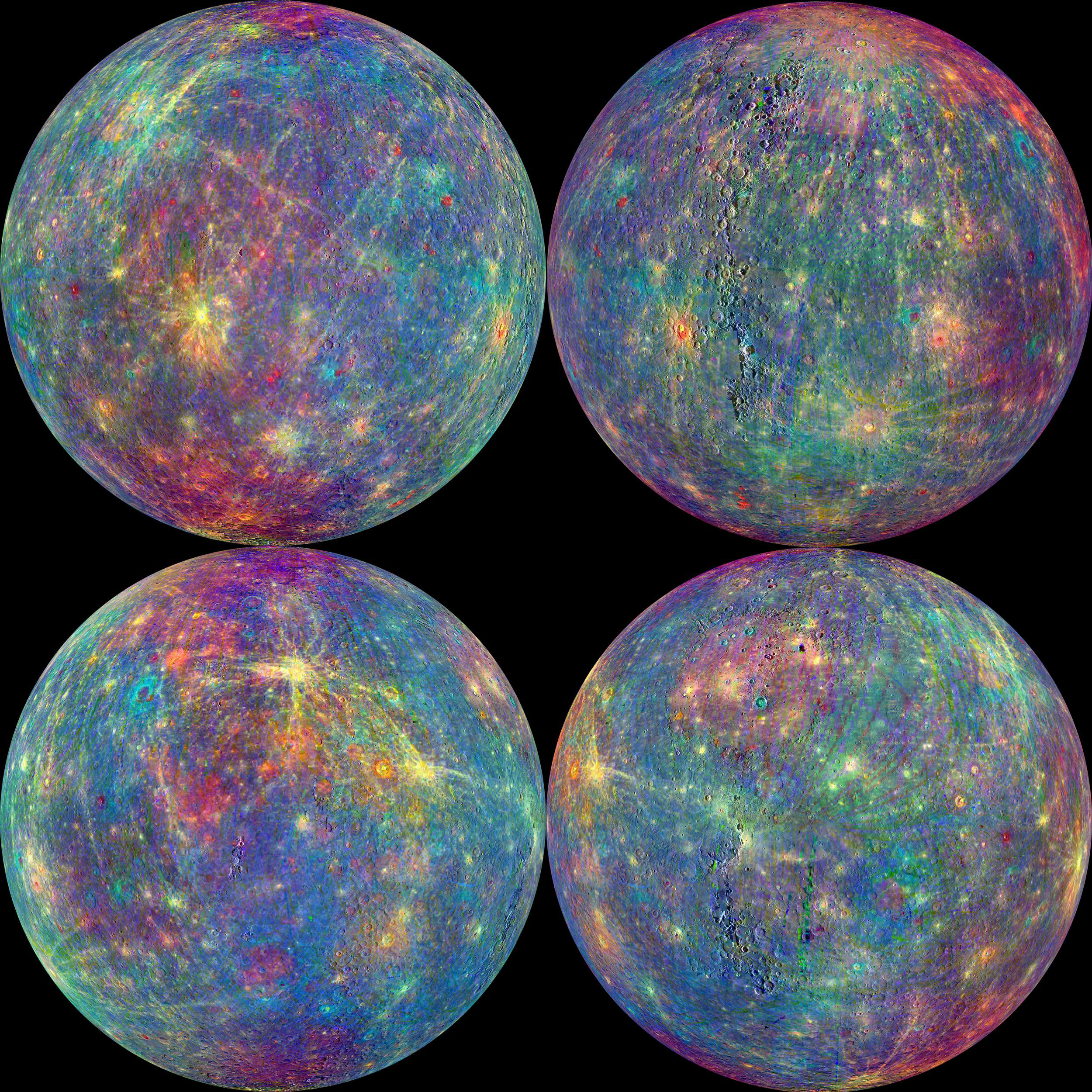
    NASA Unmasking the Secrets of Mercury
    MESSENGER, the first spacecraft to orbit Mercury, has collected valuable data for over four years using seven scientific instruments. However, the mission will end soon as the spacecraft runs out of propellant and impacts Mercury’s surface in April 2015 due to solar gravity. Credit: NASA/Johns Hopkins University Applied Physics Laboratory/Carnegie Institution of Washington

    Since entering Mercury orbit on March 17, 2011, NASA’s MESSENGER Spacecraft has provided astronomers with over 250,000 images and extensive other data sets.

    The Mercury Atmosphere and Surface Composition Spectrometer (MASCS) instrument aboard NASA’s MESSENGER spacecraft was designed to study both the exosphere and surface of the planet Mercury. To learn more about the minerals and surface processes on Mercury, the Visual and Infrared Spectrometer (VIRS) portion of MASCS has been diligently collecting single tracks of spectral surface measurements since MESSENGER entered Mercury orbit on March 17, 2011. The track coverage is now extensive enough that the spectral properties of both broad terrains and small, distinct features such as pyroclastic vents and fresh craters can be studied. To accentuate the geological context of the spectral measurements, the MASCS data have been overlain on the monochrome mosiac from the Mercury Dual Imaging System (MDIS), an instrument with wide- and narrow-angle cameras to map the rugged landforms and spectral variations on Mercury’s surface.

    The MESSENGER spacecraft is the first ever to orbit the planet Mercury, and the spacecraft’s seven scientific instruments and radio science investigation are unraveling the history and evolution of the solar system’s innermost planet. In the mission’s more than four years of orbital operations, MESSENGER has acquired over 250,000 images and extensive other data sets. MESSENGER’s highly successful orbital mission is about to come to an end, as the spacecraft runs out of propellant and the force of solar gravity causes it to impact the surface of Mercury near the end of April 2015.

    Never miss a breakthrough: Join the SciTechDaily newsletter.
    Follow us on Google and Google News.

    Astronomy Mercury NASA MESSENGER Planetary Science
    Share. Facebook Twitter Pinterest LinkedIn Email Reddit

    Related Articles

    Scientists Unveil the First Global Topographic Model of Mercury

    MESSENGER Spacecraft Reveals New Details about Mercury

    MESSENGER Collects Important Data on Mercury During Its Orbital Decay

    New Surface Composition Maps of Mercury Provide Clues to the Planet’s History

    MESSENGER Reveals Possible Source of Surge of Calcium in Mercury Exosphere

    Messenger Spacecraft Reveals Mercury’s Bizarre Magnetic Field

    NASA’s Messenger Discovers Hot Flow Anomalies at Mercury

    New Study Resolves a Decades-Old Paradox between Thermal History Models and Estimates of Mercury’s Contraction

    Presence of Ice on Mercury Confirmed by MESSENGER Probe

    Leave A Reply Cancel Reply

    • Facebook
    • Twitter
    • Pinterest
    • YouTube

    Don't Miss a Discovery

    Subscribe for the Latest in Science & Tech!

    Trending News

    JWST Finds a “Star” 100 Billion Times Brighter Than Any Star Should Be

    Scientists Find a Hidden Biological Link Across Different Forms of Autism

    Astronomers Discover a Ghostly River of Stars That Could Reveal Dark Matter

    Why Is Colorectal Cancer Rising in People Under 50? New Clues Point to the Environment

    Quantum Fluctuations Break a Crystal’s Symmetry Rules

    Why Does an Irregular Heartbeat Strike 40 Years Early in Some People?

    Scientists Reveal How ADHD Could Fuel Creative Thinking

    Scientists Find Just 3 Minutes of Sprinting Can Transform Blood Chemistry

    Follow SciTechDaily
    • Facebook
    • Twitter
    • YouTube
    • Pinterest
    • Newsletter
    • RSS
    SciTech News
    • Biology News
    • Chemistry News
    • Earth News
    • Health News
    • Physics News
    • Science News
    • Space News
    • Technology News
    Recent Posts
    • Does Vitamin C Really Prevent Colds? The Answer May Surprise You
    • Study Reveals Your Organs May Be Aging at Very Different Speeds
    • T Cells Have a Hidden Ability Scientists Never Knew Existed
    • This Grain-of-Rice-Sized “Rainbow” Chip Could Transform 6G Communications
    • Physicists Discover Time Crystals Can Communicate Across a Semiconductor
    Copyright © 1998 - 2026 SciTechDaily. All Rights Reserved.
    • Science News
    • About
    • Contact
    • Editorial Board
    • Privacy Policy
    • Terms of Use

    Type above and press Enter to search. Press Esc to cancel.