
Close Menu
    Facebook X (Twitter) Instagram
    SciTechDaily
    • Biology
    • Chemistry
    • Earth
    • Health
    • Physics
    • Science
    • Space
    • Technology
    Facebook X (Twitter) Pinterest YouTube RSS
    SciTechDaily
    Home»Space»Lunar Reconnaissance Orbiter Moves Closer to the Lunar Surface
    Space

    Lunar Reconnaissance Orbiter Moves Closer to the Lunar Surface

    By Nancy Neal Jones, NASA’s Goddard Space Flight CenterMay 5, 2015No Comments3 Mins Read
    Facebook Twitter Pinterest Telegram LinkedIn WhatsApp Email Reddit
    Share
    Facebook Twitter LinkedIn Pinterest Telegram Email Reddit
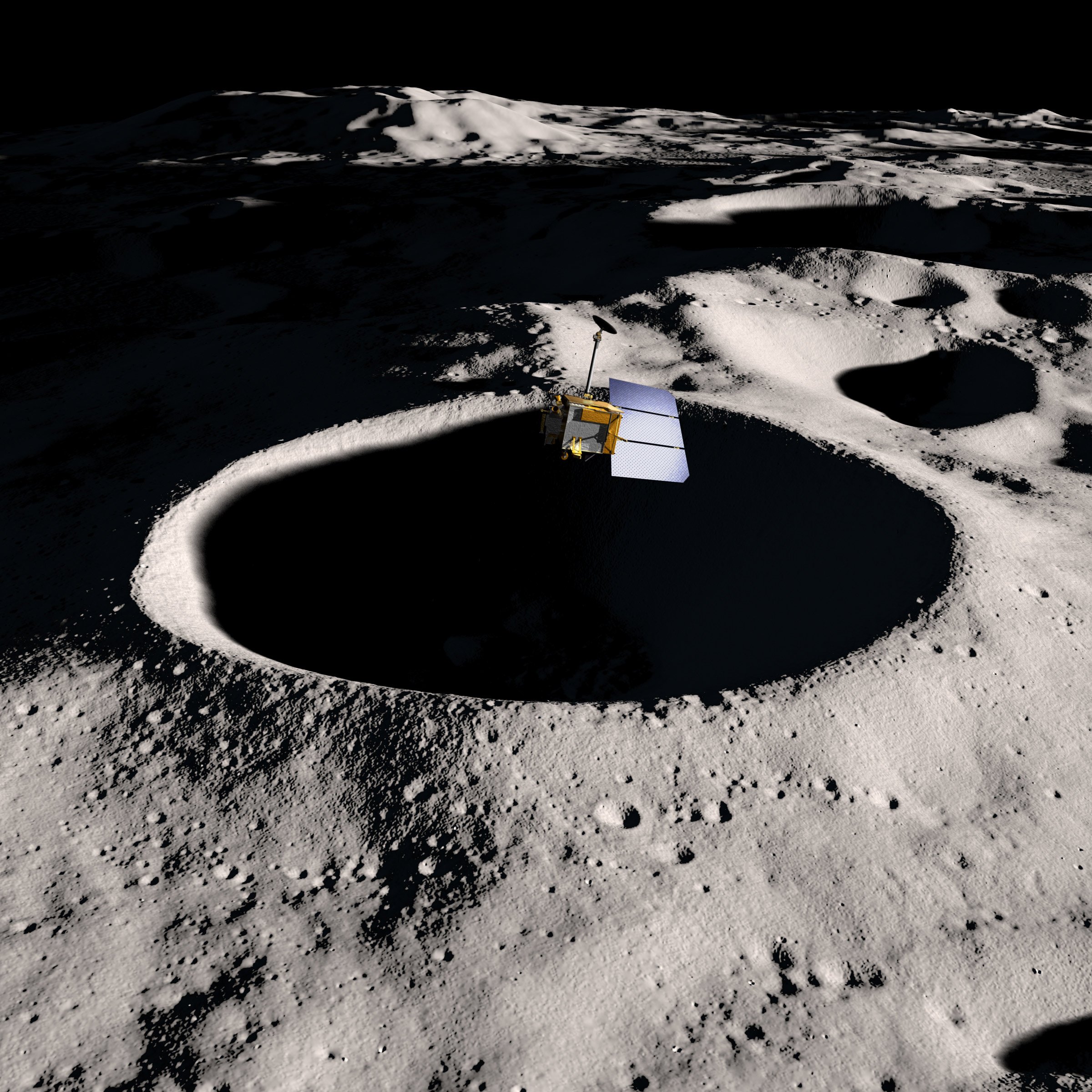
    LRO Moves Closer to the Lunar Surface
    The image is a visualization of the LRO spacecraft as it passes low over the moon¹s surface near the lunar South Pole. From this vantage point LRO will continue to make detailed measurements of the lunar surface, and now from its lower orbit near the South Pole will make unique observations of selected areas. Credit: NASA/GSFC/SVS

    NASA’s Lunar Reconnaissance Orbiter is now within 20 kilometers of the lunar South Pole, the closest the spacecraft has ever been to the lunar surface.

    On Monday, May 4, 2015 flight controllers at NASA’s Goddard Space Flight Center in Greenbelt, Maryland performed two station keeping burns to change LRO’s orbit. The new orbit allows LRO to pass within 20 km (12 miles) of the South Pole and 165 km (103 miles) over the North Pole.

    “We’re taking LRO closer to the moon than we’ve ever done before, but the maneuver is similar to all other station keeping maneuvers, so the mission operations team knows exactly what to do,” said Steve Odendahl, LRO mission manager from NASA Goddard.

    To optimize science return, team members made the decision to change the orbit after determining that the new orbit configuration poses no danger to the spacecraft. LRO can operate for many years at this orbit.

    The new orbit enables exciting new science and will see improved measurements near the South Pole. Two of the instruments benefit significantly from the orbit change. The return signal from the Lunar Orbiter Laser Altimeter (LOLA) laser shots will become stronger, producing a better signal. LOLA will obtain better measurements of specific regions near the South Pole that have unique illumination conditions. Diviner will be able to see smaller lunar features through the collection of higher resolution data.

    “The lunar poles are still places of mystery where the inside of some craters never see direct sunlight and the coldest temperatures in the solar system have been recorded,” said John Keller, LRO project scientist at NASA Goddard. “By lowering the orbit over the South Pole, we are essentially magnifying the sensitivity of the LRO instruments which will help us understand the mechanisms by which water or other volatiles might be trapped there.”

    Launched on June 18, 2009, LRO has collected a treasure trove of data with its seven powerful instruments, making an invaluable contribution to our knowledge about the moon. LRO is managed by NASA’s Goddard Space Flight Center in Greenbelt, Maryland, for the Science Mission Directorate at NASA Headquarters in Washington.

    Never miss a breakthrough: Join the SciTechDaily newsletter.
    Follow us on Google and Google News.

    Astronomy Moon NASA NASA's Lunar Reconnaissance Orbiter
    Share. Facebook Twitter Pinterest LinkedIn Email Reddit

    Related Articles

    LRO Spacecraft Reveals Earth’s Moon Hit by Surprising Number of Meteoroids

    LRO Spacecraft Captures Image of LADEE’s Lunar Impact Crater

    LRO Reveals Lunar Pits Could Support Human Activity on the Lunar Surface

    LRO Radar Data Indicates That the Walls of Shackleton Crater on the Moon May Hold Ice

    Study Finds a Mixture of Both Deep and Shallow Heating on Io

    Hubble to Test Technique of Using the Moon as a Mirror

    A Closer Look at Titan’s Chemical Production

    NASA LRO Spacecraft Reveals Geological Activity on the Moon’s Surface

    NASA’s GRAIL Mission Returns Video From Far Side of the Moon

    Leave A Reply Cancel Reply

    • Facebook
    • Twitter
    • Pinterest
    • YouTube

    Don't Miss a Discovery

    Subscribe for the Latest in Science & Tech!

    Trending News

    Chimpanzees Keep Throwing Stones at the Same Trees – Scientists Want To Know Why

    Coffee May Protect the Liver in More Ways Than Scientists Realized

    AI Just Uncovered a Hidden Secret Inside Water

    Scientists Catch a “Jumping Gene” Moving Between Species

    This Tiny-Bead Procedure Is Helping Patients Avoid Knee Replacement

    Neanderthals Nearly Vanished 75,000 Years Ago – Then One Group Repopulated Europe

    AI Detects Hidden Warning Signs Before Major Earthquakes

    Scientists Have Found Evidence That Dark Matter May Not Be Playing by the Rules

    Follow SciTechDaily
    • Facebook
    • Twitter
    • YouTube
    • Pinterest
    • Newsletter
    • RSS
    SciTech News
    • Biology News
    • Chemistry News
    • Earth News
    • Health News
    • Physics News
    • Science News
    • Space News
    • Technology News
    Recent Posts
    • 567-Million-Year-Old Fossils Suggest Animals Evolved Earlier Than We Thought
    • Scientists Discover a 5-Million-Year-Old Whale Graveyard Deep Beneath the Indian Ocean
    • Ancient DNA Reveals the Hidden Origins of China’s Mysterious Shimao Civilization
    • Scientists Finally Solve a 50-Year Mystery Hidden in Solid Nitrogen
    • Saturn’s Largest Moon May Hold the Resources for a Space Colony
    Copyright © 1998 - 2026 SciTechDaily. All Rights Reserved.
    • Science News
    • About
    • Contact
    • Editorial Board
    • Privacy Policy
    • Terms of Use

    Type above and press Enter to search. Press Esc to cancel.