
Close Menu
    Facebook X (Twitter) Instagram
    SciTechDaily
    • Biology
    • Chemistry
    • Earth
    • Health
    • Physics
    • Science
    • Space
    • Technology
    Facebook X (Twitter) Pinterest YouTube RSS
    SciTechDaily
    Home»Space»Unlocking Cosmic Secrets With Carruthers’ Ultraviolet Eye
    Space

    Unlocking Cosmic Secrets With Carruthers’ Ultraviolet Eye

    By NASAApril 2, 2024No Comments2 Mins Read
    Facebook Twitter Pinterest Telegram LinkedIn WhatsApp Email Reddit
    Share
    Facebook Twitter LinkedIn Pinterest Telegram Email Reddit
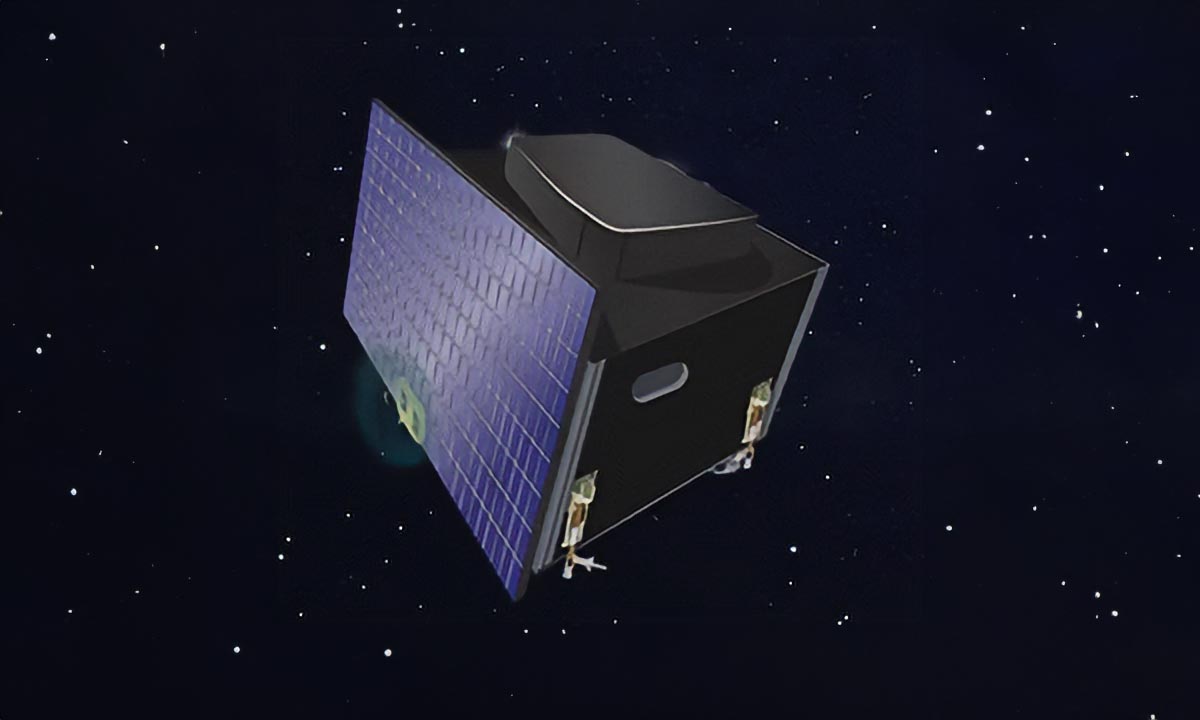
    Carruthers Geocorona Observatory
    The Carruthers Geocorona Observatory, featuring an integrated UV spectrometer, is set to launch in 2025 and will be stationed at Lagrange Point 1 to study the Earth’s exosphere. This groundbreaking SmallSat mission aims to analyze how the outermost layer of the atmosphere reacts to solar-induced space weather. Credit: NASA

    The Carruthers Observatory, launching in 2025, will explore the Earth’s exosphere from a stable point one million miles away, providing unprecedented continuous observations.

    The ultraviolet (UV) spectrometer was successfully integrated into the satellite bus of the Carruthers Geocorona Observatory.
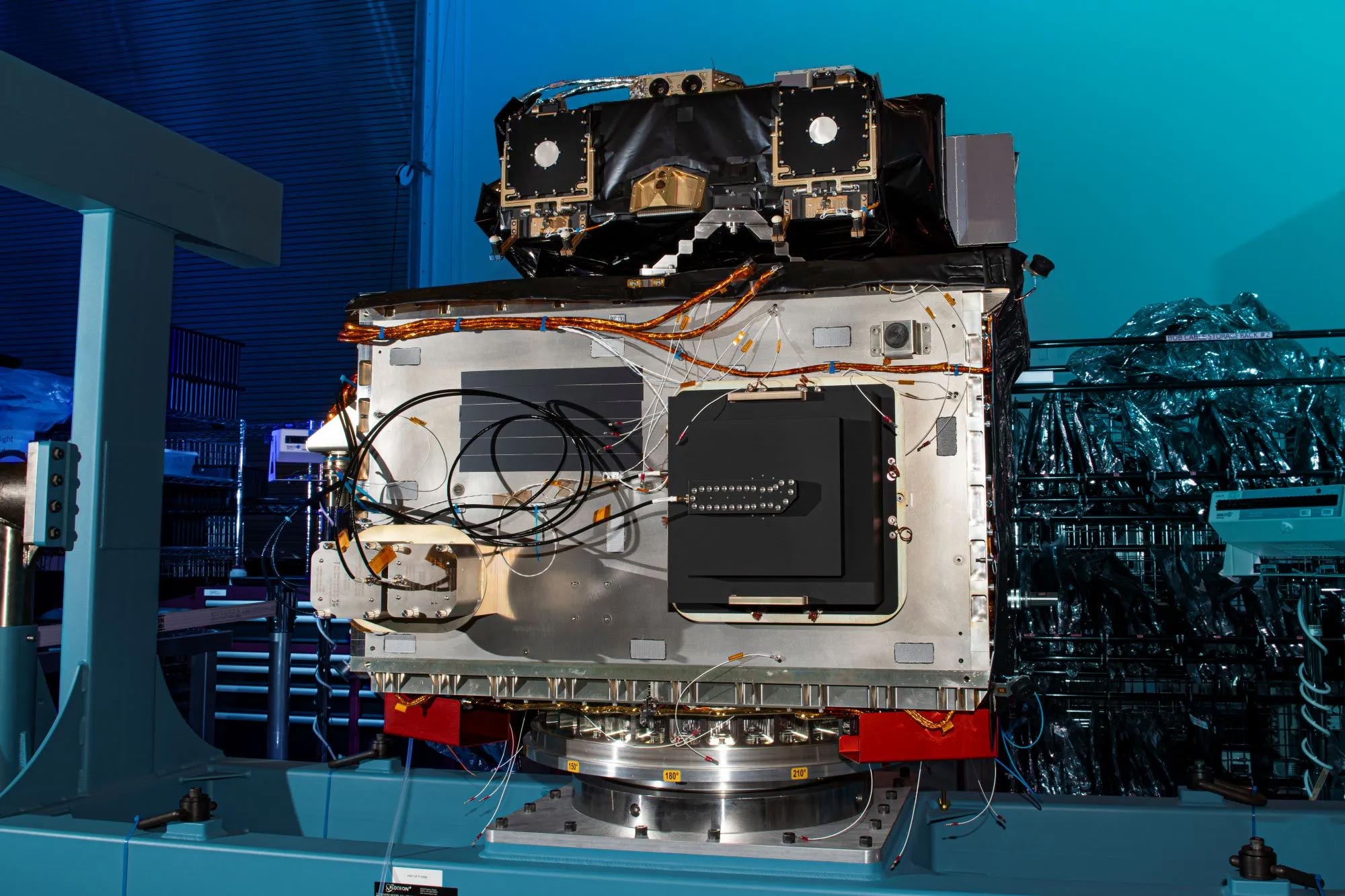
    Carruthers Geocorona Observatory Satellite Ultraviolet Spectrometer Integration
    BAE Systems successfully completes the integration of the Carruthers Geocorona Observatory’s ultraviolet (UV) spectrometer onto the satellite bus, the next major step in completing the NASA Earth-monitoring satellite. Credit: NASA/BAE Systems

    Carruthers is a small satellite (SmallSat) and once in orbit at Lagrange Point 1 (L1), the observatory will use an advanced UV imager to observe the exosphere — the outermost part of the atmosphere — to determine how it changes in response to space weather caused by the Sun. Carruthers is expected to be the first SmallSat to operate at L1, a gravitationally stable orbit point between the Earth and Sun about one million miles away, and it will be the first satellite to provide continuous observations of the Earth’s exosphere.

    Carruthers Geocorona Observatory Satellite Inspection
    BAE Systems technician inspects the Carruthers Geocorona Observatory satellite after integration of the ultraviolet (UV) spectrometer onto the satellite bus. Credit: NASA/BAE Systems

    The mission was previously called the Global Lyman-alpha Imager of the Dynamic Exosphere (GLIDE), but it was renamed in 2020 in honor of Dr. George R. Carruthers, the renowned scientist responsible for designing and building the moon-based telescope that took the first images of the Earth’s geocorona from space as part of the Apollo 16 mission.

    Carruthers is currently scheduled to launch in 2025 as a rideshare component of NASA’s Interstellar Mapping and Acceleration Probe (IMAP) mission.

    Never miss a breakthrough: Join the SciTechDaily newsletter.
    Follow us on Google and Google News.

    Astronomy NASA NASA IMAP Space Weather
    Share. Facebook Twitter Pinterest LinkedIn Email Reddit

    Related Articles

    NASA’s PUNCH Just Switched On and Could Revolutionize Space Weather Forecasting

    Red Dwarf Fury: How Wolf 359’s Radiation May Fry Alien Atmospheres

    X-Ray Flares Turn Alien Worlds Into Cosmic Battlefields

    Astronomers Unveil the Mysterious 350,000-Mile Tail of Exoplanet WASP-69 b

    NASA’s Solar Dynamics Observatory Captures Filament Explosion

    Earth’s Van Allen Radiation Belt to be Probed by NASA Satellites

    Geotail Satellite Still Sending Back Crucial Information After 20 Years of Service

    NASA’s Cassini Spots Lightning in Saturn’s Northern Hemisphere

    Two Coronal Mass Ejections Strongly Compressed the Magnetopause

    Leave A Reply Cancel Reply

    • Facebook
    • Twitter
    • Pinterest
    • YouTube

    Don't Miss a Discovery

    Subscribe for the Latest in Science & Tech!

    Trending News

    After 50 Years, Astronomers Finally Found What the Milky Way’s Black Hole Was Hiding

    The Most Powerful Drug of All Isn’t Found in a Pill Bottle

    Scientists Capture Immune Cells Eating Live Cancer Cells for the First Time

    Why Older Adults Need To Pay Closer Attention to Vitamin B12

    Scientists Say a Daily Probiotic May Help Fight Depression in Older Adults

    This Deadly Disease Was Wiping Out Humans 5,500 Years Ago

    Beyond DNA: Scientists Discover Inheritance That Breaks the Rules of Genetics

    Scientists Just Discovered the Eye Defies a Long-Held Rule of Vision

    Follow SciTechDaily
    • Facebook
    • Twitter
    • YouTube
    • Pinterest
    • Newsletter
    • RSS
    SciTech News
    • Biology News
    • Chemistry News
    • Earth News
    • Health News
    • Physics News
    • Science News
    • Space News
    • Technology News
    Recent Posts
    • After Decades of Mystery, Researchers Locate a Missing Page of the Archimedes Palimpsest
    • The 4,000-Year-Old City That Defied History’s Rules on Wealth and Power
    • The World’s Biggest Population Fear Has Flipped – and It Could Change Everything
    • US and UK Veterans Who Volunteered in Ukraine Return Home With Hidden Health Crises
    • Scientists Discover Troubling Link Between Processed Foods and Preschool Behavior
    Copyright © 1998 - 2026 SciTechDaily. All Rights Reserved.
    • Science News
    • About
    • Contact
    • Editorial Board
    • Privacy Policy
    • Terms of Use

    Type above and press Enter to search. Press Esc to cancel.