
Close Menu
    Facebook X (Twitter) Instagram
    SciTechDaily
    • Biology
    • Chemistry
    • Earth
    • Health
    • Physics
    • Science
    • Space
    • Technology
    Facebook X (Twitter) Pinterest YouTube RSS
    SciTechDaily
    Home»Space»Earth’s Van Allen Radiation Belt to be Probed by NASA Satellites
    Space

    Earth’s Van Allen Radiation Belt to be Probed by NASA Satellites

    By SciTechDailyAugust 14, 2012No Comments2 Mins Read
    Facebook Twitter Pinterest Telegram LinkedIn WhatsApp Email Reddit
    Share
    Facebook Twitter LinkedIn Pinterest Telegram Email Reddit
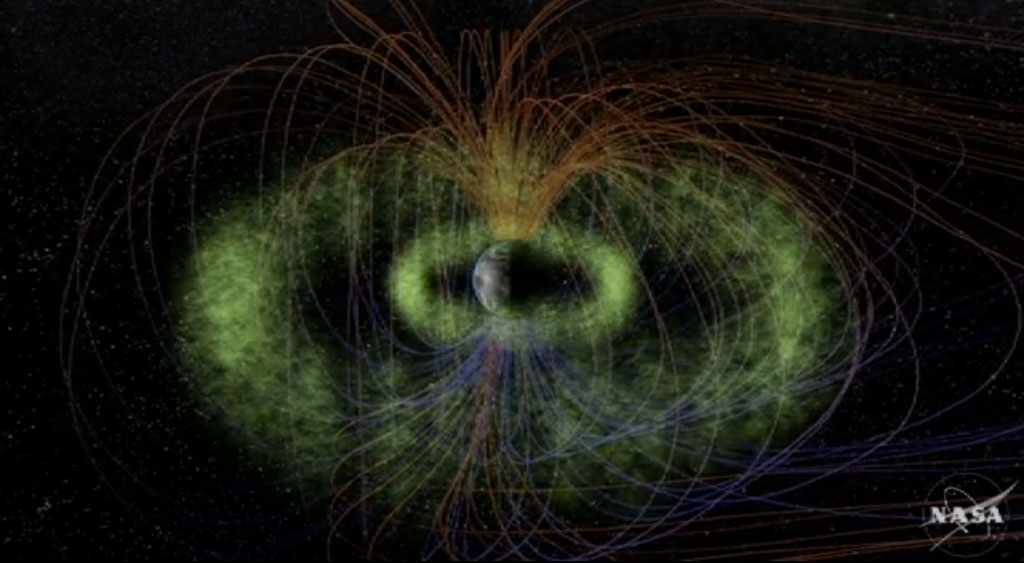
    the Van Allen Belts surround Earth
    Artist’s illustration of the Van Allen Belts surrounding Earth. Credit: NASA

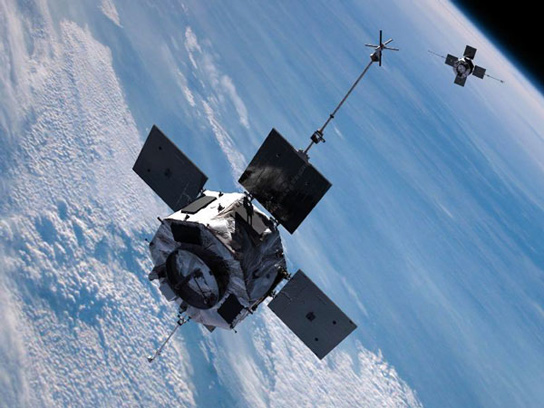
    On August 23rd, NASA will launch the Radiation Belt Storm Probes, a pair of specially designed satellites to gather information about the Earth’s Van Allen radiation belts, the concentric bands of plasma that protect the biosphere of the planet from highly charged particles.

    These probes will allow a detailed study of the Van Allen radiation belts, and give better predictions of space weather, including solar storms that send CME towards Earth, wreaking havoc with ground-based telecommunications and power grids.
    radiation-belt-storm-probes-nasa

    The shifts of these radiation belts seem to be tied to the overall solar activity. The inner belt, stretching from 1,600 km to 12,900 km (1,000 to 8,000 mi) above the Earth’s surface, is fairly stable. However, the outer ring, spanning 19,000 km to 40,000 km (12,000 to 25,000 mi) can swell up to 100 times its usual size, engulfing communications and research satellites, bathing them in harmful radiation.

    To even further complicate matters, the outer belt doesn’t always respond in the same way to CMEs, sometimes growing or shrinking, even staying the same. The belt is quite dangerous to spacecraft, so it has been difficult to study. The belts were first noticed in 1958 by data from Explorer 1, but astronomers still know little about them.


    This visualization relies on data from the SAMPEX mission, which observed particles in the Radiation Belts during a large solar storm in October 2003. The movie clearly shows just how much the outer belt can swell in extreme conditions. Credit: NASA/Goddard Space Flight Center Scientific Visualization Studio

    They remain a mystery due to their harsh environment. Inside the satellites, electronics will be shielded in 9mm thick aluminum cages, which have small apertures to allow some of the particles to strike their detectors without damaging them. These detectors will analyze the number of particles, their energy levels, as well as their composition and direction in relation to Earth’s magnetic field.

    The satellites have long, tentacle-like booms to shield the detectors from picking up the spacecraft’s own electric and magnetic fields. These will unspool once the probes are in orbit. The pair of probes will follow elliptical orbits at different speeds, to ensure that they sample as much of the belts as possible at different times.

    Never miss a breakthrough: Join the SciTechDaily newsletter.
    Follow us on Google and Google News.

    Astronomy NASA Space Weather Spacecraft Van Allen Radiation Belts
    Share. Facebook Twitter Pinterest LinkedIn Email Reddit

    Related Articles

    NASA’s PUNCH Just Switched On and Could Revolutionize Space Weather Forecasting

    Red Dwarf Fury: How Wolf 359’s Radiation May Fry Alien Atmospheres

    X-Ray Flares Turn Alien Worlds Into Cosmic Battlefields

    Astronomers Unveil the Mysterious 350,000-Mile Tail of Exoplanet WASP-69 b

    NASA’s Juno Spacecraft Completes First Deep-Space Maneuver

    Geotail Satellite Still Sending Back Crucial Information After 20 Years of Service

    NASA’s Cassini Spots Lightning in Saturn’s Northern Hemisphere

    Two Coronal Mass Ejections Strongly Compressed the Magnetopause

    NASA’s THEMIS Satellite Records Effect of Geomagnetic Storms on Radiation Belts

    Leave A Reply Cancel Reply

    • Facebook
    • Twitter
    • Pinterest
    • YouTube

    Don't Miss a Discovery

    Subscribe for the Latest in Science & Tech!

    Trending News

    Largest-Ever Study Finds Medicinal Cannabis Ineffective for Anxiety, Depression, PTSD

    250-Million-Year-Old Egg Solves One of Evolution’s Biggest Mysteries

    Living With Roommates Might Be Changing Your Gut Microbiome Without You Knowing

    Century-Old Cleaning Chemical Linked to 500% Increased Risk of Parkinson’s Disease

    What if Your Memories Never Happened? Physicists Take a New Look at the Boltzmann Brain Paradox

    One of the Universe’s Largest Stars May Be Getting Ready To Explode

    Scientists Discover Enzyme That Could Supercharge Ozempic-Like Weight Loss Drugs

    Popular Sweetener Linked to DNA Damage – “It’s Something You Should Not Be Eating”

    Follow SciTechDaily
    • Facebook
    • Twitter
    • YouTube
    • Pinterest
    • Newsletter
    • RSS
    SciTech News
    • Biology News
    • Chemistry News
    • Earth News
    • Health News
    • Physics News
    • Science News
    • Space News
    • Technology News
    Recent Posts
    • Challenging the Narrative: New Study Shows U.S. Life Expectancy Is Rising Across All States
    • Mystery Illness Kills 5 in Burundi As Doctors Scramble for Answers
    • Bone-Strengthening Discovery Could Reverse Osteoporosis
    • The Most Elusive Number in Physics Just Got Even More Mysterious
    • Scientists Uncover Hidden Trigger Behind Stem Cell Aging
    Copyright © 1998 - 2026 SciTechDaily. All Rights Reserved.
    • Science News
    • About
    • Contact
    • Editorial Board
    • Privacy Policy
    • Terms of Use

    Type above and press Enter to search. Press Esc to cancel.