
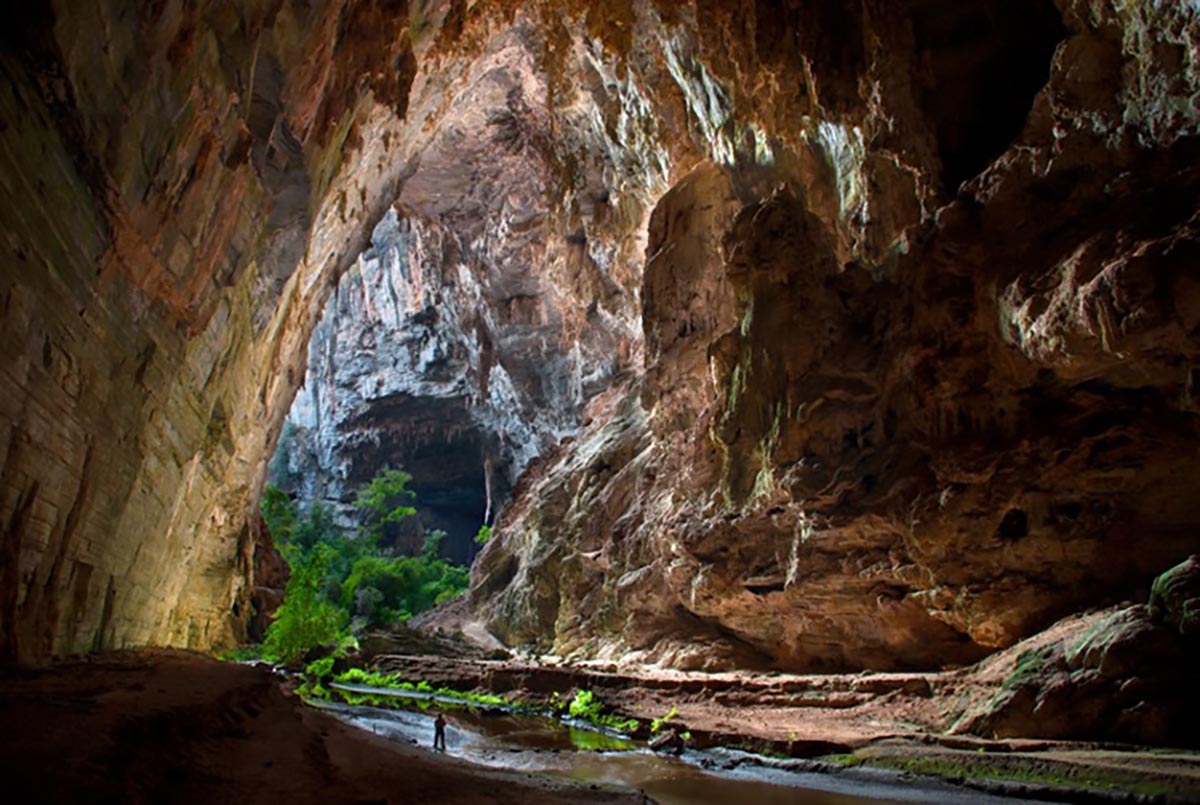
A study from the University of São Paulo indicates the Cerrado is experiencing its most severe drought in centuries due to rising temperatures and disrupted rainfall patterns, confirmed through geological and weather data analysis.
Researchers at the University of São Paulo have discovered that Cerrado, Brazil’s savanna biome, is suffering its worst drought in 700 years. This alarming finding is largely attributed to the effects of global warming, which have been particularly severe in Brazil’s central region. There, temperatures have risen by approximately 1 °C above the global average increase of 1.5 °C. This temperature surge has disrupted the hydrological cycle, causing much of the rainfall to evaporate before it can nourish the soil, leading to less frequent but more intense rainstorms and reduced aquifer recharge. The drought has the potential to deplete the tributaries of the São Francisco River, the main river in the basin.
Historical Climate Analysis Using Stalagmites
In their study, recently published in Nature Communications, the researchers analyzed records of temperature, rainfall, streamflow, and hydrological balance from the Januária weather station, one of the oldest in the state of Minas Gerais, with records dating from 1915. They correlated these with variations in the chemical composition of stalagmites in a cave in the nearby Peruaçu Caves National Park.
“We used geological data to extend the perception of drought caused by global warming to a period long before the weather station’s records began, and were able to reconstitute weather patterns as far back as seven centuries. This proved that the Cerrado is drier than it was and that the dry weather is associated with the disruption to the hydrological cycle caused by the rise in temperature due to human activity, especially greenhouse gas emissions,” said Francisco William da Cruz Junior, a professor at USP’s Institute of Geosciences and co-author of the study.
“The message is that there is no parallel with the drought that’s occurring now. It’s important to note that our study identified a rise in temperatures starting in the 1970s. This rise hasn’t yet reached its peak. The phenomenon is expected to become even worse,” Cruz added.
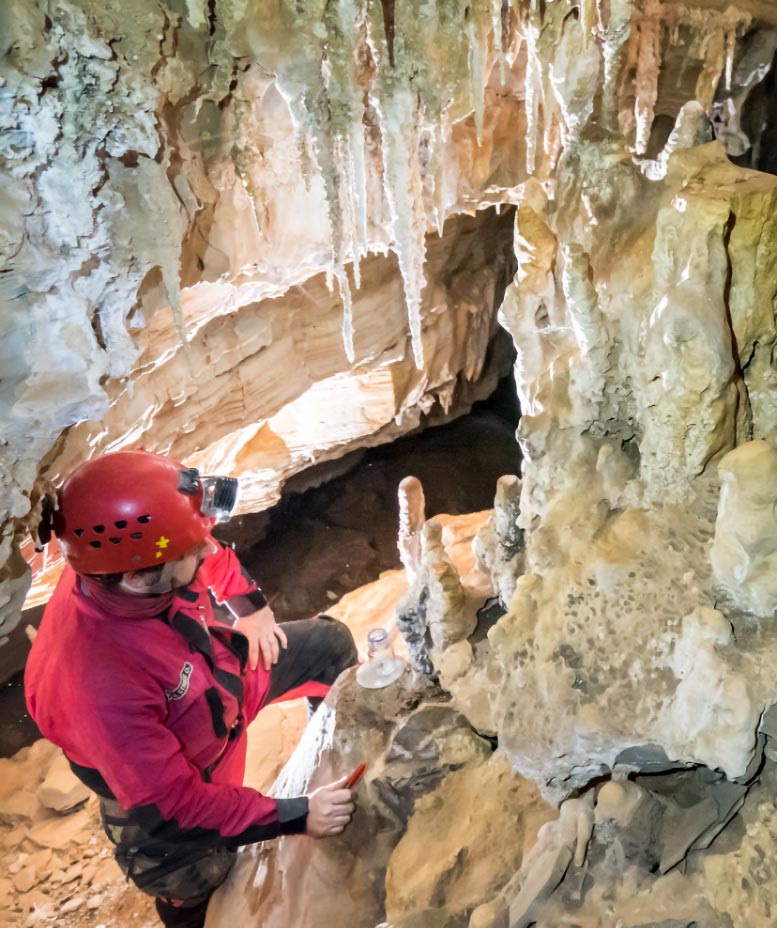
Exploring Onça Cave
Onça Cave, a jaguar’s hideout where stalagmite chemical composition data was collected, differs from other caves studied by the group in that it has a wide-open entrance and is influenced by variations in external temperature even though it lies at the bottom of a 200 m canyon.
“Studies of open caves like this one are few and far between. We usually study caves in a closed environment, where very little air circulates and the temperature is stable throughout the year,” Cruz explained.
“Onça Cave’s connection to the outside climate enabled us to determine that the drought also alters the chemistry of the speleothems [mineral deposits formed from groundwater within underground caves, including stalagmites and stalactites]. The increase in evaporation due to warming decreases the groundwater recharge that feeds the drip water in the cave. Chemical changes in the rock, associated with evaporation of the water, showed us that the ongoing drought is unprecedented.”
Innovative Climate Study Techniques
This research is part of a broader initiative aimed at understanding climate variability and change between 850 CE and 1850 CE. The project leverages speleothem and tree-ring data from central-eastern South America to track historical climate patterns.
“The new methodology and validation of the data analyzed in our study pave the way for more research in other caves, regions and biomes. This kind of approach can be used to reconstitute the climate in Brazil more precisely,” Cruz said.
“Our study innovates by using speleothem chemical data to detect hydrological cycle variations and associate these with the changes induced by warming in the tropics,” he added.
The group has also analyzed fossil trees from the Peruaçu Caves National Park for paleoclimate studies conducted in partnership with biologists who are also involved with the Thematic Project. “Fossils of Amburana cearensis are found in the caves. They’ve been protected from sunlight for over 500 years. By combining the results of our study with the research that’s being done on these fossil trees, we’ve obtained independent data relating to this same phenomenon,” Cruz said.
Reference: “Modern anthropogenic drought in Central Brazil unprecedented during last 700 years” by Nicolas Misailidis Stríkis, Plácido Fabrício Silva Melo Buarque, Francisco William Cruz, Juan Pablo Bernal, Mathias Vuille, Ernesto Tejedor, Matheus Simões Santos, Marília Harumi Shimizu, Angela Ampuero, Wenjing Du, Gilvan Sampaio, Hamilton dos Reis Sales, José Leandro Campos, Mary Toshie Kayano, James Apaèstegui, Roger R. Fu, Hai Cheng, R. Lawrence Edwards, Victor Chavez Mayta, Danielle da Silva Francischini, Marco Aurélio Zezzi Arruda and Valdir Felipe Novello, 26 February 2024, Nature Communications.
DOI: 10.1038/s41467-024-45469-8
The study was part of a Thematic Project supported by FAPESP in partnership with the United States National Science Foundation (NSF).
Never miss a breakthrough: Join the SciTechDaily newsletter.
Follow us on Google and Google News.
1 Comment
“This temperature surge has disrupted the hydrological cycle, causing much of the rainfall to evaporate before it can nourish the soil, leading to less frequent but more intense rainstorms and reduced aquifer recharge. The drought has the potential to deplete the tributaries of the São Francisco River, the main river in the basin.”
There will be little, if any, evaporation of rainfall with high humidity. It is also important what/where the source of atmospheric water vapor is. Thus, what, if anything, is happening with the relative humidity is important. Yet, there is no mention of it.