
Close Menu
    Facebook X (Twitter) Instagram
    SciTechDaily
    • Biology
    • Chemistry
    • Earth
    • Health
    • Physics
    • Science
    • Space
    • Technology
    Facebook X (Twitter) Pinterest YouTube RSS
    SciTechDaily
    Home»Earth»Rising Temperatures & Persistent Drought Threaten to Create a Second Dust Bowl
    Earth

    Rising Temperatures & Persistent Drought Threaten to Create a Second Dust Bowl

    By SciTechDailyNovember 27, 20121 Comment3 Mins Read
    Facebook Twitter Pinterest Telegram LinkedIn WhatsApp Email Reddit
    Share
    Facebook Twitter LinkedIn Pinterest Telegram Email Reddit
    drought-conditions
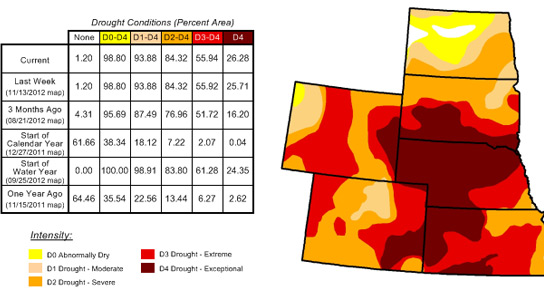
    A persistent drought has raised fears of another Dust Bowl in the future. Credit: National Drought Mitigation Center

    Rising temperatures, persistent drought, and depleted aquifers could set the stage for a second Dust Bowl, a period of drought and dust storms that affected the prairies in the USA and Canada during the 1930s.

    The southern Great Plains have been ravaged, and a cool October broke a 16-month streak of higher-than-average temperatures across the Lower 48. However, temperatures are projected to remain above normal across most of the western half of the country in the following months and future temperature gains could be on the high side, according to various climate models.

    As of November, 59.5% of the contiguous US was experiencing persistent drought conditions that are even more severe in the Great Plains in North and South Dakota, Nebraska, Kansas, Oklahoma, Texas, Montana, Wyoming, and Colorado. The drought is expected to persist in intensity for the foreseeable future. Large dust storms have been reported across some of the states.

    Farmers are seeing major shifts in the places and times they can plant and what kind of crops will grow, as well as the pests and diseases that they are dealing with. There’s no question that some crops can be engineered to weather some of these conditions, but it’s still an open question whether they can adapt to all of them.

    In the 1930s, land speculators and a government-encouraged frenzy of plowing removed windbreaks and grasslands that stabilized the soil. The dry, windy weather that followed created one of the worst man-made ecological disasters ever seen. Winds scoured bare soil and carried it across long distances.

    This October’s dust storms could be the first of many, especially if the drought holds on for two or three more years. This could lead to Dust Bowl conditions forming in the farming belt. The crops would wither, streams dry, and other secondary effects would affect communities. Wind erosion is damaging and hard to control. Many of the practices that control wind erosion require growing plants, and that is impossible to put in place right now.

    Since the 1940s, agriculture has relied on irrigation. Tens of thousands of wells are pumping from the 10-million-year-old Ogallala Aquifer, which has been depleted by 50%. Most of the remaining reservoirs will likely be useless for irrigation within the next 30 years. There has been less rain as well as hotter temperatures, which increase evaporation, causing farmers to use even more water.

    There are some techniques, like dry-land farming, rotating crops, and using waste as biofuel that could keep the economy going. Other options would include switching to more heat-tolerant livestock or moving away from cattle altogether.

    Never miss a breakthrough: Join the SciTechDaily newsletter.
    Follow us on Google and Google News.

    Climate Change Drought Dust Bowl Farming Rain Weather
    Share. Facebook Twitter Pinterest LinkedIn Email Reddit

    Related Articles

    Wheat Crops in U.S. and China May Be Threatened by Unprecedented Heat and Drought

    Snowpack Melt Trend Signals Impending Summer Water Crisis in Western Regions

    Climate Change Will Result in More Rainbows

    Lake Powell Still Shrinking – The Second Largest Reservoir in the US at Lowest Level Ever

    Drought Causes Yangtze – China’s Most Important River – To Dry Up

    Water in Bedrock Is Sustaining Trees Across Country – Long-Held Assumptions About Where Trees Get Their Water Overturned

    Lake Mead – The Largest Reservoir in the United States – Drops to a Record Low

    High Risk of Extreme Drought: Unchecked Climate Change Will Cause Severe Drying of the Amazon Rainforest

    Amazon Area Twice the Size of California Still Suffering From the Effects of a Megadrought

    1 Comment

    1. John Rochester on December 30, 2024 5:58 am

      As expected
      Were screwed
      And WE built the screwdriver

      Reply
    Leave A Reply Cancel Reply

    • Facebook
    • Twitter
    • Pinterest
    • YouTube

    Don't Miss a Discovery

    Subscribe for the Latest in Science & Tech!

    Trending News

    Scientists Uncover Potential Brain Risks of Popular Fish Oil Supplements

    Scientists Discover a Surprising Way To Make Bread Healthier and More Nutritious

    After 60 Years, Scientists Uncover Unexpected Brain Effects of Popular Diabetes Drug Metformin

    New Research Uncovers Hidden Side Effects of Popular Weight-Loss Drugs

    Scientists Rethink Extreme Warming After Surprising Ocean Discovery

    Landmark Study Links Never Marrying to Significantly Higher Cancer Risk

    Researchers Discover Unknown Beetle Species Just Steps From Their Lab

    Largest-Ever Study Finds Medicinal Cannabis Ineffective for Anxiety, Depression, PTSD

    Follow SciTechDaily
    • Facebook
    • Twitter
    • YouTube
    • Pinterest
    • Newsletter
    • RSS
    SciTech News
    • Biology News
    • Chemistry News
    • Earth News
    • Health News
    • Physics News
    • Science News
    • Space News
    • Technology News
    Recent Posts
    • Not Just Alzheimer’s: Scientists Uncover Clues to a Second, Overlooked Disorder
    • Scientists Uncover Dangerous Connection Between Serotonin and Heart Valve Disease
    • Scientists Discover a “Protector” Protein That Could Help Reverse Hair Loss
    • Powerful Lasers Reveal How Matter Becomes Plasma in Trillionths of a Second
    • A Simpler Path to Super-Resolution: Scientists Reinvent Microscopy
    Copyright © 1998 - 2026 SciTechDaily. All Rights Reserved.
    • Science News
    • About
    • Contact
    • Editorial Board
    • Privacy Policy
    • Terms of Use

    Type above and press Enter to search. Press Esc to cancel.