
Close Menu
    Facebook X (Twitter) Instagram
    SciTechDaily
    • Biology
    • Chemistry
    • Earth
    • Health
    • Physics
    • Science
    • Space
    • Technology
    Facebook X (Twitter) Pinterest YouTube RSS
    SciTechDaily
    Home»Science»Genetics of the Tree of Life – Understanding the African Baobab Tree
    Science

    Genetics of the Tree of Life – Understanding the African Baobab Tree

    By USDA Forest Service ‑ Southern Research StationSeptember 5, 2020No Comments2 Mins Read
    Facebook Twitter Pinterest Telegram LinkedIn WhatsApp Email Reddit
    Share
    Facebook Twitter LinkedIn Pinterest Telegram Email Reddit
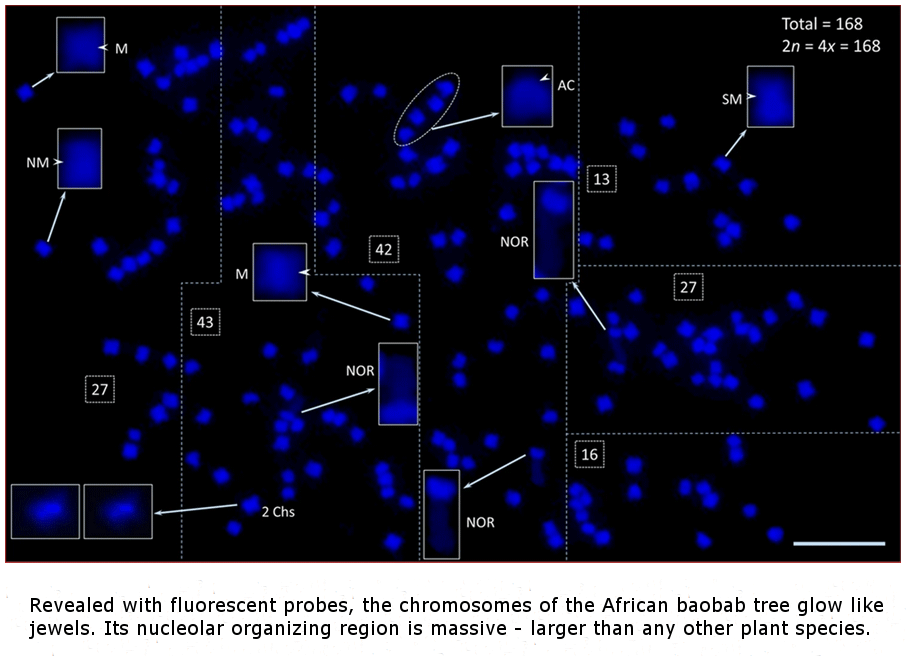
    African Baobab Tree's Root Tip Chromosome Spread
    The African baobab tree has 168 chromosomes in total. USDA researchers used fluorescent probes to see the genetic components of individual chromosomes within the cells. Credit: Islam-Faradi, Sakhanokho & Nelson

    USDA Forest Service scientists advance genetic understanding of African baobab tree.

    The African baobab tree (Adansonia digitata) is called the tree of life. Baobab trees can live for more than a thousand years and provide food, livestock fodder, medicinal compounds, and raw materials. Baobab trees are incredibly significant. However, there are growing conservation concerns and until now, a lack of genetic information.

    The African baobab tree has 168 chromosomes — critical knowledge for further genetic studies, conservation, and improvement for agricultural purposes. The findings were published in the journal Scientific Reports. Previous studies estimated that the tree has between 96 and 166 chromosomes.

    “We were able to unequivocally count the chromosomes,” says Nurul Faridi, a USDA Forest Service research geneticist who co-led the study with Hamidou Sakhanokho, a USDA Agricultural Research Service research geneticist.

    The researchers used fluorescent probes to see the genetic components of individual chromosomes within the cells — which glow like jewels.
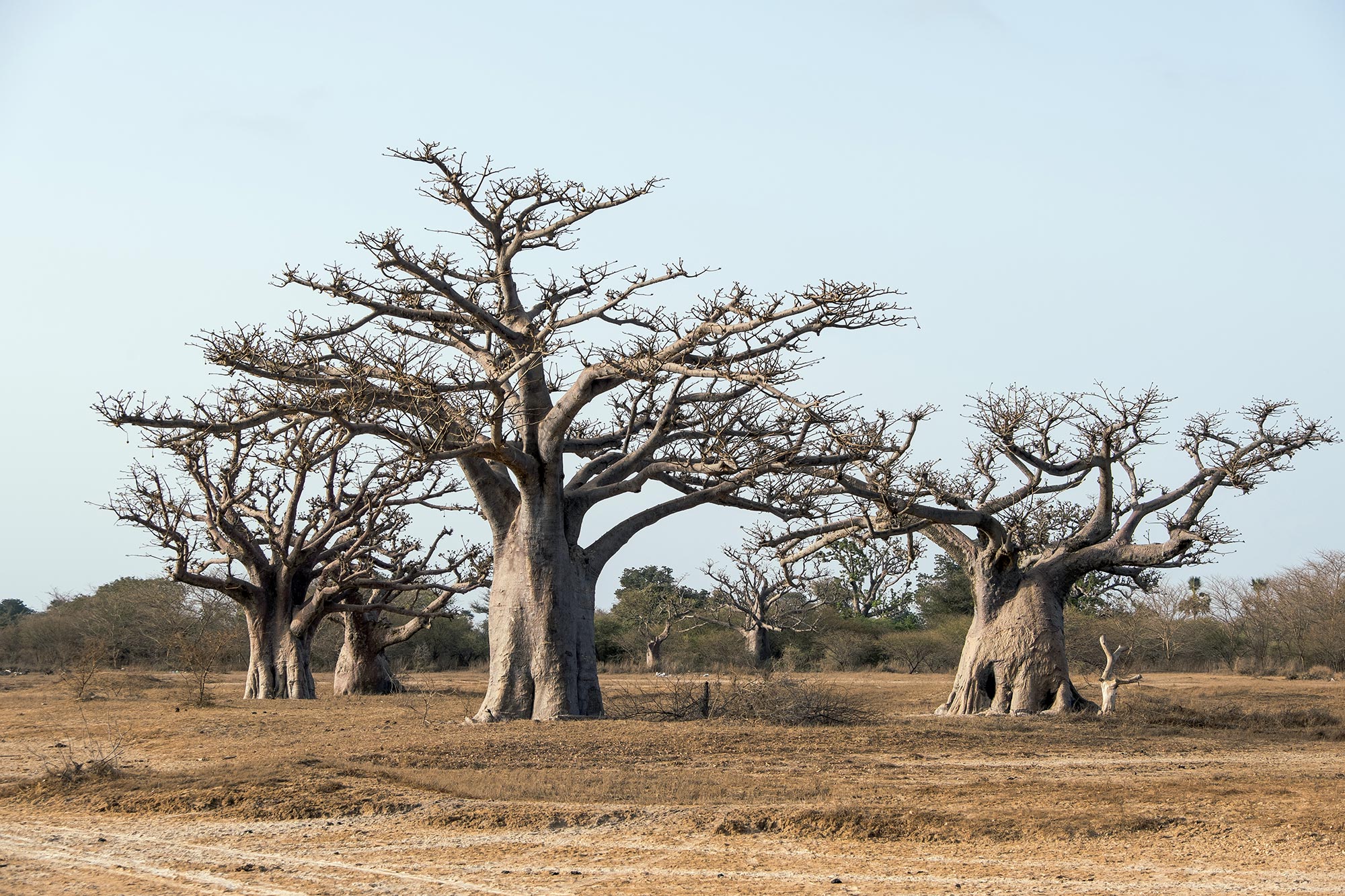
    Forest Baobabs
    Adansonia is a genus of deciduous trees known as baobabs that are found in arid regions of Madagascar, mainland Africa, Arabia, and Australia.

    The analysis also revealed that the tree has a massive nucleolus organizer region (NOR). Relative to the main chromosome body, this region appears larger than that of any other plant species. During certain stages of the cell cycle, nucleoli form at the NORs. The nucleoli are essential for ribosome assembly and protein synthesis in eukaryotes and are an important feature that differentiates eukaryotes from prokaryotes.

    “These genetic findings are foundational and will make genetic conservation of the African baobab tree more efficient and effective,” says Dana Nelson, a coauthor and project leader of the Southern Research Station’s genetic unit. “This research is also a precursor for tree breeding programs seeking to improve baobab for silvicultural applications.”

    Reference: ‘New chromosome number and cyto-molecular characterization of the African Baobab (Adansonia digitata L.) – “The Tree of Life”’ by Nurul Islam-Faridi, Hamidou F. Sakhanokho and C. Dana Nelson, 6 August 2020, Scientific Reports.
    DOI: 10.1038/s41598-020-68697-6

    Never miss a breakthrough: Join the SciTechDaily newsletter.
    Follow us on Google and Google News.

    Agriculture Genetics Plant Science
    Share. Facebook Twitter Pinterest LinkedIn Email Reddit

    Related Articles

    Bioactive Nanocarrier Spray: Better Crops Without Genetic Modification

    Cheers! Better Beer From CRISPR Gene-Edited Barley

    Improving Photosynthesis in Crops To Boost Yields

    The Secret History of Corn – And Its “Jumping Genes” – Revealed in Its Genome

    Tackling Food Allergies at the Source: Developing a Non-GMO Soybean Without the Allergenic Protein

    Breeding Better Seeds: Sustainable, More Nutritious Food Production Under the Specter of Global Warming

    Ancient DNA Continues to Rewrite the 9,000-Year Society-Shaping History of Corn

    Genetic Heritage: Rice Has Many Fathers but Only Two Mothers

    Fighting “Hidden Hunger” With Plant Genetic Engineering and Molecular Breeding

    Leave A Reply Cancel Reply

    • Facebook
    • Twitter
    • Pinterest
    • YouTube

    Don't Miss a Discovery

    Subscribe for the Latest in Science & Tech!

    Trending News

    The Universe Is Expanding Too Fast and Scientists Can’t Explain Why

    “Like Liquid Metal”: Scientists Create Strange Shape-Shifting Material

    Early Warning Signals of Esophageal Cancer May Be Hiding in Plain Sight

    Common Blood Pressure Drug Shows Surprising Power Against Deadly Antibiotic-Resistant Superbug

    Scientists Uncover Dangerous Connection Between Serotonin and Heart Valve Disease

    Scientists Discover a “Protector” Protein That Could Help Reverse Hair Loss

    Bone-Strengthening Discovery Could Reverse Osteoporosis

    Scientists Uncover Hidden Trigger Behind Stem Cell Aging

    Follow SciTechDaily
    • Facebook
    • Twitter
    • YouTube
    • Pinterest
    • Newsletter
    • RSS
    SciTech News
    • Biology News
    • Chemistry News
    • Earth News
    • Health News
    • Physics News
    • Science News
    • Space News
    • Technology News
    Recent Posts
    • Scientists Create Improved Insulin Cells That Reverse Diabetes in Mice
    • Scientists Stunned After Finding Plant Thought Extinct for 60 Years
    • A Common Diabetes Drug May Hold the Key to Stopping HIV From Coming Back
    • Ancient “Syphilis-Like” Disease in Vietnam Challenges Key Scientific Assumptions
    • Drinking Alcohol To Cope in Your 20s Could Damage Your Brain for Life
    Copyright © 1998 - 2026 SciTechDaily. All Rights Reserved.
    • Science News
    • About
    • Contact
    • Editorial Board
    • Privacy Policy
    • Terms of Use

    Type above and press Enter to search. Press Esc to cancel.