
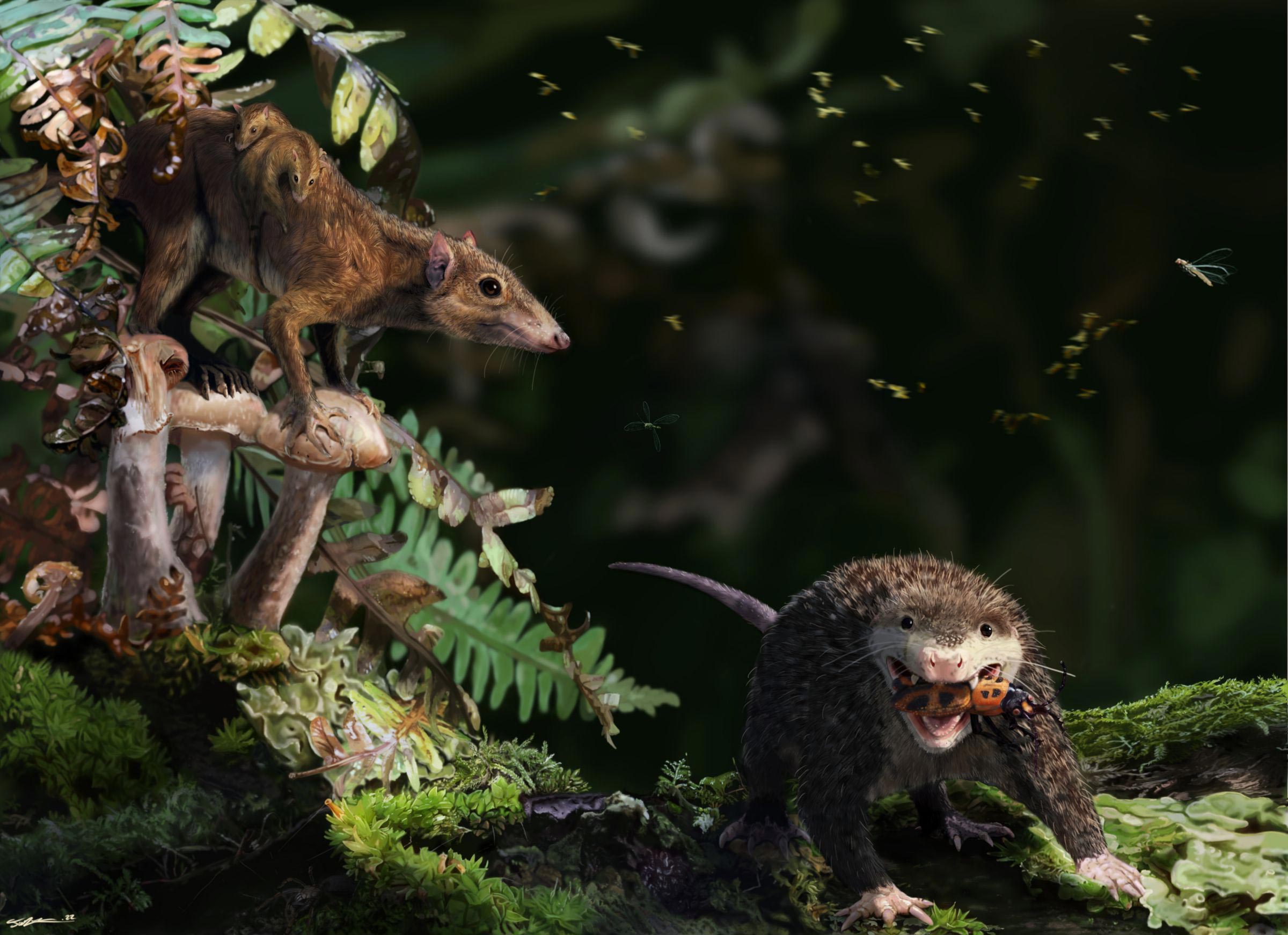
Fossil study reveals early mammals had slower growth and longer lifespans, providing insights into their evolutionary development.
What distinguishes the growth and development patterns of early mammals of the Jurassic period? This is the question jointly investigated by researchers of Queen Mary University of London and the University of Bonn.
By studying growth rings in fossilized tooth roots, paleontologists have been able to gauge the lifespan and growth rates of these ancient animals, and even when they reached sexual maturity.
“Never before have we been able to reconstruct the growth patterns of these early mammals in such detail,” says lead author Dr. Elis Newham, a postdoc at Queen Mary University of London who was an Alexander von Humboldt Research Fellow at the University of Bonn during the study.
Unraveling Historical Growth Patterns
In the study, recently published in the journal Science Advances, the team analyzed fossilized tooth roots of mammal species from the Early to Late Jurassic periods (200-150 million years ago) found at three separate sites. The finds made in Wales are of some of the oldest known mammalian precursors from the Early Jurassic period, while the fossils found in Oxfordshire, UK are of a very broad array of coexisting early mammals. The fossils from the third site in Portugal date from the Late Jurassic.
Insights from Advanced Imaging
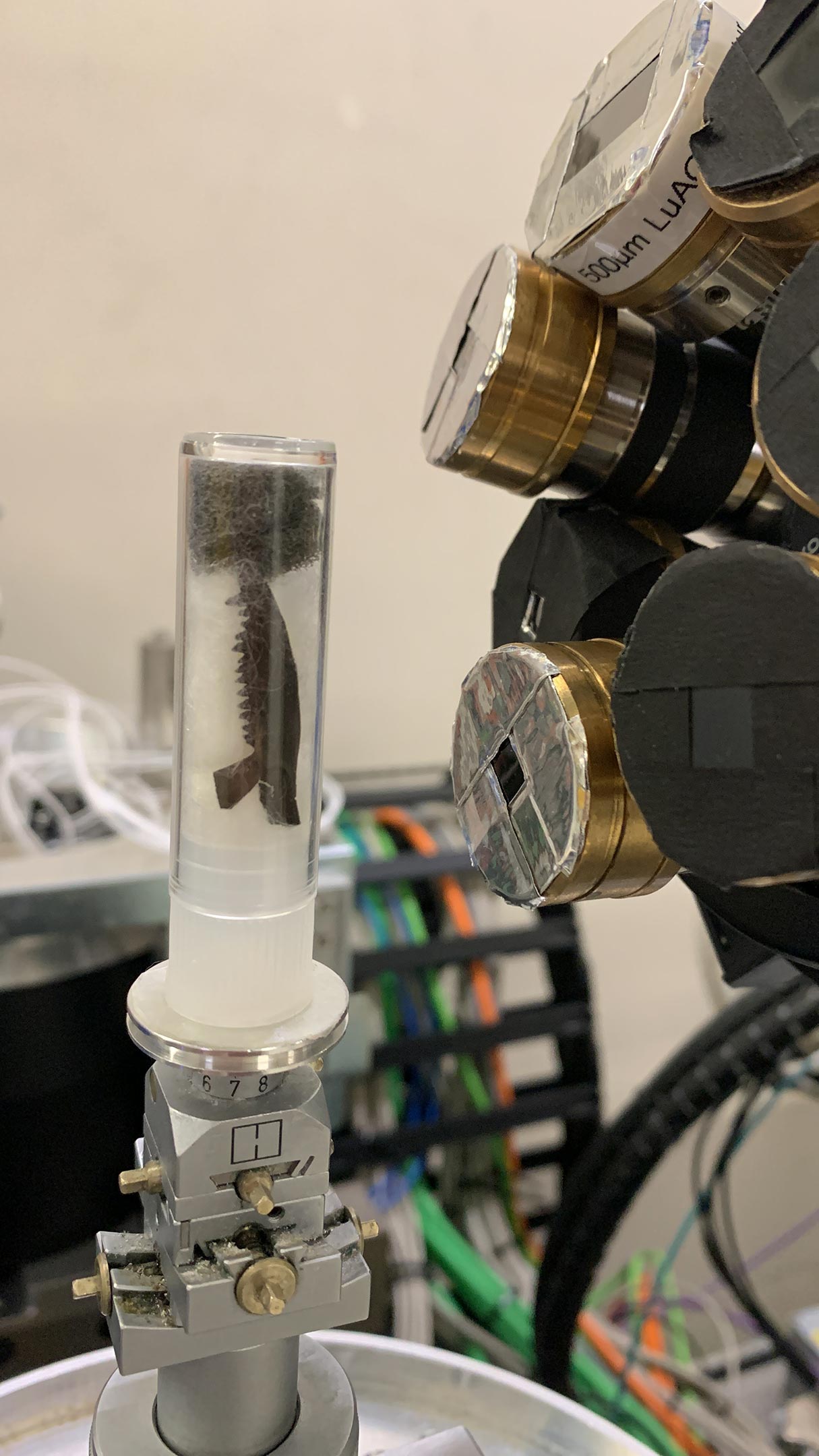
The research team studied the fossils using a technique called synchrotron X-ray tomography in which electrons are accelerated to near-light speed (unlike regular X-ray imaging). The technique affords several advantages, starting with the fact that the fossils no longer have to be prepared, i.e. cut up into slices, so they can be analyzed whole. Furthermore, images obtained via synchrotron X-ray tomography are of higher quality than images from conventional X-ray microtomography.
Researchers were able to image tiny growth rings in fossilized root cement—the bone tissue that attaches the teeth to the jaw. “The rings are similar to those in trees, but on a microscopic level,” explains senior author Professor Thomas Martin of the Vertebrates–Mammals working group at the University of Bonn Institute of Organismic Biology. “Counting the rings and analyzing their thickness and texture enabled us to reconstruct the growth patterns and lifespans of these extinct animals.”
The researchers determined that the first signs of the growth patterns characteristic of modern mammals, such as a puberty growth spurt, started emerging roughly 150 million years ago. Early mammals grew much more slowly but lived substantially longer than today’s small mammals, with lifespans of eight to fourteen years instead of just one or two as in modern mice, for example. However, it took early mammals years to reach sexual maturity, again in contrast to their modern descendants which reach sexual maturity in just a few months.
Conclusions on Mammalian Evolution
“Our findings suggest that the distinctive life history patterns of mammals, characterized by high metabolic rates and extended parental care phases for example, have evolved over millions of years,” Dr. Elis Newham explains. “The Jurassic period appears to have been a crucial time for this shift.”
Reference: “The origins of mammal growth patterns during the Jurassic mammalian radiation” by Elis Newham, Ian J. Corfe, Philippa Brewer, Jen A. Bright, Vincent Fernandez, Neil J. Gostling, Simone Hoffmann, Kai R. K. Jäger, Erika Kague, Goran Lovric, Federica Marone, Elsa Panciroli, Philipp Schneider, Julia A. Schultz, Heikki Suhonen, Alex Witchell, Pamela G. Gill and Thomas Martin, 7 August 2024, Science Advances.
DOI: 10.1126/sciadv.ado4555
In addition to Queens University of London and the University of Bonn, the study partners included the University of Helsinki, the Geological Survey of Finland, the Natural History Museum (UK), the University of Hull (UK), the European Synchrotron Radiation Facility (France), the University of Southampton (UK), the College of Osteopathic Medicine (USA), the University of Bristol (UK), and the University of Edinburgh (UK).
The study was made possible by funding under the European Community Seventh Framework Programme, Engineering and Physical Sciences Research Council studentships, an Alexander von Humboldt Research Fellowship for Dr. Elis Newham, the Paul Scherrer Institute, the Academy of Finland, Gingko Investments LTD and Versus Arthritis Grant 23115.
Never miss a breakthrough: Join the SciTechDaily newsletter.
Follow us on Google and Google News.
1 Comment
What if these dead bones and teath were not millions of years old?