
Close Menu
    Facebook X (Twitter) Instagram
    SciTechDaily
    • Biology
    • Chemistry
    • Earth
    • Health
    • Physics
    • Science
    • Space
    • Technology
    Facebook X (Twitter) Pinterest YouTube RSS
    SciTechDaily
    Home»Science»Scientists Successfully Extract Stable Antibodies From 800-Year-Old Medieval Human Teeth
    Science

    Scientists Successfully Extract Stable Antibodies From 800-Year-Old Medieval Human Teeth

    By University of NottinghamAugust 19, 20231 Comment3 Mins Read
    Facebook Twitter Pinterest Telegram LinkedIn WhatsApp Email Reddit
    Share
    Facebook Twitter LinkedIn Pinterest Telegram Email Reddit
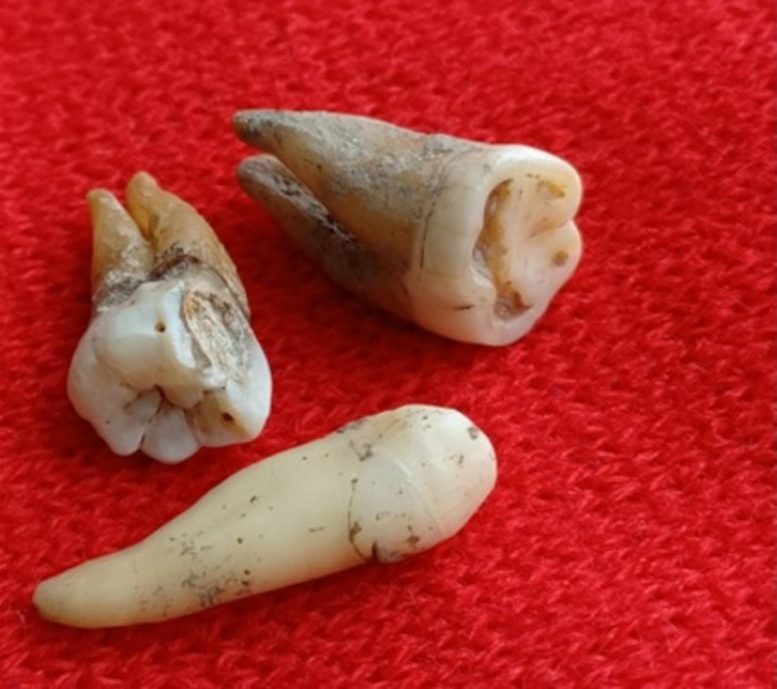
    Ancient Teeth
    Teeth can preserve antibodies for centuries, potentially enabling the study of historical human diseases, according to a study led by the University of Nottingham. Functional antibodies from 800-year-old teeth were found to still recognize viral proteins, expanding the field of palaeoproteomics. Credit: Robert Layfield, University of Nottingham

    Scientists have found that centuries-old antibodies preserved in human teeth remain functional, opening new avenues for studying historical infectious diseases.

    A recent study has discovered that teeth may have the ability to preserve antibodies for several centuries. This could provide scientists with a valuable resource for exploring the history of infectious diseases in humans.

    Antibodies are proteins that the immune system generates in response to pathogens such as viruses and bacteria. These proteins function to identify these harmful microbes, enabling the immune system to target and eliminate them from the body.

    In the new paper, published by iScience, antibodies extracted from 800-year-old medieval human teeth were found to be stable and still able to recognize viral proteins.

    The study, led by Professor Robert Layfield and research technician Barry Shaw from the School of Life Sciences, University of Nottingham, in collaboration with Professor Anisur Rahman and Dr. Thomas McDonnell from the Department of Medicine at University College London, expands the study of ancient proteins, referred to as palaeoproteomics, potentially allowing experts to analyze how human antibody responses developed through history.

    Ancient Proteins That Stand the Test of Time

    Palaeoproteomics can reach back into deep time with ancient proteins already successfully recovered and identified after preservation in 1.7-million-year-old dental enamel from an ancient rhinoceros and an ostrich eggshell more than 6.5 million years old. In this new study, the authors also found preliminary evidence that, like the medieval human teeth, mammoth bones nearly 40,000 years old appear to preserve stable antibodies.

    This science has previously been applied by the Nottingham team to the analysis of other disease-associated proteins recovered from archaeological human bones and teeth to allow the identification of an unusual ancient form of the skeletal disorder Paget’s disease.

    Professor Layfield explained: “In discovery science, we come to expect the unexpected, but the realization that intact, functional antibodies can be purified from skeletal remains in the archaeological record was quite astonishing. Some ancient proteins were known to be stable, but these tend to be ‘structural’ proteins such as collagens and keratins, that are pretty inert.”

    Functional Antibodies from the Past

    Professor Rahman added: “Antibodies are different because we are able to test whether they can still do their job of recognizing viruses or bacteria even after hundreds of years. In this case, we found that antibodies from medieval teeth were able to recognize the Epstein-Barr virus, which causes glandular fever. In the future, it could be possible to look at how antibodies from ancient specimens react to diseases present during those periods, such as the Black Death.”

    Reference: “Preservation of whole antibodies within ancient teeth” by Barry Shaw, Thomas McDonnell, Elizabeth Radley, Brian Thomas, Lynn Smith, Carol Davenport, Silvia Gonzalez, Anisur Rahman and Rob Layfield, 9 August 2023, iScience.
    DOI: 10.1016/j.isci.2023.107575

    Never miss a breakthrough: Join the SciTechDaily newsletter.
    Follow us on Google and Google News.

    Antibodies Archaeology Popular Protein Teeth University of Nottingham
    Share. Facebook Twitter Pinterest LinkedIn Email Reddit

    Related Articles

    Ancient Mysteries: Five Enigmatic Artifacts That Still Baffle Modern Archaeologists

    Discover How Ancient Europeans Survived the Ice Age With Just Their Teeth

    Ancient Tooth From Young Girl Discovered in Cave Unlocks Mystery of Denisovans, a Sister Species of Modern Humans

    Easter Island Moai Statues Could Have “Walked” Out of Quarries

    European Cave Paintings Older Than Previously Thought, Might Have Been Painted by Neanderthals

    Ancient Murals in Guatemala Offer Glimpse of Mayan Astronomy

    Million-Year-Old Ash in South African Cave Yields Evidence of Cooking

    Humans Implicated in Africa’s Deforestation 3,000 Years Ago

    Octopuses Beat the Frigid Waters of the Antarctic by Rewriting Their RNA

    1 Comment

    1. Shai on August 20, 2023 6:48 pm

      It has the potential to be use as biological weapon too:

      Reply
    Leave A Reply Cancel Reply

    • Facebook
    • Twitter
    • Pinterest
    • YouTube

    Don't Miss a Discovery

    Subscribe for the Latest in Science & Tech!

    Trending News

    Scientists Discover Bizarre 100-Million-Year-Old Insect With Giant Claws

    Scientists Discover “Good” Gut Microbes That Could Protect Against Autism and ADHD

    Scientists Reveal That Eating Almonds Every Day Could Transform Your Gut, Metabolism, and Appetite

    Scientists May Have Solved Two of Fusion Energy’s Biggest Problems at Once

    Scientists Discover Hidden “Switch” That Burns Fat and Could Treat Bone Disease

    After 50 Years of Mystery, Researchers Identify New Human Blood Group

    Beyond Pain Relief: Scientists Discover a Protein That Could Stop Osteoarthritis in Its Tracks

    Scientists Discover Why Alcohol Prevents the Liver From Healing, Even After You Quit

    Follow SciTechDaily
    • Facebook
    • Twitter
    • YouTube
    • Pinterest
    • Newsletter
    • RSS
    SciTech News
    • Biology News
    • Chemistry News
    • Earth News
    • Health News
    • Physics News
    • Science News
    • Space News
    • Technology News
    Recent Posts
    • Archaeologists Discover Prehistoric Mountain Cave Packed With Mysterious Green Mineral
    • This Common Houseplant Is Secretly Using Advanced Geometry
    • Earth’s Upper Atmosphere Is Cooling Fast and Scientists Finally Know Why
    • 32,000 Olympic Pools of Magma Nearly Erupted Beneath Atlantic Island
    • Scientists May Have Found Dark Matter’s Fingerprint in a Black Hole Collision
    Copyright © 1998 - 2026 SciTechDaily. All Rights Reserved.
    • Science News
    • About
    • Contact
    • Editorial Board
    • Privacy Policy
    • Terms of Use

    Type above and press Enter to search. Press Esc to cancel.