
Medieval skeletons reveal that cancer was shockingly common long before modern pollutants or tobacco.
The first study to use X-rays and CT scans to detect evidence of cancer among the skeletal remains of a pre-industrial population suggests that between 9-14% of adults in medieval Britain had the disease at the time of their death.
This puts cancer prevalence in a time before exposure to tumor-inducing chemicals from industry and tobacco at around ten times higher than previously thought, according to researchers.
Prior research into historic cancer rates using the archaeological record has been limited to examining the bone exterior for lesions. It suggested that cancer was rare, affecting less than 1% of the population.
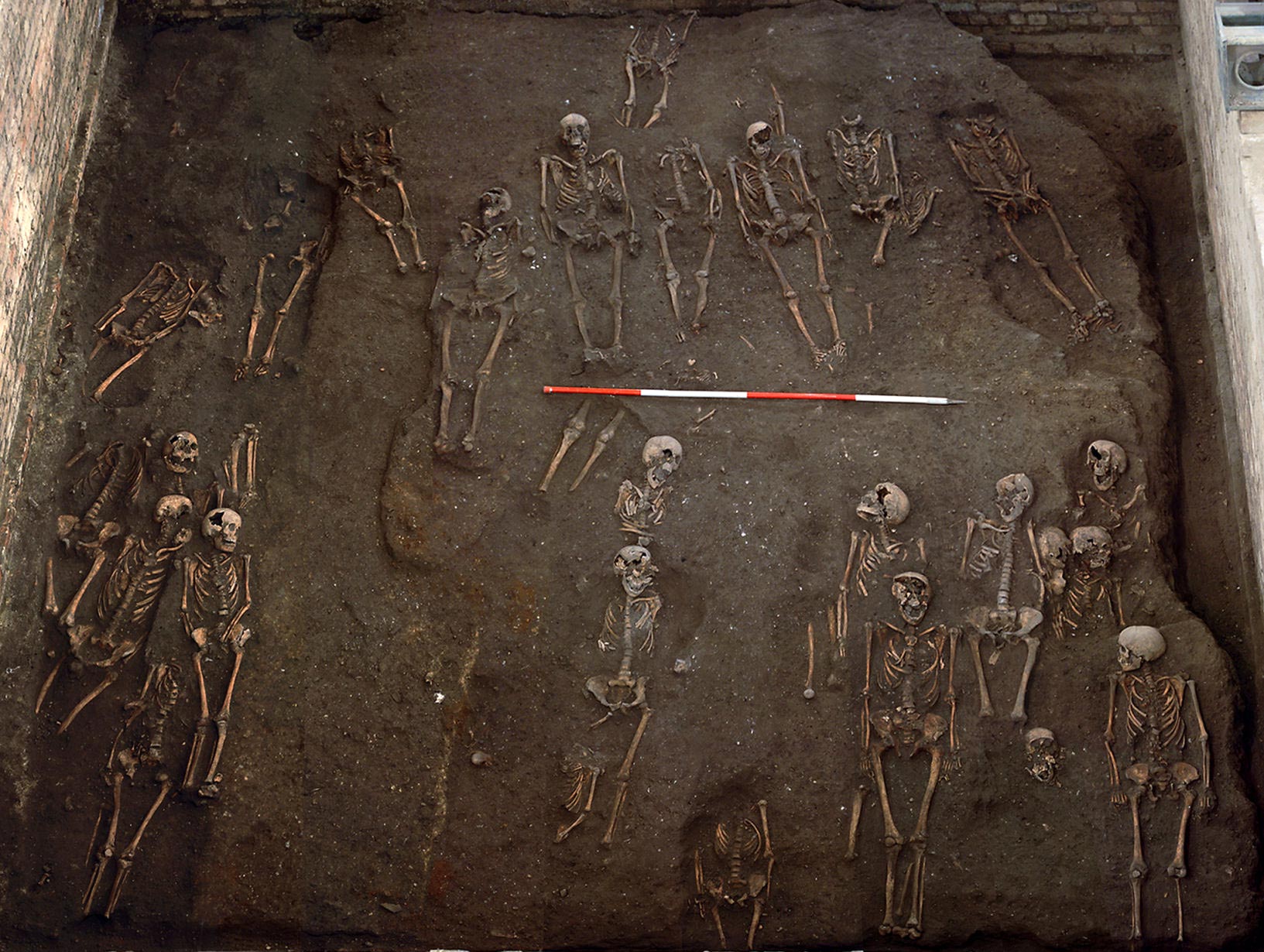
A team led by the University of Cambridge has now coupled visual inspection with radiological imaging to analyze 143 skeletons from six medieval cemeteries in and around the city of Cambridge, UK, dating from the 6th to the 16th century.
The findings of the study are published today (April 29, 2021) in the journal Cancer.

Looking Within: The Power of CT Scans
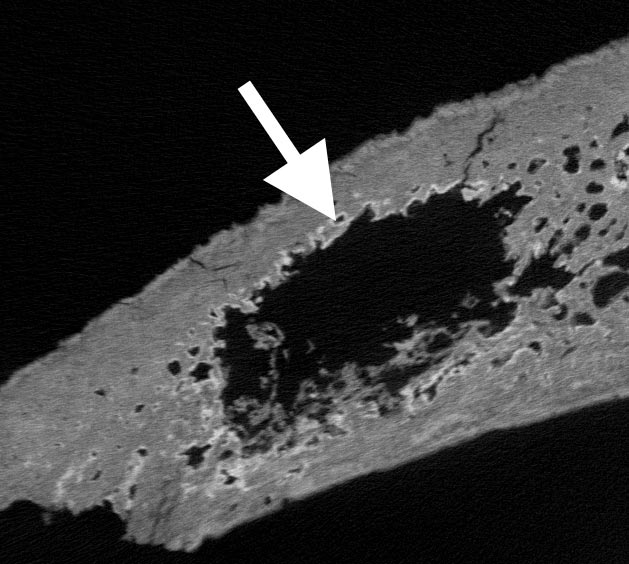
“The majority of cancers form in soft tissue organs long since degraded in medieval remains. Only some cancer spreads to bone, and of these only a few are visible on its surface, so we searched within the bone for signs of malignancy,” said lead author Dr. Piers Mitchell, who conducted the research as part of the ‘After the Plague’ project.
“Modern research shows a third to a half of people with soft tissue cancers will find the tumor spreads to their bones. We combined this data with evidence of bone metastasis from our study to estimate cancer rates for medieval Britain.”
“We think the total proportion of the medieval population that probably suffered with a cancer somewhere in their body was between nine and fourteen percent,” said Mitchell, from Cambridge University’s Department of Archaeology.
“Using CT scans we were able to see cancer lesions hidden inside a bone that looked completely normal on the outside,” said study co-author and After the Plague researcher Dr. Jenna Dittmar.
“Until now it was thought that the most significant causes of ill health in medieval people were infectious diseases such as dysentery and bubonic plague, along with malnutrition and injuries due to accidents or warfare.”
“We now have to add cancer as one of the major classes of disease that afflicted medieval people,” Dittmar said.
Comparing Cancer Rates Across Centuries
However, the researchers point out that in modern Britain some 40-50% of people have cancer by the time they die, making the disease 3-4 times more common today than the latest study suggests it was during medieval times.
They say that a variety of factors likely contribute to contemporary rates of the disease, such as the effects of tobacco, which began to be imported into Britain in the 16th century with the colonizing of the Americas.
The researchers also point to the cancerous effects of pollutants that have become ubiquitous since the industrial revolution of the 18th century, as well as the possibility that DNA-damaging viruses are now more widespread with long-distance travel. Moreover, our longer lifespans give cancer much more time to develop.
The skeletal remains investigated for the latest study came from sites near three villages in the vicinity of Cambridge, as well as three cemeteries uncovered within the medieval center of the university city, including the site of a former Augustinian friary, and the site of a former charitable hospital that cared for the sick and destitute (now part of St. John’s College).
Very few of the excavated remains were complete, so the team limited themselves to individuals with intact spinal column, pelvis, and femora (thigh bones). Modern research shows these to be the bones most likely to contain secondary malignancies — or metastases — in people with cancer.
The remains of 96 men, 46 women, and an individual of unknown sex, had their vertebrae, femurs, and pelvis inspected and then imaged using X-rays and CT scans. The team found signs of malignancy in the bones of five individuals — a minimum prevalence of 3.5%. These were mostly in the pelvis, although one middle-aged man had small lesions throughout his skeleton, suggesting a form of blood cancer.
A New Perspective on Historical Disease Burden
Research shows that CT scans detect bone metastases around 75% of the time, and only a third to half of cancer deaths involve spread to the bone, so the team projected that 9-14% of medieval Britons developed cancer.
However, they caution that the sample size is inevitably limited and diagnosing cancer in those who lain dead for many centuries is somewhat challenging.
“We need further studies using CT scanning of apparently normal skeletons in different regions and time periods to see how common cancer was in key civilizations of the past,” added Mitchell.
Reference: “The prevalence of cancer in Britain before industrialization” by Piers D. Mitchell MD, Jenna M. Dittmar PhD, Bram Mulder PhD, Sarah Inskip PhD, Alastair Littlewood MB BChir, Craig Cessford MLitt and John E. Robb PhD, 4 May 2021, Cancer.
DOI: 10.1002/cncr.33615
Never miss a breakthrough: Join the SciTechDaily newsletter.
Follow us on Google and Google News.
2 Comments
I’m sure if we CT scanned every person living today, just as many- if not a lot more, would have signs of cancer prevalence hidden in bones and other tissues but suffer absolutely no outwardly obvious symptoms of the disease and will likely die of other causes.
We shouldn’t assume that just because there’s evidence of this disease that the individual suffered and died as a result of its presence.
I didn’t see where the article stated that those affected died from Cancer?