
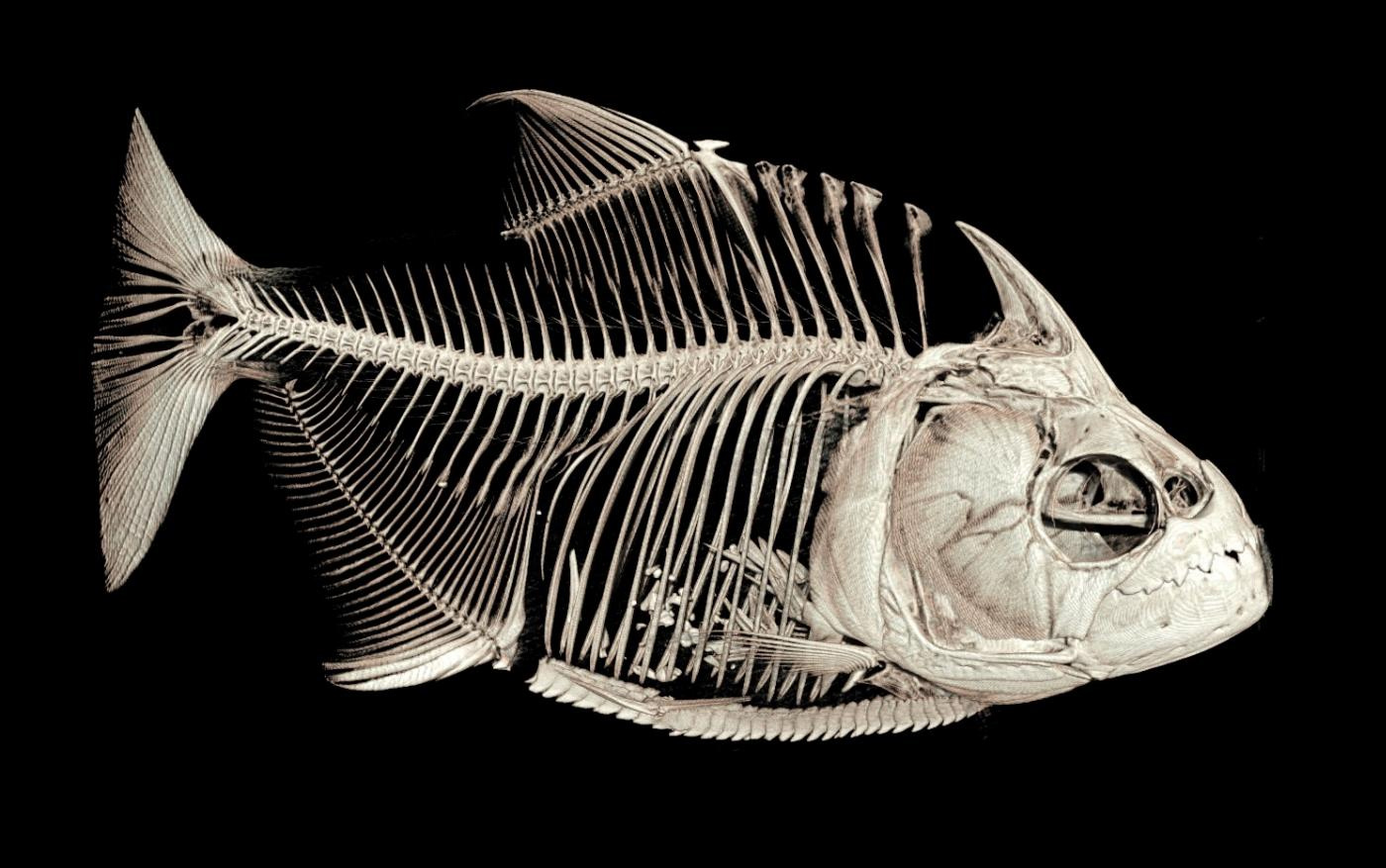
Piranha fish swap old teeth for new ones simultaneously
Piranha fish have a powerful bite. Their teeth help them shred through the flesh of their prey or even scrape plants off rocks to supplement their diet.
Years ago, scientists discovered that piranhas lose all of the teeth on one side of their mouth at once and regrow them, presumably to replace dulled teeth with brand new sharp spears for gnawing on prey. But no museum specimens have ever shown this theory to be true, and there’s no documentation of piranhas missing an entire block of teeth.
With the help of new technologies, a team led by the University of Washington has confirmed that piranhas — and their plant-eating cousins, pacus — do in fact lose and regrow all the teeth on one side of their face multiple times throughout their lives. How they do it may help explain why the fish go to such efforts to replace their teeth.
The findings were published on August 26, 2019, in the journal Evolution & Development.
“I think in a sense we found a solution to a problem that’s obvious, but no one had articulated before,” said senior author Adam Summers, a professor of biology and of aquatic and fishery sciences at UW Friday Harbor Laboratories on San Juan Island.
“The teeth form a solid battery that is locked together, and they are all lost at once on one side of the face. The new teeth wear the old ones as ‘hats’ until they are ready to erupt. So, piranhas are never toothless even though they are constantly replacing dull teeth with brand new sharp ones.”

The team of researchers joined their expertise in evolutionary history, biomechanical properties of fish and powerful imaging technologies to piece together the unlikely story of how piranhas and pacus lose and replace their teeth. With new teeth waiting in the wings, the fish are never missing a full set of pearly whites.
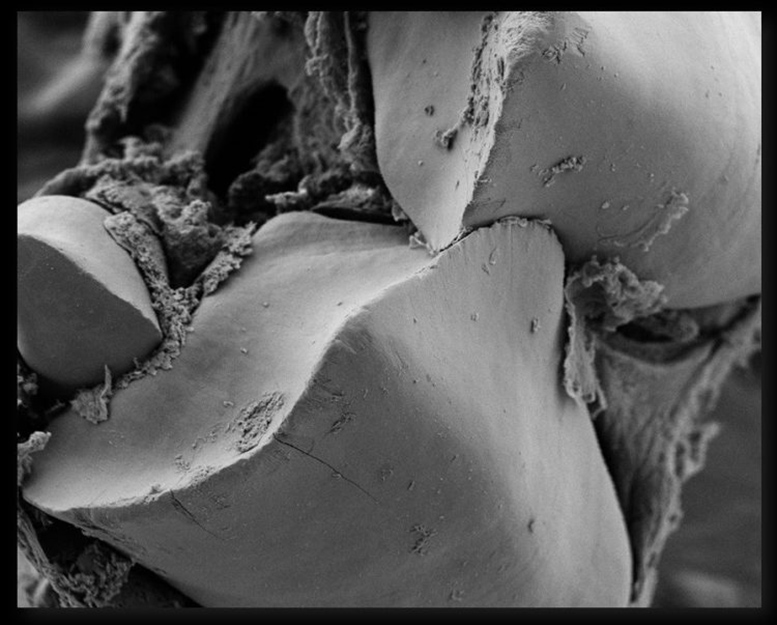
Once the researchers discovered how the teeth were being replaced, they began to understand why the fish likely employ this tactic. Using an advanced imaging technique, they were able to see clearly the contours and topography of the teeth inside various fish specimens. They found that the teeth on each side were interlocked together, forming two strong blocks within each mouth.
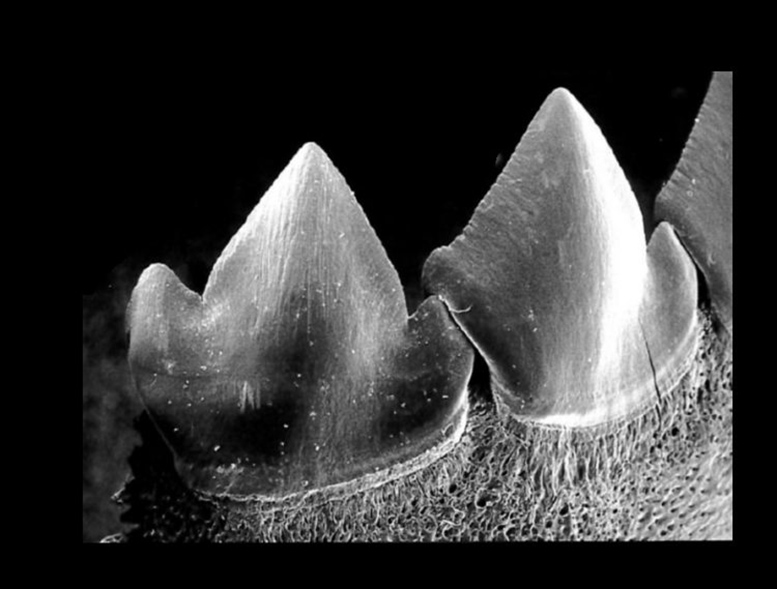
“When one tooth wears down, it becomes hard to replace just one,” lead author Matthew Kolmann, a postdoctoral researcher at George Washington University who started this work with Summers as a researcher at Friday Harbor Labs. “Once you link teeth together, if one wears too much, it becomes like a missing link in an assembly line. They all have to work together in a coordinated way.”
The interlocking teeth likely benefit the fish, allowing them to distribute stress over all of their teeth when chewing. The tradeoff of having to lose an entire set of teeth all at once is perhaps worth it over the course of their lives, the researchers explained.
“With interlocking teeth, the fish go from having one sharp tooth that can crack a nut or cut through flesh to a whole battery of teeth,” said co-author Karly Cohen, a UW biology doctoral student. “Among piranhas and pacus there’s a lot of diversity in how the teeth lock together, and it seems to relate to how the teeth are being used.”
The researchers leveraged state-of-the-art analysis techniques to examine in detail the specimens of dozens of piranhas and pacus. They CT-scanned 93 specimens of 40 different species, digitizing the bones and connective tissues for high-resolution, 3D examination. They also stained the tissues of fish to see how teeth develop and incorporated hereditary information about each species to understand their evolutionary relationships with each other.
“By combining all of these things, we got a more holistic idea of what’s going on,” Cohen said.
These techniques showed a clear pattern of tooth replacement in nearly every piranha and pacu fish they examined. The imaging tools allowed them to see what wasn’t visible before to the naked eye in the specimens — rows of teeth poking to the surface underneath the existing teeth of fish.
Additionally, the project teased new information out of dozens of fish specimens that sat on the shelves of natural history museums around the country.
“The motivation for this work came out of an effort to take those collections and come up with new ways of learning about the biology of fish,” Kolmann said.
The other co-authors are Katherine Bemis of the Virginia Institute of Marine Science; Frances Irish of Moravian College; and L. Patricia Hernandez of George Washington University.
This research was funded by the National Science Foundation, the National Institutes of Health, the Clyde D. & Lois W. Marlatt, Jr. Fellowship and Friday Harbor Laboratories.
Reference: “Tooth and consequences: Heterodonty and dental replacement in piranhas and pacus (Serrasalmidae)” by Matthew A. Kolmann, Karly E. Cohen, Katherine E. Bemis, Adam P. Summers, Frances J. Irish and L. Patricia Hernandez, 26 August 2019, Evolution & Development.
DOI: 10.1111/ede.12306
Never miss a breakthrough: Join the SciTechDaily newsletter.
Follow us on Google and Google News.