
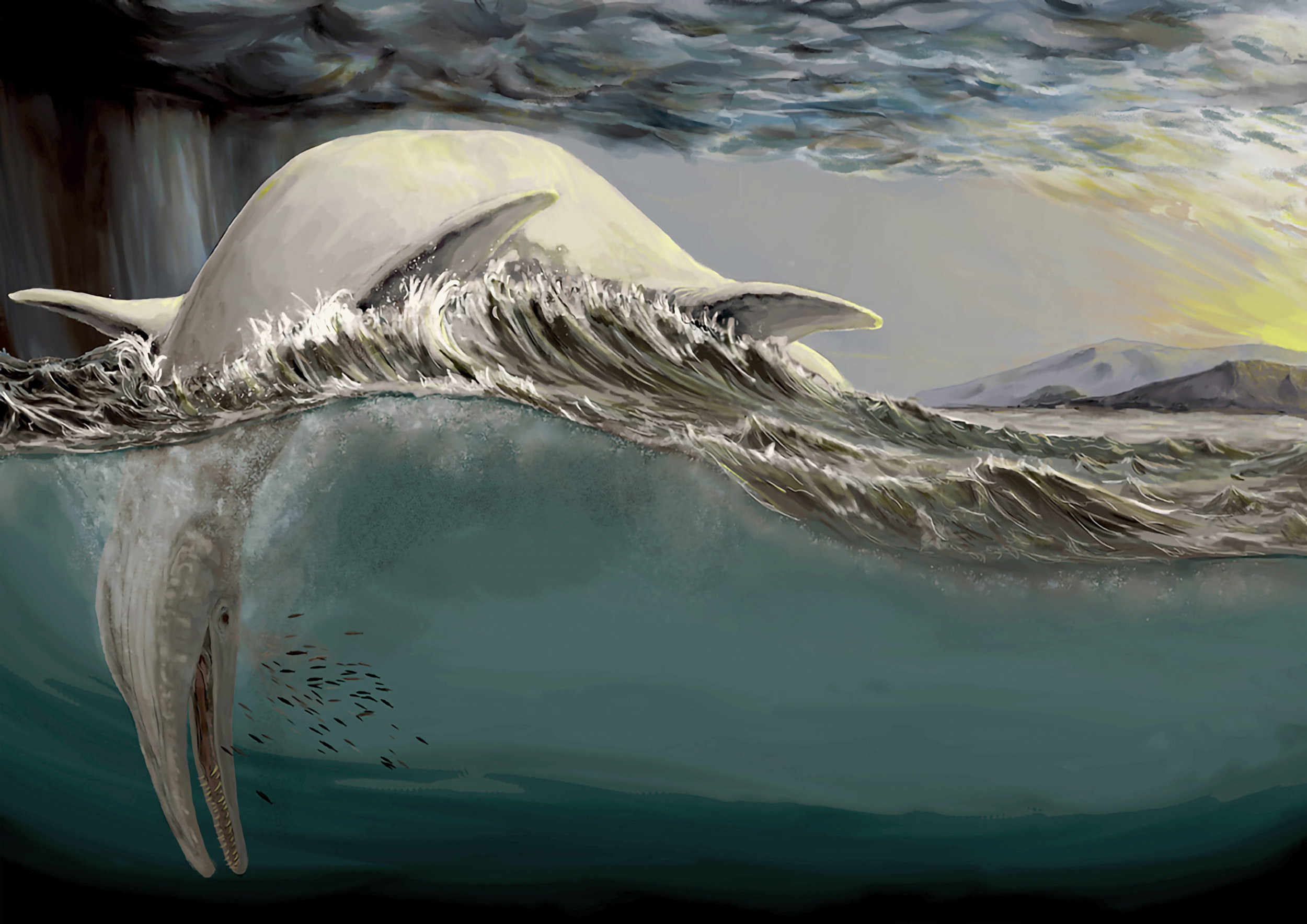
Several similar large, fossilized bone fragments have been discovered in various regions across Western and Central Europe since the 19th century. The animal group to which they belonged is still the subject of much debate to this day. A study carried out at the University of Bonn could now settle this dispute once and for all: The microstructure of the fossils indicates that they come from the lower jaw of a gigantic ichthyosaur. These animals could reach 25 to 30 meters in length, a similar size to the modern blue whale. The results have now been published in the journal PeerJ.
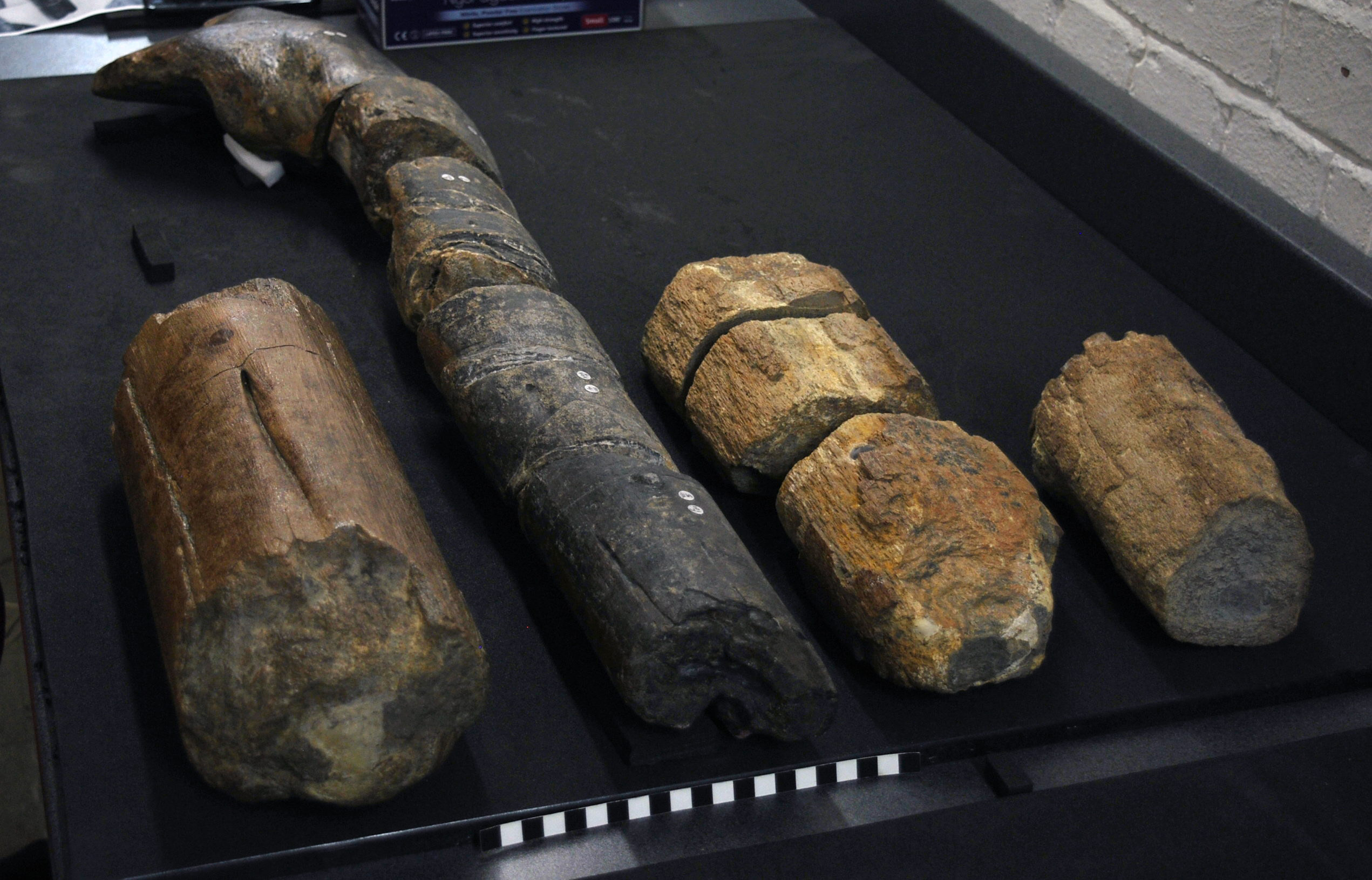
In 1850, the British naturalist Samuel Stutchbury reported a mysterious find in a scientific journal: A large, cylindrical bone fragment had been discovered at Aust Cliff – a fossil deposit near to Bristol. Similar bone fragments have since been found in various different places around Europe, including Bonenburg in North Rhine-Westphalia and in the Provence region of France. More than 200 million years ago, these areas were submerged beneath a huge ocean that covered vast swathes of Western and Central Europe. Fossil remains from the animal world of that time – including marine and coastal dwellers – have been preserved in the sediment.
There is still some debate to this day about the animal group to which these large, fossilized bones belonged. Stutchbury assumed in his examination of the first finds that they came from a labyrinthodontia, an extinct crocodile-like land creature. However, this hypothesis was questioned by other researchers, who believed instead that the fossils came from long-necked dinosaurs (sauropods), stegosaurs, or a still completely unknown group of dinosaurs.
Unusual tissue made of protein fibers
“Already by the beginning of the 20th century, some other researchers had theorized that the fossils could possibly be from a gigantic ichthyosaur,” explains Marcello Perillo. The young researcher has been investigating this theory as part of his Master’s Thesis in the research group headed by Prof. Martin Sander in the Institute of Geosciences at the University of Bonn. As part of his work, he examined the microstructure of the fossilized bone tissue. “Bones of similar species generally have a similar structure,” he says. “Osteohistology – the analysis of bone tissue – can thus be used to draw conclusions about the animal group from which the find originates.”
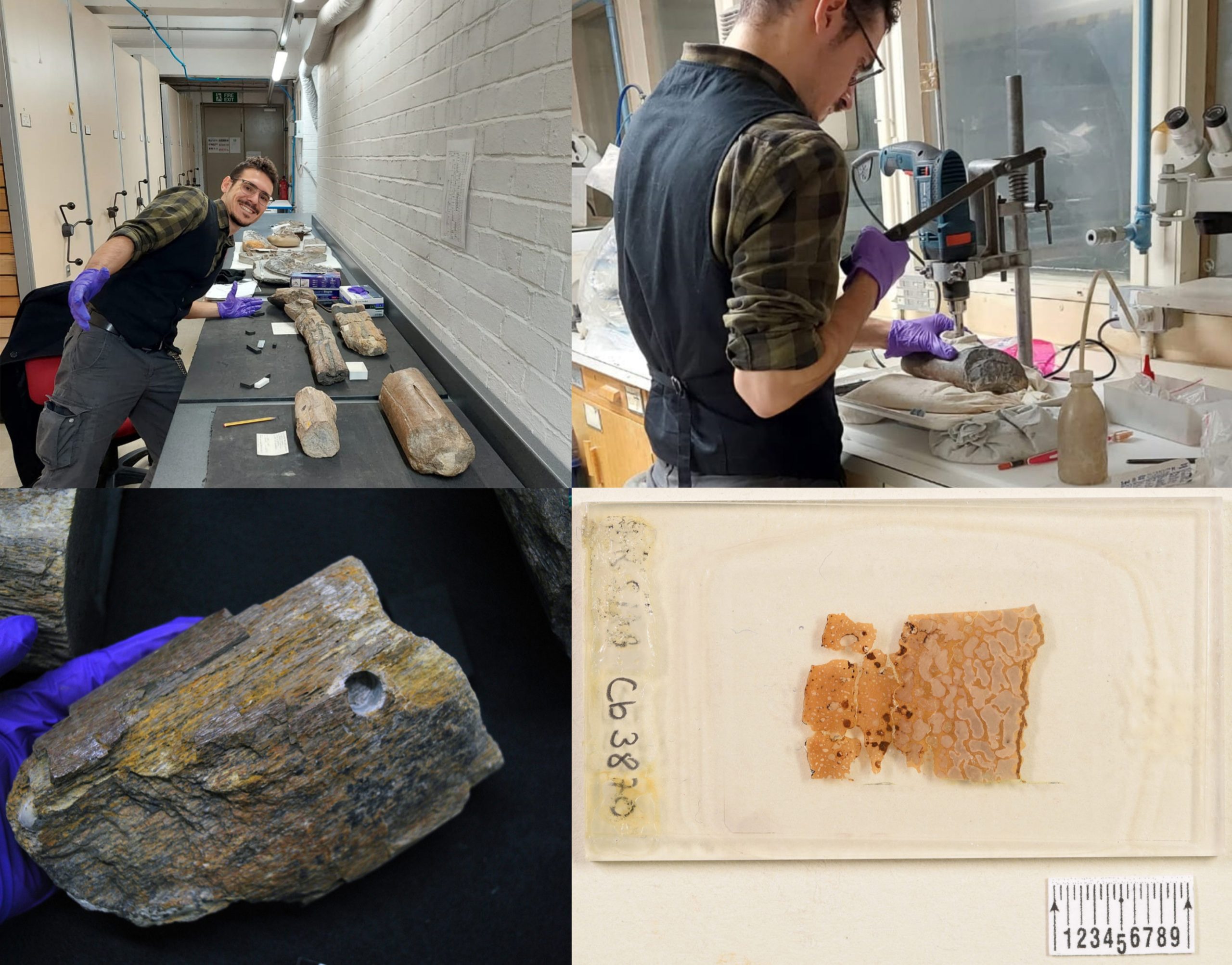
Perillo first took samples from the bones that have so far not been classified. “I compared specimens from South West England, France, and Bonenburg,” he says. “They all displayed a very specific combination of properties. This discovery indicated that they might come from the same animal group.” He then used a special microscope to prove that the bone wall had a very unusual structure: It contained long strands of mineralized collagen, a protein fiber, which were interwoven in a characteristic way that had not yet been found in other bones.
Ichthyosaur bones with a similar structure
Interestingly, fossils from large ichthyosaurs from Canada also have a very similar bone wall structure. “However, this structure is not found in fossil samples from other animal groups that I have studied,” emphasized Perillo. “Therefore, it seems highly probable that the fragments in question also belong to an ichthyosaur and that the findings refute the claim that the bones come from a land-living dinosaur.”
It is likely that the fossils come from the lower jaw of a sea creature. By comparing the size of the fragments with the jaws of other species in this animal group, it is possible to deduce the length of the animals: They could possibly have reached a length of 25 to 30 meters, as proponents of the ichthyosaur theory had originally speculated in an earlier study. “However, this number is only an estimate and far from certain – until, that is, we find more complete fossil remains,” says Perillo. Nevertheless, they were certainly exceptionally large.
The first ichthyosaur lived in the ancient oceans in the early Triassic period around 250 million years ago. Species as big as whales existed early on but the largest creatures only appeared around 215 million years ago. Almost all species of ichthyosaur then died out at the end of the Triassic period more than 200 million years ago.
The unusual structure of their bone walls – which is similar to carbon fiber-reinforced materials – probably kept the bone very stable while allowing for fast growth. “These huge jaws would have been exposed to strong shearing forces even when the animal was eating normally,” says Perillo. “It is possible that these animals also used their snouts to ram into their prey, similar to the orcas of today. However, this is still pure speculation at this time.”
Reference: “The dinosaurs that weren’t: osteohistology supports giant ichthyosaur affinity of enigmatic large bone segments from the European Rhaetian” by Marcello Perillo and P Martin Sander, 9 April 2024, PeerJ.
DOI: 10.7717/peerj.17060
Marcello Perillo was funded by the German Academic Exchange Service (DAAD). The excavations carried out in Bonenburg by the Institute of Geosciences were funded by the NRW Office for the Preservation of Archaeological Heritage via the LWL Museum of Natural History.
Never miss a breakthrough: Join the SciTechDaily newsletter.
Follow us on Google and Google News.