
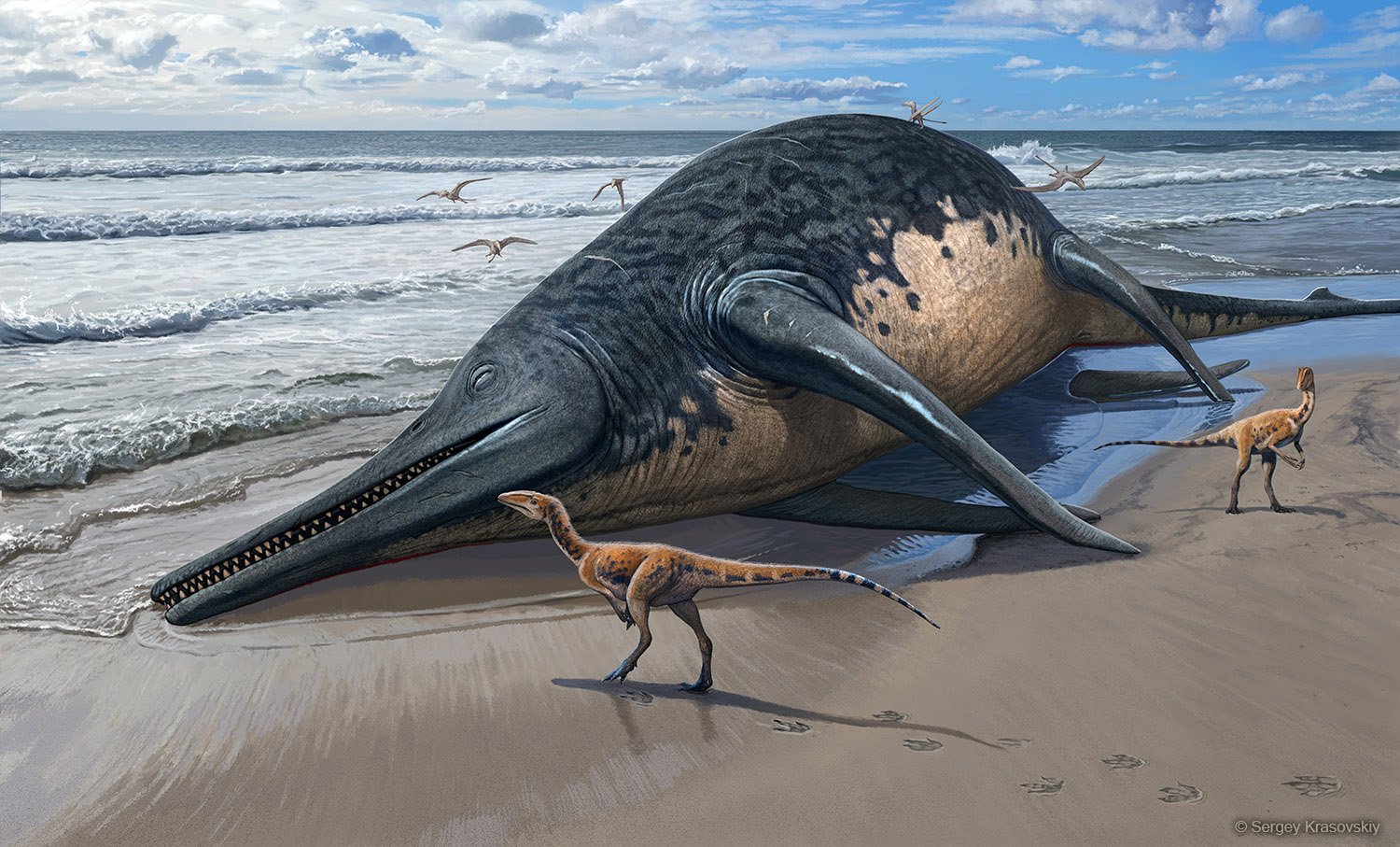
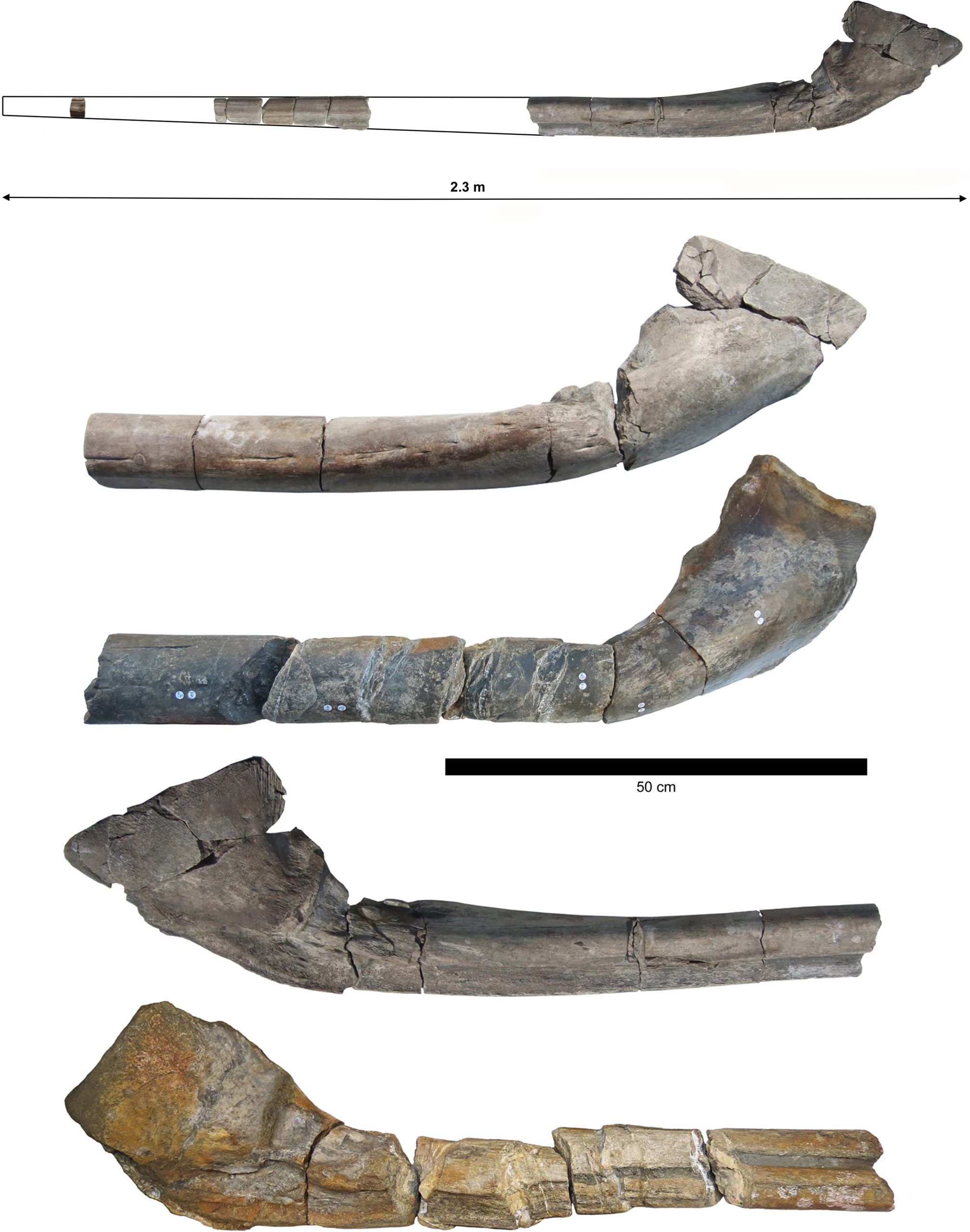
The fossilised remains of a second gigantic jawbone measuring more than two metres long has been found on a beach in Somerset, UK.
Experts have identified the bones as belonging to the jaws of a new species of enormous ichthyosaur, a type of prehistoric marine reptile. Estimates suggest the oceanic titan would have been more than 25 meters (82 feet) long.
Father and daughter, Justin and Ruby Reynolds from Braunton, Devon, found the first pieces of the second jawbone to be found in May 2020, while searching for fossils on the beach at Blue Anchor, Somerset. Ruby, then aged 11, found the first chunk of giant bone before searching together for additional pieces.
Realising they had discovered something significant, they contacted leading ichthyosaur expert, Dr. Dean Lomax, a paleontologist at The University of Manchester. Dr Lomax, who is also an 1851 Research Fellow at the University of Bristol, contacted Paul de la Salle, a seasoned fossil collector who had found the first giant jawbone in May 2016 from further along the coast at Lilstock.
Excitement and Further Discoveries
Dr Dean Lomax said: “I was amazed by the find. In 2018, my team (including Paul de la Salle) studied and described Paul’s giant jawbone and we had hoped that one day another would come to light. This new specimen is more complete, better preserved, and shows that we now have two of these giant bones – called a surangular – that have a unique shape and structure. I became very excited, to say the least.”
Justin and Ruby, together with Paul, Dr Lomax, and several family members, visited the site to hunt for more pieces of this rare discovery. Over time, the team found additional pieces of the same jaw which fit together perfectly, like a multimillion-year-old jigsaw.
Justin said: “When Ruby and I found the first two pieces we were very excited as we realized that this was something important and unusual. When I found the back part of the jaw, I was thrilled because that is one of the defining parts of Paul’s earlier discovery.”
The last piece of bone was recovered in October 2022.
The research team, led by Dr Lomax, revealed that the jaw bones belong to a new species of giant ichthyosaur that would have been about the size of a blue whale. Comparing the two examples of the same bone with the same unique features from the same geologic time zone supports their identifications.
The team has called the new genus and species Ichthyotitan severnensis, meaning “giant fish lizard of the Severn.”
Historical Context and Significance
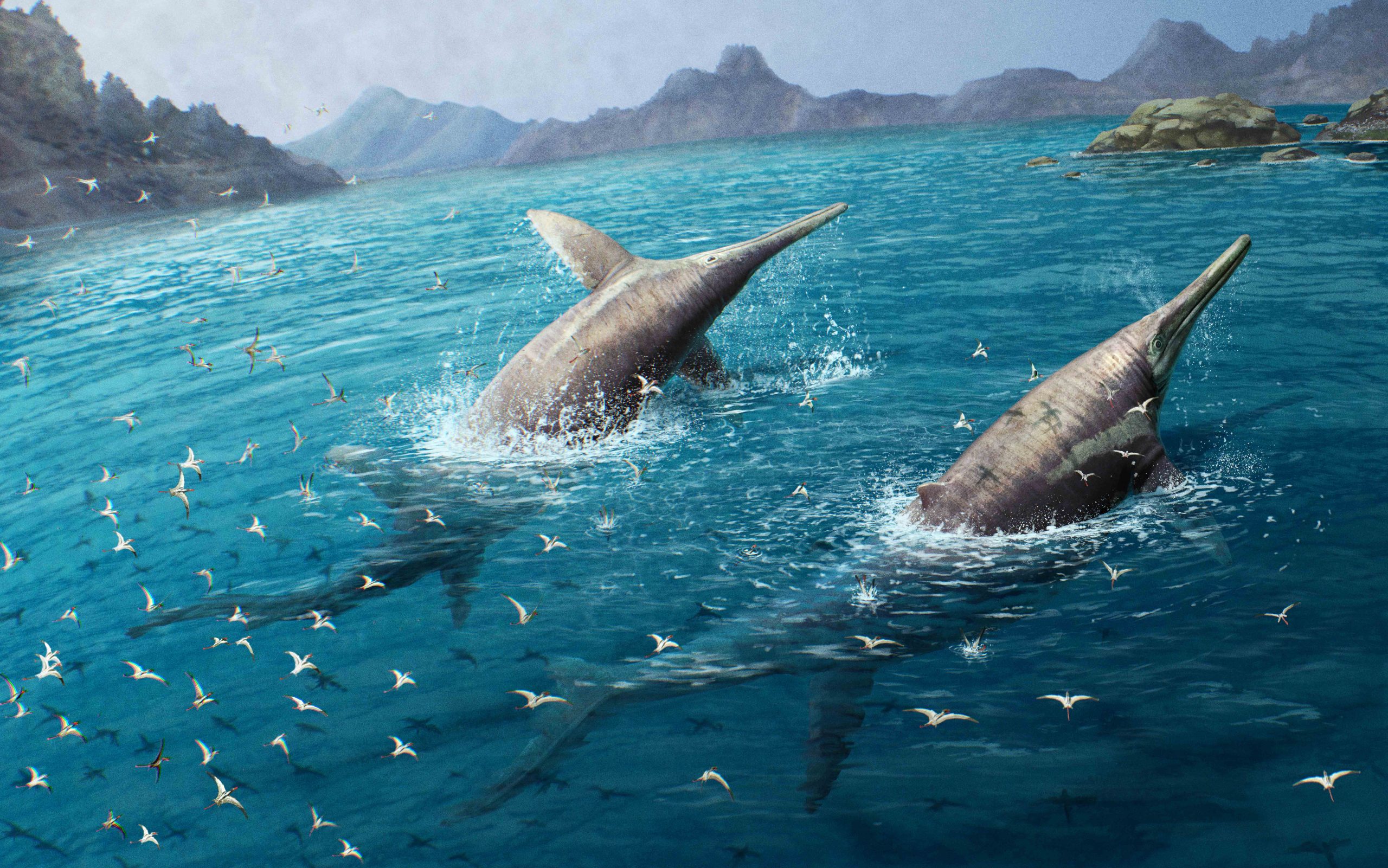
The bones are around 202 million years old, dating to the end of the Triassic Period in a time known as the Rhaetian. During this time, the gigantic ichthyosaurs swam the seas while the dinosaurs walked on land. It was the titans’ final chapter, however—as the story told in the rocks above these fossils record a cataclysm known as the Late Triassic global mass extinction event. After this time, giant ichthyosaurs from the family known as Shastasauridae go extinct. Today, these bones represent the very last of their kind.
Ichthyotitan is not the world’s first giant ichthyosaur, but de la Salles’ and Reynolds’ discoveries are unique among those known to science. These two bones appear roughly 13 million years after their latest geologic relatives, including Shonisaurus sikanniensis from British Columbia, Canada, and Himalayasaurus tibetensis from Tibet, China.
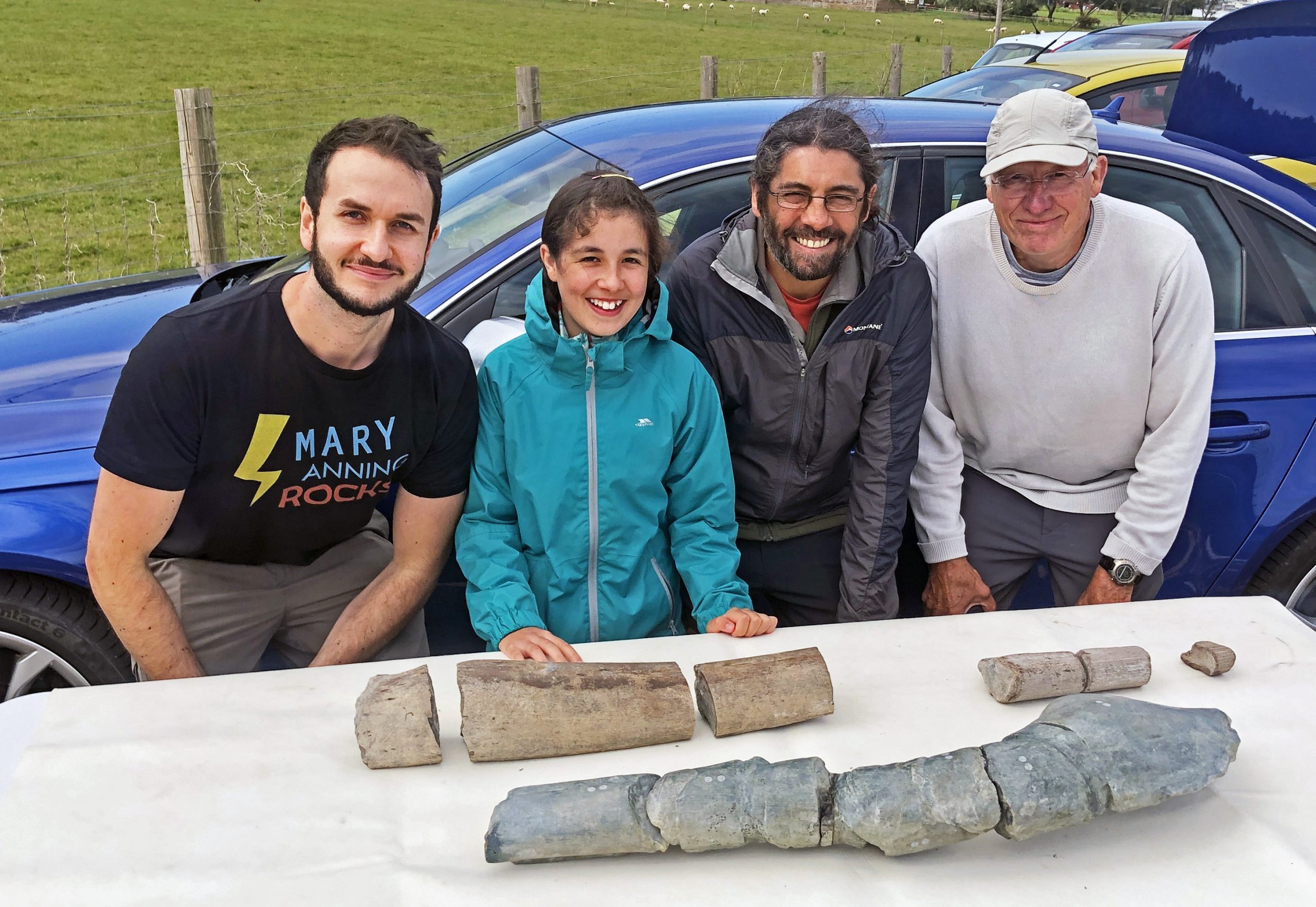
Dr Lomax added: “I was highly impressed that Ruby and Justin correctly identified the discovery as another enormous jawbone from an ichthyosaur. They recognized that it matched the one we described in 2018. I asked them whether they would like to join my team to study and describe this fossil, including naming it. They jumped at the chance. For Ruby, especially, she is now a published scientist who not only found but also helped to name a type of gigantic prehistoric reptile. There are probably not many 15-year-olds who can say that! A Mary Anning in the making, perhaps.”
Ruby said: “It was so cool to discover part of this gigantic ichthyosaur. I am very proud to have played a part in a scientific discovery like this.”
Further examinations of the bones’ internal structures have been carried out by master’s student, Marcello Perillo, from the University of Bonn, Germany. His work confirmed the ichthyosaur origin of the bones and revealed that the animal was still growing at the time of death.
He said: “We could confirm the unique set of histological characters typical of giant ichthyosaur lower jaws: the anomalous periosteal growth of these bones hints at yet-to-be-understood bone developmental strategies, now lost in the deep time, that likely allowed late Triassic ichthyosaurs to reach the known biological limits of vertebrates in terms of size. So much about these giants is still shrouded by mystery, but one fossil at a time we will be able to unravel their secret.”
Concluding the work, Paul de la Salle added: “To think that my discovery in 2016 would spark so much interest in these enormous creatures fills me with joy. When I found the first jawbone, I knew it was something special. To have a second that confirms our findings is incredible. I am overjoyed.”
Ruby, Justin, and Paul’s discoveries will soon go on display at the Bristol Museum and Art Gallery.
Lomax said: “This research has been ongoing for almost eight years. It is quite remarkable to think that gigantic, blue whale-sized ichthyosaurs were swimming in the oceans around what was the UK during the Triassic Period. These jawbones provide tantalizing evidence that perhaps one day a complete skull or skeleton of one of these giants might be found. You never know.”
Reference: “The last giants: New evidence for giant Late Triassic (Rhaetian) ichthyosaurs from the UK” by Dean R. Lomax, Paul de la Salle, Marcello Perillo, Justin Reynolds, Ruby Reynolds and James F. Waldron, 17 April 2024, PLOS ONE.
DOI: 10.1371/journal.pone.0300289
Never miss a breakthrough: Join the SciTechDaily newsletter.
Follow us on Google and Google News.