
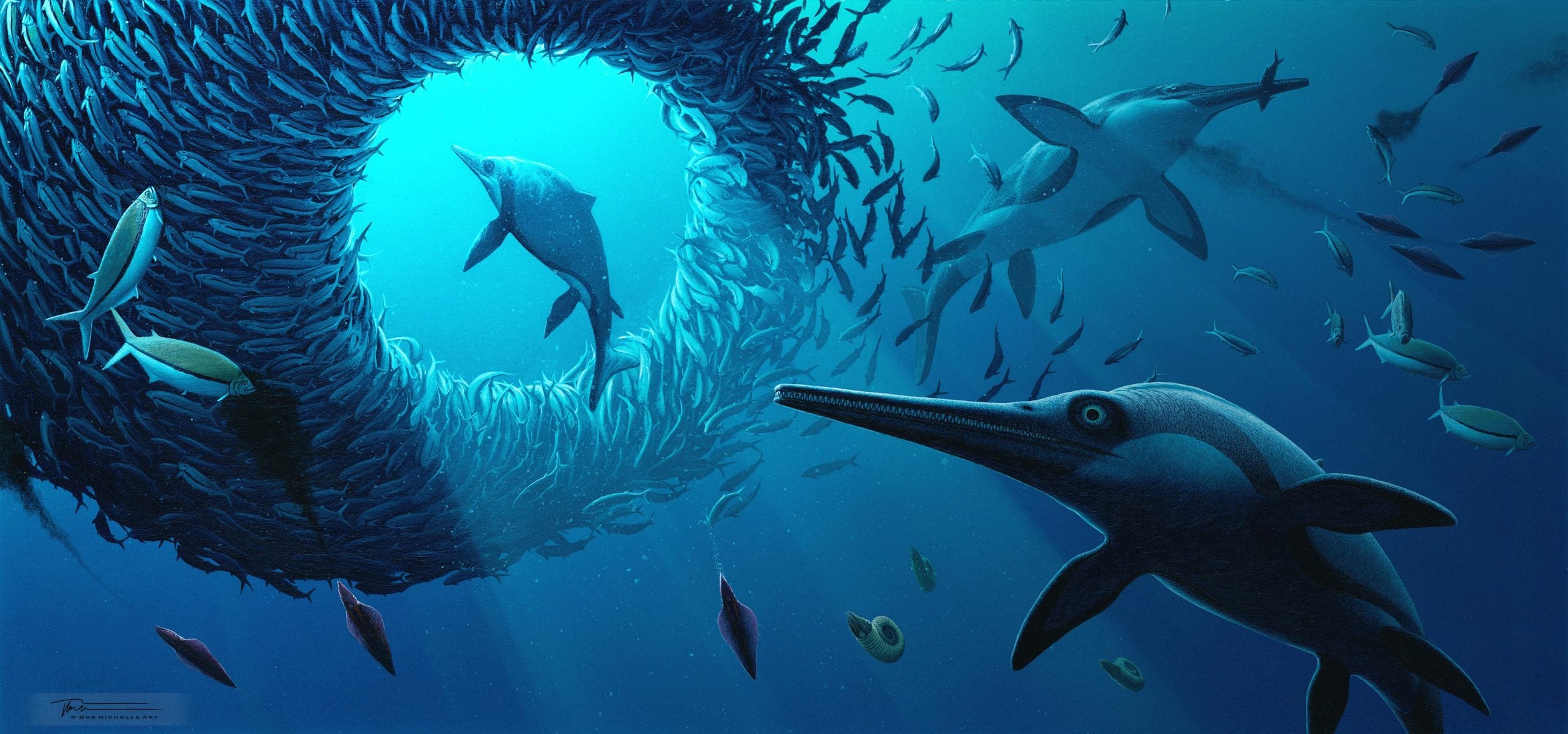
A uniquely preserved ichthyosaur from the Pliensbachian period helps resolve when a major evolutionary shift occurred among Jurassic marine reptiles.
A nearly complete skeleton discovered along the UK’s Jurassic Coast has been identified as a previously unknown and rare species of ichthyosaur, a prehistoric marine reptile that once dominated ancient seas.
The dolphin-sized species, named Xiphodracon goldencapensis and nicknamed the “Sword Dragon of Dorset,” is the only known specimen of its kind. Its identification helps close an important gap in the evolutionary history of ichthyosaurs preserved in the fossil record.
A century-long gap in regional discovery
Since the time of pioneering paleontologist Mary Anning, thousands of ichthyosaur fossils have been recovered from the Jurassic Coast. Despite this rich history, Xiphodracon represents the first newly described genus of an Early Jurassic ichthyosaur from the region in more than a century.
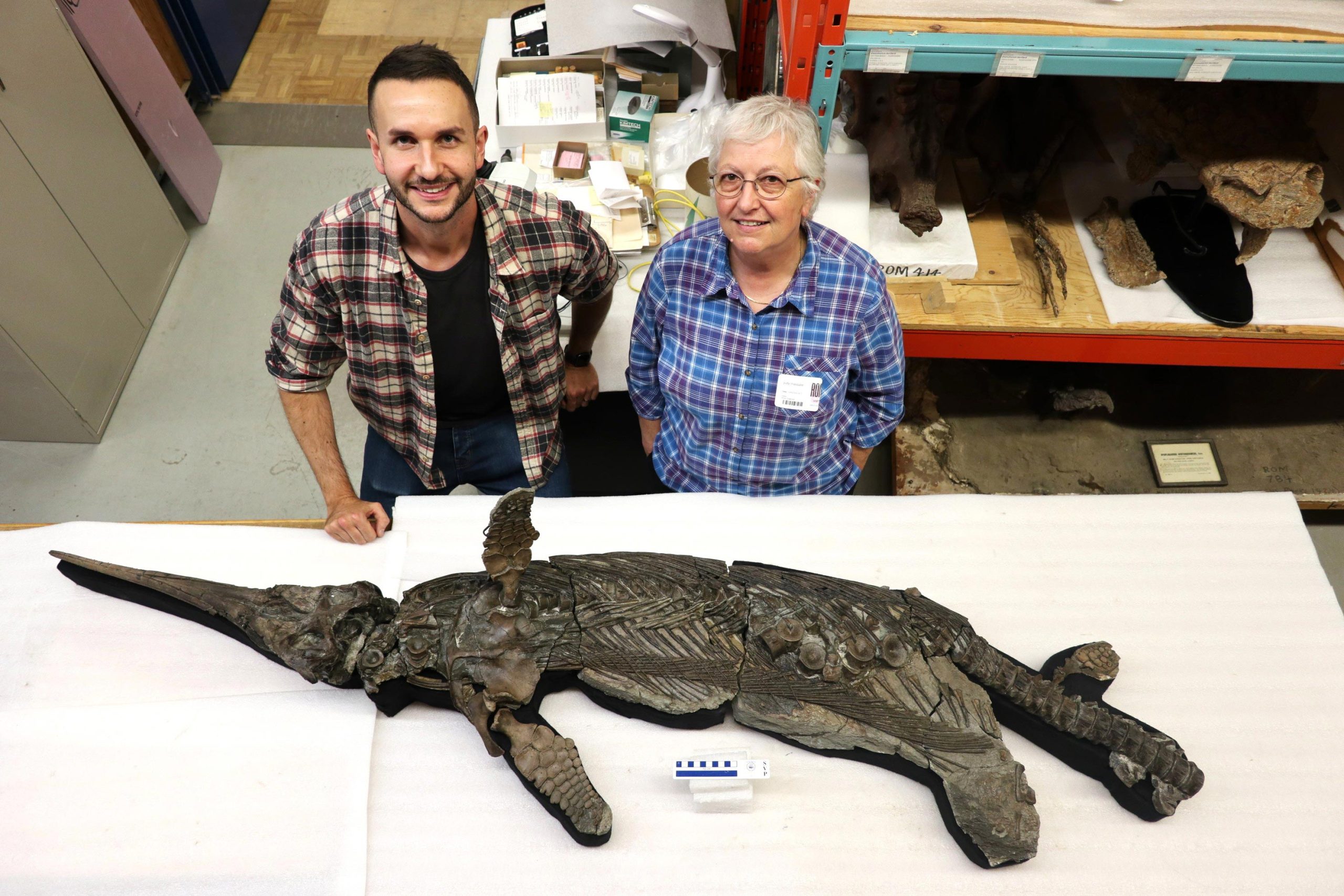
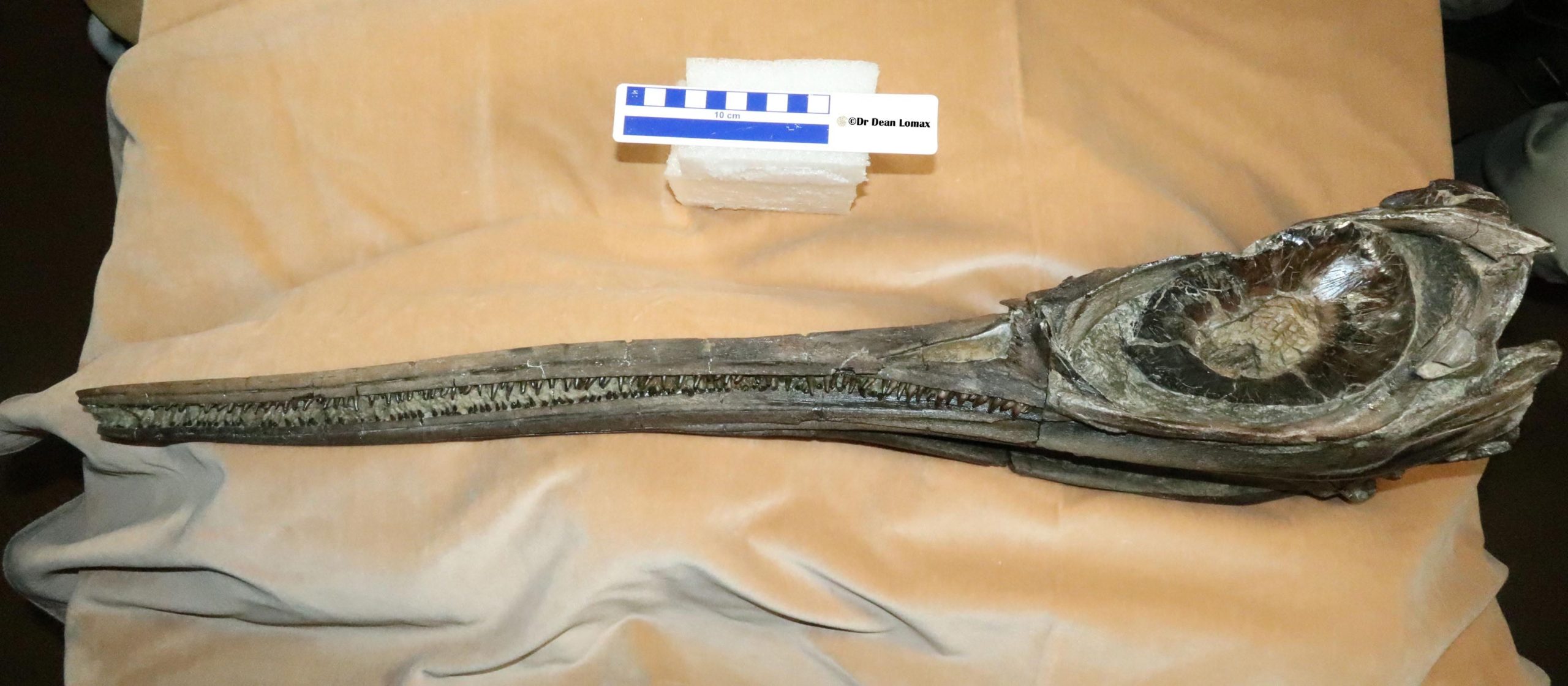
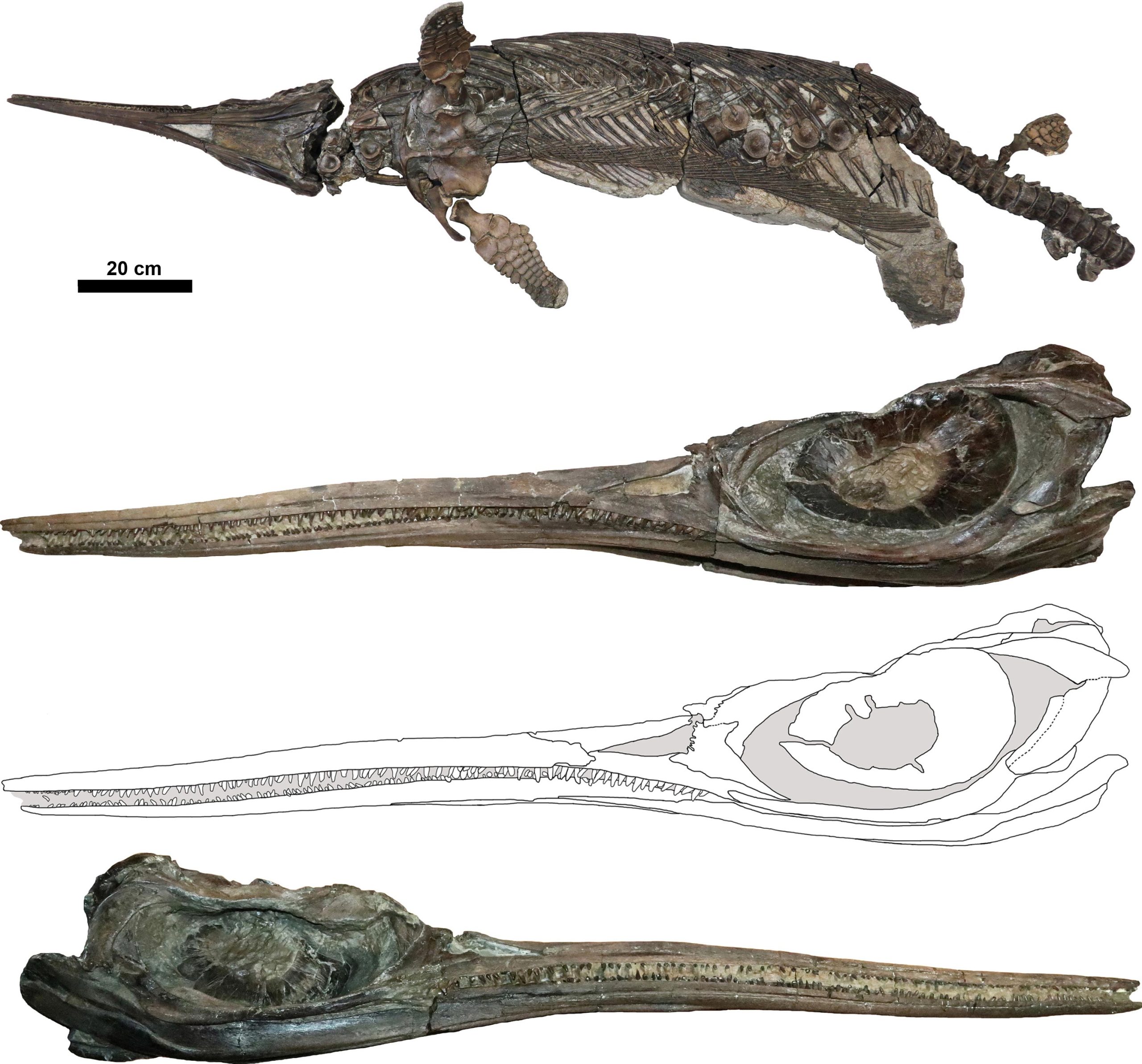
The fossil was found near Golden Cap in 2001 by Dorset fossil collector Chris Moore and is preserved in remarkable three-dimensional detail. The skeleton includes a skull with an exceptionally large eye socket and a long, sword-like snout. Researchers estimate the animal measured about three meters in length and likely fed on fish and squid. The remains may even preserve traces of its final meal, making it one of the most complete prehistoric reptiles known from the Pliensbachian period.
Pinpointing a critical evolutionary turnover
The discovery was documented by an international team of paleontologists led by ichthyosaur specialist Dr. Dean Lomax, an Honorary Research Fellow at The University of Manchester and an 1851 Research Fellow at the University of Bristol. Their study was recently published in the journal Papers in Palaeontology.
Dr. Lomax said: “I remember seeing the skeleton for the first time in 2016. Back then, I knew it was unusual, but I did not expect it to play such a pivotal role in helping to fill a gap in our understanding of a complex faunal turnover during the Pliensbachian. This time is pretty crucial for ichthyosaurs as several families went extinct and new families emerged, yet Xiphodracon is something you might call a “missing piece of the ichthyosaur puzzle.” It is more closely related to species in the later Early Jurassic (in the Toarcian), and its discovery helps pinpoint when the faunal turnover occurred, being much earlier than expected.”
A neglected specimen gains new importance
After its discovery in 2001, the skeleton was acquired by the Royal Ontario Museum, Canada, where it became part of their extensive collection of ichthyosaurs but had remained unstudied.
Ichthyosaurs from the Pliensbachian (193–184 million years ago) are incredibly rare and makes Xiphodracon a vital piece of evidence for scientists studying the critical but poorly understood time in ichthyosaurian evolution.
Evidence of abrupt ecological change
Ichthyosaur expert and co-author, Professor Judy Massare, from the State University of NY at Brockport, USA, said: “Thousands of complete or nearly complete ichthyosaur skeletons are known from strata before and after the Pliensbachian. The two faunas are quite distinct, with no species in common, even though the overall ecology is similar. Clearly, a major change in species diversity occurred sometime in the Pliensbachian. Xiphodracon helps to determine when the change occurred, but we still don’t know why.”
Dr. Erin Maxwell, a co-author and ichthyosaur expert from the State Museum of Natural History Stuttgart, added: “This skeleton provides critical information for understanding ichthyosaur evolution, but also contributes to our understanding of what life must have been like in the Jurassic seas of Britain. The limb bones and teeth are malformed in such a way that points to serious injury or disease while the animal was still alive, and the skull appears to have been bitten by a large predator – likely another much larger species of ichthyosaur- giving us a cause of death for this individual. Life in the Mesozoic oceans was a dangerous prospect.”
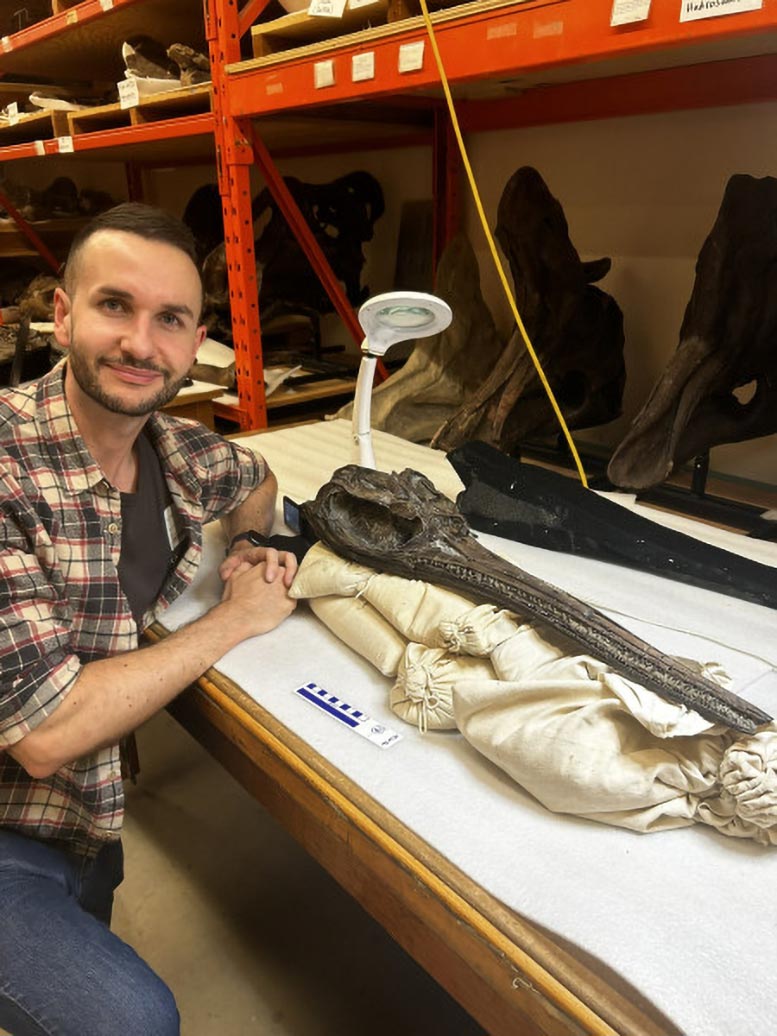
Collectively, the trio have identified several features in Xiphodracon that have never been observed in any ichthyosaur. The most peculiar is a strange and unique bone around the nostril (called a lacrimal) that has prong-like bony structures.
Dr. Lomax, who is the author of the recently published book, “The Secret Lives of Dinosaurs”, said: “One of the coolest things about identifying a new species is that you get to name it! We opted for Xiphodracon because of the long, sword-like snout (xipho from Greek xiphos for sword) and dracon (Greek and Latin for dragon) in reference to ichthyosaurs being referred to as “sea dragons” for over 200 years.”
The skeleton is planned to go on display at the Royal Ontario Museum, Toronto, Canada.
Reference: “A new long and narrow-snouted ichthyosaur illuminates a complex faunal turnover during an undersampled Early Jurassic (Pliensbachian) interval” by Dean R. Lomax, Judy A. Massare and Erin E. Maxwell, 9 October 2025, Papers in Palaeontology.
DOI: 10.1002/spp2.70038
Never miss a breakthrough: Join the SciTechDaily newsletter.
Follow us on Google and Google News.