
Close Menu
    Facebook X (Twitter) Instagram
    SciTechDaily
    • Biology
    • Chemistry
    • Earth
    • Health
    • Physics
    • Science
    • Space
    • Technology
    Facebook X (Twitter) Pinterest YouTube RSS
    SciTechDaily
    Home»Space»NASA’s MAVEN Spacecraft Observes Mars Moon Phobos
    Space

    NASA’s MAVEN Spacecraft Observes Mars Moon Phobos

    By Nancy Neal Jones, NASA’s Goddard Space Flight CenterFebruary 29, 2016No Comments2 Mins Read
    Facebook Twitter Pinterest Telegram LinkedIn WhatsApp Email Reddit
    Share
    Facebook Twitter LinkedIn Pinterest Telegram Email Reddit
    MAVEN Observes Mars Moon Phobos in the Mid- and Far-Ultraviolet
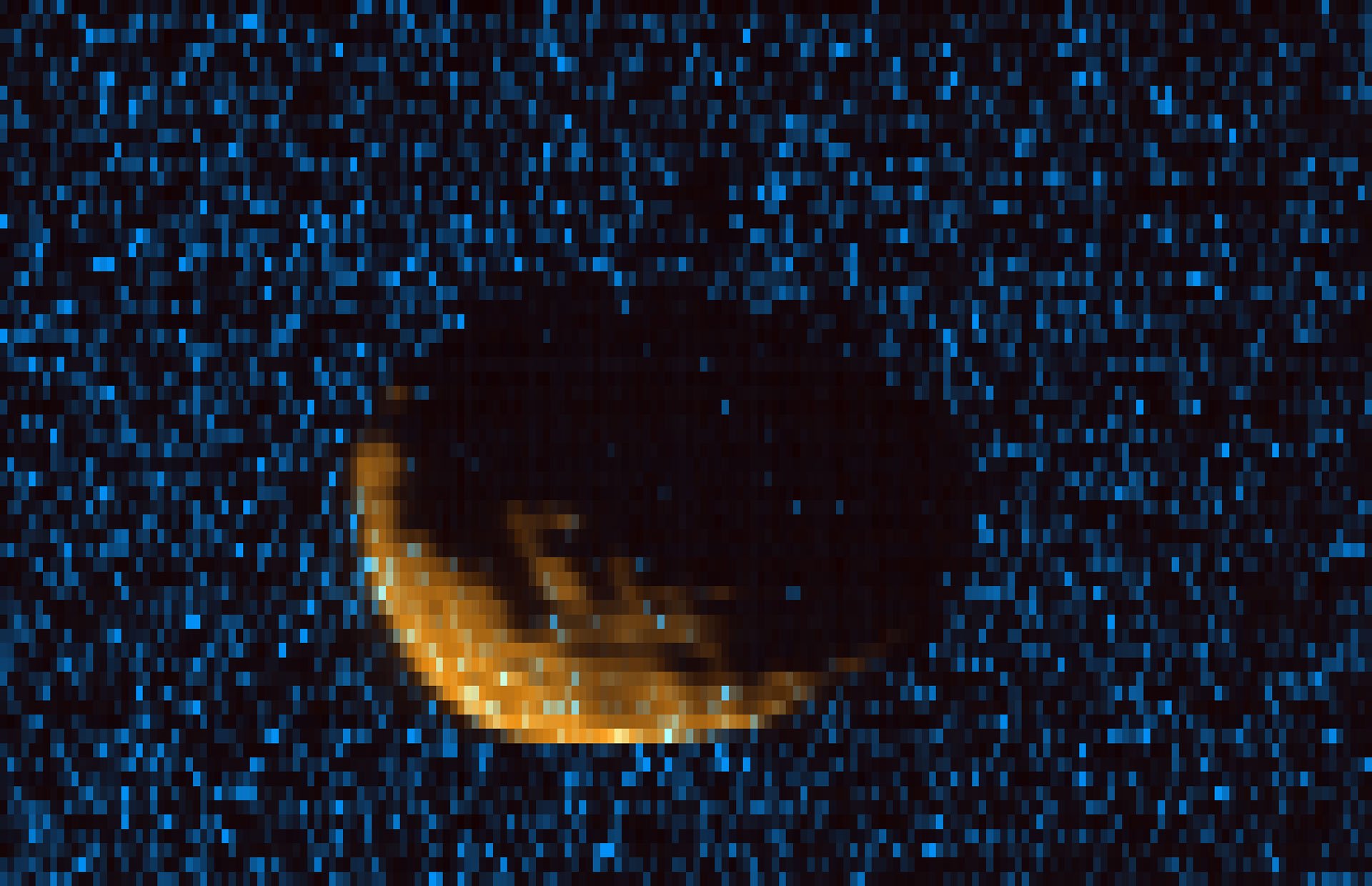
    Phobos as observed by MAVEN’s Imaging Ultraviolet Spectrograph. Orange shows mid-ultraviolet (MUV) sunlight reflected from the surface of Phobos, exposing the moon’s irregular shape and many craters. Blue shows far ultraviolet light detected at 121.6 nm, which is scattered off of hydrogen gas in the extended upper atmosphere of Mars. Phobos, observed here at a range of 300km, blocks this light, eclipsing the ultraviolet sky.

    New observations from NASA’s MAVEN Mission have scientists closer to solving the mystery of how Mars’ moon Phobos formed.

    In late November and early December 2015, NASA’s Mars Atmosphere and Volatile Evolution (MAVEN) mission made a series of close approaches to the Martian moon Phobos, collecting data from within 300 miles (500 kilometers) of the moon.

    Among the data returned were spectral images of Phobos in the ultraviolet. The images will allow MAVEN scientists to better assess the composition of this enigmatic object, whose origin is unknown.

    Comparing MAVEN’s images and spectra of the surface of Phobos to similar data from asteroids and meteorites will help planetary scientists understand the moon’s origin – whether it is a captured asteroid or was formed in orbit around Mars. The MAVEN data, when fully analyzed, will also help scientists look for organic molecules on the surface. Evidence for such molecules has been reported by previous measurements from the ultraviolet spectrograph on the Mars Express spacecraft.

    MAVEN Observes Mars Moon Phobos
    The orbit of MAVEN sometimes crosses the orbit of Phobos. This image shows the configuration of the two orbits in early December 2015, when MAVEN’s Phobos observations were made.

    The observations were made by the Imaging Ultraviolet Spectrograph instrument aboard MAVEN.

    MAVEN’s principal investigator is based at the University of Colorado’s Laboratory for Atmospheric and Space Physics, and NASA’s Goddard Space Flight Center in Greenbelt, Maryland, manages the MAVEN project. Partner institutions include Lockheed Martin, the University of California at Berkeley, and NASA’s Jet Propulsion Laboratory.

    Never miss a breakthrough: Join the SciTechDaily newsletter.
    Follow us on Google and Google News.

    Astronomy Mars MAVEN NASA Phobos Planetary Science
    Share. Facebook Twitter Pinterest LinkedIn Email Reddit

    Related Articles

    Mars’ Moon Phobos Shows Signs of Structural Failure

    New Findings on Fate of Mars’ Atmosphere Will be Broadcast Live Today

    NASA is Working on Technology to Protect Astronauts from Space Radiation on Mars

    New ScienceCast Video Explores the Mystery of Mars

    NASA’s Curiosity Prepares for Use of Its Arm and Tools

    Curiosity Sends Back Radioed Words and New Telephoto View of Mars

    NASA’s Curiosity Readies for First Drive on Mars

    Color HiRISE Image of Curiosity Rover on Mars

    First 360-Degree Color Panorama From NASA’s Curiosity Mars Rover

    Leave A Reply Cancel Reply

    • Facebook
    • Twitter
    • Pinterest
    • YouTube

    Don't Miss a Discovery

    Subscribe for the Latest in Science & Tech!

    Trending News

    JWST Finds a “Star” 100 Billion Times Brighter Than Any Star Should Be

    Scientists Find a Hidden Biological Link Across Different Forms of Autism

    Astronomers Discover a Ghostly River of Stars That Could Reveal Dark Matter

    Why Is Colorectal Cancer Rising in People Under 50? New Clues Point to the Environment

    Quantum Fluctuations Break a Crystal’s Symmetry Rules

    Why Does an Irregular Heartbeat Strike 40 Years Early in Some People?

    Scientists Reveal How ADHD Could Fuel Creative Thinking

    Scientists Find Just 3 Minutes of Sprinting Can Transform Blood Chemistry

    Follow SciTechDaily
    • Facebook
    • Twitter
    • YouTube
    • Pinterest
    • Newsletter
    • RSS
    SciTech News
    • Biology News
    • Chemistry News
    • Earth News
    • Health News
    • Physics News
    • Science News
    • Space News
    • Technology News
    Recent Posts
    • Scientists Turn Red Strawberries White With a Single Gene Edit
    • NASA’s Artemis II Crew Flew Farther Than Any Humans Ever. Now They’re Being Honored
    • The Sun’s Corona Usually Looks White. In Spain, It Turned Gold
    • A SpaceX Falcon 9 Rocket Hit the Moon and Blasted Open a 60-Foot Crater
    • Does Vitamin C Really Prevent Colds? The Answer May Surprise You
    Copyright © 1998 - 2026 SciTechDaily. All Rights Reserved.
    • Science News
    • About
    • Contact
    • Editorial Board
    • Privacy Policy
    • Terms of Use

    Type above and press Enter to search. Press Esc to cancel.