
Close Menu
    Facebook X (Twitter) Instagram
    SciTechDaily
    • Biology
    • Chemistry
    • Earth
    • Health
    • Physics
    • Science
    • Space
    • Technology
    Facebook X (Twitter) Pinterest YouTube RSS
    SciTechDaily
    Home»Space»NASA’s MAVEN Spacecraft Observes Mars Moon Phobos
    Space

    NASA’s MAVEN Spacecraft Observes Mars Moon Phobos

    By Nancy Neal Jones, NASA’s Goddard Space Flight CenterFebruary 29, 2016No Comments2 Mins Read
    Facebook Twitter Pinterest Telegram LinkedIn WhatsApp Email Reddit
    Share
    Facebook Twitter LinkedIn Pinterest Telegram Email Reddit
    MAVEN Observes Mars Moon Phobos in the Mid- and Far-Ultraviolet
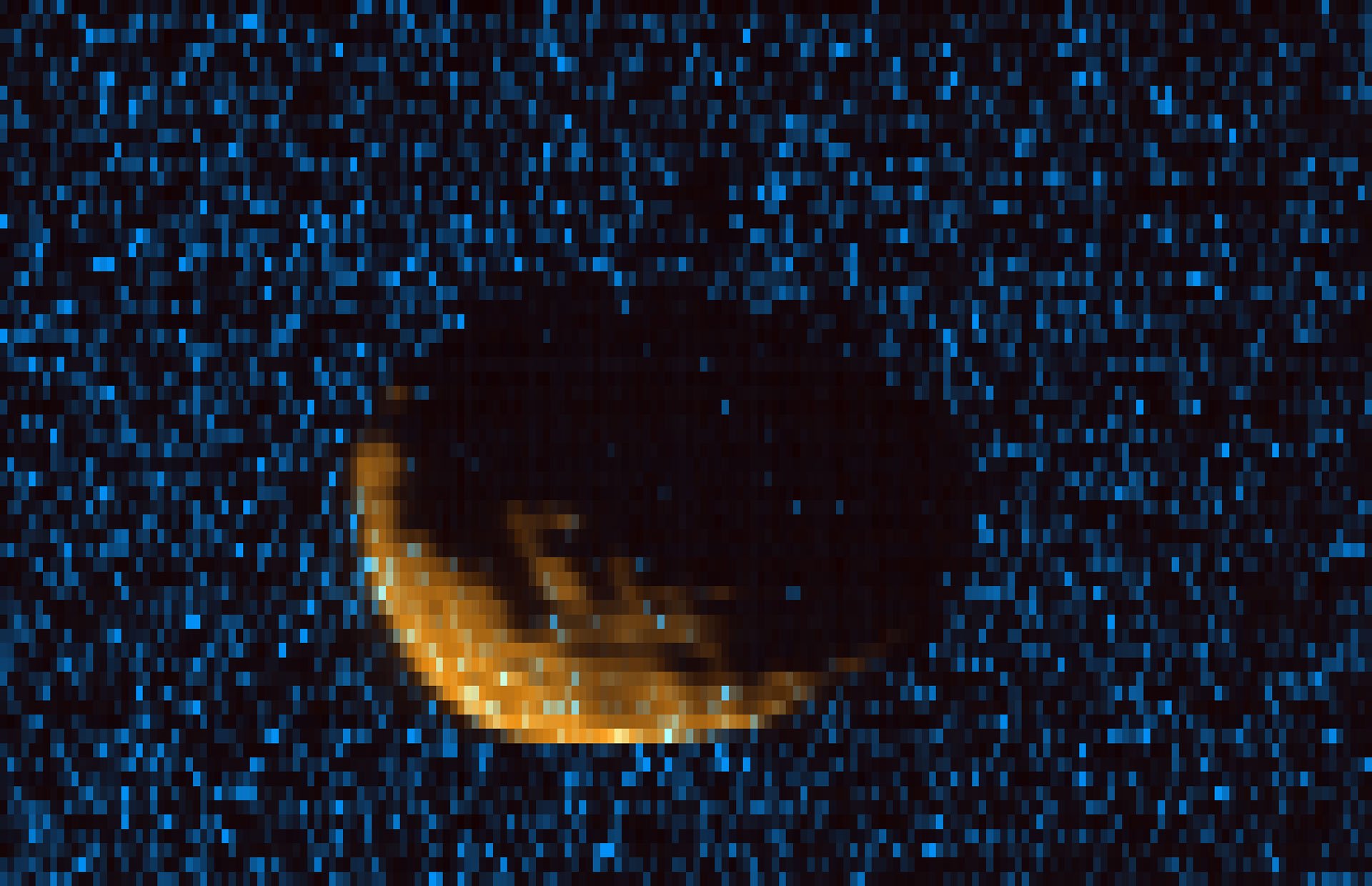
    Phobos as observed by MAVEN’s Imaging Ultraviolet Spectrograph. Orange shows mid-ultraviolet (MUV) sunlight reflected from the surface of Phobos, exposing the moon’s irregular shape and many craters. Blue shows far ultraviolet light detected at 121.6 nm, which is scattered off of hydrogen gas in the extended upper atmosphere of Mars. Phobos, observed here at a range of 300km, blocks this light, eclipsing the ultraviolet sky.

    New observations from NASA’s MAVEN Mission have scientists closer to solving the mystery of how Mars’ moon Phobos formed.

    In late November and early December 2015, NASA’s Mars Atmosphere and Volatile Evolution (MAVEN) mission made a series of close approaches to the Martian moon Phobos, collecting data from within 300 miles (500 kilometers) of the moon.

    Among the data returned were spectral images of Phobos in the ultraviolet. The images will allow MAVEN scientists to better assess the composition of this enigmatic object, whose origin is unknown.

    Comparing MAVEN’s images and spectra of the surface of Phobos to similar data from asteroids and meteorites will help planetary scientists understand the moon’s origin – whether it is a captured asteroid or was formed in orbit around Mars. The MAVEN data, when fully analyzed, will also help scientists look for organic molecules on the surface. Evidence for such molecules has been reported by previous measurements from the ultraviolet spectrograph on the Mars Express spacecraft.

    MAVEN Observes Mars Moon Phobos
    The orbit of MAVEN sometimes crosses the orbit of Phobos. This image shows the configuration of the two orbits in early December 2015, when MAVEN’s Phobos observations were made.

    The observations were made by the Imaging Ultraviolet Spectrograph instrument aboard MAVEN.

    MAVEN’s principal investigator is based at the University of Colorado’s Laboratory for Atmospheric and Space Physics, and NASA’s Goddard Space Flight Center in Greenbelt, Maryland, manages the MAVEN project. Partner institutions include Lockheed Martin, the University of California at Berkeley, and NASA’s Jet Propulsion Laboratory.

    Never miss a breakthrough: Join the SciTechDaily newsletter.
    Follow us on Google and Google News.

    Astronomy Mars MAVEN NASA Phobos Planetary Science
    Share. Facebook Twitter Pinterest LinkedIn Email Reddit

    Related Articles

    Mars’ Moon Phobos Shows Signs of Structural Failure

    New Findings on Fate of Mars’ Atmosphere Will be Broadcast Live Today

    NASA is Working on Technology to Protect Astronauts from Space Radiation on Mars

    New ScienceCast Video Explores the Mystery of Mars

    NASA’s Curiosity Prepares for Use of Its Arm and Tools

    Curiosity Sends Back Radioed Words and New Telephoto View of Mars

    NASA’s Curiosity Readies for First Drive on Mars

    Color HiRISE Image of Curiosity Rover on Mars

    First 360-Degree Color Panorama From NASA’s Curiosity Mars Rover

    Leave A Reply Cancel Reply

    • Facebook
    • Twitter
    • Pinterest
    • YouTube

    Don't Miss a Discovery

    Subscribe for the Latest in Science & Tech!

    Trending News

    Scientists Call for a Complete Rethink of Alzheimer’s Treatment

    Scientists Identify Molecular Switch That Lets Exercise Reverse Muscle Aging

    Why Your Most Vivid Dreams Might Be the Key to Deep, Restful Sleep

    A Bright Star Hid a Massive Secret for 50 Years: Mystery of Gamma Cassiopeiae Finally Solved

    Scientists Identify Protein That Slows Key Effects of Aging

    Revolutionary Submarine Mysteriously Disappears Without a Trace – Scientists Are Now Preparing for a Bold Return

    Why Drinking More Water Isn’t Enough To Stop Kidney Stones

    New Study Reveals Surprising Effect of Drinking Coffee at Night

    Follow SciTechDaily
    • Facebook
    • Twitter
    • YouTube
    • Pinterest
    • Newsletter
    • RSS
    SciTech News
    • Biology News
    • Chemistry News
    • Earth News
    • Health News
    • Physics News
    • Science News
    • Space News
    • Technology News
    Recent Posts
    • Mountain Mutation Could Unlock a Natural Treatment for Nerve Damage
    • Microscopic Medicines That Work Inside Human Cells Unlock New Treatments for Alzheimer’s Disease
    • New Study Reveals Hidden Trade-Off in Popular Weight Loss Treatments
    • AI Uncovers Hidden Signals, Discovering Dozens of New Alien Planets
    • New Discovery Challenges 80-Year-Old Theory About Turbulence
    Copyright © 1998 - 2026 SciTechDaily. All Rights Reserved.
    • Science News
    • About
    • Contact
    • Editorial Board
    • Privacy Policy
    • Terms of Use

    Type above and press Enter to search. Press Esc to cancel.